
In my extensive experience with advanced casting processes, particularly differential pressure casting for complex thin-walled components, I have frequently encountered a perplexing defect termed “white crack” segregation in shell castings made from ZL201A alloy. This aluminum-copper-manganese system alloy is renowned for its superior mechanical properties at both room and elevated temperatures, excellent plasticity, impact toughness, weldability, and machinability, making it indispensable for aerospace and critical structural applications. However, its relatively wide solidification range and significant shrinkage tendency predispose it to defects like shrinkage porosity, hot tearing, and segregation. The production of large, thin-walled shell castings with varying wall thicknesses using differential pressure casting within metallic molds, while beneficial for reducing gas porosity and hot tearing propensity, does not immune the process from these inherent challenges. This article delves deep into my systematic study of this “white crack” segregation phenomenon, combining macroscopic inspection, fractography, advanced microstructural and compositional analysis, and theoretical modeling to unravel its formation mechanisms and propose effective countermeasures. Throughout this discussion, the term “shell castings” will be emphasized, as the geometry and performance requirements of these components are central to the problem and its solution.
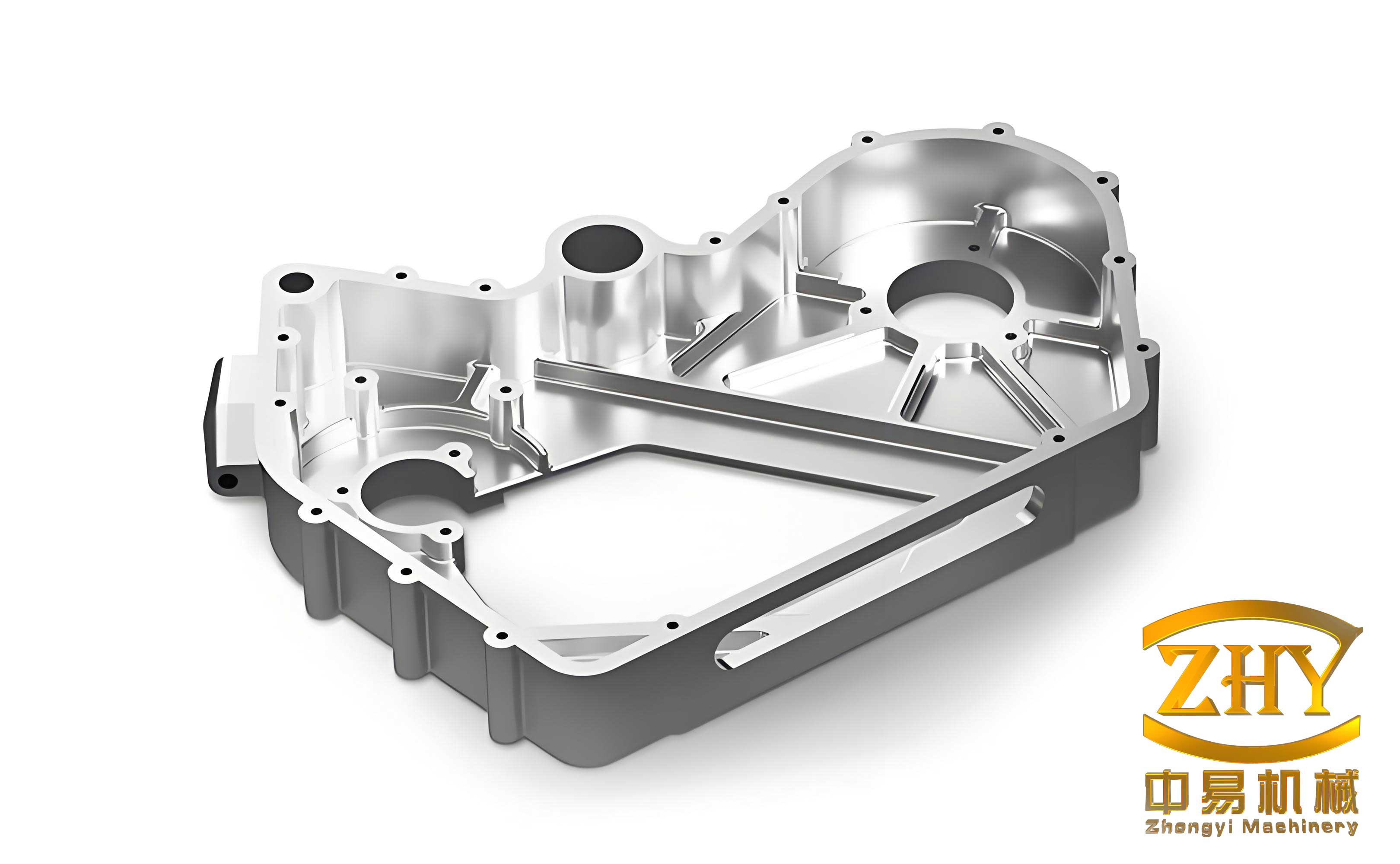
The defect manifests primarily during non-destructive X-ray inspection of the finished shell castings. On the radiographs, it appears as distinct, linear whitish streaks or bands, often intermingled with crack-like features, hence the name “white crack” segregation. Critically, these defects are not randomly located; they predominantly occur on the vertical faces of the shell castings, specifically in regions adjacent to transitions between thin and thick wall sections. This spatial correlation immediately suggests a link to localized solidification conditions and thermal stresses. A representative illustration of such a defect, crucial for visual understanding, is provided below. It shows the typical appearance of this segregation within the context of a cast shell structure.
To quantify the mechanical degradation caused by this defect, I prepared and tested tensile specimens extracted directly from regions of the shell castings exhibiting the “white crack” segregation, comparing them with specimens from sound areas. The fractographic analysis under scanning electron microscopy (SEM) revealed stark differences. The fracture surfaces of defective specimens exhibited characteristics of intergranular brittle fracture. Clear cracks were visible, predominantly propagating along grain boundaries. In some areas, quasi-cleavage facets and “rock candy” like morphology were observed, indicating weak grain boundaries. Micro-cracks were also pervasive, severely compromising the integrity of the metallic matrix. In contrast, the fracture surface of sound shell castings displayed a dimpled, ductile rupture morphology with numerous deep micro-voids, indicative of effective plastic deformation before failure. This contrast underscores the severe embrittlement effect of the segregation on the shell castings’ performance.
The microstructural investigation formed the core of my analysis. Samples from the segregated zones and sound areas were examined using optical microscopy, SEM, and subjected to energy-dispersive X-ray spectroscopy (EDS) and X-ray diffraction (XRD). The microstructure in the “white crack” regions was markedly different. Instead of a uniform distribution of phases, I observed a distinctive, coarse, fishbone-like or dendritic structure aligned along the grain boundaries. This contrasted sharply with the finer, more homogeneous microstructure of sound regions, where precipitates were distributed as fine, continuous, or discontinuous particles along grain boundaries and as isolated particles within the grains.
EDS point analysis provided the first direct clue to the composition of this segregant. The results are summarized in the table below, comparing characteristic points from segregated (Points A1-A4) and sound (Points B1-B2) regions within the shell castings.
| Analysis Point | Location Description | Major Elements Detected (At. % Approx.) | Inferred Phase |
|---|---|---|---|
| A1 | White fishbone structure on grain boundary | Al (~65%), Cu (~35%) | Al2Cu (θ phase) |
| A2 | Adjacent grain boundary phase | Al (~70%), Cu (~30%) | Al2Cu (θ phase) |
| A3 | Random particle within segregated zone | Al (major), Mn, traces of K | Al-Mn intermetallic |
| A4 | Discrete cluster within matrix near segregation | Al (~85%), Ti (~15%) | Al3Ti or AlxTiy |
| B1 | Normal precipitate in sound matrix | Al (~75%), Cu (~25%) | Fine Al2Cu |
| B2 | Normal precipitate on grain boundary in sound area | Al (~72%), Cu (~28%) | Fine Al2Cu |
The XRD analysis corroborated these findings. The diffraction pattern from the segregated material confirmed the matrix as α-Al and identified strong peaks corresponding to the Al2Cu phase. Additionally, peaks for Al1+xTi1-x type intermetallics were detected. This combined data unequivocally identified the primary segregating elements in these ZL201A shell castings as copper (Cu) and titanium (Ti). The “white crack” morphology is essentially a severe interdendritic and grain boundary segregation of Cu-rich phases (primarily Al2Cu), accompanied by localized clusters of Ti-rich compounds.
To understand the “why,” I developed a mechanistic model based on solidification theory and process dynamics. The formation of this defect in shell castings is a consequence of interplay between alloy chemistry, thermal gradients, and fluid flow during processing. The key lies in the solidification behavior of ZL201A. The alloy solidifies over a wide temperature range via a mushy (pasty) mode. The sequence can be described by considering the non-equilibrium Scheil-Gulliver solidification model, which approximates microsegregation under limited diffusion in the solid:
$$ C_s = k C_0 (1 – f_s)^{k-1} $$
where \( C_s \) is the solute concentration in the solid at the solid-liquid interface, \( C_0 \) is the initial alloy composition, \( k \) is the partition coefficient, and \( f_s \) is the solid fraction. For Cu in Al (k < 1), this equation predicts significant solute enrichment in the remaining liquid as solidification progresses. In the complex geometry of shell castings, especially at thin-thick junctions, the local cooling rate varies. Thicker sections or areas with less efficient heat extraction (like corners away from chills) solidify slower. This allows more time for dendrite coarsening and the development of extensive interconnected solid networks. The interdendritic channels become constricted and tortuous.
The final stage of solidification involves the freezing of this solute-enriched liquid. For a binary Al-Cu alloy, the last liquid to solidify is a eutectic-like mixture of α-Al and Al2Cu. If this liquid cannot freely flow to compensate for solidification shrinkage (a condition known as poor interdendritic feeding), microscopic shrinkage pores or tears form. In our case, the highly enriched liquid solidifies into coarse, continuous Al2Cu networks along grain boundaries, which appear white on X-rays due to their higher density and atomic number compared to the aluminum matrix. The associated shrinkage stress can initiate micro-tears, leading to the crack-like appearance. The thermal stress (\( \sigma_{th} \)) in such a region during cooling can be approximated by:
$$ \sigma_{th} \approx E \cdot \alpha \cdot \Delta T $$
where \( E \) is Young’s modulus, \( \alpha \) is the coefficient of thermal expansion, and \( \Delta T \) is the temperature difference between the constrained region and its surroundings. In shell castings with non-uniform wall thickness, \( \Delta T \) can be significant, promoting hot tearing susceptibility at locations already weakened by continuous brittle Al2Cu films.
The Ti segregation has a different root cause. Titanium is typically added as an Al-Ti master alloy to refine grain size. However, Al3Ti and similar compounds have very high melting points (above 1300°C). During the melting of ZL201A for shell castings, if the melting temperature is insufficiently high or the holding time is too short, or if stirring is inadequate, these compounds may not dissolve completely. Furthermore, even upon dissolution, during the subsequent holding and casting process, if the temperature falls below the liquidus for these compounds, they can precipitate as primary particles. Due to their higher density (≈3.3 g/cm³ for Al3Ti vs. ≈2.4 g/cm³ for Al melt), they tend to settle or gravitationally segregate, especially in relatively tranquil regions of the melt or during slow filling. This can lead to localized microscopic clusters of Ti-rich phases within the final shell castings, as detected in point A4. The settling velocity (\( v_s \)) of such a particle can be estimated by Stokes’ law:
$$ v_s = \frac{2 (\rho_p – \rho_f) g r^2}{9 \eta} $$
where \( \rho_p \) and \( \rho_f \) are the particle and fluid densities, \( g \) is gravity, \( r \) is the particle radius, and \( \eta \) is the melt viscosity. Larger or agglomerated particles settle faster, promoting inhomogeneity. Inadequate stirring fails to counteract this settling, leading to a non-uniform distribution of potent nucleation sites and, ultimately, to Ti-rich zones in the cast structure.
Based on this mechanistic understanding, the mitigation strategy must attack the problem at both the melting and casting stages. The goal is to achieve a homogeneous melt, promote favorable thermal gradients, and ensure adequate feeding throughout solidification of the shell castings. I propose a multi-pronged approach, with critical process parameters and their optimized ranges summarized in the following table.
| Process Stage | Key Control Parameter | Problematic Practice | Recommended Practice for Shell Castings | Scientific Rationale |
|---|---|---|---|---|
| Melting & Alloy Preparation | Master Alloy Quality | Using coarse, inhomogeneous Al-Cu/Ti master alloys | Use high-quality, finely structured master alloys with uniform composition | Promotes complete and rapid dissolution, minimizing undissolved high-melting point clusters. |
| Stirring Efficiency | Insufficient or inefficient mechanical/electromagnetic stirring | Implement vigorous and thorough stirring after master alloy addition and before pouring | Ensures thermal and compositional homogeneity, prevents Ti-rich particle settling, breaks up agglomerates. | |
| Charge Composition | High percentage of low-quality returns (recycled alloy) | Limit the use of returns; use a high proportion of primary metal and pre-treated returns | Reduces cumulative impurity buildup (e.g., K, Na) and oxide content that can exacerbate hot tearing and segregation. | |
| Casting Process (Differential Pressure) | Pouring Temperature | Too low (increased melt viscosity, early solidification) | Optimally increase within bounds to improve fluidity (e.g., 750-780°C for ZL201A) | Enhances feeding capability into mushy zone, delays dendritic coarsening, allows more time for Ti particle suspension. |
| Mold Temperature & Cooling Control | Inadequate chilling at thick sections, leading to large thermal gradients | Employ strategic chilling (e.g., copper chills) at thick sections to promote directional solidification towards feeders/risers | Aims for a more controlled temperature gradient, reducing the size of the mushy zone at critical junctions in shell castings. | |
| Feeding System Design | Poor gating/risering design, lack of compliant mold media in cores | Design gating for sequential filling; use exothermic/insulating sleeves on risers; improve core sand collapsibility | Enhances pressure transmission to the solidifying front via interdendritic channels and improves feeding efficiency to combat shrinkage. | |
| Pressure Parameters | Insufficient pressure or poorly timed pressure application | Optimize differential pressure profile: higher pressure during late solidification to force feed interdendritic liquid | Applies an external force to counteract shrinkage stress and push liquid into underfed regions, suppressing pore and tear formation. |
The interplay of these factors is complex. For instance, increasing pouring temperature must be balanced against increased gas solubility and potential for coarse grain structure. Similarly, excessive stirring can lead to oxide entrapment. Therefore, a designed experiment approach (e.g., Taguchi methods) is highly recommended for fine-tuning these parameters for a specific shell casting geometry. The solidification time (\( t_f \)) for a section of a shell casting can be estimated using Chvorinov’s rule:
$$ t_f = B \left( \frac{V}{A} \right)^n $$
where \( V \) is volume, \( A \) is surface area, \( B \) is a mold constant, and \( n \) is an exponent (typically ~2). Designing the process to minimize the difference in \( t_f \) between adjacent thin and thick sections (simultaneous solidification) or to create a controlled directional solidification path is crucial. For the problematic junctions in shell castings, where thickness changes abruptly, employing chills effectively increases the local \( A \) (cooling surface), thereby reducing \( t_f \) for the thicker part, aligning it closer to the thinner section’s solidification time.
In conclusion, my investigation into the “white crack” segregation defect in differential pressure cast ZL201A shell castings reveals it to be a severe form of inverse segregation predominantly of copper, exacerbated by titanium heterogeneity. The defect originates from a confluence of factors: the alloy’s inherent wide freezing range, the challenges of interdendritic feeding in complex, variable-thickness geometries characteristic of shell castings, and process-induced inhomogeneities from incomplete master alloy dissolution and gravitational settling. The resulting coarse, continuous Al2Cu networks along grain boundaries act as brittle paths, drastically reducing ductility and fracture toughness, as unequivocally shown by the fractographic evidence. Preventing this defect in critical shell castings requires a holistic strategy. It mandates stringent control over melt homogeneity through quality raw materials and vigorous stirring, coupled with optimized casting parameters designed to manage thermal gradients and ensure effective mass feeding during the vulnerable final stages of solidification. By integrating these principles, the production of high-integrity, defect-free ZL201A shell castings for demanding applications becomes a consistently achievable goal, ensuring the reliability and performance of the final components in service.
Further theoretical modeling can be employed to predict susceptibility. The susceptibility to such segregation and hot tearing can be related to a cohesion parameter or a critical stress model. One approach considers the strain accumulation in the mushy zone when the solid fraction is high enough to form a continuous skeleton but liquid films still exist. The strain rate (\( \dot{\epsilon} \)) induced by thermal contraction must be accommodated by liquid flow or else leads to void formation. The pressure drop (\( \Delta P \)) required for liquid flow through the dendritic network is given by a form of the Darcy equation:
$$ \Delta P = \frac{\eta \cdot v \cdot L}{\kappa} $$
where \( \eta \) is liquid viscosity, \( v \) is superficial velocity of the liquid, \( L \) is flow length through the mushy zone, and \( \kappa \) is the permeability of the porous dendritic network. Permeability decreases dramatically as the solid fraction increases (\( \kappa \propto (1 – f_s)^3 / f_s^2 \) for simple models). In shell castings with long flow paths \( L \) in isolated hot spots, \( \Delta P \) can easily exceed the metallostatic or applied pressure, leading to feeding cessation and defect formation. Therefore, process design for shell castings must aim to minimize \( L \) by promoting shorter, more direct feeding paths and to maximize the applied pressure \( \Delta P \) during the critical period when \( \kappa \) is plummeting. This detailed physicochemical understanding underscores why seemingly minor process deviations can have catastrophic effects on the quality of high-performance shell castings, reinforcing the need for precision and control at every step of the manufacturing chain.