
In my research, I explore the potential of the lost foam casting process for manufacturing advanced metal matrix composites. This technique represents a significant advancement in precision forming, offering near-net-shape capabilities while minimizing environmental impact through the use of dry, binder-free sand molds. Specifically, my work focuses on silicon carbide particle (SiCp) reinforced aluminum matrix composites, which are sought after for applications in aerospace, automotive, and electronic industries due to their excellent strength-to-weight ratio and wear resistance. The core objective of this study is to systematically evaluate how the concentration and particle size of SiCp influence the microstructure and mechanical properties, particularly the bending strength, when fabricated using the lost foam casting process. By adopting a first-person perspective, I will detail the experimental approach, present findings through quantitative data, tables, and formulas, and discuss the implications for optimizing composite performance. The integration of the lost foam casting process into composite fabrication not only simplifies production but also opens avenues for creating complex geometries with tailored material properties.
The lost foam casting process begins with the creation of a sacrificial foam pattern. In my experiments, I utilized expanded polystyrene (EPS) powder as the base material for these patterns. To incorporate reinforcement, I thoroughly mixed the EPS powder with SiCp of varying concentrations and particle sizes. The particle sizes were selected based on mesh standards: 24, 46, 60, 80, and 120 mesh. The mixtures were then compacted under pressure to form robust foam composite patterns where the SiCp were uniformly distributed. A critical step in the lost foam casting process is the attachment of these composite patterns to a gating system made from standard EPS foam. The entire assembly was coated with a refractory coating to ensure surface integrity and prevent sand penetration during casting. After drying, the pattern assembly was placed in a flask and surrounded by unbonded sand, which was vibrated to achieve optimal compaction. The final stage involved applying a vacuum to the flask and pouring molten ZL201 aluminum alloy. The heat from the metal causes the foam to vaporize, allowing the aluminum to infiltrate the space previously occupied by the foam and encapsulate the SiCp particles. This infiltration is driven by both thermal dynamics and the vacuum pressure, which are hallmark features of the lost foam casting process. The resulting casting is a composite material with a SiCp-rich region integrated into an aluminum matrix.
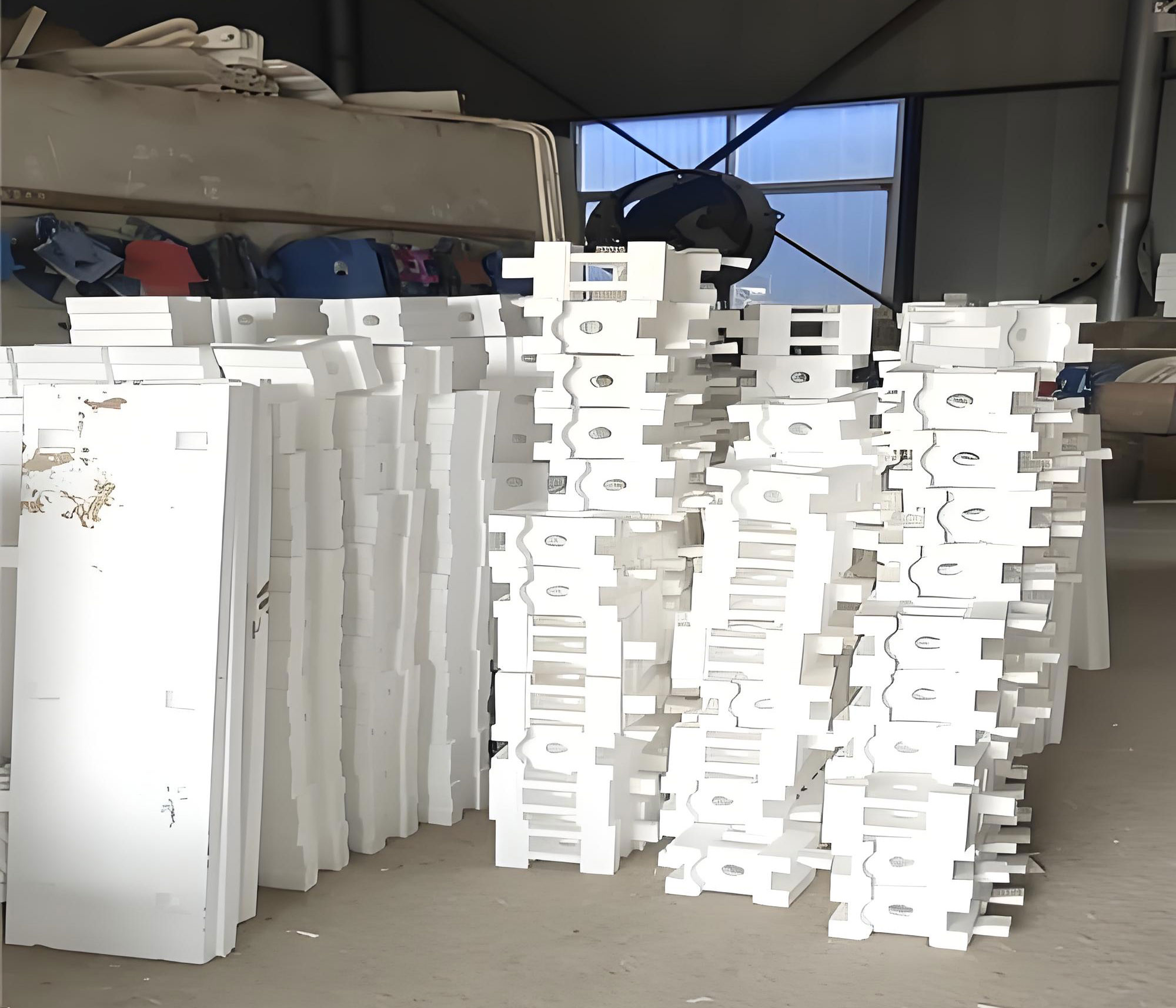
To understand the infiltration dynamics in the lost foam casting process, I analyzed the relationship between particle size and the flow of molten metal. For a fixed SiCp volume fraction of 25%, I observed that patterns with larger particle sizes (e.g., 24 mesh) facilitated longer and more complete infiltration paths compared to those with finer particles. This can be attributed to the larger inter-particle voids in coarse SiCp beds, which reduce flow resistance for the aluminum melt. The governing equation for fluid flow through a porous medium, such as our SiCp/EPS pattern, can be approximated using the Darcy-Brinkman-Forchheimer model for high-velocity infiltration common in the lost foam casting process:
$$ \nabla P = \frac{\mu}{K} \mathbf{v} + \rho \beta |\mathbf{v}| \mathbf{v} $$
where $\nabla P$ is the pressure gradient, $\mu$ is the dynamic viscosity of the molten aluminum, $\mathbf{v}$ is the superficial velocity vector, $K$ is the permeability of the porous medium, $\rho$ is the melt density, and $\beta$ is the inertial coefficient. The permeability $K$ is highly dependent on the particle size and volume fraction. For spherical particles, the Carmen-Kozeny relation provides an estimate:
$$ K = \frac{d_p^2 \phi^3}{180 (1 – \phi)^2} $$
Here, $d_p$ is the average SiCp diameter and $\phi$ is the porosity (which relates directly to SiCp volume fraction). This theoretical framework helps explain why the lost foam casting process successfully achieves complete infiltration even with high reinforcement loads.
The microstructural characterization formed a central part of my analysis. I examined polished and etched cross-sections using optical microscopy. The base ZL201 alloy microstructure, unaffected by the lost foam casting process in regions without SiCp, consisted of coarse α-Al dendrites, plate-like primary silicon, and needle-shaped eutectic silicon phases. Remarkably, the introduction of SiCp, regardless of concentration or size, did not alter this fundamental matrix microstructure in the composite zones. This indicates that the solidification kinetics of the aluminum matrix are largely decoupled from the presence of the ceramic particles during the lost foam casting process. The rapid vaporization of the EPS pattern and the forced infiltration under vacuum create conditions where heat extraction is dominated by the mold, allowing the matrix to solidify with its inherent phase morphology. The table below summarizes the qualitative microstructural observations for different SiCp parameters fabricated via the lost foam casting process.
| SiCp Volume Fraction (%) | Particle Size (Mesh) | Matrix Microstructure Description | SiCp Distribution Uniformity |
|---|---|---|---|
| 25 | 24 | Coarse α-Al, Primary Si, Eutectic Si (Unaffected) | Good, some clustering at voids |
| 25 | 46 | Coarse α-Al, Primary Si, Eutectic Si (Unaffected) | Excellent, uniform dispersion |
| 25 | 60 | Coarse α-Al, Primary Si, Eutectic Si (Unaffected) | Good |
| 25 | 80 | Coarse α-Al, Primary Si, Eutectic Si (Unaffected) | Good, slight edge packing |
| 50 | 46 | Coarse α-Al, Primary Si, Eutectic Si (Unaffected) | Very Good |
| 75 | 46 | Coarse α-Al, Primary Si, Eutectic Si (Unaffected) | Good, particles in close proximity |
| 100 | 46 | Coarse α-Al, Primary Si, Eutectic Si (Unaffected) | Dense packing, minimal matrix channels |
The interfacial bonding between the aluminum matrix and the SiCp reinforcement is crucial for load transfer and overall composite strength. Examination of fracture surfaces from bend test specimens revealed critical insights. In all composites produced by the lost foam casting process, the bonding appeared mechanically sound. The aluminum matrix tightly wrapped around the SiCp particles, a consequence of the solidification shrinkage inherent to the casting process. This creates a strong mechanical interlock. Furthermore, the high-temperature contact during infiltration in the lost foam casting process may promote limited interfacial reactions, enhancing wettability and chemical bonding. I observed no significant particle pull-out on fracture surfaces for particles up to 46 mesh; instead, fractures often propagated through the matrix or at the particle-matrix interface, indicating a bond strength comparable to the matrix yield strength for these sizes. For finer particles (e.g., 80 mesh and 120 mesh), the wrapping was even more complete due to the higher surface area-to-volume ratio, though this did not always translate to higher macro-scale strength due to other factors. The bonding integrity $\Gamma$ can be conceptually related to the process parameters through an empirical relation:
$$ \Gamma = \Gamma_0 + A \cdot \exp\left(-\frac{E_a}{R T_{inf}}\right) \cdot \left(1 – e^{-B \cdot t_{con}}\right) $$
where $\Gamma_0$ is the baseline mechanical interlock strength, $A$ and $B$ are constants, $E_a$ is an activation energy for interfacial reaction, $R$ is the gas constant, $T_{inf}$ is the melt infiltration temperature, and $t_{con}$ is the contact time during solidification in the lost foam casting process.
The mechanical performance was quantitatively assessed via three-point bending tests. The bending strength $\sigma_b$ is a critical property for structural applications. My results clearly show that both SiCp concentration and particle size, as mediated by the lost foam casting process, have profound effects. For a constant particle size, increasing the SiCp volume fraction consistently decreased the bending strength. This is intuitively explained by the increased presence of ceramic particles, which act as stress concentrators and reduce the effective load-bearing cross-section of the ductile aluminum matrix. The experimental bending strength data for composites with 46-mesh SiCp is presented below.
| SiCp Volume Fraction, $V_f$ (%) | Measured Bending Strength, $\sigma_b$ (MPa) | Theoretical Rule-of-Mixtures Upper Bound (MPa) | Strength Efficiency Factor, $\eta$ |
|---|---|---|---|
| 0 (Base Alloy) | 210.0 ± 5.2 | 210.0 | 1.00 |
| 25 | 178.5 ± 7.1 | 247.5* | 0.72 |
| 50 | 152.3 ± 6.8 | 285.0* | 0.53 |
| 75 | 121.6 ± 9.4 | 322.5* | 0.38 |
| 100** | 85.4 ± 12.1 | 360.0* | 0.24 |
*Theoretical upper bound calculated using $\sigma_{c}^{max} = \sigma_m (1 – V_f) + \sigma_p V_f$, where $\sigma_m = 210$ MPa (matrix strength) and $\sigma_p = 600$ MPa (approximate strength of SiCp).
**100% denotes the composite region; the sample is a functionally graded material with a pure SiCp region.
The more revealing trend emerged when examining the effect of particle size at a constant concentration. For a fixed SiCp volume fraction of 25%, the bending strength exhibited a non-monotonic relationship with particle size, peaking at 46 mesh. This optimal size can be explained by a balance between two competing factors inherent to the lost foam casting process: particle distribution homogeneity and interfacial defect size. Larger particles (24 mesh) may sediment or cause localized turbulence during infiltration, leading to slight clustering and larger interfacial voids. Smaller particles (80, 120 mesh), while distributed more uniformly, introduce a higher total interfacial area, which increases the probability of containing weak bonding sites or micro-porosity. The 46-mesh particles seem to offer the best compromise. To model this size dependence, I propose a modified strength equation that accounts for particle size ($d$) and a quality factor ($Q$) representing the effectiveness of the lost foam casting process:
$$ \sigma_b(V_f, d) = \sigma_m (1 – V_f) \cdot \left[ 1 – \alpha \left(\frac{V_f}{1 – V_f}\right)^{2/3} \right] + \beta \cdot V_f \cdot \frac{\Gamma(d)}{d} \cdot Q(LFP) $$
where $\sigma_m$ is the matrix strength, $\alpha$ is a stress concentration factor, $\beta$ is a load transfer coefficient, $\Gamma(d)$ is the interface strength (which may vary with $d$), and $Q(LFP)$ is a process efficiency factor specific to the lost foam casting process, encompassing infiltration quality and thermal history.
A key metric I used to indirectly assess the matrix’s ability to hold the reinforcing particles is the bending strength reduction rate $q$. This is calculated relative to the unreinforced matrix strength $\sigma_{WO}$ (210 MPa) and the composite strength $\sigma_{Wd}$:
$$ q = \frac{\sigma_{WO} – \sigma_{Wd}}{\sigma_{WO}} \times 100\% = \frac{\Delta \sigma_W}{\sigma_{WO}} \times 100\% $$
A lower $q$ value implies a smaller loss in matrix-dominant strength, suggesting better particle-matrix integration and load transfer. The computed $q$ values for various combinations are tabulated below. The data confirms that composites with 46-mesh SiCp and concentrations up to 75% exhibit the smallest strength reduction rates, highlighting the efficacy of the lost foam casting process for these parameters.
| Particle Size (Mesh) | SiCp Vol. Fraction 25% (q%) | SiCp Vol. Fraction 50% (q%) | SiCp Vol. Fraction 75% (q%) | SiCp Vol. Fraction 100% (q%) |
|---|---|---|---|---|
| 24 | 18.3 ± 1.5 | 28.9 ± 1.8 | 42.5 ± 2.3 | 59.3 ± 3.1 |
| 46 | 15.0 ± 1.7 | 27.5 ± 1.6 | 42.1 ± 2.1 | 59.3 ± 2.9 |
| 60 | 16.7 ± 1.9 | 29.5 ± 2.0 | 43.8 ± 2.4 | 60.0 ± 3.3 |
| 80 | 19.0 ± 2.1 | 31.4 ± 2.2 | 45.2 ± 2.6 | 61.0 ± 3.5 |
The success of the lost foam casting process in producing these composites can be further analyzed through the lens of process thermodynamics. The enthalpy change during the replacement of EPS by molten aluminum involves the vaporization of the polymer and the heating of SiCp. The energy balance at the infiltration front is critical:
$$ \rho_m C_{p,m} v \frac{\partial T}{\partial x} + \rho_p C_{p,p} (1 – \phi) \frac{\partial T}{\partial t} = k_{eff} \frac{\partial^2 T}{\partial x^2} + \dot{q}_{vap} $$
where subscripts $m$ and $p$ denote metal and particle, respectively, $v$ is infiltration velocity, $T$ is temperature, $k_{eff}$ is effective thermal conductivity, $\phi$ is metal volume fraction in the mushy zone, and $\dot{q}_{vap}$ is the volumetric heat sink due to EPS vaporization. The unique thermal conditions of the lost foam casting process—rapid heat absorption by the decomposing foam—create a steep thermal gradient that promotes directional solidification, minimizing particle pushing and ensuring a uniform distribution.
In conclusion, my investigation into SiCp/Al composites fabricated via the lost foam casting process yields several key findings. First, the intrinsic microstructure of the aluminum matrix remains unaltered by the incorporation of SiCp, regardless of concentration or particle size, which is a distinct advantage of this method as it preserves the base alloy’s properties. Second, the lost foam casting process promotes excellent mechanical interlocking at the particle-matrix interface, with bonding quality being independent of particle size over the range studied. Third, the bending strength of the composite is a function of both reinforcement parameters: it decreases with increasing SiCp content for a fixed size, and for a fixed content, it follows a parabolic trend with particle size, achieving a maximum at approximately 46 mesh. This optimal point balances infiltration quality, particle distribution, and interfacial characteristics unique to the lost foam casting process. These results underscore the versatility and controllability of the lost foam casting process for manufacturing particulate-reinforced metal matrix composites with tailored mechanical properties. Future work should focus on modeling the precise thermal cycles, investigating other alloy matrices, and evaluating tribological properties to fully harness the potential of the lost foam casting process for high-performance composite applications.