
In my research on advanced casting techniques for high-strength aluminum alloys, I have focused on the differential pressure casting process for producing complex, thin-walled shell castings. Specifically, I examined the occurrence of a defect termed “white crack” segregation in ZL201A alloy shell castings. ZL201A is an Al-Cu-Mn series high-purity, high-strength casting aluminum alloy known for its excellent mechanical properties at room and elevated temperatures, good plasticity, impact toughness, weldability, and machinability. It is widely used in aerospace and critical load-bearing structures. However, due to its wide solidification range and significant shrinkage tendency, it is prone to defects such as shrinkage porosity, shrinkage cavities, cracks, and segregation. Among these, cracks and segregation are the most common issues in ZL201A alloy castings.
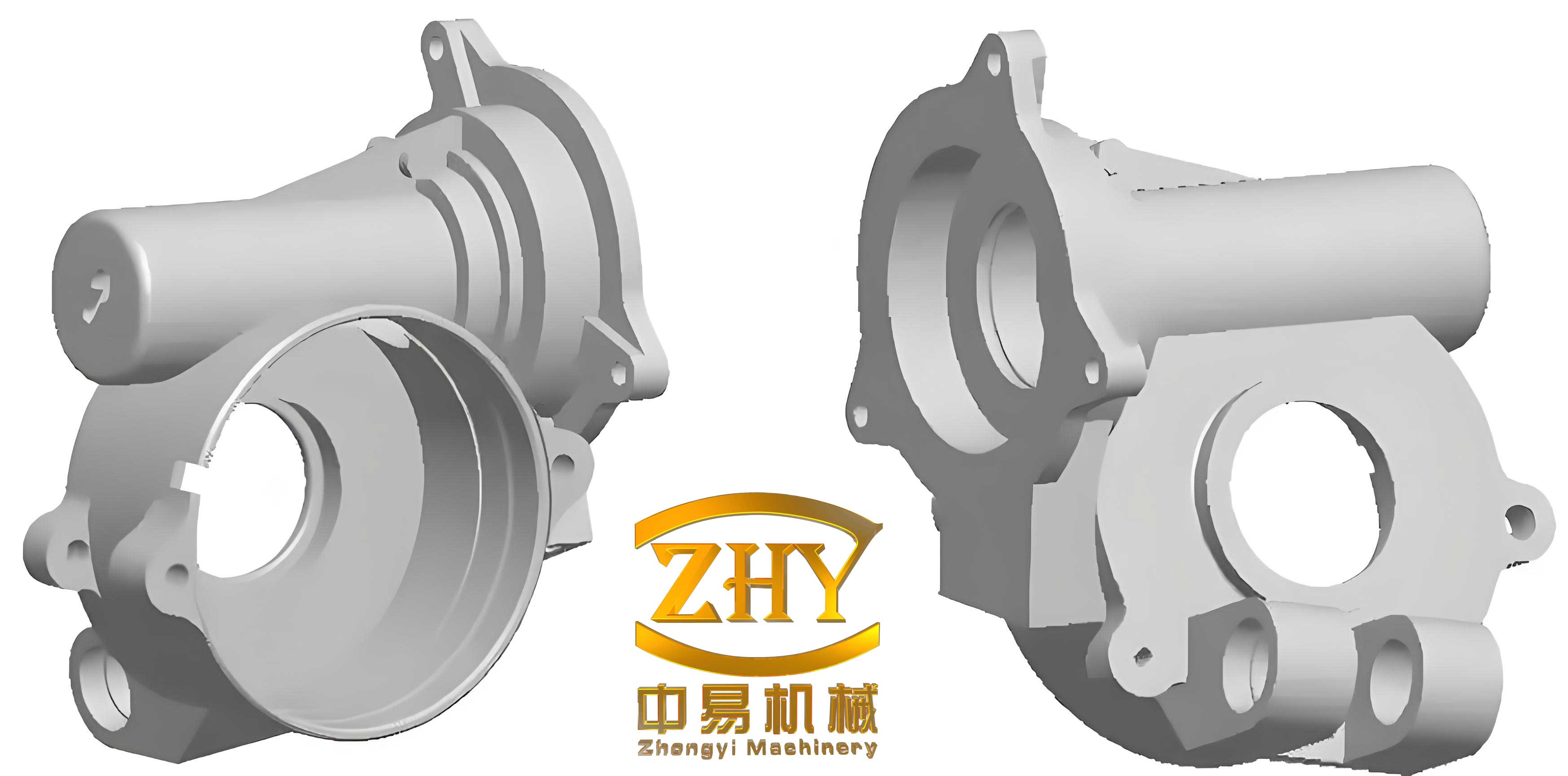
For producing large, thin-walled aluminum alloy components, conventional sand casting often fails to meet requirements for internal quality, dimensional accuracy, and mechanical properties. Sand castings may also suffer from gas pores and inclusions, and are easily damaged during shakeout and cleaning. Differential pressure casting, especially when combined with metal mold casting, offers advantages such as reduced gas porosity, decreased hot tearing tendency during solidification of large complex castings, and improved surface quality. Therefore, it is typically employed for such applications. In my work, the shell castings produced were large thin-walled parts with non-uniform thickness. Chills were placed at transitions between thin and thick sections to promote near-simultaneous solidification. However, during non-destructive testing of these ZL201A alloy shell castings, I observed that some castings exhibited “white crack”-like segregation structures. Upon closer inspection, these defects were often located near corners or areas adjacent to thickness transitions, where cooling rates are slower and the yielding of sand cores can be hindered, leading to casting defects. This study aims to investigate the microstructural morphology, tensile fracture characteristics, chemical composition, and phase composition of this segregation, and to explore its formation mechanisms and preventive measures.
The macroscopic appearance of the “white crack” segregation, as observed on X-ray inspection radiographs, is a significant characteristic. These defects manifest as linear, crack-like bright bands, predominantly located on the vertical faces of the shell castings, often near regions where wall thickness changes. This suggests a strong correlation between geometric features, thermal stresses, and defect formation. The macro-morphology is characterized by a linear pattern intermingled with what appears to be cracks. For a more quantitative understanding of the conditions favoring such defects, we can consider the thermal stress generated during solidification. The thermal stress ($\sigma_{th}$) in a casting can be approximated by:
$$\sigma_{th} = E \cdot \alpha \cdot \Delta T$$
where $E$ is Young’s modulus, $\alpha$ is the coefficient of thermal expansion, and $\Delta T$ is the temperature difference between different regions of the casting. In thin-thick transition zones of shell castings, this $\Delta T$ can be substantial, leading to high stresses that may initiate defects.
To assess the mechanical impact of these defects, I prepared tensile specimens from both defective and sound regions of the shell castings. The specimen geometry was standardized, and after tensile testing, the fracture surfaces were examined using scanning electron microscopy (SEM). The results were striking. Fracture surfaces from specimens containing the “white crack” segregation showed clear evidence of cracking, primarily along grain boundaries. In some cases, numerous micro-cracks were observed within the matrix, severely compromising its integrity. The fracture mode was predominantly intergranular brittle fracture, with features like “rock candy” patterns and shallow dimples. In contrast, fracture surfaces from defect-free regions exhibited a typical ductile fracture morphology with numerous deep dimples, indicating good material cohesion. This contrast underscores the detrimental effect of the segregation on the mechanical performance of the shell castings. A summary of the tensile properties could be represented in a table format to clearly compare sound and defective material.
| Specimen Condition | Tensile Strength (MPa) | Elongation (%) | Fracture Mode | Primary Defect Feature |
|---|---|---|---|---|
| Sound (Defect-Free) | ~320-350 (Typical for ZL201A) | ~6-8 | Ductile (Dimpled) | None |
| With “White Crack” Segregation | Significantly Reduced (e.g., <250) | Dramatically Reduced (e.g., <2) | Brittle (Intergranular) | Micro-cracks, Segregation Bands |
The microstructural investigation revealed the nature of the segregation. Samples from the “white crack” regions and normal areas were prepared for metallographic examination. After polishing and etching with a mixed acid solution (50 vol% HCl, 30 vol% HNO3, 20 vol% HF), the samples were observed under SEM. The microstructure in the segregation zone displayed a distinct “fishbone” or dendritic pattern, with bright constituents predominantly distributed along grain boundaries. The structure appeared coarser compared to the sound areas. In defect-free regions, the microstructure was finer, with precipitates distributed continuously or discontinuously along grain boundaries and as fine particles within the grains.
To determine the chemical nature of these features, energy-dispersive X-ray spectroscopy (EDS) was performed at various points within the segregation zone and the sound matrix. The analysis consistently showed that the matrix phase was rich in aluminum (Al). However, in the “white crack” regions, significant enrichment of copper (Cu) was detected along the grain boundaries and within the fishbone structures. In some specific locations within the segregated bands, enrichment of titanium (Ti) and manganese (Mn) was also observed. For instance, point analysis on the bright phases revealed high counts for Cu and Al, suggesting the presence of Al-Cu intermetallics. Other points showed peaks for Ti and Al. In the sound matrix, EDS analysis showed a more uniform distribution of alloying elements, with occasional Al-Cu precipitates. This localized enrichment is a classic sign of microsegregation. The driving force for segregation during solidification can be described by the equilibrium partition coefficient $k$, defined as:
$$k = \frac{C_s}{C_l}$$
where $C_s$ is the solute concentration in the solid and $C_l$ is the solute concentration in the liquid at the solid-liquid interface. For elements with $k < 1$ (like Cu and Ti in Al), solute is rejected into the liquid ahead of the solidification front, leading to enrichment in the last-to-freeze regions, such as grain boundaries and interdendritic spaces. The extent of segregation can be modeled by the Scheil equation for non-equilibrium solidification:
$$C_s = k C_0 (1 – f_s)^{k-1}$$
where $C_s$ is the solute concentration in the solid at a given solid fraction $f_s$, and $C_0$ is the initial alloy composition. This equation predicts significant solute buildup in the remaining liquid as solidification progresses.
To identify the specific phases present, X-ray diffraction (XRD) analysis was conducted on samples containing the segregation. The diffraction patterns confirmed that the matrix was primarily $\alpha$-Al. The major secondary phase identified in the segregation zones was $\text{Al}_2\text{Cu}$. Additionally, peaks corresponding to an $\text{Al}_{1+x}\text{Ti}_{1-x}$ type phase were detected. This aligns perfectly with the EDS results, confirming that the “white crack” segregation in these shell castings is characterized by the accumulation of $\text{Al}_2\text{Cu}$ and Al-Ti intermetallic compounds along grain boundaries. The formation of these phases is critical to understanding the defect mechanism. The sequence of phase formation during the solidification of ZL201A can be complex. A simplified thermodynamic calculation for the Al-Cu-Ti system relevant to our shell castings can be illustrated. The Gibbs free energy of formation for $\text{Al}_2\text{Cu}$ is highly negative, making it a stable phase that readily precipitates from the Al-rich liquid in the final stages of solidification.
The mechanism behind the formation of this “white crack” segregation is multifaceted, involving both solidification dynamics and melting practice issues. First, the geometry of the shell castings plays a crucial role. At transitions between thin and thick sections, feeding becomes difficult. The thinner sections solidify faster, isolating liquid pools in thicker areas. This can create isolated hot spots where solute-rich liquid is trapped. As this last liquid solidifies, it forms a network of eutectic or intermetallic phases along the grain boundaries. If the feeding is insufficient to compensate for solidification shrinkage in these areas, micro-porosity or even hot tears can form adjacent to the segregated channels, giving the defect its characteristic crack-like appearance on radiographs. The pressure conditions in differential pressure casting modify the solidification parameters. The applied pressure ($P$) influences the melting point ($T_m$) according to the Clausius-Clapeyron relation:
$$\frac{dT_m}{dP} = \frac{T_m \Delta V}{\Delta H_f}$$
where $\Delta V$ is the volume change upon melting and $\Delta H_f$ is the latent heat of fusion. While this effect is small, the primary benefit of pressure is in suppressing gas porosity and enhancing feeding. However, if the pressure profile and solidification sequence are not optimally controlled, it may not fully compensate for poor feeding in complex geometries like our shell castings.
The second major factor is related to the melting and alloy preparation process. Copper is typically added as an Al-Cu master alloy. In ZL201A, the Cu content ranges from 4.8% to 5.3%. According to the Al-Cu binary phase diagram, during solidification, Cu tends to form the $\text{Al}_2\text{Cu}$ phase. As the $\alpha$-Al dendrites form first and interconnect, the remaining liquid becomes enriched in Cu. This Cu-rich liquid eventually solidifies as interdendritic $\text{Al}_2\text{Cu}$. In areas with slower cooling, such as near thick sections or corners, this process is amplified, leading to coarse, continuous networks of $\text{Al}_2\text{Cu}$—the “white” constituent observed.
More intriguing is the role of titanium. Ti is added as an Al-Ti master alloy, with a specification range of 0.15% to 0.35% in ZL201A. Titanium has a high melting point, and Al-Ti intermetallics (like $\text{Al}_3\text{Ti}$ or other $\text{Al}_{1+x}\text{Ti}_{1-x}$ phases) are very stable. During melting, if the Al-Ti master alloy is not completely dissolved or if the melt is not homogenized sufficiently through vigorous stirring, undissolved or partially dissolved Al-Ti particles may persist. These particles have a higher density than the aluminum melt and can settle or agglomerate in certain regions of the furnace or ladle. When the melt is poured into the mold, these regions become localized zones of high Ti concentration. Upon solidification, these zones lead to the formation of Al-Ti rich phases. The settling velocity ($v_s$) of a particle in a liquid melt can be estimated by Stokes’ law:
$$v_s = \frac{2 (\rho_p – \rho_l) g r^2}{9 \eta}$$
where $\rho_p$ and $\rho_l$ are the densities of the particle and liquid, $g$ is gravity, $r$ is the particle radius, and $\eta$ is the melt viscosity. For large, high-density Ti-rich particles, $v_s$ can be significant, leading to settling and macrosegregation in the shell castings. The combined segregation of Cu and Ti creates a brittle, continuous network along grain boundaries, severely reducing ductility and acting as a preferential path for crack propagation under stress.
| Element | Typical Content in ZL201A (wt%) | Primary Source | Key Intermetallic Phase Formed | Melting Point of Phase (approx.) | Partition Coefficient (k) in Al | Potential Issue in Melting/Casting |
|---|---|---|---|---|---|---|
| Copper (Cu) | 4.8 – 5.3 | Al-Cu Master Alloy | $\text{Al}_2\text{Cu}$ (θ) | ~590°C (Eutectic) | <1 (~0.17) | Microsegregation, forms low-melting eutectic network |
| Titanium (Ti) | 0.15 – 0.35 | Al-Ti Master Alloy | $\text{Al}_{1+x}\text{Ti}_{1-x}$ (e.g., $\text{Al}_3\text{Ti}$) | >1000°C | <1 (~8-9 for peritectic) | Incomplete dissolution, settling due to high density |
| Manganese (Mn) | 0.6 – 1.0 | Al-Mn Master Alloy or pure | $\text{Al}_6\text{Mn}$, $\text{Al}_{12}\text{Mn}$ etc. | >700°C | <1 | Can contribute to complex intermetallics |
Based on this understanding of the formation mechanism, I propose several corrective measures to prevent the occurrence of “white crack” segregation in differential pressure cast ZL201A alloy shell castings. These measures target both the melting/pouring processes and the solidification conditions.
- Optimization of Solidification and Feeding: For shell castings with varying wall thickness, the principle of directional solidification towards feeders is often difficult to apply. Instead, aiming for simultaneous solidification using chills is common. However, the design must be meticulous. The use of computer simulation to model temperature fields and solidification sequences is highly recommended to optimize the placement of chills and cooling channels. The goal is to minimize large thermal gradients and isolated hot spots. Furthermore, improving the yielding capability of the sand core or mold material in complex corners can reduce mechanical hindrance to contraction, lowering thermal stress. The thermal stress reduction can be conceptually linked to maximizing the temperature uniformity, minimizing $\Delta T$ in the earlier stress equation.
- Control of Master Alloy Quality and Melting Practice: Using high-quality master alloys with fine, uniform microstructure ensures quicker and more complete dissolution. For Al-Ti master alloys, a finer grain size reduces the risk of undissolved particles. The melting temperature and time must be sufficient to fully dissolve these alloys. For ZL201A, maintaining the melt temperature within 760-780°C for an adequate duration is crucial. An empirical relation for the dissolution time ($t_d$) of a spherical particle can be derived from diffusion principles:
$$t_d \propto \frac{r^2}{D}$$
where $r$ is the initial particle radius and $D$ is the diffusion coefficient of the solute in the melt. Using finer master alloy particles significantly reduces $t_d$.
- Enhanced Melt Homogenization: Vigorous and efficient stirring is essential to prevent localized accumulation of heavy elements like Ti. Mechanical stirring or electromagnetic stirring should be employed to ensure a homogeneous melt composition before pouring. The stirring should be maintained until just before pouring to avoid re-settling.
- Optimization of Pouring Parameters: A moderately increased pouring temperature can be beneficial. While too high a temperature increases gas pickup and shrinkage, a temperature that is too low reduces fluidity and increases the viscosity of the melt. Higher viscosity hinders the movement of solute-rich liquid during solidification and may promote segregation. An optimal temperature (e.g., around 750°C for thin-walled shell castings) ensures good fluidity while allowing sufficient time for feeding. The fluidity length ($L_f$) often relates to temperature as:
$$L_f \propto \frac{\Delta H_f}{\eta (T_{\text{pour}} – T_{\text{liq}})}$$
where $T_{\text{pour}}$ is the pouring temperature, $T_{\text{liq}}$ is the liquidus temperature, and $\eta$ is viscosity. There is an optimum $T_{\text{pour}}$ that maximizes $L_f$ for a given mold configuration.
- Management of Recycled Material: The use of internal scrap (returns) should be controlled. Excessive use of returns can lead to a buildup of impurities and exacerbate segregation tendencies due to possible oxide inclusions and localized composition variations. A balanced charge with a significant proportion of primary metal is advisable for critical shell castings.
- Pressure Profile in Differential Pressure Casting: The pressure increase and holding time during differential pressure casting should be optimized. The pressure should be applied promptly after filling to enhance feeding during the critical mushy zone stage. The pressure gradient ($\nabla P$) helps drive liquid metal into interdendritic regions to compensate for shrinkage, potentially reducing the continuity of segregated networks. The flow of liquid through the mushy zone can be described by Darcy’s law:
$$\mathbf{u} = -\frac{K}{\eta f_l} \nabla P$$
where $\mathbf{u}$ is the superficial velocity of the liquid, $K$ is the permeability of the dendritic network, $\eta$ is the liquid viscosity, and $f_l$ is the liquid fraction. Optimizing $\nabla P$ can improve feeding and reduce segregation severity.
In conclusion, my investigation into the “white crack” segregation in differential pressure cast ZL201A alloy shell castings reveals that this defect is a form of severe microsegregation and macrosegregation, primarily involving copper and titanium. The defect manifests as linear, bright bands on radiographs, corresponding to continuous networks of brittle $\text{Al}_2\text{Cu}$ and Al-Ti intermetallic phases along grain boundaries. This structure drastically reduces the ductility and strength of the shell castings, leading to intergranular brittle fracture. The formation mechanism is dual in nature: firstly, the inherent difficulty in feeding and the high thermal stresses at thin-thick wall transitions in complex shell geometries promote the concentration of solute-rich last liquid at grain boundaries. Secondly, deficiencies in melting practice, particularly insufficient homogenization leading to the settling or incomplete dissolution of high-melting-point Ti-rich particles, create localized zones of Ti segregation. The prevention of this defect requires a holistic approach focusing on both melt treatment and solidification control. Key measures include using high-quality master alloys, ensuring thorough melt homogenization through vigorous stirring, optimizing pouring temperature, carefully designing the cooling system to promote uniform solidification, and controlling the use of returns. Implementing these measures can significantly improve the internal quality and reliability of high-performance ZL201A alloy shell castings produced by differential pressure casting, ensuring they meet the stringent demands of aerospace and structural applications. Further research could involve quantitative modeling of the segregation process under differential pressure conditions and the development of real-time melt monitoring techniques to ensure homogeneity before pouring.