
In my own engineering practice, I treat investment casting as a precision manufacturing system rather than as a single workshop operation. I examine every step through the lens of dimensional stability, metallurgical soundness, repeatability, and equipment capability. At the same time, I keep full mold casting in view because full mold casting offers a useful comparison for pattern behavior, mold filling, and automation strategy. The central question I ask is simple: how can a sacrificial pattern, a ceramic or refractory shell, a controlled melting route, and a well-designed gating system be combined so that complex parts are produced with predictable quality? For titanium alloy impellers and closed impellers, this question becomes especially important because the geometry is complex, the wall thickness is limited, and the service conditions demand high integrity.
My perspective is that investment casting, full mold casting, and SLA-assisted investment casting should not be treated as isolated technologies. They belong to a broader family of precision casting methods in which a pattern is used to create a cavity, the cavity is filled with liquid metal, and the final part is obtained after cooling, shell removal, cut-off, and finishing. Full mold casting differs in that the pattern is typically a foam pattern that is vaporized by the incoming metal, while investment casting normally uses a wax or photopolymer pattern that is removed before pouring. Despite this difference, both routes require strict control of pattern quality, coating or shell integrity, pouring temperature, filling velocity, and solidification behavior. When I compare full mold casting with investment casting, I find that many process-control lessons transfer from one route to the other, especially in areas such as gating design, venting, and dimensional compensation.
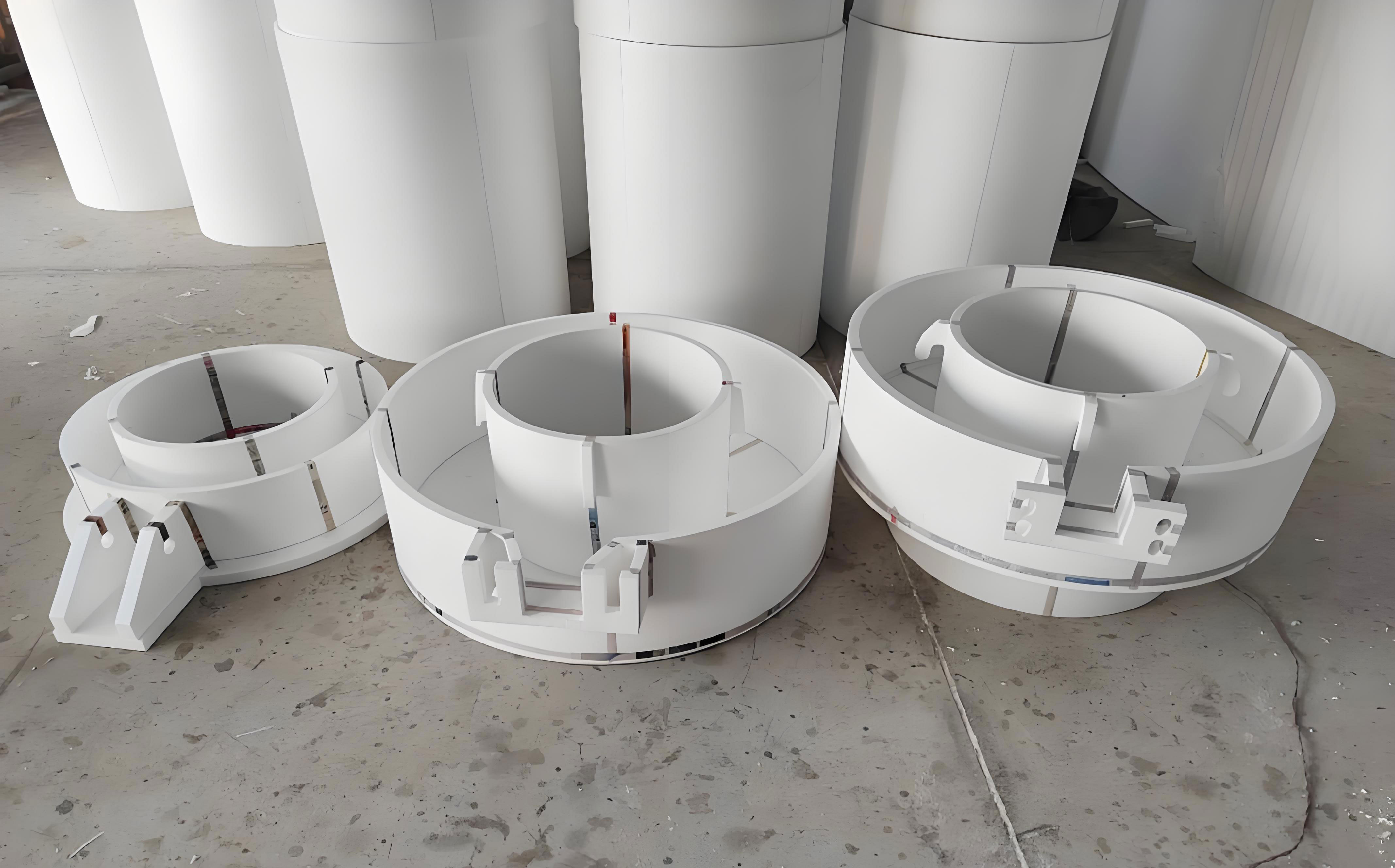
From my point of view, the value of investment casting is most evident when the part cannot be produced economically by machining or by conventional sand casting. The process can create fine surface detail, thin sections, intricate internal passages, and near-net shapes. It is widely used in medical devices, automotive components, aerospace hardware, fluid machinery, and energy equipment. Full mold casting also has a strong position in larger, less thin-walled parts, and it can reduce tooling complexity in some applications. However, when the target is a titanium impeller with a thin blade profile and a demanding surface finish, I prefer investment casting because the ceramic shell can reproduce fine geometry and because the pattern removal step avoids the gas-generation issues that can occur in full mold casting. In my experience, full mold casting is most competitive when the pattern can be designed with enough permeability and when the pouring system can manage the decomposition products effectively.
To organize my thinking, I use a comparison table that places investment casting, full mold casting, and SLA-assisted investment casting side by side. This table is not intended to rank the processes universally; instead, it helps me select the correct route for a given geometry, lot size, material, and quality level.
| Feature | Investment casting | Full mold casting | SLA-assisted investment casting |
|---|---|---|---|
| Pattern material | Wax, plastic, or photopolymer | Foam, usually expanded polystyrene | Photopolymer resin |
| Pattern removal | Melting, autoclaving, or burnout | Vaporization during pouring | Burnout and controlled collapse |
| Shell or mold | Ceramic shell built by repeated coating | Sand or refractory coating around foam | Ceramic shell built on resin pattern |
| Dimensional precision | High | Moderate to high | High, especially for prototypes |
| Surface finish | Very good | Good | Very good |
| Complex internal passages | Excellent | Good when pattern is accessible | Excellent |
| Tooling cost | Moderate to high | Low to moderate | Low for small batches |
| Best application | Titanium impellers, medical, aerospace | Large automotive and industrial parts | Closed impellers and complex prototypes |
I also use process capability indices when I evaluate whether a casting route can meet tolerance requirements. For a controlled dimensional feature, I calculate capability as follows:
$$C_p = \frac{USL – LSL}{6\sigma}$$
$$C_{pk} = \min\left(\frac{USL – \mu}{3\sigma}, \frac{\mu – LSL}{3\sigma}\right)$$
Here, USL and LSL are the upper and lower specification limits, mu is the process mean, and sigma is the process standard deviation. In my trials, investment casting usually shows better capability on fine features than full mold casting because the pattern and shell dimensions can be controlled more tightly. Full mold casting can still achieve good capability when the foam density, coating thickness, and pouring parameters are held within a narrow window. When I compare the two, I find that full mold casting often needs more attention to pattern aging and coating permeability, whereas investment casting needs more attention to wax shrinkage and shell cracking.
The process flow of investment casting begins with pattern manufacture. I consider pattern material selection to be one of the most important decisions because it influences surface finish, dimensional accuracy, removal behavior, and cost. Wax patterns are common because they flow well, reproduce fine detail, and can be removed easily. Photopolymer patterns are increasingly used when the geometry is too complex for conventional tooling or when the batch size is small. In my work, I have seen that SLA patterns are especially useful for closed impellers, where split wax patterns would require assembly and welding. Full mold casting avoids the wax removal step, but the foam pattern must be designed with sufficient density and surface treatment so that the metal does not leave carbon defects or incomplete filling.
| Pattern material | Key advantage | Main risk | Typical control variable |
|---|---|---|---|
| Wax | Excellent flow and detail reproduction | Shrinkage and deformation | Injection pressure, temperature, cooling time |
| Photopolymer | Complex geometry without tooling | Thermal expansion and shell cracking | Hollow design, venting, burnout cycle |
| Foam for full mold casting | Simple pattern production | Gas defects and carbon pickup | Density, coating, venting, pouring speed |
| Plastic | Good strength for handling | Burnout residue | Material grade and burnout atmosphere |
After pattern manufacture, I move to shell building. In investment casting, the pattern is dipped into a ceramic slurry and then stuccoed with refractory sand. This cycle is repeated until the shell has enough strength. The face coat is critical because it contacts the liquid metal and determines surface finish. For titanium alloys, I pay special attention to face-coat stability because titanium is highly reactive at high temperature. The backup layers provide mechanical strength and thermal shock resistance. Full mold casting uses a different mold-building logic, but both processes require uniform coating thickness and controlled drying. If the coating is too thin, the shell may crack. If it is too thick, the shell may have poor permeability or may not collapse properly during cooling.
I commonly use a first-order relation for dimensional compensation across the pattern-to-casting chain:
$$L_{mold} = L_{part}\left(1+s_w\right)\left(1+s_t\right)$$
In this expression, L-part is the target part dimension, s-w is the wax or pattern shrinkage, and s-t is the metal shrinkage. For a titanium impeller, I may set the wax shrinkage allowance to about 1.2 percent and the titanium shrinkage allowance to about 1.0 percent when the geometry and process conditions justify those values. The actual allowance must be adjusted after measuring trial castings. This is one reason I prefer to combine simulation with production trials. Full mold casting also requires compensation, but the foam pattern may have different aging and compression behavior, so the coefficient set is not identical.
The dewaxing or pattern removal stage is another point where I see major differences between investment casting and full mold casting. In investment casting, the pattern is melted or burned out before pouring. Temperature uniformity is essential because local overheating can deform the shell, while insufficient heating can leave residue. In full mold casting, the pattern is not removed before pouring; instead, it is vaporized by the liquid metal. This means that the pouring system must manage a large volume of gas. If the gas cannot escape, the result can be backpressure, incomplete filling, or surface defects. When I design a full mold casting process, I therefore focus on venting, coating permeability, and pouring speed. When I design an investment casting process, I focus on dewaxing pressure, heating rate, and shell support.
| Stage | Investment casting control | Full mold casting control | Why it matters |
|---|---|---|---|
| Pattern | Shrinkage, surface, dimensions | Density, aging, coating | Determines final geometry and defects |
| Mold or shell | Layer count, drying, strength | Coating thickness, permeability | Controls filling and surface quality |
| Pattern removal | Dewaxing or burnout cycle | Vaporization during pour | Prevents gas defects and shell damage |
| Melting | Superheat, vacuum, contamination | Pouring temperature and rate | Controls fluidity and reaction |
| Solidification | Thermal gradient, feeding | Cooling rate, gas escape | Controls shrinkage and microstructure |
For titanium alloy impellers, I have found that the technical challenge is not only the alloy itself but also the geometry. Titanium has a high melting point, high chemical reactivity, and relatively low superheat tolerance in some melting routes. The impeller must operate in a corrosive environment at high speed, so dynamic balance, corrosion resistance, dimensional accuracy, and internal soundness are all critical. In my work, I select industrial pure titanium for certain impeller applications because it offers a good balance of corrosion resistance and castability. The maximum outer envelope can be around 80 mm by 300 mm, and the minimum blade thickness can be around 6 mm. These dimensions are not extreme in isolation, but when they are combined with thin blades and a complex hub, they create a narrow process window.
| Requirement | Target or observation | Process implication |
|---|---|---|
| Material | Industrial pure titanium | High melting point and reactivity |
| Maximum envelope | Approximately 80 mm by 300 mm | Requires uniform shell support |
| Minimum blade thickness | Approximately 6 mm | Needs rapid filling and thermal control |
| Dynamic balance | High requirement | Dimensional symmetry and density control |
| Corrosion resistance | High requirement | Clean melt and stable face coat |
When I first studied the casting difficulty of this titanium impeller, I identified two main risks. The first was insufficient superheat caused by the high melting point of titanium and the limitations of conventional melting. The second was a poorly balanced gating system. In the original trial design, the central sprue was introduced at the top center of the impeller, with a cross-section diameter of about 60 mm and five runners inclined at about 25 degrees. This top-pour system can work for some geometries, but for a thin-bladed titanium impeller it can create unstable filling. During centrifugal casting, the metal may not fill the blade passages uniformly, and local temperature differences can lead to cold shuts, misruns, or shrinkage porosity. I have also seen similar challenges in full mold casting when the foam decomposition disturbs the filling front, although the mechanism is different because full mold casting introduces gas pressure rather than a vacuum or centrifugal force alone.
In the trial production, I used vacuum arc skull melting and centrifugal pouring. The melting current was controlled at about 15 kA, the voltage at about 40 V, and the centrifugal speed at about 250 rpm. After shell removal, sandblasting, and visual inspection, I observed significant shrinkage porosity near the casting edges. The defects were not merely cosmetic; they indicated that the filling and feeding behavior were not adequate. I analyzed the problem as a combination of high melting point, high viscosity of the titanium melt, insufficient superheat, and nonuniform temperature distribution. The cold shut defect was especially revealing because it suggested that two flow fronts met before complete fusion. In full mold casting, a similar defect can occur when the metal front is cooled by foam decomposition, but in investment casting the primary cause is often a thermal gradient that is too steep.
| Trial parameter | Value | Observation |
|---|---|---|
| Melting route | Vacuum arc skull melting | Good cleanliness but limited superheat |
| Pouring mode | Top gating | Uneven filling of thin blades |
| Melting current | Approximately 15 kA | Stable melt but narrow window |
| Voltage | Approximately 40 V | Acceptable arc stability |
| Centrifugal speed | Approximately 250 rpm | Good force but insufficient feeding |
| Inspection result | Shrinkage porosity and cold shuts | Need gating redesign |
To improve the process, I redesigned the gating system from a top-pour arrangement to a bottom-pour arrangement. I selected a heat-resistant centrifugal cup with a spherical bottom and introduced the ingate at the bottom center of the casting. The runner and cross-runner cross-section remained at about 60 mm. I then used finite element analysis to compare the original top-gating design with the improved bottom-gating design. The simulation kept the centrifugal parameters and melting parameters consistent with the trial production so that the comparison would isolate the effect of gating. I varied the centrifugal radius across several values to examine filling behavior and solidification. The simulation results showed that the improved design eliminated much of the shrinkage porosity and cold-shut tendency. This matched my expectation that bottom gating would provide a more stable and progressive filling front, reduce turbulence, and improve feeding through the center section.
$$t_s = B\left(\frac{V}{A}\right)^n$$
The expression above is Chvorinov’s rule, which I use as a simple guide for solidification time. In this relation, t-s is solidification time, V is volume, A is surface area, B is a mold constant, and n is often close to 2 for many castings. Although the rule is simplified, it helps me reason about why thick sections need more feeding than thin sections. For the titanium impeller, the hub and blade roots are thicker than the blade tips, so the feeding path must be designed to keep the thick sections liquid long enough to compensate for shrinkage. Full mold casting also follows this principle, but the presence of a vaporizing pattern adds a gas-evolution term that can alter the local heat transfer.
| Gating feature | Original top gating | Improved bottom gating | Expected effect |
|---|---|---|---|
| Liquid metal entry | Top center | Bottom center | More stable filling |
| Sprue diameter | 60 mm | 60 mm | Similar flow capacity |
| Runner angle | 25 degrees | Adjusted for bottom feed | Reduced turbulence |
| Cup design | Conventional | Spherical refractory cup | Better centrifugal balance |
| Defect outcome | Shrinkage and cold shuts | Defects largely removed in simulation | Improved soundness |
After the gating redesign, I continued to examine the role of centrifugal speed. The centrifugal force improves feeding and filling, but too much force can cause shell damage or dimensional distortion. I therefore use a basic centrifugal relation to estimate the required speed. The gravity coefficient can be written as:
$$G = \frac{R\omega^2}{g}$$
Where R is the local radius, omega is angular velocity, and g is gravitational acceleration. The rotational speed n in revolutions per minute is related to omega by:
$$\omega = \frac{2\pi n}{60}$$
Combining these relations gives:
$$n = \frac{60}{2\pi}\sqrt{\frac{gG}{R}}$$
In shop-floor practice, I often use an empirical form that embeds the unit conversion:
$$n \approx 9.29\sqrt{\frac{G}{R}}$$
This empirical form should always be calibrated with the actual machine, mold strength, and alloy system. In my titanium trials, the practical range was about 200 to 250 rpm. The melting current was kept between approximately 1.2 times 10 to the fourth power amperes and 1.8 times 10 to the fourth power amperes, depending on the charge size and electrode condition. The electrode melting rate was around 15 kg per minute, and the vacuum level was maintained according to the equipment specification. When I compare this with full mold casting, I note that full mold casting usually does not apply the same centrifugal force, so its feeding behavior depends more on gravity, coating permeability, and pouring head. This makes investment casting more controllable for thin titanium blades, while full mold casting remains attractive for larger parts where foam tooling is simpler.
| Centrifugal parameter | Operating window | Reason |
|---|---|---|
| Speed | 200 to 250 rpm | Balance between feeding and shell stability |
| Gravity coefficient | Greater than about 10 for dense castings | Improves feeding and reduces porosity |
| Melting current | 1.2e4 A to 1.8e4 A | Controls melt rate and superheat |
| Electrode melting rate | About 15 kg/min | Matches furnace capability |
| Atmosphere | Vacuum with argon protection | Prevents titanium contamination |
I then turned my attention to SLA technology in investment casting. SLA is valuable because it allows a photopolymer pattern to be built directly from a digital model. This removes the need for wax injection tooling, which is a major advantage for closed impellers, prototype runs, and low-volume production. In a closed impeller for a high-speed centrifugal fan, the outer envelope can be around 153 mm by 350 mm, and the minimum blade thickness can be around 2.5 mm. The long and short blades are distributed evenly around the hub. The material may be ZTC4, and the surface finish requirement can be as fine as Ra 6.3 micrometers or better. This combination of thin blades and narrow internal cavities makes conventional wax pattern assembly difficult. If I use separate wax patterns for the hub and shroud and then weld them, I introduce dimensional errors, joint lines, and additional labor. The tooling cost is high, and the lead time is long. SLA avoids those issues by creating the pattern as a single piece or as a well-controlled assembly.
| Closed impeller feature | Typical value | Challenge |
|---|---|---|
| Outer envelope | Approximately 153 mm by 350 mm | Large shape with thin internal passages |
| Minimum blade thickness | Approximately 2.5 mm | Risk of misrun and distortion |
| Blade arrangement | Evenly distributed long and short blades | Uniform filling required |
| Material | ZTC4 titanium alloy | Reactive melt and narrow window |
| Surface finish | Ra 6.3 micrometers or better | Face-coat control is critical |
In the SLA-assisted process, the pattern is not simply a copy of the final part. I design the pattern with a hollow interior so that the shell can collapse inward during burnout instead of expanding outward and cracking. I also add vents at the blade outlets and at thicker sections so that decomposition gases can escape quickly. After burnout, compressed air can be used to remove residual ash and loose particles. This is a different strategy from full mold casting, where the foam pattern remains in the mold and is vaporized by the metal. In full mold casting, the gas must escape through the coating and sand; in SLA-assisted investment casting, the pattern is removed before pouring, so the shell can be cleaner and more stable. However, the burnout cycle must still be carefully controlled because the photopolymer has significant thermal expansion before it decomposes.
For the face coat, I prefer a stable refractory system. Yttrium oxide is attractive for titanium casting because it is thermodynamically stable and has good strength at high temperature. I have used a zirconium acetate binder with yttrium oxide refractory powder, mixed at a powder-to-liquid ratio of about 1 to 1.0 through 1 to 2.5. The exact ratio depends on viscosity, coating thickness, and drainage behavior. The face coat must wet the pattern uniformly and must not run or pool. For the backup layers, I use a silica sol binder with mullite refractory. A typical schedule is to apply five primary backup layers, each air-dried for at least 12 hours, followed by six to eight additional layers, each air-dried for at least 8 hours. To increase shell strength, I can add a wire mesh at the sixth layer. The eighth layer may be a seal coat without stucco. This layered architecture gives the shell enough green strength for handling and enough fired strength for pouring.
| Shell layer | Material | Drying or treatment | Function |
|---|---|---|---|
| Face coat | Zirconium acetate binder with yttrium oxide | Controlled drying, uniform coverage | Surface finish and titanium compatibility |
| Primary backup | Silica sol with mullite | At least 12 hours per layer for first five layers | Strength and thermal shock resistance |
| Secondary backup | Silica sol with mullite | At least 8 hours per layer for six to eight layers | Mechanical support |
| Reinforcement | Wire mesh at sixth layer | Embedded before final drying | Prevents shell cracking |
| Seal coat | Slurry without stucco at eighth layer | Air dry | Surface sealing and handling strength |
After coating, I move to burnout. For SLA patterns, I do not use a conventional dewaxing autoclave. Instead, I place the shell directly into a high-temperature furnace so that the pattern burns out, collapses, and vents before the shell expands excessively. A typical burnout temperature is about 1050 degrees Celsius, held for four to six hours. This step must be matched to the shell thickness and the pattern mass. If the heating rate is too fast, the shell can crack. If the hold time is too short, carbon residue can remain and contaminate the titanium melt. Full mold casting does not use this burnout step for pattern removal, but it still requires a fired or cured coating and careful control of gas evolution during pouring. I often compare the two because both demand a balance between pattern removal, mold integrity, and metal cleanliness.
For pouring, I use vacuum arc skull melting with centrifugal casting. The ZTC4 alloy chemistry must meet the specification. In one representative composition, the vanadium content is about 3.9 percent, nitrogen about 0.04 percent, silicon about 0.012 percent, and hydrogen about 0.004 percent. Titanium alloy melting requires strict vacuum control and often argon protection. The furnace types include vacuum induction furnaces and vacuum arc skull furnaces. In my assessment, the vacuum arc skull furnace is one of the most economical and practical options for titanium because it combines melting and centrifugal pouring. It forms a thin titanium skull between the water-cooled copper crucible and the melt, and this skull acts as a container for the molten titanium. The process is especially effective for thin-walled, complex titanium castings with wall thickness below about 4 mm. Under centrifugal force, the metal flow and feeding behavior change significantly, which improves fillability and density.
| Pouring factor | Typical control | Effect on casting |
|---|---|---|
| Alloy | ZTC4 titanium alloy | High strength and corrosion resistance |
| Vacuum | High vacuum with argon protection | Prevents oxidation and contamination |
| Melting unit | Vacuum arc skull furnace | Protects melt from crucible reaction |
| Pouring method | Centrifugal casting | Improves filling and feeding |
| Wall thickness | Often below 4 mm for complex parts | Requires high fluidity and fast fill |
I also use heat isostatic pressing after pouring and solidification for some titanium castings. Hot isostatic pressing can close internal porosity and improve fatigue performance. This is particularly important for impellers, where internal defects can reduce service life. Full mold casting can also benefit from hot isostatic pressing, but the initial defect population may be different because of gas evolution and coating interaction. In my experience, the combination of vacuum arc melting, centrifugal filling, proper shell design, and hot isostatic pressing gives a robust route for titanium impellers.
When I consider equipment selection, I divide the system into primary equipment and auxiliary equipment. Primary equipment performs the core operations: shell building, melting, pouring, and centrifugal casting. Auxiliary equipment supports the process: dewaxing, cleaning, inspection, and material handling. The choice of equipment should be driven by the part family, alloy, batch size, and quality standard. Full mold casting equipment has a different emphasis because the pattern is not removed before pouring, so venting and coating systems are more important. Investment casting equipment emphasizes shell strength, pattern removal, and vacuum melting. Both routes benefit from automation because automation reduces human variability and improves repeatability.
| Equipment category | Function | Investment casting focus | Full mold casting focus |
|---|---|---|---|
| Pattern making | Produce sacrificial pattern | Wax injection, SLA, dimensional control | Foam molding, density, aging |
| Shell or mold building | Create refractory cavity | Slurry viscosity, layer drying | Coating permeability, sand compaction |
| Melting | Melt alloy cleanly | Vacuum arc or induction melting | Pouring temperature and rate |
| Pouring | Fill mold cavity | Centrifugal casting, vacuum | Gravity pouring, venting |
| Cleaning | Remove shell and gates | Sandblasting, cutting, polishing | Shakeout, cut-off, finishing |
| Inspection | Verify quality | X-ray, 3D scanning, dye penetrant | X-ray, visual, dimensional |
Centrifugal casting equipment is a major category in my work. It uses centrifugal force to fill the mold and improve feeding. It is especially useful for parts with rotational symmetry, such as bearings, turbine blades, and impellers. In aerospace and fluid machinery, centrifugal casting can improve strength and uniformity. However, it also requires careful balancing of the mold and controlled acceleration. If the rotation is too fast, the shell may crack or the casting may distort. If it is too slow, the filling may be incomplete. I use the gravity coefficient and the empirical speed formula to set the initial window, and then I refine the window through trials. Full mold casting may also use centrifugal force in some modified setups, but it is not as common because the foam pattern and coating must withstand the additional pressure.
Vacuum investment casting equipment is another critical category. It performs melting and pouring under vacuum, which reduces gas and impurity content. This is essential for titanium alloys and other reactive metals. In the automotive industry, vacuum investment casting is used for engine components such as pistons and cylinder bodies, where strength and uniformity are important. In medical and aerospace applications, vacuum investment casting is used for implants and structural parts. Full mold casting can also be performed under vacuum or with controlled atmosphere, but the presence of the foam pattern introduces additional gas load. This is why I often recommend investment casting for high-integrity titanium parts and full mold casting for larger, more cost-sensitive parts where the gas load can be managed.
Intelligent equipment is a growing part of my strategy. I combine casting machines with information control systems to monitor melt temperature, cooling rate, vacuum level, pouring speed, and mold position. Automatic control reduces human error and helps keep each casting within the same process window. For investment casting, I can use sensors to monitor shell temperature and furnace atmosphere. For full mold casting, I can use sensors to monitor coating dryness and pouring rate. The data can be fed into a digital twin, which simulates filling and solidification in real time. This allows me to adjust parameters before defects occur. I believe that the future of both investment casting and full mold casting will depend on this level of digital integration.
| Automation function | Investment casting application | Full mold casting application | Benefit |
|---|---|---|---|
| Temperature control | Furnace and shell heating | Pouring temperature and mold preheat | Stable filling and solidification |
| Vacuum control | Melting and pouring chamber | Venting and gas removal | Lower gas defects |
| Motion control | Centrifugal speed and acceleration | Pouring position and rate | Repeatable filling |
| Inspection | X-ray, 3D scan, vision | X-ray, vision, dimensional | Early defect detection |
| Data logging | Full traceability | Full traceability | Process improvement |
Auxiliary equipment also deserves attention. The dewaxing system is one example. In investment casting, the dewaxing system removes the wax pattern automatically. The temperature must be controlled within about plus or minus 1 degree Celsius in some precision operations to avoid pattern deformation or shell damage. If the temperature is too high, the wax may boil or the shell may crack. If the temperature is too low, the wax may not drain completely. In full mold casting, the equivalent auxiliary focus is the coating and drying system, because the foam pattern must be evenly coated and fully dried before pouring. Both routes need reliable melting furnaces, cleaning machines, and pouring equipment. Efficient melting furnaces reduce energy consumption and cycle time. Cleaning equipment such as sandblasting cabinets and ultrasonic cleaners improve surface quality. Inspection equipment such as 3D scanners and X-ray machines provides nondestructive verification.
| Auxiliary equipment | Purpose | Key parameter |
|---|---|---|
| Dewaxing autoclave | Remove wax pattern | Temperature uniformity within about plus or minus 1 degree Celsius |
| Burnout furnace | Remove photopolymer and fire shell | Temperature around 1050 degrees Celsius, hold 4 to 6 hours |
| Melting furnace | Melt alloy | Power, vacuum, electrode feed |
| Sandblasting unit | Remove shell and clean surface | Pressure, media size, nozzle distance |
| Ultrasonic cleaner | Clean fine internal passages | Frequency, temperature, time |
| 3D scanner | Measure dimensions | Accuracy, resolution, alignment |
| X-ray system | Detect internal defects | Voltage, current, sensitivity |
I also use process control charts and defect analysis tables to manage production. A defect analysis table helps me connect a symptom to its likely cause and corrective action. For example, cold shuts in investment casting may be caused by low superheat, slow filling, or poor gating. In full mold casting, cold shuts may be caused by excessive gas pressure or low pouring temperature. Shrinkage porosity in investment casting may be caused by inadequate feeding or a steep thermal gradient. In full mold casting, shrinkage may be worsened by foam decomposition that cools the metal front. By organizing defects in this way, I can decide whether to change the pattern, shell, gating, melting, or pouring parameters.
| Defect | Likely cause in investment casting | Likely cause in full mold casting | Corrective action |
|---|---|---|---|
| Cold shut | Low superheat, slow fill, poor gating | Gas backpressure, low pour temperature | Increase superheat, redesign gating, improve venting |
| Shrinkage porosity | Insufficient feeding, steep gradient | Poor feeding, foam cooling effect | Add risers, use bottom gating, adjust speed |
| Gas porosity | Shell residue, moisture, turbulence | Foam decomposition, coating permeability | Improve burnout, dry shell, increase venting |
| Surface roughness | Face-coat degradation, poor slurry | Coating roughness, sand erosion | Control face coat, improve coating practice |
| Dimensional error | Wax shrinkage, shell expansion | Foam shrinkage, coating thickness | Recalibrate allowances, control temperature |
When I compare the economics of investment casting and full mold casting, I look at lot size, part complexity, material, and quality level. Investment casting has higher tooling and shell costs in many cases, but it provides better precision and surface finish. Full mold casting can be more economical for large parts and moderate tolerances because the foam pattern is relatively inexpensive and the mold preparation is simpler. However, full mold casting may have higher scrap rates if venting and coating are not optimized. For titanium impellers, the material cost and machining cost are high, so a near-net investment casting is often the better choice. For large industrial parts with less demanding internal quality, full mold casting can be very competitive.
| Economic factor | Investment casting | Full mold casting |
|---|---|---|
| Tooling cost | Moderate to high | Low to moderate |
| Pattern cost | Higher for wax, lower for SLA small batch | Low for foam |
| Shell or mold cost | High due to multiple layers | Moderate |
| Surface finish | Very good | Good |
| Dimensional precision | High | Moderate to high |
| Best lot size | Medium to high for tooling amortization | Small to large |
| Material suitability | Reactive alloys such as titanium | Iron, aluminum, some steels |
I have also found that full mold casting and investment casting can be complementary in a foundry. A foundry may use full mold casting for large, less critical parts and investment casting for precision components. The same melting and pouring knowledge can support both routes. The same dimensional inspection equipment can be used for both. The same digital infrastructure can track both. This complementarity is why I do not treat full mold casting as a competitor to investment casting; instead, I treat full mold casting as another tool in the precision casting toolbox. When a customer asks for a complex impeller with thin blades and a fine surface finish, I recommend investment casting. When a customer asks for a large housing with moderate tolerances, I evaluate full mold casting. When the part is a prototype with internal passages, I consider SLA-assisted investment casting. The decision is always based on the required function, cost, and lead time.
For the titanium impeller project, my recommended process route is therefore a ceramic shell investment casting route with vacuum arc skull melting and centrifugal pouring. The key controls are pattern shrinkage, shell face-coat stability, bottom gating, centrifugal speed, melt superheat, and hot isostatic pressing. The simulation and trial results show that bottom gating is superior to top gating for this geometry. The defects observed in the first trial were not acceptable, but the improved design removed most of the shrinkage and cold-shut risk. I would validate the final process with a statistically designed trial matrix, measuring dimensional capability, density, surface finish, and fatigue performance. I would also compare the results with full mold casting only if the part geometry and quality requirements permit a lower-cost route. For a high-speed titanium impeller, full mold casting would not be my first choice because the gas evolution and surface reaction risks are harder to control, but the comparison remains useful for understanding filling and venting.
| Process decision | Selection | Reason |
|---|---|---|
| Primary casting route | Investment casting with ceramic shell | High precision and thin-wall capability |
| Pattern route | Wax for production, SLA for prototypes or closed impellers | Balance tooling cost and complexity |
| Gating | Bottom gating with central bottom ingate | Better filling and fewer cold shuts |
| Melting | Vacuum arc skull melting | Clean titanium melt and controlled superheat |
| Pouring | Centrifugal casting at 200 to 250 rpm | Improved feeding and density |
| Post-processing | Hot isostatic pressing and inspection | Closes internal porosity and verifies quality |
| Alternative route | Full mold casting for larger, less critical parts | Lower tooling and simpler pattern |
In my view, the future of investment casting and full mold casting will be shaped by three forces. The first is digitalization. Simulation, sensor feedback, and machine learning will allow foundries to predict defects before they occur. The second is automation. Robotic shell handling, automatic slurry control, and automated pouring will reduce variability. The third is material innovation. New binders, face coats, and pattern materials will expand the range of alloys that can be cast with high integrity. Full mold casting will benefit from improved foam materials and coatings, while investment casting will benefit from better photopolymers and refractory systems. I expect the boundary between full mold casting and investment casting to become more flexible as hybrid processes emerge.
I also want to emphasize the importance of measurement. Without measurement, process improvement is just guesswork. I use dimensional inspection, X-ray, computed tomography where available, surface roughness measurement, and metallographic analysis. For titanium impellers, I check blade thickness, profile, runout, and internal soundness. For closed impellers, I check passage dimensions and surface finish. For full mold casting, I check coating thickness, foam density, and gas defect severity. The data from these measurements feed back into the pattern allowances, gating design, and process windows. This closed-loop approach is what turns a casting process from an art into a controlled manufacturing system.
| Measurement | Purpose | Application |
|---|---|---|
| Coordinate measurement | Verify dimensions and profile | Impeller blades and hubs |
| 3D scanning | Compare casting to CAD | Complex freeform surfaces |
| X-ray radiography | Detect internal porosity | Thick sections and critical areas |
| Computed tomography | Quantify internal defects | High-value titanium parts |
| Surface roughness tester | Verify finish | Flow passages and sealing faces |
| Metallography | Check microstructure | Heat treatment and solidification control |
My final recommendation is to build the process around the part function, not around a single equipment list. Investment casting is my preferred route for titanium impellers and closed impellers because it offers the best combination of precision, surface finish, and material compatibility. Full mold casting remains valuable for larger parts, simpler geometries, and cost-sensitive programs. SLA-assisted investment casting is the best option for prototypes and complex internal passages because it eliminates wax tooling and reduces assembly errors. Vacuum arc skull melting and centrifugal pouring are the core equipment choices for titanium. Bottom gating, controlled superheat, and hot isostatic pressing are the core process choices for soundness. When these elements are combined with digital control and rigorous inspection, the result is a manufacturing route that can deliver complex castings with repeatable quality.
In summary, I see investment casting as a precision platform that can be extended by SLA, optimized by simulation, and supported by full mold casting where appropriate. The keyword in my work is control: control of pattern dimensions, shell integrity, melt chemistry, pouring speed, centrifugal force, and solidification. Full mold casting teaches me to think about gas evolution and venting. Investment casting teaches me to think about shell stability and feeding. SLA teaches me to think about design freedom and tooling avoidance. Together, these methods form a powerful set of options for modern casting production. I will continue to use tables, formulas, and trials to refine the process because the quality of a casting is ultimately determined by the discipline applied at every step.