
In modern foundry practice, the use of furan resin sand casting has become widespread, offering numerous advantages such as high dimensional accuracy, sharp casting definition, excellent surface finish, reduced scrap rates, and improved molding efficiency. However, achieving consistent quality in resin sand casting requires careful attention to a complex interplay of factors. From my experience, success hinges on a systematic approach encompassing casting design, material selection, process parameter control, and equipment maintenance. This article will delve into the critical issues and influencing elements that must be managed to optimize the resin sand casting process.
1. The Impact of Foundry Process Design
The inherent characteristics of resin-bonded sands, such as high instantaneous gas evolution and excellent high-temperature collapsibility, directly influence casting process design. A flawed design can lead to defects like gas porosity, inclusions, and sand erosion.
1.1 Gating System Principles
The design of the gating system must adhere to specific principles tailored for resin sand casting: rapid yet tranquil filling, pressurized (often bottom-gated) systems, adequate metallostatic head, and effective slag trapping. To compensate for the higher gas evolution and ensure smooth filling, the total cross-sectional area of the gating system is typically 10-20% larger compared to green sand molding. Dispersing the ingates helps reduce localized thermal shock and turbulence.
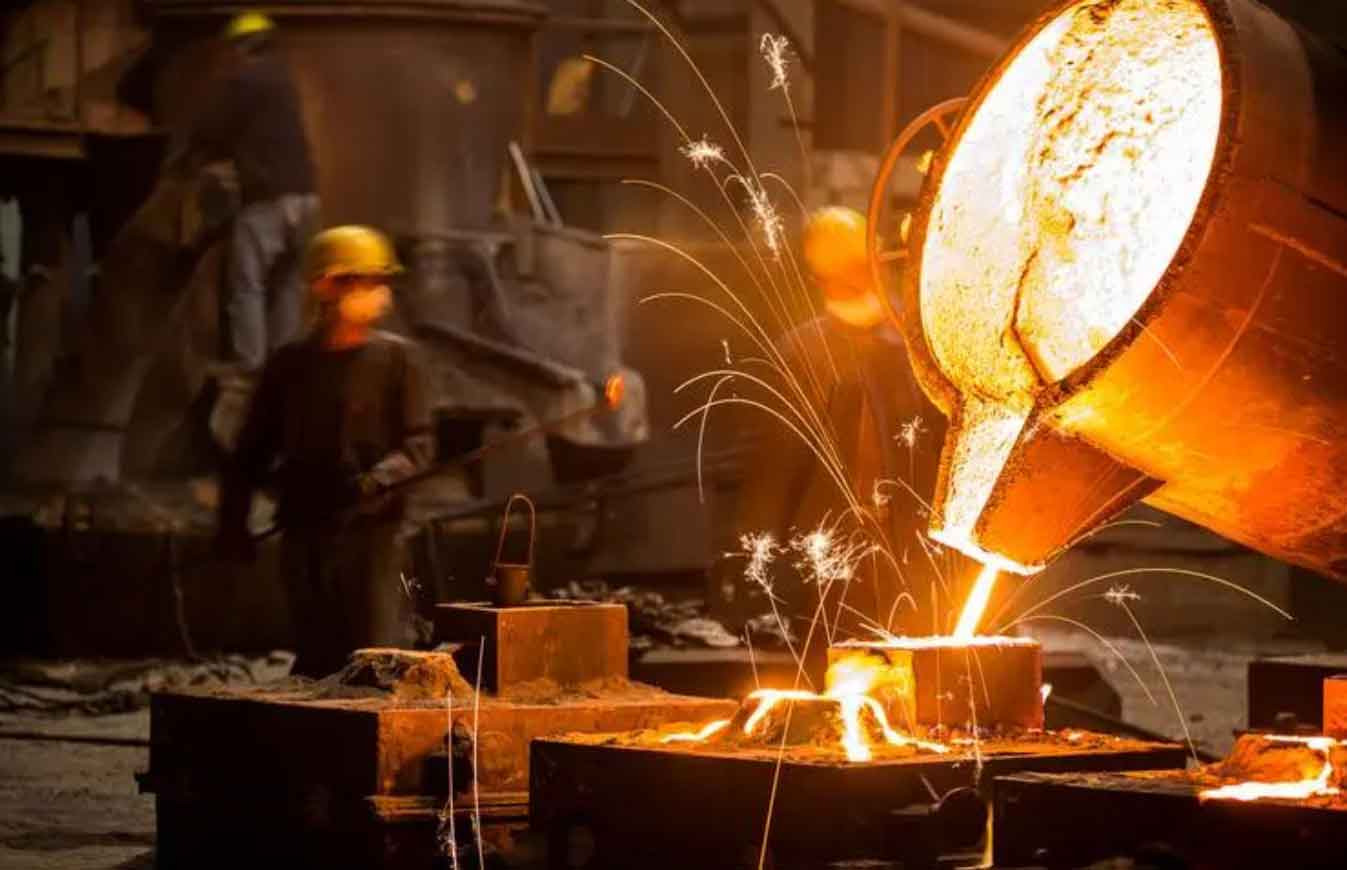
To enhance slag removal capability, ceramic filters are frequently placed within the runner system. Furthermore, to prevent sand erosion—a risk due to the high fluidity of the metal—ceramic tubes or sleeves are recommended for the sprue and initial sections of the runner. The high strength of cured resin sand molds minimizes mold wall movement, reducing the tendency for shrinkage defects. However, to avoid cold shuts and poor fluidity that can exacerbate slag entrapment, the pouring temperature must be carefully controlled. For gray iron, a temperature not lower than 1320°C is often necessary. The relationship between pouring temperature ($T_p$) and the fluidity length ($L_f$) can be conceptually described by a simplified model:
$$L_f \propto \frac{\Delta H}{\sqrt{T_p – T_l}}$$
where $\Delta H$ is the metallostatic head and $T_l$ is the liquidus temperature.
| Aspect | Green Sand Molding | Resin Sand Casting | Rationale for Resin Sand |
|---|---|---|---|
| Gating Ratio | More restrictive | More open (larger total area) | Faster filling to minimize gas pick-up from mold decomposition. |
| Ingate Placement | Often concentrated | Preferentially dispersed | Reduces localized heating and sand erosion. |
| Slag Control | Runner extensions, skim gates | Ceramic filters, tapered runners | High gas evolution can disturb slag; positive filtration is beneficial. |
| Sprue/Runner Material | Molded sand | Ceramic tubes/sleeves (common) | Prevents erosion in high-velocity areas during initial pour. |
1.2 Pattern Quality
The pattern equipment forms the foundation of the mold. For medium to low-volume production of complex castings, well-seasoned hardwood remains a cost-effective and adaptable choice. The pattern plate must possess sufficient rigidity to resist deflection under the weight of the sand; reinforcing with a steel frame (“I” or “米” shaped) is common for larger plates. When higher accuracy, superior surface finish, and longer lifespan are required and the process is stable, aluminum or epoxy resin patterns are viable despite their higher initial cost and reduced modifiability. Crucially, a first-article inspection is mandatory to verify all dimensions, shrinkage allowances, and the feasibility of the intended molding sequence.
2. The Influence of Foundry Materials
The quality of raw materials, namely the base sand and the resin binder system, is paramount in determining the final properties of the mold and core, and consequently, the quality of the casting produced via resin sand casting.
2.1 Base Sand Selection
The ideal base sand for resin sand casting is a dry, thermally reclaimed silica sand with an AFS grain fineness number typically between 40 and 70. Rounded or sub-angular grains are strongly preferred over crushed (angular) sand. While crushed sand may have high SiO2 content and refractoriness, its sharp edges lead to several drawbacks: lower compactability and flowability of the sand mix, reduced tensile strength for a given resin addition, and a higher tendency to generate fines during the vigorous mechanical reclamation process. This increases the Loss on Ignition (LOI) of the system and reduces sand reusability.
2.2 Resin and Catalyst Selection
For typical gray iron production, a medium-nitrogen furan resin (N content 2-5%) is commonly employed. The resin is a copolymer primarily composed of furfuryl alcohol, urea-formaldehyde, and phenol-formaldehyde. The ratio of these components is balanced based on cost, required bench life, curing speed, and the nitrogen-sensitive nature of the alloy being cast. A general guideline for resin quality includes a water content below 5%. The catalyst, usually an acidic compound like toluene sulfonic acid (TSA), is selected based on its acid strength and the desired work time. The curing reaction is an acid-catalyzed polycondensation. The reaction kinetics can be influenced by the acid value (AV) of the catalyst and the sand temperature ($T_s$). The effective acid concentration [H+]eff driving the cure can be approximated as:
$$[H^+]_{eff} \propto \frac{AV \cdot m_{cat}}{m_{sand}} \cdot f(T_s)$$
where $m_{cat}$ and $m_{sand}$ are the masses of catalyst and sand, and $f(T_s)$ is a temperature-dependent activity function.
| Material | Key Parameters | Typical Range/Requirement | Influence on Process |
|---|---|---|---|
| Base Sand | Grain Shape, AFS GFN, LOI | Rounded/Sub-angular, 40-70, <3.5% | Strength, flowability, reclaimability, surface finish. |
| Furan Resin | Nitrogen Content, Water Content, Viscosity | 2-5%, <5%, 50-150 cP | Gas defects (N2), strength development, bench life. |
| Catalyst | Acid Value (AV), Type | Varies (e.g., 15-35% TSA), Sulfonic acid | Cure speed, strip time, final strength. |
3. Control of Sand Mix Parameters
The properties of the prepared resin sand mixture are the most direct and controllable variables in the resin sand casting process. Precise control here is essential for consistent molding performance.
3.1 Curing Strength
Strength is characterized at two stages: initial or strip strength (measured after 1 hour) and final strength (measured after 24 hours). The initial strength must be sufficient for safe pattern removal without distortion, typically between 0.1 and 0.4 MPa. The final strength, generally between 0.6 and 0.9 MPa, provides the necessary rigidity for handling and resisting metalostatic pressure. Exceeding these ranges is counterproductive; excessive resin addition increases cost, raises the LOI of reclaimed sand, and significantly elevates the risk of gas-related casting defects due to higher volatile content.
3.2 Bench Life and Strip Time
Bench life is the period during which the mixed sand remains workable. It is often practically defined as the time until the sand becomes noticeably sticky or stringy. In production, this is controlled between 3 to 15 minutes depending on mold size and complexity. Strip time is the interval after mixing before the mold/core can be stripped from the pattern without damage. It is a function of bench life, catalyst level, and temperature. A useful empirical relationship links strip time ($t_s$) to these factors:
$$ t_s \approx k \cdot \exp\left(\frac{E_a}{R \cdot T_s}\right) \cdot [H^+]_{eff}^{-\alpha} $$
where $k$ is a constant, $E_a$ is the apparent activation energy, $R$ is the gas constant, and $\alpha$ is an empirical exponent.
3.3 Resin and Catalyst Addition Rates
Resin addition typically ranges from 0.8% to 1.2% of the sand weight. The catalyst is added as a percentage of the resin weight, usually between 30% and 60%. Optimal levels are determined experimentally for each specific combination of sand, resin, and production conditions. Insufficient resin leads to weak molds prone to breakage and erosion. Excess resin is economically wasteful and technically detrimental, as previously discussed. Catalyst addition must be sufficient for uniform and complete curing; too little results in soft spots, while too much shortens bench life unnecessarily and can cause over-curing, which may embrittle the sand.
3.4 Mold-to-Metal Ratio (Mold Cavity Design)
Due to the high strength of cured resin sand, the necessary mold wall thickness (the sand mass surrounding the pattern) can be less than in green sand molding. However, this must be optimized. An excessively high sand-to-metal ratio wastes expensive binder and generates large, hard waste sand lumps that burden the reclamation system. Conversely, a ratio that is too low risks metal penetration or “run-outs” (breakthroughs) during pouring. The design of flask equipment and the strategic use of old sand blocks as fillers in non-critical areas of large molds are effective strategies for minimizing the sand-to-metal ratio in resin sand casting.
| Parameter | Definition & Measurement | Typical Target Range | Consequences of Deviation |
|---|---|---|---|
| Resin Addition | Weight % of sand | 0.8 – 1.2 % | Low: Weak molds, erosion. High: Cost, high LOI, gas defects. |
| Catalyst Addition | Weight % of resin | 30 – 60 % | Low: Incomplete cure, soft spots. High: Wasted, short bench life. |
| Initial Strength (1h) | Tensile Strength (MPa) | 0.10 – 0.40 MPa | Low: Pattern strip damage. High: May indicate over-catalyzation. |
| Final Strength (24h) | Tensile Strength (MPa) | 0.60 – 0.90 MPa | Low: Handling/molding failure. High: Indicator of over-resination. |
| Bench Life | Practical workability time (min) | 3 – 15 min | Short: Rush in molding, waste. Long: Delays in production cycle. |
| Sand Temperature | Temperature of sand entering mixer (°C) | 25 – 30 °C | Critical for consistent catalyst reaction and strip time control. |
4. The Role of Foundry Equipment
Reliable and well-maintained equipment is the backbone of a stable resin sand casting operation. The mixer, reclaimer, and sand temperature control units are of particular importance.
4.1 Sand Mixer Technology and Control
Continuous mixers (single or twin-arm) are standard for resin sand casting. Their control systems are critical for consistency.
- Resin Metering: Modern systems use variable frequency drives (VFDs) on gear pumps, controlled by a PLC. Operators can select pre-set addition rates (e.g., 0.9%, 1.0%, 1.1%) via a selector switch to quickly adapt to different job requirements.
- Catalyst Metering – The Dual-Catalyst System: A significant advancement is the use of two catalysts (A and B) with different acid strengths, pumped separately. The system uses a sand temperature sensor to dynamically adjust the blend ratio of A and B, thereby varying the effective acid strength while keeping the total liquid addition constant. This provides much more stable strip times across varying sand temperatures than a single catalyst system. The control logic can be represented as:
$$ Ratio_{A/B} = f(T_s) $$
with the total flow $Q_{cat} = Q_A + Q_B$ held constant by the PLC. - Mixing Sequence: The order of addition in the mixer is crucial. The correct sequence is: 1) Sand, 2) Catalyst, 3) Resin. Introducing resin before the catalyst can cause premature localized curing on sand grains, reducing usable bench life and ultimate strength.
- Maintenance and Calibration: Daily cleaning of lines, filters, and blades is essential to prevent blockages from cured resin or catalyst crystallization. Regular gravimetric calibration of sand flow, resin, and catalyst pumps is non-negotiable for maintaining mix consistency in resin sand casting.
4.2 Sand Reclamation System
The thermal-mechanical reclamation system removes the spent resin film from the sand grains. Its efficiency is measured by the Loss on Ignition (LOI) of the reclaimed sand, which should ideally be maintained below 3.5%. A high LOI indicates poor binder removal, leading to increased new resin demand, poor sand flowability, reduced permeability, and a higher propensity for gas defects. Concurrently, effective dust removal (<0.5% in the reclaimed sand) is vital, as fines interfere with bonding and reduce permeability.
4.3 Sand Temperature Control
Sand temperature is arguably the most critical external variable. The ideal range for consistent curing is 25-30°C. Outside this range, compensating via catalyst adjustment becomes difficult and unstable. In summer, sand coolers (e.g., fluidized bed or chiller units) are necessary. In winter, sand heaters are required to bring cold sand into the optimal processing window. Neglecting this aspect makes consistent resin sand casting nearly impossible.
| Equipment | Key Function | Critical Control Parameter | Target/Effect |
|---|---|---|---|
| Continuous Mixer | Uniform blending of sand, resin, catalyst | Addition accuracy, mixing sequence, blade wear | Determines sand mix consistency and properties. |
| Dual-Catalyst System | Automatic adjustment of cure speed | Sand temperature input, A/B pump calibration | Stabilizes strip time against sand temperature fluctuations. |
| Sand Reclaimer | Remove spent binder, reduce fines | LOI (Loss on Ignition), Dust content | LOI < 3.5%, Dust < 0.5% for stable sand base quality. |
| Sand Temperature Unit | Condition sand to optimal temperature | Inlet/Outlet sand temperature | Maintains sand at 25-30°C for predictable reaction kinetics. |
5. Conclusion
Achieving excellence in resin sand casting is not the result of focusing on a single factor, but rather the diligent management of an integrated system. It requires a sound casting process design that accounts for the unique behavior of resin-bonded molds. It demands high-quality, consistent raw materials—specifically, round-grain sand and a well-chosen resin-catalyst system. It hinges on the precise control of sand mix parameters like strength, bench life, and additive levels. Finally, it relies on robust equipment with advanced control systems (like dual-catalyst metering) and rigorous maintenance protocols for mixers and reclamation units. When all these elements are understood, controlled, and harmonized, the resin sand casting process delivers on its promise of high-quality, dimensionally precise castings with remarkable efficiency and reliability. The journey involves continuous monitoring, measurement, and adjustment, but the consistency and quality of the output make it a cornerstone of modern competitive foundry practice.