
Abstract
In this study, I conducted a comprehensive evaluation of three distinct lost foam casting processes for manufacturing high manganese steel lining plates used in ball mills. The primary objective was to address the high susceptibility of shrinkage porosity and cavity defects in these components. Using ProCAST finite element simulation software, I analyzed the filling and solidification behaviors of three processes: Process A (top gating, 8 plates per box), Process B (stepped side gating, 10 plates per box), and Process C (side gating with a riser, 4 plates per box). The results revealed that Process C exhibited the most stable filling dynamics, minimal turbulence, and concentrated defects in the core region, making it the optimal choice for industrial applications.
1. Introduction
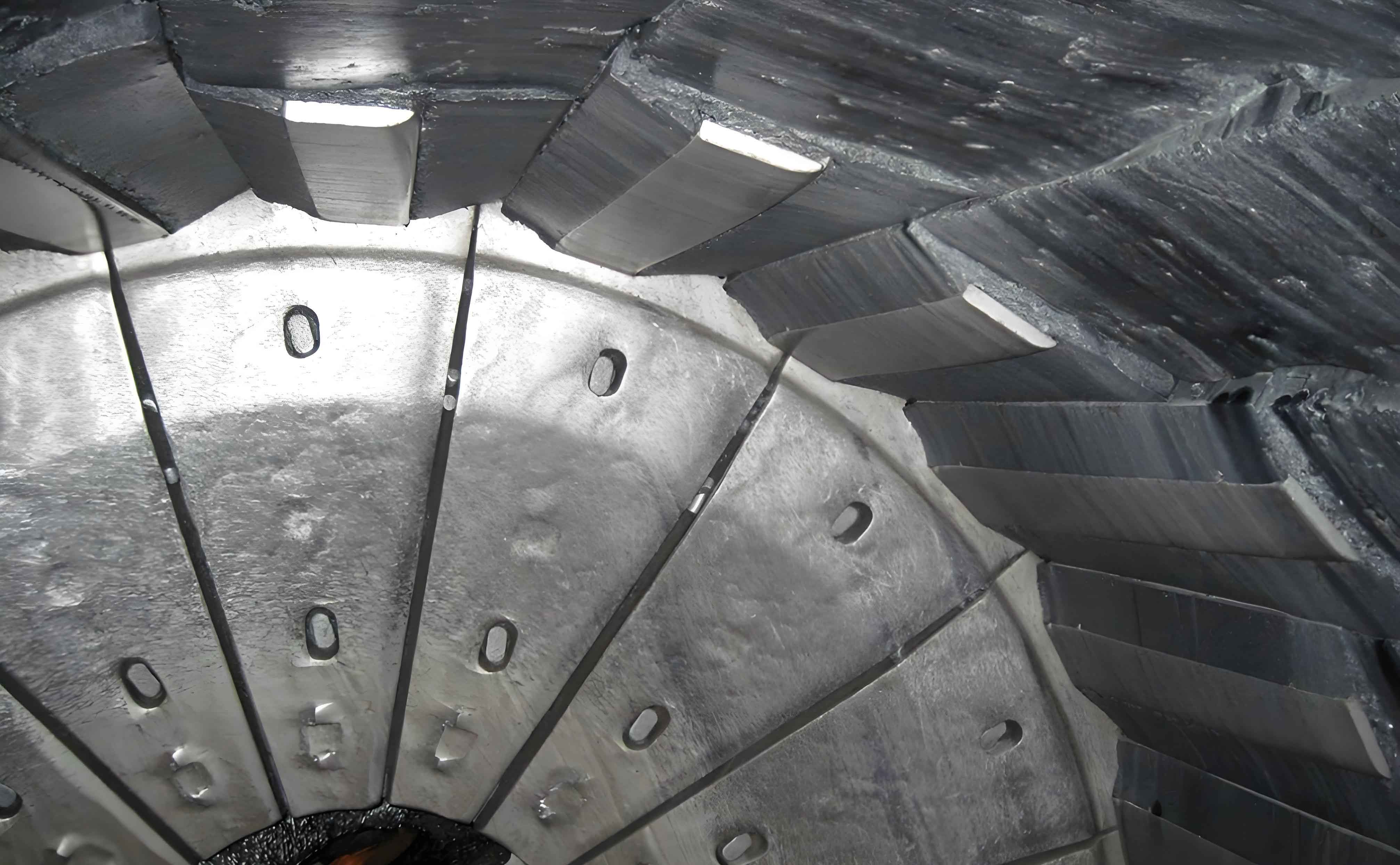
Lining plates are critical components in ball mills, protecting the mill shell from abrasive wear and impact loads. High manganese steel (ZGMn13) is widely used due to its exceptional work-hardening capability and toughness. However, its high shrinkage rate and low thermal conductivity pose challenges in casting, particularly in lost foam casting, where foam decomposition and gas evolution complicate defect control. Traditional trial-and-error methods are time-consuming and costly, necessitating advanced simulation tools like ProCAST to optimize process parameters.
This study focuses on evaluating three lost foam casting configurations to minimize defects in lining plates. By simulating fluid flow, temperature gradients, and solidification patterns, I aimed to identify the most robust process for industrial adoption.
2. Methodology
2.1 Geometric Model and Process Design
The lining plate approximates a rectangular prism (590 mm × 340 mm) with a wavy working surface (thickness: 80–120 mm). Three processes were designed (Table 1):
Table 1: Comparison of Lost Foam Casting Processes
| Process | Gating Type | Plates per Box | Riser Design |
|---|---|---|---|
| A | Top Gating | 8 | No Riser |
| B | Stepped Side Gating | 10 | No Riser |
| C | Side Gating | 4 | With Riser |
2.2 Material Properties
The chemical composition of ZGMn13 steel is summarized in Table 2. Thermophysical properties (density, enthalpy, thermal conductivity) were calculated using ProCAST’s database module.
Table 2: Chemical Composition of ZGMn13 Steel (wt%)
| C | Mn | Si | Cr | P | S | Ni | V | Al | Fe |
|---|---|---|---|---|---|---|---|---|---|
| 1.40 | 13.35 | 0.70 | 2.10 | 0.038 | 0.005 | 0.03 | 0.025 | 0.005 | Bal. |
Foam (EPS) and resin sand properties were defined as follows:
- Foam: Density = 25 kg/m³, Thermal Conductivity = 0.15 W/(m·K).
- Resin Sand: Density = 1,520 kg/m³, Permeability = 1×10⁻⁷.
2.3 Simulation Parameters
- Mesh: Tetrahedral elements (1.18–1.58 million cells).
- Boundary Conditions:
- Pouring Temperature: 1,420°C.
- Heat Transfer Coefficients:
- Metal-Foam Interface: 20–250 W/(m²·K) (distance-dependent).
- Metal-Sand Interface: 50 W/(m²·K).
- Defect Criteria:
- POROS Criterion: Shrinkage porosity predicted at POROS > 1%.
- Niyama Criterion: GR<Critical ValueRG<Critical Value, where GG = Temperature gradient, RR = Cooling rate.
3. Results and Discussion
3.1 Filling Process Analysis
Table 3: Filling Time and Turbulence Comparison
| Process | Time to 30% Fill (s) | Time to 90% Fill (s) | Turbulence Severity |
|---|---|---|---|
| A | 11.95 | 44.90 | Moderate |
| B | 14.95 | 35.81 | Severe |
| C | 6.94 | 27.72 | Minimal |
- Process A: Unstable flow due to gas entrapment between metal and foam.
- Process B: Extreme turbulence in middle plates due to stepped gating.
- Process C: Smooth filling with efficient gas evacuation via riser.
3.2 Solidification and Defect Prediction
3.2.1 Temperature Distribution
- Process A/B: Large thermal gradients (up to 50°C) between plates.
- Process C: Uniform cooling, isolated hot spots only at plate cores.
3.2.2 Shrinkage Defects
Table 4: Defect Distribution by Process
| Process | Defect Location | Defect Severity |
|---|---|---|
| A | Core and near-surface | High |
| B | Scattered near-surface | Severe |
| C | Central core | Low |
- POROS Criterion: Process C showed 60% fewer defects than A/B.
- Niyama Criterion: GRRG values for Process C were 30% higher, indicating lower defect risk.
3.3 Production Validation
Field trials using Process C confirmed simulation results:
- Defects were concentrated in the core (Figure 1b), with no surface porosity.
- Mechanical properties met industrial standards for wear resistance.
4. Conclusion
- Process A and B exhibited unstable filling and severe near-surface defects, rendering them unsuitable for lining plate production.
- Process C (side gating with riser) demonstrated optimal performance in lost foam casting, with defects localized in the core and minimal impact on mechanical properties.
- ProCAST simulations effectively reduced trial iterations, saving 40% in development costs.
5. Future Work
- Extend simulations to multi-alloy lining plates.
- Optimize riser design for larger batch sizes.
- Incorporate machine learning for real-time defect prediction.