
The relentless evolution of modern mechanical products, particularly in sectors like aerospace and missile development, imposes stringent demands on manufacturing flexibility. The production in these fields is often characterized by single-unit or small-batch orders, featuring a wide variety of parts with rapid generational updates. Many components suitable for casting are often manufactured using machining or riveting-welding combinations due to limitations in casting technology. This leads to significant drawbacks such as low material utilization, long production cycles, high costs, and poor uniformity in part performance. Therefore, developing a rapid, flexible casting process for thin-walled, complex aluminum alloy shell castings is of strategic importance. The lost foam casting (LFC) process, utilizing expandable polystyrene (EPS) patterns, offers a compelling solution. EPS patterns are easy to form and can be adhesively assembled, making them ideal for low-volume production. This article systematically researches a high-temperature lost foam precision casting process tailored for single-unit and small-batch production of aluminum alloy thin-walled shell castings.
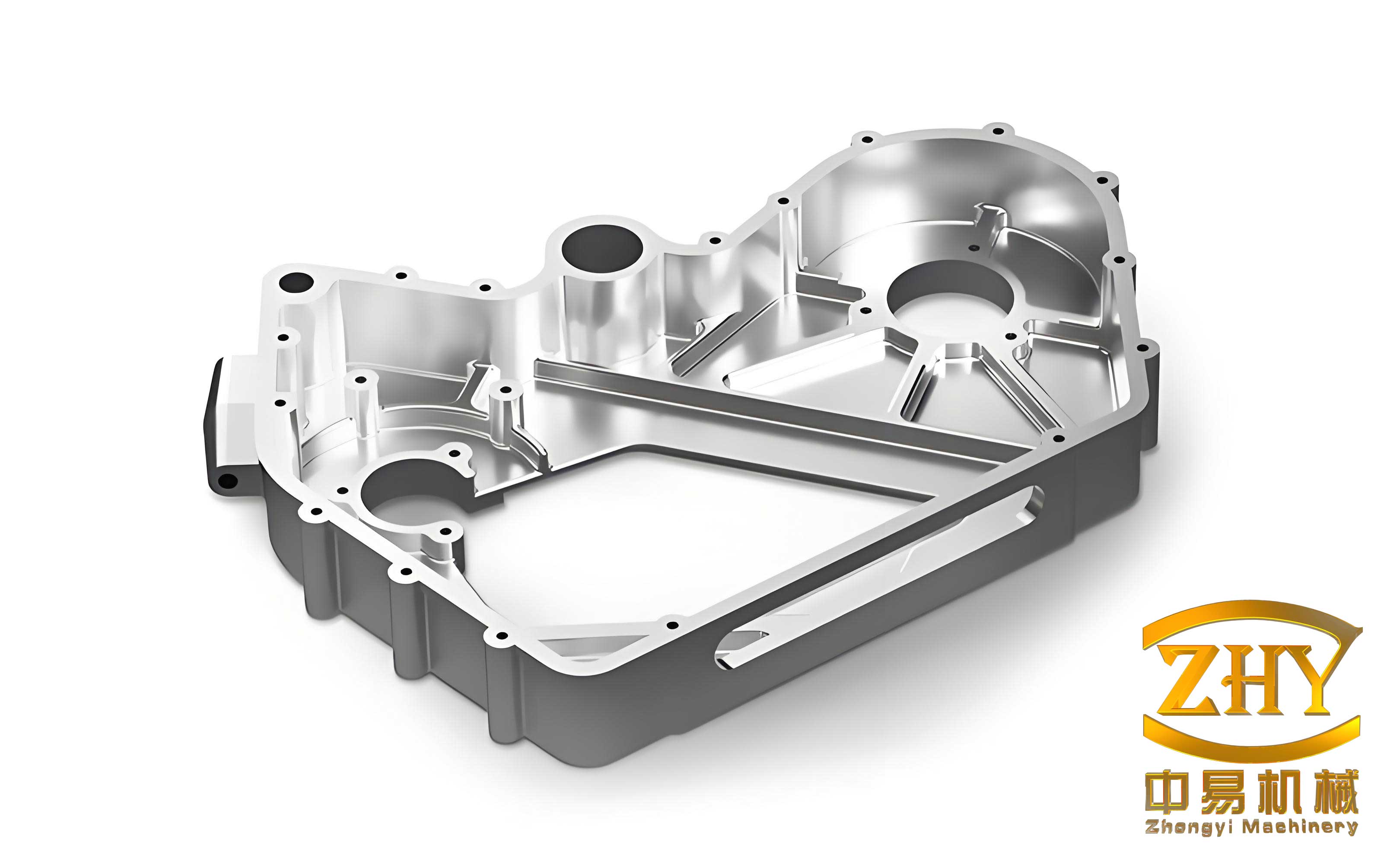
The core of the proposed process is a universal mold block forming technique combined with adhesive assembly of EPS patterns, representing an innovative application of the Replicast CS process principle. The primary workflow is as follows: Universal mold blocks are used to form individual EPS segments. These segments are then adhesively bonded together to create the complete, often complex, pattern for the thin-walled shell casting. The assembled pattern undergoes the standard lost foam procedure: coating with a refractory ceramic slurry, drying, investment to create the mold, followed by high-temperature pattern removal (burn-out) and finally, pouring of molten aluminum alloy.
1. Experimental Methodology and EPS Pattern Formation
Raw EPS beads containing 6-7% blowing agent were used. The beads were pre-expanded in water at 95–100°C, then dried and aged at room temperature for 24 hours. The final pattern molding (bead fusion) was conducted in an autoclave using pressurized steam.
An orthogonal experimental design was employed to determine the optimal molding parameters: pattern density ($\rho$), steam pressure ($P$), and holding time ($t$). The response variables were the surface roughness ($R_a$) of the EPS pattern and its fusional integrity, characterized by a transgranular fracture index. Surface roughness measurements for the mold, EPS pattern, and resulting shell casting were performed using a profilometer. The influence of EPS bead size distribution on surface finish was also investigated.
The dimensional stability of EPS patterns during heating is critical. The maximum one-dimensional expansion of cylindrical EPS samples ($\varnothing 30\text{mm} \times 20\text{mm}$) was measured at different temperatures and densities using a dilatometer. The pattern removal (burn-out) behavior was studied by instrumenting coated EPS samples with thermocouples to map internal temperature gradients during high-temperature dewaxing. The relationship between pattern density, pattern size, and the critical burn-out temperature required to prevent mold cracking was established experimentally.
The ceramic shell was fabricated using a primary hydrolyzed ethyl silicate (32% SiO2) binder and alumina flour refractory. The coating was dried and hardened using a combined air-drying and ammonia-fuming process at room temperature with 50-70% relative humidity.
2. Optimization of EPS Pattern Molding Parameters
The orthogonal experiment results are summarized in the table below, showing the effects of density, pressure, and time on surface roughness and fusion quality.
| Factor | Effect on Surface Roughness ($R_a$) | Effect on Transgranular Fracture Index | Optimal Value |
|---|---|---|---|
| Density ($\rho$) | $R_a$ decreases sharply with increasing $\rho$ up to ~0.15 g/cm³, then plateaus. Higher density improves particle fusion and gap filling. | Index decreases with higher $\rho$, indicating potential over-compaction and poorer inter-bead fusion at very high densities. | 0.163 g/cm³ |
| Steam Pressure ($P$) | Optimal pressure exists. Too low: insufficient expansion/fusion. Too high: surface cell rupture, increasing $R_a$. | Index increases with $P$, promoting better inter-bead fusion and bonding. | 0.15 MPa |
| Holding Time ($t$) | Similar to pressure effect (time-temperature equivalence). Too short: incomplete fusion. Too long: potential bead shrinkage. | Index peaks at an optimal time. Short times yield poor fusion; long times cause shrinkage and reduced fusion. | 120 s (2 min) |
Based on this analysis, the optimal parameters for producing high-quality EPS patterns for thin-walled shell castings are: $\rho = 0.163 \text{ g/cm}^3$, $P = 0.15 \text{ MPa}$, and $t = 120 \text{ s}$. This combination yields a pattern with low surface roughness and good internal bead fusion, essential for replicating fine details in the final shell castings.
3. Analysis of Surface Roughness Replication
The surface finish of the final aluminum shell castings is directly linked to the quality of the EPS pattern. The relationship between EPS bulk density and its surface roughness $R_a$ can be described by an exponential decay function, reflecting the filling of inter-bead voids:
$$ R_a(\rho) = A + B \cdot e^{-k\rho} $$
where $A$, $B$, and $k$ are constants derived from experimental data. The replication fidelity from mold to pattern to casting is remarkably linear. The correlations can be expressed as:
$$ R_{a,\text{EPS}} = m_1 \cdot R_{a,\text{Mold}} + c_1 $$
$$ R_{a,\text{Casting}} = m_2 \cdot R_{a,\text{EPS}} + c_2 $$
where $m_1$, $m_2$, $c_1$, and $c_2$ are positive constants close to 1 and 0, respectively, indicating excellent replication at each stage for producing precise shell castings.
The particle size distribution of the EPS beads significantly impacts the theoretical minimum void fraction and thus the pattern’s surface porosity. A bimodal distribution can optimize packing density. The packing density $\phi$ for a binary mixture is given by:
$$ \phi = \phi_s + (1 – \phi_s) \cdot \phi_l $$
where $\phi_s$ and $\phi_l$ are the packing densities of the small and large beads, respectively. Optimizing this distribution minimizes surface pits from unfilled voids, directly improving the surface quality of the subsequent shell castings.
4. The High-Temperature Pattern Removal (Burn-Out) Mechanism
A major challenge in using higher-density EPS patterns for precision shell castings is the risk of ceramic shell fracture during conventional low-temperature pattern removal due to high gas pressure. The proposed solution is a controlled high-temperature burn-out process. Experimental data reveals key relationships:
- Expansion vs. Temperature & Density: Maximum linear expansion $\Delta L/L_0$ increases with density at lower temperatures (<~70°C). Above ~80°C, the expansion difference between densities diminishes significantly. Above ~300°C, rapid decomposition and collapse occur.
$$ \left(\frac{\Delta L}{L_0}\right)_{T} = f(\rho, T) $$ - Critical Burn-out Temperature ($T_c$): The minimum temperature to safely remove the pattern without shell cracking increases with pattern density ($\rho$) and characteristic size ($d$, e.g., diameter or wall thickness), plateauing at high values.
$$ T_c = g(\rho, d) $$
The thermal behavior during burn-out is characterized by steep internal temperature gradients due to the low thermal conductivity of EPS, with a distinct exothermic peak corresponding to polymer combustion.
4.1 Rheological Model for Low-Temperature Removal
For temperatures below the EPS glass transition/softening point, the foam can be modeled as a viscoelastic solid. A Kelvin-Voigt element (spring $G$ and dashpot $\eta_1$ in parallel) in series with a dashpot ($\eta_2$) often describes its behavior. The stress relaxation following pre-expansion strain $\gamma_0$ is:
$$ \tau(t) = -\eta_2 \dot{\gamma} = -\eta_2 \gamma_0 \left( -\frac{G}{\eta_1+\eta_2} \right) e^{-\frac{G}{\eta_1+\eta_2}t} = \frac{\eta_2 G \gamma_0}{\eta_1+\eta_2} e^{-\frac{G}{\eta_1+\eta_2}t} $$
This relaxing stress counteracts the gas expansion pressure $P_{gas}$ inside the foam cells. The net stress $\sigma$ on the ceramic shell from a spherical cell of radius $a$ is:
$$ \sigma = \frac{nRT}{V} – \frac{2(\tau + \sigma_{st})}{a} $$
where $nRT/V$ is the ideal gas pressure, $\sigma_{st}$ is the polystyrene surface tension, and $\tau(t)$ is the time-dependent viscoelastic stress. This model shows that higher temperature and smaller cell size (higher density) increase net pressure on the shell, as does stress relaxation over time, explaining the risk of fracture at lower burn-out temperatures for dense patterns used in shell castings.
4.2 Mechanism of High-Temperature Burn-Out
At high temperatures (>~500°C), the removal mechanism shifts fundamentally, enabling successful production of intact molds for thin-walled shell castings. The process occurs in sequential, radially inward layers:
- Surface Layer Expansion and Collapse: The outermost EPS rapidly heats to its softening point, expands minimally into adjacent inter-bead gaps, then undergoes violent thermal degradation (depolymerization, vaporization) and ignition. The resulting gases permeate and escape through the porous ceramic shell, and liquid styrene may exude. This leads to rapid cell wall rupture and collapse, relieving stress.
- Sequential Layer-by-Layer Removal: The next subsurface layer expands into the space vacated by the first, then itself degrades and combusts. This cyclical process of localized expansion followed by collapse and gas evacuation continues radially inward.
- Final Cleanout: After the bulk pattern is consumed, sustained high temperature ensures complete combustion of any residual carbonaceous material within the mold cavity, leaving a clean shell ready for pouring.
This mechanism is crucial because it avoids the buildup of a high, uniform internal gas pressure. Instead, stress is localized and repeatedly alleviated at the advancing decomposition front. The shell must withstand only transient, localized pressures from layer expansion, which is more manageable than the full-volume pressure of low-temperature removal. This layered degradation mechanism is the key to successfully casting complex, thin-walled aluminum shell castings using dense EPS patterns.
5. Process Advantages and Summary for Shell Castings Production
The developed lost foam precision casting process offers a transformative approach for manufacturing low-volume, complex thin-walled aluminum alloy shell castings. Its advantages are summarized below:
| Aspect | Traditional Methods (Machining/Welding) | Developed Lost Foam Process |
|---|---|---|
| Flexibility & Lead Time | Low flexibility; long lead times for tooling and processing. | High flexibility; rapid pattern production via universal molds and assembly; ideal for prototypes and small batches of shell castings. |
| Material Utilization | Very low (high buy-to-fly ratio). | Very high; near-net-shape capability minimizes waste for complex shell geometries. |
| Cost | High due to material waste and extensive machining. | Significantly lower for low volumes, reducing need for expensive permanent tooling. |
| Part Complexity & Integrity | Limited by machining/welding feasibility; potential for stress concentrations. | Capable of highly complex, integrated thin-walled structures; produces metallurgically sound, homogeneous shell castings. |
| Surface Finish | Machined finish. | Good cast surface finish, replicating pattern quality; suitable for minimal post-machining. |
In conclusion, the successful production of high-integrity thin-walled aluminum shell castings via this process hinges on several optimized technical pillars:
1. Pattern Quality: EPS patterns must be formed at optimal density (~0.163 g/cm³), pressure, and time to ensure low surface roughness and good bead fusion, faithfully replicating the mold geometry for the final shell castings.
2. Surface Replication: The surface finish transfer from master to pattern to casting is linear and controllable, with bead size distribution offering an additional lever for improving the surface quality of shell castings.
3. High-Temperature Burn-Out: This is the enabling technology for using higher-density patterns. The critical burn-out temperature increases with pattern density and size. The underlying layer-by-layer decomposition and combustion mechanism prevents catastrophic shell fracture by avoiding uniform high-pressure buildup, making it essential for delicate shell castings molds.
4. Integrated Process: The combination of flexible pattern making via universal molds and adhesive assembly with the robust high-temperature dewaxing and precision pouring creates a versatile, efficient manufacturing route for complex, low-volume shell castings.
This research provides a comprehensive framework for implementing lost foam precision casting for demanding applications. The understanding of parameter effects, surface generation, and the physics of pattern removal specifically equips engineers to produce high-quality, thin-walled aluminum alloy shell castings with significantly improved efficiency and design freedom compared to conventional subtractive or joining methods.