
As an engineer deeply involved in the manufacturing of internal combustion engine components, I have spent considerable time studying the intricacies of producing high-performance parts. Among these, cylinder liners stand out due to their critical role in engine durability and efficiency. In particular, boron iron cylinder liners, known for their excellent wear resistance, are prone to specific casting defects that can compromise their quality. This article delves into the nature of these casting defects, their root causes, and effective mitigation strategies, emphasizing the importance of precise control in foundry processes. Casting defects are a persistent challenge in metallurgy, and understanding them is key to enhancing product reliability.
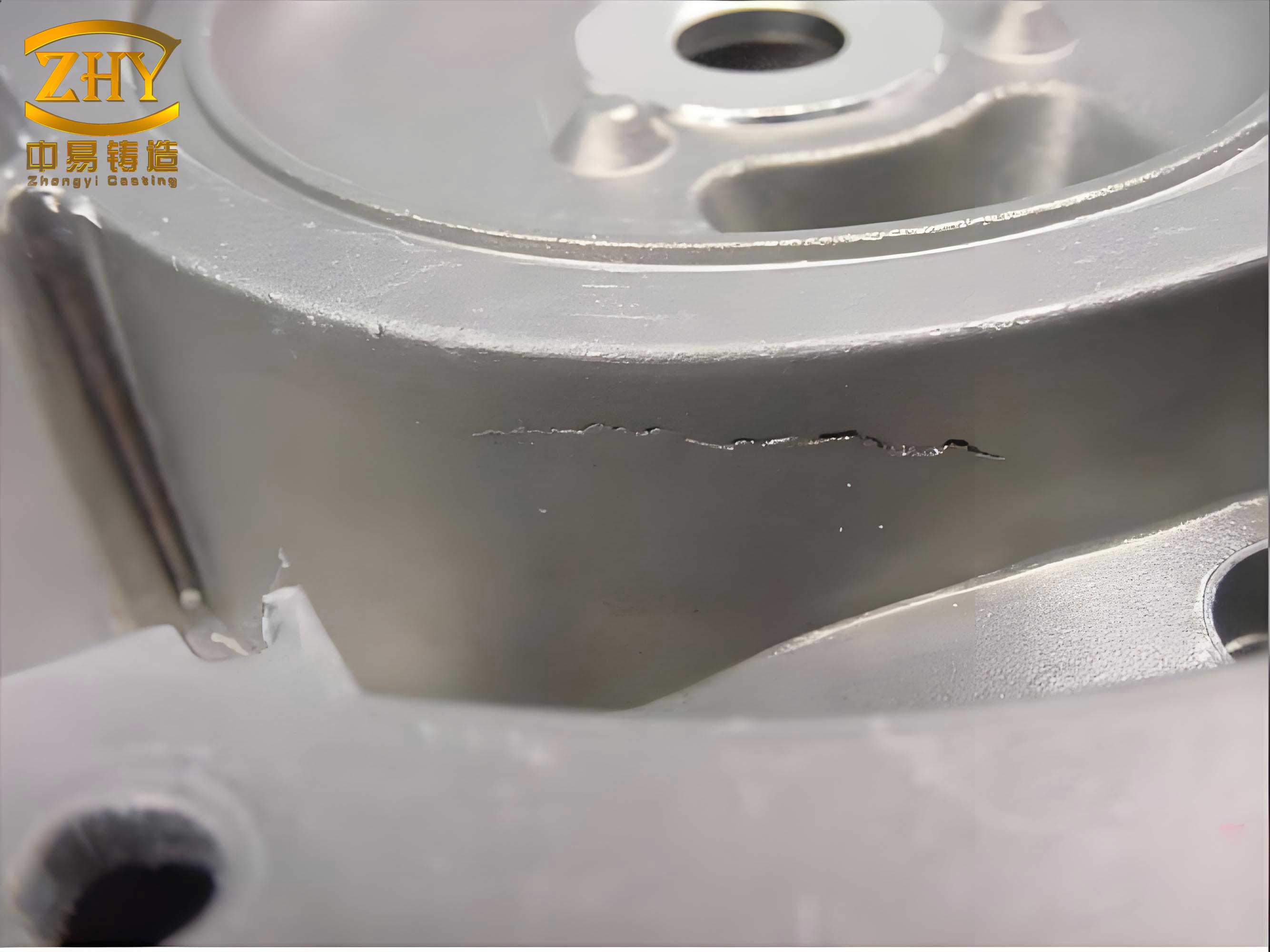
Boron iron, a variant of cast iron with trace boron additions, exhibits unique microstructural characteristics that improve耐磨性. However, the same properties that confer benefits also predispose the material to casting defects during centrifugal casting—a common method for cylinder liner production. The primary casting defects include chill zones (white iron structures), porosity, shrinkage cavities, and graphite flotation. These casting defects arise from the interplay of composition, cooling rates, and process parameters. For instance, boron stabilizes carbides, leading to a tendency for chill formation on rapidly cooled surfaces, while its effect on solidification morphology promotes shrinkage-related defects.
To systematically analyze these casting defects, I often refer to the following table that categorizes common issues in boron iron casting:
| Type of Casting Defect | Primary Cause | Typical Location | Impact on Component |
|---|---|---|---|
| Chill (White Iron) | Rapid cooling, high boron content | Outer surface | Increased hardness, poor machinability, brittleness |
| Porosity (Microshrinkage) | Extended mushy zone, poor feeding | Inner bore | Reduced density, leakage paths, lower fatigue strength |
| Shrinkage Cavities | Inadequate risering, high pouring temperature | Last-to-freeze regions | Structural weakness, stress concentration |
| Graphite Degeneration | Excessive boron, improper inoculation | Throughout matrix | Impaired lubrication, increased wear |
The formation of these casting defects can be modeled using metallurgical principles. For example, the chill tendency is influenced by the cooling rate $\( \frac{dT}{dt} \)$ and the composition-dependent critical cooling rate for carbide formation. The relationship can be expressed as:
$$ R_c = k \cdot \exp\left(-\frac{Q}{RT}\right) $$
where $\( R_c \)$ is the critical cooling rate, $\( k \)$ is a material constant, $\( Q \)$ is the activation energy, $\( R \)$ is the gas constant, and $\( T \)$ is temperature. Boron lowers the eutectic temperature, altering the solidification range and increasing the risk of casting defects like porosity. The solidification time $\( t_s \)$ for a cylindrical liner can be estimated using Chvorinov’s rule:
$$ t_s = C \left( \frac{V}{A} \right)^n $$
where $\( V \)$ is volume, $\( A \)$ is surface area, $\( C \)$ is a constant dependent on mold material, and $\( n \)$ is an exponent typically around 2. Longer solidification times in certain zones exacerbate casting defects such as shrinkage.
In my experience, the prevention of casting defects hinges on optimizing several factors: melt composition, inoculation, pouring conditions, and mold design. Boron content must be tightly controlled—typically between 0.02% and 0.06%—to balance wear resistance and castability. Inoculation with ferrosilicon (75% Si) is crucial to promote graphite nucleation, counteracting boron’s chilling effect. The inoculation efficiency $\( \eta \)$ can be related to the number of nuclei formed per unit volume:
$$ \eta = N_0 \cdot f(\Delta T) $$
where $\( N_0 \)$ is the initial nucleus count and $\( f(\Delta T) \)$ is a function of undercooling. Proper inoculation reduces casting defects by refining the microstructure.
Pouring parameters are equally vital. High pouring temperatures (1380–1420°C) improve fluidity and feeding but must be balanced against increased shrinkage risks. The temperature gradient $\( G \)$ along the liner wall dictates the solidification mode; a steep gradient favors directional solidification, minimizing casting defects. This can be expressed as:
$$ G = \frac{T_p – T_m}{x} $$
where $\( T_p \)$ is pouring temperature, $\( T_m \)$ is mold temperature, and $\( x \)$ is wall thickness. Rapid pouring speeds reduce surface chilling, while controlled mold temperatures (200–300°C) and coating thicknesses (1.5–2.0 mm) moderate cooling rates. Additionally, centrifugal casting转速 $\( \omega \)$ affects segregation; lower speeds reduce偏析 but must suffice for slag removal. An empirical formula for optimal转速 is:
$$ \omega = \frac{K}{\sqrt{r}} $$
where $\( K \)$ is a constant and $\( r \)$ is the liner radius.
To encapsulate the strategies for mitigating casting defects, I have compiled another table summarizing key measures:
| Process Parameter | Optimal Range | Effect on Casting Defects | Mechanism |
|---|---|---|---|
| Boron Content | 0.03–0.05 wt% | Reduces chill and porosity | Limits carbide formation, stabilizes graphite |
| Inoculation Amount | 0.3–0.5% FeSi | Decreases white iron zones | Enhances nucleation, refines grains |
| Pouring Temperature | 1400–1420°C | Minimizes shrinkage and porosity | Improves feeding, reduces mushy zone |
| Mold Temperature | 250–300°C | Prevents excessive chilling | Lowers thermal shock, moderates cooling |
| Cooling Delay | 60–120 seconds | Reduces internal porosity | Allows better feeding before solidification |
The role of microstructure in casting defects cannot be overstated. Boron promotes the formation of hard phases like boron carbides (e.g., Fe23(C,B)6) and boron-phosphorus complexes, which, while beneficial for wear, can aggregate into macro-defects if not controlled. The volume fraction of these phases $\( V_f \)$ relates to boron concentration $\( C_B \)$ via:
$$ V_f = \alpha C_B + \beta $$
where $\( \alpha \)$ and $\( \beta \)$ are constants. Excessive $\( V_f \)$ leads to brittleness and machining difficulties—classic casting defects. Furthermore, boron alters the eutectic reaction, shifting the共晶点 to lower carbon equivalents. This affects the solidification path, as described by the lever rule in the Fe-C-B system. The共晶 temperature drop $\( \Delta T_e \)$ due to boron is approximately:
$$ \Delta T_e = k_B \cdot C_B $$
with $\( k_B \)$ being a negative coefficient, exacerbating undercooling and associated casting defects.
In practice, I have implemented rigorous melt management to curb casting defects. This includes spectrometric analysis for composition control, thermal analysis to monitor solidification behavior, and real-time temperature logging. For instance, maintaining a carbon equivalent (CE) below 4.3% helps avoid excessive graphite flotation, another common casting defect. CE is calculated as:
$$ \text{CE} = \%C + \frac{\%Si + \%P}{3} $$
where higher CE values increase fluidity but also shrinkage tendencies. Additionally, mold design improvements, such as using thick-walled iron molds with controlled cooling channels, enhance temperature gradients. Simulation software aids in predicting hot spots where casting defects like shrinkage cavities are likely, allowing for proactive riser placement.
Another aspect is the effect of process variations on casting defects. For example, in centrifugal casting, the G-force influences particle distribution; boron-rich phases may segregate toward the outer diameter, leading to inhomogeneous hardness. This segregation can be modeled with Stokes’ law modified for centrifugal fields:
$$ v = \frac{2 r_p^2 (\rho_p – \rho_m) \omega^2 r}{9 \eta} $$
where $\( v \)$ is settling velocity, $\( r_p \)$ is particle radius, $\( \rho \)$ densities, $\( \eta \)$ is viscosity, and $\( r \)$ is radial position. Such segregation contributes to casting defects by creating localized brittle zones. To combat this, optimizing rotation speed and using inoculants that form neutral-density nuclei are effective.
The economic impact of casting defects is significant, as rejection rates drive up costs. By adopting the measures outlined, scrap due to casting defects can be reduced from over 10% to below 3%. This not only saves material but also enhances the lifespan of cylinder liners, contributing to engine reliability. Field tests have shown that liners with minimized casting defects exhibit up to 50% longer service life in柴油机 applications, underscoring the value of defect control.
In conclusion, managing casting defects in boron iron cylinder liners requires a holistic approach blending metallurgy, process engineering, and quality assurance. Casting defects such as chill, porosity, and shrinkage are inherent challenges but can be mitigated through precise composition control, effective inoculation, optimized pouring parameters, and advanced mold design. The formulas and tables presented here serve as practical tools for foundry personnel. As technology evolves, continued research into boron’s behavior and real-time monitoring will further reduce the incidence of casting defects, ensuring that these critical engine components meet the demanding standards of modern internal combustion engines. Ultimately, a deep understanding of casting defects is not just about avoiding flaws—it is about unlocking the full potential of advanced materials for superior performance.