
As a specialist in advanced metal forming, I have encountered numerous challenges in producing high-integrity components, particularly within the demanding aerospace sector. This case study delves into the intricate process of developing a reliable sand casting process for a critical aero-engine component, the oil distributing sleeve. The journey from persistent defect generation to a robust manufacturing solution underscores the profound expertise required in high-end sand casting services. The success hinged not on a single change but on a holistic, physics-based re-evaluation of the entire solidification event, a principle at the core of proficient sand casting services.
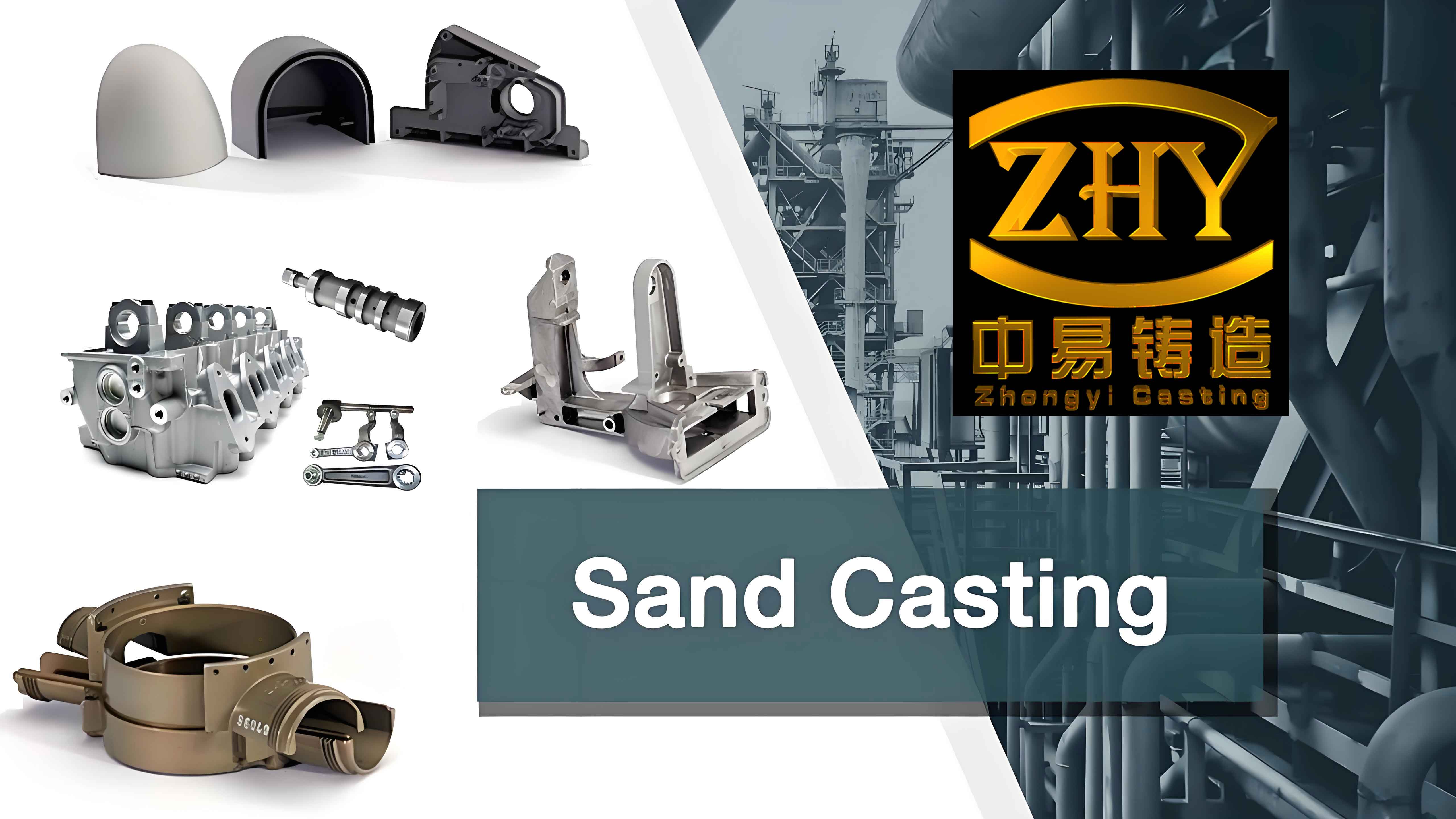
The component in question was a long, cylindrical magnesium alloy (ZM6) casting with a complex external geometry. Initial production attempts consistently yielded parts afflicted by internal metallurgical defects—slag inclusions, gas porosity, and shrinkage cavities—leading to high scrap rates after machining. This was unacceptable for an aerospace part where reliability is paramount. Our mission was to diagnose the root causes and engineer a flawless sand casting process, showcasing the problem-solving capabilities of dedicated sand casting services.
1. Initial Process Analysis and Defect Genesis
The original gating system was conceptually sound for magnesium alloys, employing a bottom-gating approach with a serpentine sprue to reduce turbulence. However, practical outcomes revealed critical shortcomings. A detailed defect analysis was conducted, correlating each flaw with specific process phenomena.
1.1 Slag Inclusions and Gas Porosity: The Filling Phase Dilemma
Despite the serpentine design, the long flow path and high oxidation tendency of molten magnesium led to excessive oxide film formation. The system’s slag-trapping capacity was insufficient. Furthermore, the rapid fill velocity, inherent to the unmodified bottom-gating, promoted turbulent flow and air entrainment within the mold cavity. The trapped air and oxides manifested as widespread slag clusters and gas pores upon solidification. This highlighted a key area for improvement in our sand casting services: achieving truly quiescent filling for reactive alloys.
1.2 Shrinkage Cavities: The Solidification Phase Challenge
Shrinkage occurred at isolated thick sections, notably on internal surfaces of mid-span bosses. The feeding mechanism was inadequate. While top risers were present, their thermal efficacy was poor due to size and lack of insulation. The use of annular aluminum chills provided insufficient cooling power to create a directed solidification gradient towards the risers. The result was isolated hot spots that solidified last and formed shrinkage cavities, as the liquid metal supply was prematurely cut off. This is a classic feeding problem that expert sand casting services must solve through thermal management.
The relationship between the volume deficit (shrinkage) and the need for feed metal can be conceptualized by considering the solidification contraction. The total volumetric shrinkage, $V_{shrink}$, that must be compensated by the riser is a function of the casting volume $V_c$ and the alloy’s shrinkage characteristic $\beta$ (from liquid to solid):
$$ V_{shrink} = \beta \cdot V_c $$
For the riser to be effective, its available feed volume $V_{feed}$ must satisfy:
$$ V_{feed} \cdot \varepsilon \ge V_{shrink} $$
where $\varepsilon$ is the feeding efficiency factor, heavily influenced by riser geometry, placement, and use of exothermic/insulating materials.
2. The Integrated Solution: A Multi-Pronged Process Overhaul
Our intervention targeted both the filling and solidification stages systematically. The table below summarizes the root causes and the corresponding engineered solutions implemented in our revised sand casting services protocol.
| Defect Type | Primary Root Cause | Implemented Solution | Physical Principle |
|---|---|---|---|
| Slag Inclusions | Insufficient oxide filtration during metal transfer. | Addition of multiple ceramic foam filters in the serpentine sprue runners. | Mechanical interception of oxide films and non-metallic inclusions. |
| Gas Porosity | Turbulent filling causing air entrainment. | Implementation of a tilted pouring process (45°-50°). | Promotes laminar, progressive cavity fill by reducing metal head pressure and velocity. |
| Shrinkage Cavities | Poor thermal gradient & ineffective chilling. | Replacement of Al chills with high-conductivity iron chills; addition of local chills at hot spots. | Increases local cooling rate, shifting the thermal center towards the riser. Chill efficiency is governed by the heat transfer coefficient and thermal diffusivity. |
| Inefficient riser feeding. | Significant increase in riser dimensions; application of insulating ceramic fiber wraps. | Increases feed volume $V_{feed}$ and improves feeding efficiency $\varepsilon$ by delaying riser solidification. | |
| Sand core acting as an insulator. | Replacement of the sand core with a ZM6 alloy chill core. | Extracts heat from the internal surface, promoting directional solidification. |
2.1 The Tilt-Pour Technique: A Paradigm in Filling Control
The tilted pouring method was a cornerstone improvement. By orienting the mold at an angle, the liquid metal enters the cavity along a rising, sloping floor rather than impacting a flat bottom. This dramatically reduces splash and turbulence. The fill progression can be modeled as a function of the tilt angle $\theta$ and the fill rate. The effective head pressure $h_{eff}$ driving the flow is reduced, thereby lowering the inlet velocity $v$ according to the modified Bernoulli principle:
$$ v \propto \sqrt{2g \cdot h_{eff} \cdot \sin\theta} $$
where $g$ is gravity. This controlled velocity is critical for defect-free filling in premium sand casting services.
2.2 Advanced Thermal Management: The Science of Directed Solidification
The strategic use of chills is a calculable art. The goal is to create a predictable temperature gradient. The effect of a chill can be approximated by considering it as a heat sink. The rate of heat extraction $Q$ is crucial:
$$ Q = h \cdot A \cdot (T_{melt} – T_{chill}) $$
where $h$ is the interface heat transfer coefficient, $A$ is the contact area, $T_{melt}$ is the metal temperature, and $T_{chill}$ is the initial chill temperature. Iron chills, with their higher thermal conductivity and capacity, yield a significantly higher effective $h$ compared to aluminum, creating a steeper thermal gradient. This, combined with the enlarged, insulated risers, enforced a solidification sequence where the riser remained liquid longest, effectively feeding the shrinkage in the casting body. This level of thermal design separates basic foundry work from engineered sand casting services.
3. Validation and Refinement: The Iterative Path to Success
Implementing the first set of changes yielded dramatic improvements. X-ray inspection confirmed the elimination of slag and gas defects. However, a minor shrinkage imperfection persisted, albeit smaller. This highlighted an unanticipated interaction: the tilt-pour process, while excellent for filling, slightly compromised the gravitational feeding efficiency of the riser during the final stages of solidification.
The solution was a refined two-stage pouring sequence: 1) Initiate filling with the mold tilted to ensure quiescent filling. 2) When the metal level in the riser reached approximately one-third of its height, the mold was smoothly rotated to the vertical position. This final rotation ensured full gravitational head pressure was available for the critical end-of-solidification feeding phase. This nuanced procedural control is emblematic of the tailored approach in high-performance sand casting services.
4. Conclusion and Broader Implications
The final process, incorporating the integrated gating/filtering system, optimized chill design, insulated risers, and the timed tilt-pour sequence, produced castings with impeccable internal metallurgical quality. All subsequent components passed rigorous X-ray inspection and machining, validating the process robustness.
This case study transcends a single component fix. It articulates fundamental principles for complex sand casting services:
- Decoupling Filling from Feeding: The process must address the often-conflicting requirements of quiescent filling (low velocity) and effective feeding (high pressure head). Sequential or spatially clever gating solutions are key.
- Thermal Management is Quantifiable: The use of chills and risers is not guesswork. It is the strategic manipulation of heat extraction rates and solidification gradients, concepts that can be modeled and optimized.
- Holistic System View: Every element—filter, sprue geometry, chill material, riser insulation, and pouring dynamics—interacts. Optimization in expert sand casting services requires considering the system from the pouring cup to the final solidified point in the riser.
The successful resolution of this challenge underscores that modern sand casting services are a blend of empirical craftsmanship and applied engineering science. For critical aerospace components, this synergy is not just beneficial; it is essential for achieving the requisite levels of quality, reliability, and performance. The knowledge gained provides a reproducible framework for tackling similar challenges in long, thin-walled, and structurally intricate castings across various alloys and industries.