
In my years of experience within the foundry industry, I have consistently observed the growing demand for high-integrity pure copper components. The exceptional electrical and thermal conductivity of pure copper (often referred to as red copper or electrolytic copper) makes it indispensable for critical applications in machinery, metallurgy, power generation, and particularly in the demanding sectors of defense and aerospace. Components such as electrode holders, conductive busbars, furnace cooling elements, and collector rings rely on these properties, frequently necessitating the use of cast pure copper parts. However, achieving a flawless casting with this material presents a significant technical hurdle, primarily due to its notoriously poor casting characteristics.
The fundamental challenge lies in pure copper’s substantial volumetric and linear shrinkage. With a volumetric shrinkage of approximately 4.1% and a linear shrinkage around 1.42%, the solidifying metal is prone to pulling away from the mold, creating internal stresses and, crucially for this discussion, exacerbating surface defects. This inherent behavior makes pure copper castings highly susceptible to surface imperfections like cold laps (flow marks), surface pits (concavities or protrusions), metal penetration (burn-on/roughness), and slag inclusions (scabs). These defects severely compromise not only the aesthetic appeal but, more importantly, the functional performance and reliability of the component. Therefore, the development of robust sand casting services protocols to minimize surface roughness in pure copper is not merely an academic exercise; it is a critical industrial imperative.
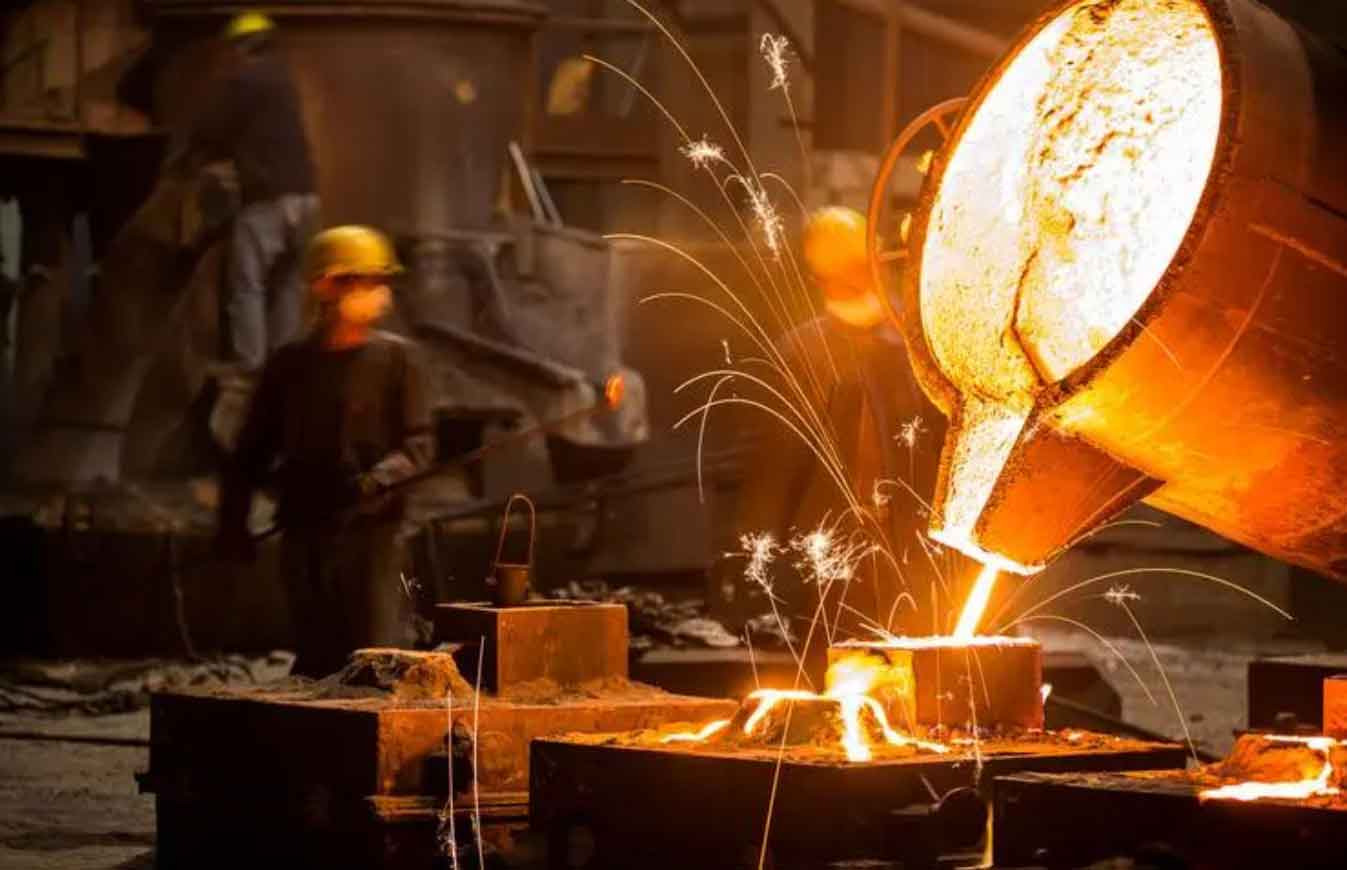
This article synthesizes practical knowledge and metallurgical principles to provide a comprehensive guide on preventing surface defects in pure copper sand castings. We will delve into the root causes of these flaws and outline a controlled, systematic approach encompassing mold material science, metal treatment, and process engineering.
Root Cause Analysis of Surface Defects in Pure Copper Castings
Understanding the origin of each defect is the first step toward its elimination. The following analysis is based on direct observation and process tracing.
1. Cold Laps (Flow Marks)
This defect manifests as wrinkles or seams on the casting surface, often in thin sections or sharp corners. The primary cause is the premature freezing of the metal stream before the mold cavity is completely filled. Contributing factors include:
– Insufficient Fluidity/Pouring Temperature: Pure copper has lower fluidity compared to many copper alloys. If the pouring temperature is too low (typically below ~1100°C), the metal loses its thermal head too quickly, leading to coalescence issues between advancing fronts.
– Poor Gating Design: An inadequate gating system, with undersized or too few ingates, fails to deliver metal rapidly enough to overcome the heat loss to the mold.
– Erratic Pouring Practice: An unsteady pour, with fluctuating flow rate or metal stream break-up, disrupts smooth cavity filling.
– Mold Condition: Insufficiently or unevenly dried molds can generate local chilling and gas evolution, further hindering metal flow.
– Metal Oxidation: A thick, viscous oxide film on the molten metal surface can be carried into the mold, creating barriers between merging streams.
2. Surface Pits (Concavities) and Protrusions
These are localized depressions or raised areas on the cast surface.
– Gas Entrapment: This is the foremost cause for pits (blowholes). Hydrogen and oxygen dissolution in molten copper is significant. Inadequate degassing or improper melt covering during melting leads to gas release during solidification, trapping bubbles at the metal-mold interface. The pressure of a bubble forming against the semi-solid skin can create a smooth, rounded pit.
– Mold Gas: Incomplete drying of the sand mold releases large volumes of steam upon contact with the hot metal. If this gas cannot escape quickly through permeable vents, it presses against the solidifying surface, forming depressions.
– Low/Non-Uniform Mold Hardness: If the sand mold is not compacted sufficiently or uniformly, the hydrostatic pressure of the liquid metal can cause local mold wall movement (swelling), resulting in a corresponding protrusion on the casting. The relationship between mold deformation and casting dimension can be conceptualized. If the local mold wall moves outward by a distance $\delta$, the casting thickness increases by approximately $2\delta$ at that point.
– Turbulent Gating: A poorly designed system that entrains air during pouring will introduce gas directly into the cavity.
3>Metal Penetration and Surface Roughness (Burn-on)
This defect involves the mechanical and/or chemical bonding of sand grains to the casting surface, making it rough and difficult to clean.
– Sand Properties: The use of sand with low refractoriness, coarse grain size, or high impurities lowers its sintering point. The molten copper or its oxide (Cu2O) can then penetrate deep into the inter-sand voids and fuse with them. The penetration depth $P$ can be related to pressure and pore size by a simplified capillary law: $P \propto \frac{\gamma_{lv} \cos\theta}{r}$, where $\gamma_{lv}$ is the liquid-vapor surface tension, $\theta$ is the contact angle, and $r$ is the average pore radius. Larger $r$ (coarser sand) favors deeper penetration.
– Mold Hardness and Dryness: A soft, low-hardness mold offers less resistance to penetration. A damp mold creates a moisture condensation zone just behind the hot face, causing sand layers to spall off and become incorporated into the metal surface.
– Excessive Thermal Load: Pouring temperature that is too high delivers excessive heat to the sand, promoting sintering and chemical reaction at the interface. High metal static pressure (tall casting) or dynamic pressure (high pour height) forces metal into the pores.
4>Slag Inclusions and Scabs (Rolling Skin)
These appear as non-metallic, crusty patches or folds on the casting surface.
– Poor Melt Quality: Inadequate slag removal, excessive oxidation during melting, or the use of contaminated charge materials/tools introduces oxides and other non-metallic inclusions into the ladle. If not properly skimmed, these are poured into the mold and float to the surface or get trapped.
– Erosion of Mold Surface: Improperly placed ingates with high-velocity metal streams can erode the mold wall, especially in areas of low compaction or where sand layers have delaminated. The eroded sand mixes with the metal, forming a slag-like aggregate.
– Sand Expansion Defects: Certain sands, under intense heat, can expand and buckle, causing cracks. Metal enters these cracks, forming a “sand expansion scab” that is partially attached to the casting.
– Unclean Mold Cavity: Loose sand, dirt, or debris left in the mold after closing will naturally become embedded in the casting surface.
A Systematic Prevention Strategy: Controlling the Process
Eliminating these defects requires a holistic approach. Every stage, from sand preparation to pouring, must be meticulously controlled. This is where the expertise of professional sand casting services becomes paramount, as they integrate these controls into a repeatable process.
1. Foundry Sand: The First Line of Defense
The quality of the molding sand is foundational. For pure copper, which exerts a severe thermal load, the choice is critical.
- Base Sand: Use high-purity silica sand or a specialty sand with high refractoriness (softening point >1300°C). The grains should be sub-angular to rounded for better packing.
- Binder System: A high-quality bentonite clay is essential for green and dry strength. The clay must be activated properly.
- Sand Segregation (Facing vs. Backing Sand): This is a highly effective technique.
- Facing Sand: A specially prepared, fine-grained mix applied in a 10-20 mm layer against the pattern. It directly contacts the metal and is responsible for surface finish.
- Backing Sand: A coarser, more permeable, and often recycled sand used to fill the rest of the flask. It provides support and venting.
A typical sand formulation for dry-sand molds is suggested below:
| Sand Layer | New Sand (70-140 mesh) | Old Sand | Bentonite | Water | Target Properties |
|---|---|---|---|---|---|
| Facing Sand | 98-99% | 0% | 1-2% | 5-6% | High green strength, fine finish |
| Backing Sand | 20-30% | 70-80% | 5-7% | 5.5-6.5% | Good permeability, collapsibility |
Mold Drying: For dry-sand molds, a complete and even bake is non-negotiable. The mold must be dried to a core moisture content below 0.5% to eliminate all sources of mold gas.
2. Mold Compaction: Achieving Uniform Hardness
Mold hardness, often measured in Brinell Hardness Number (BHN) or by a specialized mold hardness tester, is a direct indicator of compaction. Inconsistent hardness leads to variations in heat transfer, metal penetration, and wall stability.
- Facing Sand Layer: Must be rammed to a high, uniform hardness. For dry-sand work, a surface hardness >90 is recommended. This minimizes metal penetration and erosion.
- Backing Sand: Should be compacted to a lower, yet still uniform, hardness (typically in the range corresponding to 60-80 on common scales). This ensures good gas permeability and allows for some natural mold yielding during solidification shrinkage, reducing stress on the casting.
- Compaction should be layered and systematic to avoid laminations, which become weak planes prone to erosion.
3. The Critical Role of Mold Coatings
A well-applied refractory coating is arguably the single most effective measure for improving surface finish in pure copper sand casting services. It creates a passive, high-refractoriness barrier between the aggressive molten copper and the silica sand.
- Function: The coating prevents metal/sand interaction, reduces surface tension-driven penetration, and facilitates easy shakeout.
- Composition: A graphite- (plumbago) based wash is highly effective for copper alloys. Graphite is non-wetting to copper and has excellent thermal stability.
- Application: The coating must be applied evenly to the thoroughly dried mold. A common method is spraying or brushing, followed by a flash-dry to set it. The final dried coating thickness should be 0.5 to 1.0 mm.
A robust coating recipe is as follows:
| Ingredient | Function | Percentage (by weight) |
|---|---|---|
| Graphite Powder (Fine Flake) | Refractory base, non-wetting agent | 93% – 95% |
| Fireclay (Ball Clay/Kaolin) | Binder, provides adherence to mold | 5% – 7% |
| Water (Hot) | Carrier medium | 180% – 200% (of dry solids) |
The slurry should have a density of 1.30 – 1.35 g/cm³ and exhibit excellent suspension properties (>90% stability).
4. Molten Metal Quality: The Heart of the Process
No amount of mold preparation can compensate for poor metal quality. The melt practice for pure copper is delicate and must be methodical.
Key Process Steps:
- Charge Preparation: Use high-purity cathode copper (Cu-1, Cu-2). All charge materials, tools, and crucibles must be clean, dry, and preheated to eliminate moisture.
- Melting under Cover: Melt under a protective layer of charcoal or a suitable flux to minimize oxidation and hydrogen pickup. The equilibrium for hydrogen solubility is given by: $$[H] \propto \sqrt{P_{H_2}}$$ where $[H]$ is the dissolved hydrogen concentration and $P_{H_2}$ is the partial pressure of hydrogen in the furnace atmosphere. A reducing atmosphere (from charcoal) minimizes $P_{H_2}$.
- Deoxidation: Copper readily oxidizes to Cu2O, which reduces conductivity and causes gas porosity. Phosphorus (as Cu-P master alloy) is a common deoxidizer, but for highest conductivity, lithium or boron can be used. The reaction is: $$2Cu_2O + P_4 \rightarrow 4Cu + P_4O_{10}(g)$$
- Degassing: After deoxidation, nitrogen or argon purging is highly effective for removing dissolved hydrogen.
- Temperature Control: Strict control is vital. Overheating increases gas solubility and sand attack. Undertemperature causes poor fluidity.
- Melt/Superheat Temperature: 1200 – 1220 °C.
- Pouring Temperature: 1100 – 1150 °C (adjusted for section thickness).
- Process Control Test: This is a mandatory step. Before pouring castings, a test sample is poured into a small, open dry-sand mold. A sound sample will solidify with a slightly concave surface and no bubbling or puffing. A convex or bubbly surface indicates residual gas, requiring re-treatment. This simple test is a powerful quality gate.
5>Gating System Design and Pouring Technique
The goal is to fill the mold quickly, smoothly, and with minimal turbulence.
Design Philosophy:
– For flat plate-like castings (e.g., busbars, conductive plates), a “horizontal molding, vertical pouring” technique is advantageous. The mold is made horizontally for ease of molding but turned upright for pouring.
– Use a bottom-gated, step-gated system for tall castings. This provides sequential filling from the bottom up, minimizing splashing and oxide entrapment. The cross-sectional area ratios are critical. For a vertical pour system without a runner (direct sprue to step gates), a choke-at-the-sprue-base principle works well:
$$ \sum A_{sprue\,base} : \sum A_{ingates} = 1.2 : 1.0 $$
For a conventional horizontal pour with full gating:
$$ \sum A_{sprue} : \sum A_{runner} : \sum A_{ingates} = 1.2 : 1.5 : 1.0 $$
Pouring Practice:
1. Start with a fast pour to quickly fill the sprue and establish the metal “heel” in the mold base.
2. Transition to a steady, controlled pour, maintaining the sprue full to create a consistent metallostatic pressure head.
3. Avoid interrupting the stream. The pouring basin should be designed to prevent vortexing and slag entry.
4. The pouring ladle should be as close to the pouring basin as practical to reduce stream disruption and air entrainment.
Integrated Process Summary for High-Quality Sand Casting Services
To consolidate, achieving excellent surface quality in pure copper sand castings is a symphony of interdependent controls. The table below summarizes the key parameters and their targets:
| Process Area | Key Control Parameters | Target / Best Practice |
|---|---|---|
| Molding Sand | Base Sand AFS Fineness, Clay Content, Moisture | Facing: Fine (100-200 mesh), 1-2% Bentonite. Backing: Coarser (70-140 mesh), 5-7% Bentonite. Dry molds completely. |
| Mold Compaction | Uniform Hardness (BHN or equivalent) | Facing Layer >90, Backing Sand 60-80. Avoid laminations. |
| Mold Coating | Composition, Density, Application Thickness | Graphite-based wash, Density 1.30-1.35 g/cm³, Thickness 0.5-1.0 mm after drying. |
| Melting & Metal Treatment | Atmosphere, Deoxidation, Degassing, Temperature | Reducing cover (charcoal). Effective deoxidation (P, Li, B). Gas purge (N2/Ar). Pour Temp: 1100-1150°C. |
| Gating & Pouring | System Design, Area Ratios, Pouring Technique | Bottom-filling, stepped gates preferred. Ratio (Sprue:Ingate) ~1.2:1. Steady, non-turbulent pour. |
| Quality Assurance | Process Control Test (PCT) | Mandatory pour of test sample to check for gas evolution before production pour. |
Conclusion
The pursuit of low surface roughness and defect-free pure copper sand castings is a challenging yet entirely achievable goal. It demands a departure from routine foundry practice and an embrace of a disciplined, integrated methodology. The poor casting characteristics of pure copper—its high shrinkage, oxidation tendency, and thermal aggression—are not insurmountable barriers but rather parameters that define a specialized process window.
Success hinges on recognizing that surface quality is not determined at a single point but is the product of the entire chain: selecting and preparing sand with intention, compacting it with precision, shielding it with an engineered refractory coating, mastering the metallurgy of the melt to produce clean, sound metal, and finally, delivering that metal into the mold with a carefully designed and executed gating system. Each element reinforces the others. A perfect mold is wasted on dirty metal; perfect metal is spoiled by a turbulent pour.
Therefore, the consistent production of high-surface-quality pure copper castings is the definitive mark of advanced, competent sand casting services. It represents a synthesis of material science, empirical skill, and rigorous process control. By implementing the systematic controls outlined here—from the sand heap to the finished casting—foundries can reliably transform the difficult nature of pure copper into a competitive advantage, delivering components that meet the stringent aesthetic and performance standards of the most demanding modern industries.