
In recent years, the rapid advancement of the manufacturing sector has driven a significant increase in demand for machine tools. However, a considerable portion of high-precision machine tools, which are critical for modern manufacturing, are still imported. A primary reason for this reliance on imports is the quality gap in domestically produced machine tool castings. These castings often fall short not only in surface finish and appearance but, more critically, in dimensional accuracy, stability, and overall performance consistency. The path to bridging this gap lies in fundamentally re-evaluating and refining the metallurgical and processing approaches for gray iron, the predominant material for machine tool casting bodies.
The conventional pursuit of high strength in gray iron for machine tool casting often led to the use of low carbon equivalent (CE) compositions. This approach, while achieving target tensile strengths, introduces several detrimental effects. It impairs fluidity, increases shrinkage and casting stress, elevates the risk of chilling and carbides, and worsens machinability. The modern paradigm, essential for high-precision machine tool castings, shifts towards achieving high strength concurrently with a high carbon equivalent. This combination yields superior overall performance, including excellent castability, reduced stress, better damping capacity, improved machinability, and minimal section sensitivity, which is vital for the dimensional stability of precision machine tool castings.
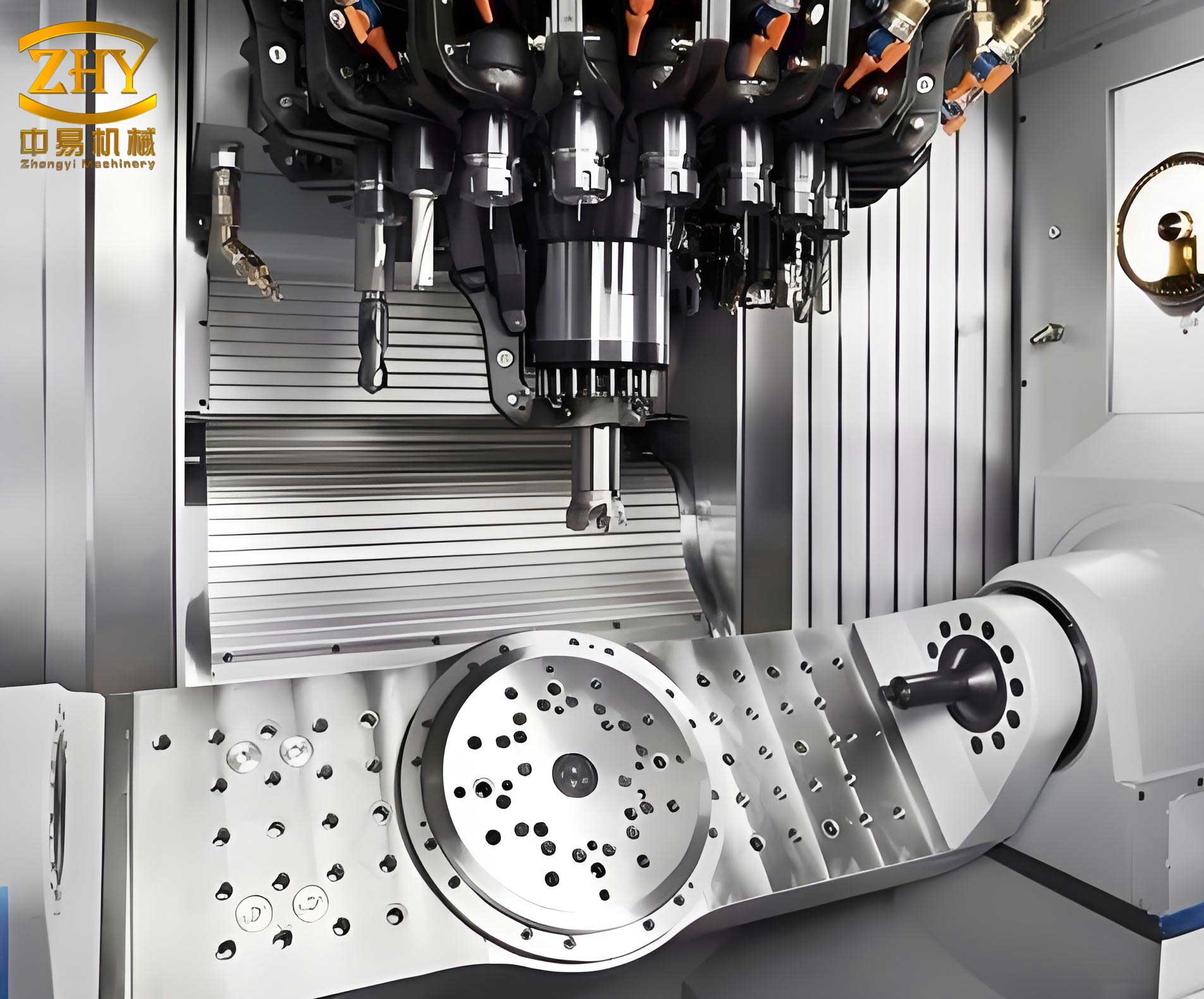
The performance of a machine tool casting is not determined by a single factor but by a complex interplay of chemical composition, melting practice, and post-solidification treatment. Understanding and controlling these factors is the cornerstone of producing reliable, high-quality castings.
1. Critical Factors Influencing the Performance of Machine Tool Castings
The properties of gray iron are governed by its microstructure—the matrix and the graphite morphology. For machine tool castings, the target microstructure typically consists of a fully pearlitic matrix (over 95% pearlite) with uniformly distributed, fine, Type A graphite flakes. The following factors are paramount in achieving this structure.
1.1 The Central Role of Carbon Equivalent (CE)
The carbon equivalent is the single most influential parameter. It is calculated as:
$$CE = \%C + \frac{\%Si + \%P}{3}$$
For high-precision machine tool castings, a high CE (typically in the range of 3.7% to 4.0%) is targeted. A low CE, while potentially increasing strength, has severe drawbacks:
- Poor Fluidity: Hinders the filling of thin sections and complex geometries in a machine tool casting.
- Increased Shrinkage and Stress: Leads to higher risk of distortion, hot tears, and residual stresses that compromise dimensional stability.
- High Section Sensitivity: Causes significant variation in hardness and microstructure between thin and thick sections of the same machine tool casting.
- Inferior Machinability: Results in higher hardness, reducing tool life and cutting speeds.
Therefore, the goal is to maximize CE while maintaining the required strength level (e.g., 300 MPa or 350 MPa).
1.2 Influence of Alloying Elements
Alloying elements are crucial for strengthening the pearlitic matrix and refining the microstructure. Their effects are summarized in the table below:
| Element | Primary Function | Typical Range for High-Strength Machine Tool Castings | Notes & Precautions |
|---|---|---|---|
| Manganese (Mn) | Stabilizes pearlite, combines with sulfur. | 0.8% – 1.2% | Content depends on S level to form MnS. |
| Chromium (Cr) | Strong pearlite promoter, refines graphite and pearlite. | 0.2% – 0.45% | High amounts promote carbides; use with effective inoculation. |
| Copper (Cu) | Promotes pearlite, refines graphite, improves corrosion resistance. | 0.4% – 0.7% | Synergistic with other alloys; strength peaks near 0.5%. |
| Tin (Sn) | Very potent pearlite promoter for heavy sections. | 0.02% – 0.04% | Low additions are effective; excess increases brittleness. |
| Molybdenum (Mo) | Refines pearlite, increases strength and thermal stability. | 0.3% – 0.6% | Used for high-demand applications. |
1.3 Impact of Charge Materials and Trace Elements
The choice of raw materials (pig iron, steel scrap, foundry returns) directly affects the final chemistry and the presence of trace elements. The shift from cupola to induction melting has heightened sensitivity to trace elements, as the latter lacks the strong oxidative refining of a cupola.
| Element | Source | Influence on Machine Tool Castings | Control Strategy |
|---|---|---|---|
| Titanium (Ti) | Primarily from pig iron. | Forms hard TiN/C inclusions, impairing machinability. Can promote undercooled graphite. | Select low-Ti pig iron (<0.08% Ti). Limit pig iron usage to 10-15% of charge. |
| Lead (Pb) | Contaminant in steel scrap. | Severely promotes undercooled/aberrant graphite (e.g., Widmanstätten), drastically reducing strength and increasing leakage risk. | Control scrap source. Aim for <15 ppm in the final iron. |
| Nitrogen (N) | From air, certain steel scraps, and some carburizers. | Optimal levels (70-120 ppm) promote nucleation and strengthen pearlite. Excess (>180 ppm) causes porosity/pinholes and reduces strength. | Use high-temperature graphitized carburizers (low N). Control charge materials. Monitor levels in induction melting. |
2. Key Measures for Enhancing Gray Iron Performance in Machine Tool Castings
To achieve the desired high-CE, high-strength iron for precision machine tool castings, a systematic approach encompassing melting, alloying, and treatment is required.
2.1 Controlling Graphite Morphology: The Foundation
The objective is to generate a large population of fine, Type A graphite flakes. This is achieved through:
- High Superheating Temperature: To dissolve coarse inherited graphite from pig iron and create favorable conditions for homogeneous nucleation. For heavy-section machine tool castings, a holding temperature of 1500-1530°C is recommended.
- Promoting Nucleation via Charge Design (Synthetic Iron Practice): Using a high percentage of steel scrap (50-60%) with minimal pig iron (10-15%) and adding high-quality, graphitized carburizer. This practice provides numerous, fine graphite nuclei.
- Optimizing Sulfur Content: Sulfur is a crucial nucleating agent in induction-melted iron. A too-low S content (<0.055%) leads to poor inoculation response and coarse graphite. The optimal range is 0.07% to 0.10%. This can be achieved by adding a controlled amount of FeS or a high-sulfur additive.
2.2 Optimizing Carbon and Silicon for High CE
Aiming for a CE of approximately 3.85%, the typical composition ranges for key grades of machine tool castings are:
| Target Grade | Carbon (C%) | Silicon (Si%) | Carbon Equivalent (CE%) | Key Alloy Additions |
|---|---|---|---|---|
| HT300 / 300 MPa | 3.15 – 3.25 | 1.75 – 1.90 | 3.75 – 3.95 | Cr, Cu |
| HT350 / 350 MPa | 3.10 – 3.20 | 1.70 – 1.85 | 3.70 – 3.90 | Cr, Cu, Mo, Sn |
The relationship between tensile strength ($\sigma_t$), carbon equivalent (CE), and the combined effect of alloying elements can be conceptually represented as needing to balance the equation for high precision machine tool casting requirements:
$$\sigma_t(CE, \sum Alloy) \geq \text{Target Strength (e.g., 300 MPa)}$$
where a higher CE is desired, and the alloy sum term compensates to maintain strength.
2.3 Effective Inoculation Practice
Inoculation is the intentional late addition of materials to trigger graphite nucleation. For high-strength machine tool castings, it prevents chill in thin sections, refines graphite, and increases the pearlite content. The choice and method are critical:
- Inoculant Selection:
- For iron with adequate S (>0.07%): A blend of 60% SiCaBa and 40% FeSi75 is effective.
- For low-S iron (<0.06%): Rare-earth containing inoculants like ReCaBa are more powerful.
- Addition Rate: Typically 0.3% to 0.5% of the iron weight. Over-inoculation must be avoided as it can lead to excessive ferrite, especially in heavy sections.
- Application Method: To combat fade, late addition methods are essential:
Method Description Advantage for Machine Tool Castings Stream Inoculation Adding granular inoculant into the metal stream during pouring. Excellent efficiency, minimal fade. Pouring Cup / Mold Inoculation Placing inoculant in the pouring basin or sprue. Simple, effective for medium-sized castings. In-mold Inoculation Using pre-placed inoculant blocks in the gating system. Consistent, automated results.
2.4 The Critical Role of Stress Relieving (Thermal Aging)
For a precision machine tool casting, a proper stress relief cycle is non-negotiable to ensure long-term dimensional stability. The process must be carefully controlled:
- Heating Rate: Slow and uniform, especially for complex and heavy castings. A rate of 30-50°C per hour is recommended to prevent thermal stresses.
- Soaking Temperature and Time:
- Temperature: 550-600°C for high-strength grades (HT300/350).
- Time: Calculated based on the thickest section, typically using a rule of 1 hour per 25 mm of thickness, plus an additional 1-2 hours for high-CE irons and complex geometries.
- Furnace Uniformity: Temperature variation inside the furnace must be minimized (±20°C) to ensure consistent treatment across all castings.
- Cooling Rate: Controlled cooling inside the furnace to below 200°C is essential. Rapid cooling reintroduces thermal stresses.
- Timing: Should be performed after rough machining to remove the bulk of the casting skin and the associated stresses.
3. Production Example: Implementation for a Heavy-Section Machine Tool Bed
To illustrate the practical application of these measures, consider the production of a large CNC machine tool bed casting, weighing approximately 2000 kg, with critical wall thicknesses of 80-100 mm. The material specification was HT300 (300 MPa), with a hardness requirement of 200-240 HB, Type A graphite, and a maximum hardness variation of 20 HB across the casting.
The implemented process was as follows:
- Charge Composition: 55% Steel Scrap, 35% Returns, 10% Low-Ti Pig Iron.
- Melting: 3-ton medium-frequency induction furnace. Superheating to 1500-1520°C.
- Metallurgical Control: Graphitized carburizer addition. Intentional sulfur addition to achieve a target of 0.08% S.
- Inoculation: 0.4% of a 60/40 SiCaBa/FeSi75 blend, added via stream inoculation during pouring.
- Pouring Temperature: 1380-1410°C.
The resulting chemical composition and properties of the machine tool casting are shown below:
| Element | C | Si | Mn | P | S | Cr | Cu | Sn |
|---|---|---|---|---|---|---|---|---|
| wt.% | 3.18 | 1.85 | 0.92 | 0.042 | 0.081 | 0.39 | 0.56 | 0.031 |
Mechanical Properties:
- Tensile Strength (φ30 mm test bar): 348 MPa
- Casting Hardness (Body): 228 HB
- Graphite Structure: Predominantly Type A, size 4-5.
The results confirm that the integrated approach of high-CE synthetic iron melting, trace element control, targeted alloying, and efficient inoculation successfully produced a high-strength, high-precision machine tool casting with excellent and uniform properties.
4. Conclusion
The production of high-quality, high-precision machine tool castings necessitates a departure from traditional low-CE strategies. The effective path is the systematic adoption of high carbon equivalent, high-strength gray iron. This is achieved through a holistic methodology: employing a synthetic iron base with controlled raw materials to manage detrimental trace elements; implementing high superheating temperatures and optimal sulfur levels to refine graphite morphology; utilizing precise alloying and powerful, late-stage inoculation to develop a strong, fully pearlitic matrix; and concluding with a meticulously controlled thermal aging process to guarantee dimensional stability. This comprehensive technical regime ensures that machine tool castings possess the necessary combination of strength, castability, machinability, damping capacity, and, most importantly, the dimensional precision required for the most demanding manufacturing applications.