
As a professional in the foundry industry, I have spent decades working with sand casting manufacturers to improve workplace environments through advanced ventilation and dust removal systems. The inherent challenge in foundries, especially for sand casting manufacturers, is the unavoidable presence of airborne particulates and haze during production processes. To elevate operational conditions and achieve world-class manufacturing standards, integrating sophisticated ventilation and dust control systems is not just beneficial—it is essential. A scientifically sound environmental design, including technical retrofits, can yield multiplicative benefits, making the process design and calculation of these systems critical for success. This article delves into the principles, calculations, and practical applications of ventilation and dust removal in modern foundries, with a focus on sand casting manufacturers, who often face unique challenges due to the extensive use of molding sands and binders.
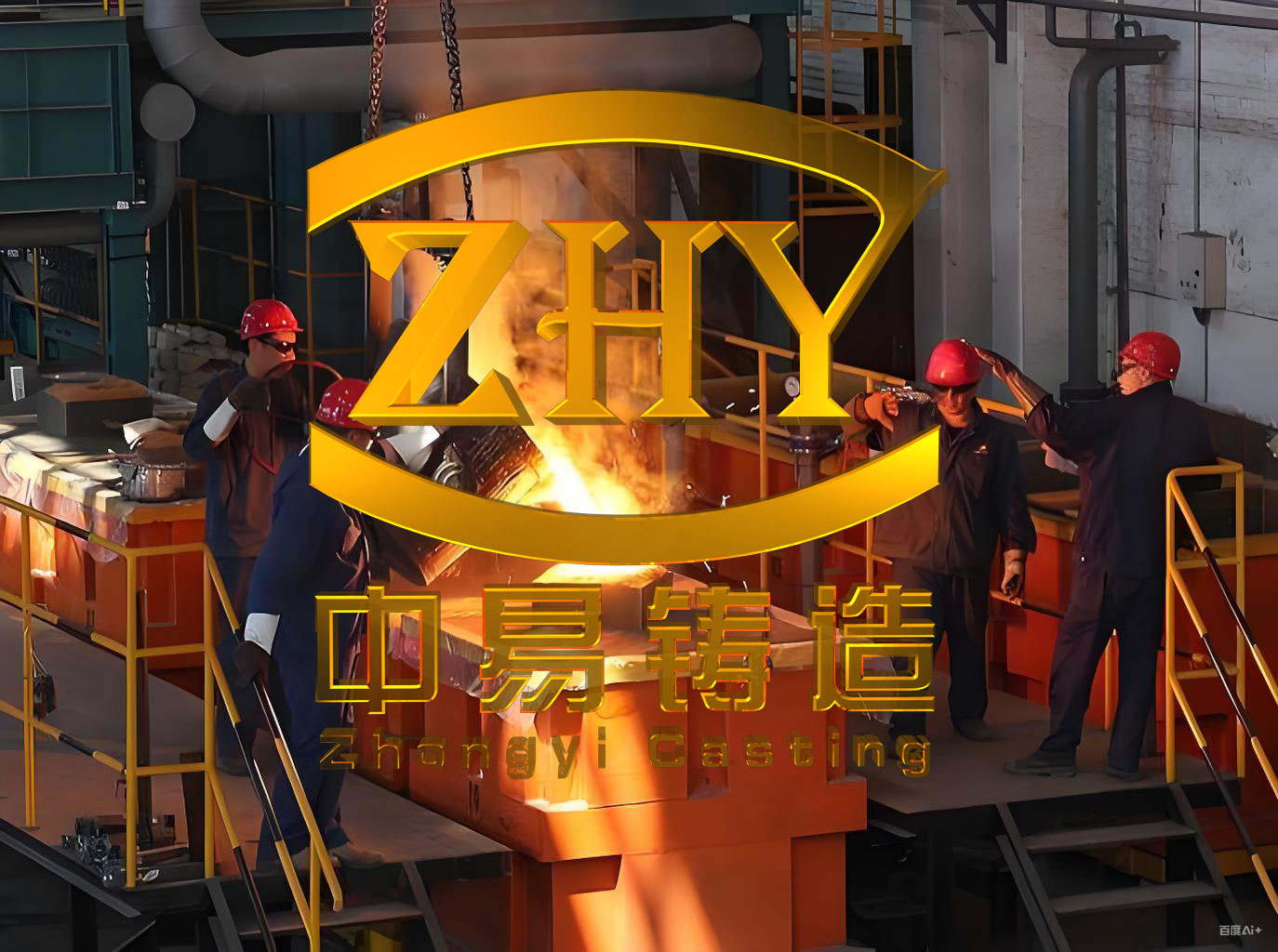
In foundry operations, particularly among sand casting manufacturers, environmental quality is often compromised by high dust concentrations in key areas such as sand preparation, shakeout, and melting departments. Additionally, processes like molding, core-making, cleaning, and pouring release varying levels of dust, heat flows, and harmful gases, contributing to significant pollution. Therefore, it is imperative to design and deploy effective ventilation, exhaust, and dust extraction systems to contain these pollutants. For sand casting manufacturers, this is a cornerstone of sustainable production, as dust control directly impacts worker health, equipment longevity, and regulatory compliance. The following discussion centers on the process design and calculation of these systems, drawing from hands-on experience in assisting sand casting manufacturers globally.
To begin, understanding dust formation is fundamental. Dust in foundries, especially for sand casting manufacturers, arises from both mechanical and physicochemical processes. The nature of this dust varies widely due to diverse materials like new sand, reclaimed sand, clay, graphite, coal dust, and binders such as resins or silicates. These materials generate inorganic and organic粉尘, each with distinct properties. For instance, inorganic粉尘 from sand handling pose silicosis risks due to free or combined SiO2, while organic粉尘 from binders like furan resins may release harmful amines. Sand casting manufacturers must prioritize this understanding, as dust characteristics influence control strategies. Below is a table summarizing key dust properties relevant to sand casting manufacturers:
| Dust Type | Source (Common in Sand Casting) | Key Properties | Health/Environmental Impact |
|---|---|---|---|
| Inorganic Dust | New sand, old sand, clay, graphite | High density, variable dispersion, abrasive | Silica exposure leading to lung diseases |
| Organic Dust | Resins, binders, curing agents | Lower density, often combustible | Toxic fumes, potential allergies |
| Metallic Dust | Melting scrap, iron oxides | Heavy, often magnetic | Heavy metal contamination |
Dust generation in foundries, including those operated by sand casting manufacturers, occurs through mechanical actions like crushing, screening, and conveying of materials, as well as physicochemical reactions during melting. For example, in sand casting, the handling of molding sand—a core activity for sand casting manufacturers—produces fine particulates during mixing, transport, and shakeout. Additionally, melting operations in cupolas or induction furnaces release fumes and smoke. Dust diffusion is a two-step process: primary dusting from inertial or tangential airflows, and secondary dispersion due to ambient air currents or equipment vibrations. This is particularly problematic for sand casting manufacturers, where open processes like shakeout can spread粉尘 widely. To mitigate this, control measures focus on reducing dusting intensity and managing airflow patterns. Sand casting manufacturers often employ wet suppression or negative-pressure enclosures, but these require careful design to avoid issues like sludge handling or energy loss.
Effective dust control starts at the source. For sand casting manufacturers, this means designing equipment hoods or enclosures that maintain negative pressure, preventing dusty air from escaping. The principle is straightforward: by extracting air from within a hood, the internal pressure drops below atmospheric, containing粉尘. In cases where full enclosure isn’t feasible, such as with vibrating shakeout machines, open hoods with air curtains are used. These systems, common among sand casting manufacturers, create a directional airflow that guides粉尘 toward extraction points. The basic equation for negative pressure control relates to the airflow rate needed to maintain containment. If Q is the required exhaust flow rate (in m³/s), and A is the open area of the hood (in m²), the face velocity v (in m/s) must be sufficient to overcome external disturbances. For sand casting manufacturers, a typical face velocity might range from 0.5 to 1.5 m/s depending on dustiness. This can be expressed as:
$$ Q = v \times A $$
Where v is determined empirically based on dust particle size and ambient conditions. Sand casting manufacturers must also consider wet dust suppression, which uses water sprays to agglomerate fines. However, this method has limits—it’s unsuitable for water-reactive materials and generates wastewater, a concern for environmentally conscious sand casting manufacturers. Therefore, a hybrid approach often works best, combining localized wetting with dry extraction.
Ventilation in foundries, including those run by sand casting manufacturers, should leverage natural ventilation where possible. This eco-friendly strategy uses temperature differences or wind to drive air exchange, reducing energy costs. For sand casting manufacturers, factory layout is key: orienting buildings to prevailing winds (e.g., 60–90° angles in summer) enhances cross-ventilation. Natural ventilation calculations often rely on the thermal buoyancy method, ignoring wind effects for simplicity. The required air change rate G (in kg/h) can be estimated from heat dissipation. Suppose a foundry section, typical for sand casting manufacturers, has total heat gain Q (in kcal/h) from molten metal or equipment. The formula is:
$$ G = \frac{m \cdot Q}{0.24 \Delta t} + (1 – m) \cdot G_{cp} $$
Here, m is the effectiveness coefficient for heat released in the working zone (often 0.3–0.7 for sand casting manufacturers), Δt is the temperature difference between indoor and outdoor air (typically 3–10°C), and Gcp is air extracted directly from the work zone. The thermal pressure ΔH (in mm H2O) driving natural flow is given by:
$$ \Delta H = h (\gamma_w – \gamma_p) $$
With h as the height between inlet and outlet centers (in m), γw as outdoor air density (kg/m³), and γp as outlet air density. For sand casting manufacturers, high ceilings aid this effect. The pressure loss ΔH through openings is:
$$ \Delta H = \zeta \cdot \frac{v^2 \gamma}{2g} $$
Where ζ is the local resistance coefficient, v is air velocity (m/s), γ is air density, and g is gravity (9.81 m/s²). A simplified estimate for exhaust through equal-area windows is:
$$ q = 420 \sqrt{H \cdot \Delta t_p} $$
With q in m³/h per m², H in m, and Δtp as average temperature difference. Sand casting manufacturers can use these to preliminarily size openings before opting for mechanical systems.
When natural ventilation falls short, mechanical systems become vital. For sand casting manufacturers, dust removal equipment selection is critical. Common dry systems include bag filters and cyclone separators. Bag filters, favored by many sand casting manufacturers for fine dust, operate via sieving, diffusion, inertia, and electrostatic effects. Their efficiency depends on filter media and cleaning mechanisms. Cyclones, used as pre-separators, rely on centrifugal force to remove coarse particles, protecting downstream filters. Below is a comparison table for sand casting manufacturers:
| Device Type | Working Principle | Efficiency Range | Best For Sand Casting | Limitations |
|---|---|---|---|---|
| Bag Filter | Fiber filtration with pulse-jet cleaning | >99% for particles >1µm | Fine silica dust from sand handling | Sensitive to moisture, high maintenance |
| Cyclone Separator | Centrifugal sedimentation | 80–90% for particles >10µm | Pre-cleaning of heavy sand dust | Poor on fines, erosion risk |
| Wet Scrubber | Water spray impaction | 90–95% for various sizes | High-temperature fumes from melting | Water treatment needed, corrosion |
For sand casting manufacturers dealing with hot, humid air from sand cooling or regeneration, combining a low-resistance cyclone (first stage) with a bag filter (second stage) is effective. The cyclone removes coarse sand and condenses moisture, preventing bag condensation—a common issue for sand casting manufacturers in humid climates. The pressure drop in cyclones, typically under 300 Pa, must be factored into system design.
The heart of the process lies in system design and calculation. For sand casting manufacturers, this involves mapping all dust sources, determining exhaust volumes, and laying out duct networks. Each hood or pickup point requires a specific airflow rate Qi (in m³/h), based on capture velocity and hood geometry. Summing these gives the total system demand Qtotal. To account for leaks and future loads, sand casting manufacturers apply safety factors. The system air volume for the dust collector Qcollector and fan Qfan are:
$$ Q_{collector} = \alpha_1 \times Q_{total} $$
$$ Q_{fan} = \alpha_1 \times \alpha_2 \times Q_{total} $$
With α1 as duct leakage factor (often 1.1) and α2 as collector leakage (1.1 for bag filters). Fan pressure Hfan (in Pa) covers duct and collector losses:
$$ H_{fan} = (H_{duct} + H_{collector}) \times \beta $$
Where β is a resistance safety factor (1.1–1.15). Duct losses comprise friction and local losses. For circular ducts, friction loss Hf (in Pa) over length L (m) and diameter D (m) is:
$$ H_f = \frac{\lambda L}{D} \cdot \frac{v^2 \gamma}{2g} $$
Here, λ is the friction coefficient (≈0.02 for steel ducts), v is air velocity (m/s), γ is air density (≈1.2 kg/m³ at 20°C), and g is 9.81 m/s². Local losses Hlocal from hoods, elbows, etc., are:
$$ H_{local} = \zeta \cdot \frac{v^2 \gamma}{2g} $$
With ζ values from handbooks (e.g., 0.3 for a smooth bend, 1.0 for a hood entry). Total duct loss ∑H is:
$$ \sum H = \frac{v^2 \gamma}{2g} \left( \sum \frac{\lambda L}{D} + \sum \zeta \right) $$
Sand casting manufacturers must balance branches by adjusting diameters to ensure even airflow. For instance, if a branch serving a sand mixer has higher loss, increasing its diameter reduces velocity and loss. Duct velocities are kept moderate (10–20 m/s) to minimize wear and noise, crucial for sand casting manufacturers with abrasive sand dust. Below is a sample calculation table for a typical sand casting foundry duct run:
| Duct Section | Length L (m) | Diameter D (m) | Flow Q (m³/h) | Velocity v (m/s) | Friction Loss (Pa) | Local ζ | Total Loss (Pa) |
|---|---|---|---|---|---|---|---|
| Sand Conveyor Hood | 5 | 0.3 | 2000 | 7.8 | 12 | 1.2 | 45 |
| Shakeout Duct | 10 | 0.4 | 5000 | 11.1 | 25 | 0.5 | 60 |
| Main Header | 20 | 0.6 | 10000 | 9.8 | 30 | 0.2 | 50 |
These calculations guide fan selection—a critical step for sand casting manufacturers to avoid under- or over-sizing, which wastes energy or compromises control. Modern sand casting manufacturers also integrate monitoring sensors, e.g., temperature probes in ducts to prevent bag filter condensation by maintaining air above dew point.
Beyond calculations, practical considerations abound. For sand casting manufacturers, material handling changes can reduce dust. For example, enclosing transfer points or using low-drop chutes minimizes secondary dispersal. Regular maintenance of filters and fans is essential; many sand casting manufacturers adopt automated pulse-jet cleaning with pressure sensors to optimize bag life. Energy recovery from hot exhaust air, common in melting areas, can preheat incoming air, saving costs for sand casting manufacturers. Additionally, compliance with standards like OSHA or EU directives requires continuous dust concentration checks. Sand casting manufacturers often install real-time monitors in work zones, with alarms triggering if limits exceed thresholds (e.g., 5 mg/m³ for respirable silica). The design process thus intertwines engineering with regulatory savvy.
In summary, the journey toward optimal ventilation and dust removal in foundries, especially for sand casting manufacturers, hinges on meticulous process design and calculation. From understanding dust physics to sizing ducts and fans, each step demands precision. Sand casting manufacturers who invest in these systems not only protect health and environment but also boost productivity by reducing downtime and cleanup. As technology advances, trends like smart sensors and AI-driven airflow optimization offer new frontiers. However, the core principles remain: contain dust at source, harness natural forces where possible, and engineer mechanical systems with robust calculations. For sand casting manufacturers worldwide, this isn’t just about compliance—it’s about crafting a sustainable future where clean air and efficient production go hand in hand.
To further aid sand casting manufacturers, let’s explore additional formulas and tables. For instance, the capture velocity vc (m/s) for a hood depends on dust release energy. For quiet operations like sand screening, vc might be 0.5 m/s; for vigorous processes like shakeout, 2.0 m/s or more. The hood airflow Qhood is then Qhood = vc × Aeff, with Aeff as effective open area. Sand casting manufacturers must also consider thermal drafts from hot castings, which add upward air velocity vth estimated as:
$$ v_{th} = 0.08 \sqrt{g H \Delta T} $$
With H as height of hot surface (m) and ΔT as temperature excess over ambient (°C). This can interfere with lateral capture, requiring adjusted hood designs. Another key aspect is dust explosivity—some organic binders used by sand casting manufacturers pose fire risks. The minimum explosive concentration (MEC) for such dusts, often around 50 g/m³, dictates maximum allowable concentrations in ducts. Safety factors include explosion vents or inerting systems.
For sand casting manufacturers, water usage in wet suppression needs calculation too. The water flow rate W (L/min) to suppress dust from a sand processing line can be approximated by:
$$ W = k \cdot M_d \cdot \rho_d $$
Where Md is dust generation rate (kg/h), ρd is dust density (kg/m³), and k is an empirical coefficient (0.1–0.5). This water must be treated or recycled, adding to plant overheads. Thus, many sand casting manufacturers prefer dry systems where feasible. Below is a decision matrix for sand casting manufacturers choosing between dry and wet methods:
| Factor | Dry System (Bag/Cyclone) | Wet System (Scrubber) |
|---|---|---|
| Initial Cost | Moderate to high | Low to moderate |
| Operating Cost | Energy for fans, filter replacement | Water and treatment costs |
| Efficiency on Fine Dust | Very high (>99%) | Moderate (90–95%) |
| Handling Hot/Humid Air | Risk of bag condensation | Excellent cooling effect |
| Waste Generated | Dry dust for disposal | Sludge requiring dewatering |
In duct design, sand casting manufacturers often use equal-pressure drop method for balancing. If two branches need flows Q1 and Q2 (m³/s), with target loss ΔP (Pa), diameters D1 and D2 can be solved iteratively from the Darcy-Weisbach equation expressed as:
$$ \Delta P = f \frac{L}{D} \frac{\rho v^2}{2} $$
With f as friction factor, ρ as air density. For rough steel ducts common in foundries, f ≈ 0.025. Rearranging for diameter:
$$ D = \left( \frac{8 f L Q^2}{\pi^2 \Delta P} \right)^{1/5} $$
This helps sand casting manufacturers size ducts efficiently. Additionally, fan laws relate performance changes: for a given fan, flow Q ∝ N (rpm), pressure H ∝ N², and power P ∝ N³. Sand casting manufacturers can use this to adjust existing systems.
Finally, integration with building HVAC is growing among sand casting manufacturers. By treating exhaust air with heat exchangers, waste heat from melting or cooling can preheat ventilation air in winter, reducing energy bills. The effectiveness ε of a heat recovery unit is:
$$ \epsilon = \frac{T_{out} – T_{in}}{T_{exhaust} – T_{in}} $$
Where T are temperatures in °C. With high ε (0.6–0.8), sand casting manufacturers can cut heating costs by 30% or more. Such synergies highlight how ventilation design extends beyond dust control to overall plant sustainability.
In closing, the process design and calculation of ventilation and dust removal systems are foundational for modern foundries. For sand casting manufacturers, this expertise ensures a competitive edge through improved safety, compliance, and efficiency. By applying the principles and formulas discussed—from natural ventilation calculations to duct loss summations—sand casting manufacturers can create environments where both people and machines thrive. As the industry evolves, continuous learning and adaptation will keep these systems at the forefront, just as sand casting manufacturers continue to innovate in metal casting itself.