
As a dedicated researcher in the foundry industry, I have focused on advancing green casting technologies, particularly for the production of high-quality steel castings. The global shift toward sustainable manufacturing necessitates innovations that reduce environmental impact while maintaining economic viability. In this pursuit, ester-cured sodium silicate sand has become a cornerstone for steel castings production due to its excellent collapsibility, recyclability, and dimensional accuracy. However, traditional organic esters derived from petroleum sources pose challenges such as high cost, volatile emissions, and limited performance across varying climatic conditions. Our team embarked on a comprehensive project to modify organic ester curing agents, aiming to develop a cost-effective, environmentally friendly solution tailored for year-round use in steel castings foundries. This article details our first-person journey from theoretical research to practical application, emphasizing the integration of modified organic esters into the manufacturing process for steel castings.
The foundation of our work lies in understanding the materials and hardening mechanisms of ester-cured sodium silicate sand. Typically, the sand mixture comprises quartz sand, reclaimed sand, sodium silicate, and organic ester. Key parameters include sand grain size (30/70 mesh with concentration ≥80%), clay content (≤1.0%), and for reclaimed sand, residual Na₂O ≤0.45%. Sodium silicate with a modulus of 2.00–2.35 and density of 1.47–1.52 g/cm³ is used, while organic esters have a density of 1.1–1.2 g/cm³ and free acid content ≤1.2%. The hardening process involves three stages, which can be modeled using chemical kinetics. First, hydrolysis of the organic ester in alkaline medium produces organic acids and alcohols, governing the usable time (t_use). This reaction follows:
$$ \text{RCOOR}’ + \text{H}_2\text{O} \xrightarrow{k_1} \text{RCOOH} + \text{R}’\text{OH} $$
where R and R’ represent alkyl groups, and k₁ is the rate constant dependent on temperature and pH. Second, the reaction between hydrolyzed products and sodium silicate increases the silicate modulus via dehydration, leading to gel formation. The overall curing reaction can be expressed as:
$$ \text{Na}_2\text{O} \cdot m\text{SiO}_2 \cdot n\text{H}_2\text{O} + \text{RCOOH} \rightarrow \text{Na}_2\text{O} \cdot (m+\Delta m)\text{SiO}_2 \cdot (n-\Delta n)\text{H}_2\text{O} + \text{byproducts} $$
Third, further dehydration strengthens the bond network, resulting in final compressive strength (σ_c). We derived an empirical formula to relate strength development to time (t) and ester concentration (C_ester):
$$ \sigma_c(t) = \sigma_{\infty} \left(1 – e^{-k_c t}\right) + \beta C_{\text{ester}} $$
where σ_∞ is the asymptotic strength, k_c is the curing rate constant, and β is a proportionality factor. This mechanistic insight guided our modification efforts to optimize usable time and strength for steel castings production.
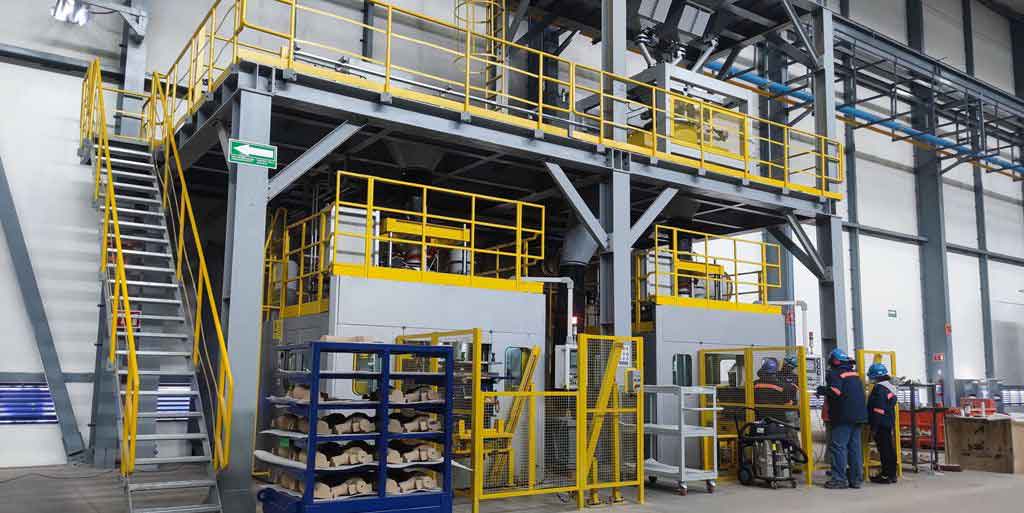
Our modification strategy began with selecting a green base material for the organic ester. We evaluated three candidates: ethylene glycol esters, propylene carbonate esters, and glycerol esters. Criteria included stability, toxicity, additive requirements, and cost. Glycerol emerged as the optimal choice due to its non-toxic nature, minimal odor, low cost (approximately 8,000–10,000 CNY/ton), and compatibility with sustainable casting goals. To enhance the hardenability and stability of glycerol-based esters, we incorporated a stabilizer at 20% by volume of the ester blend. This stabilizer, composed of non-ionic surfactants, improves dispersion and reduces viscosity variations with temperature. The modified ester formulation was designed to meet the rigorous demands of steel castings production, where consistent sand properties are critical for defect-free castings.
The research methodology followed a structured approach, as outlined in the implementation plan. We conducted laboratory experiments to screen base esters, followed by pilot-scale trials and full-scale production tests for steel castings. Key variables included sand type (new vs. reclaimed), sand temperature (5–30°C), sodium silicate modulus (2.0–2.3), and organic ester dosage (11–20% relative to sodium silicate weight). Our goal was to develop a family of modified organic esters, designated as the ZZ series, with nomenclature indicating application and composition. For instance, ZZ2031 denotes: ZZ for steel castings use, 20 for 20% stabilizer content, and 31 for a fast-to-slow ester ratio of 3:1. This systematic naming facilitated customization for seasonal variations in steel castings foundries.
Initial sample formation studies involved comparative testing with conventional esters (e.g., 904 fast ester, 903 neutral ester, 901 slow ester). We performed over a hundred trials under controlled conditions to assess compressive strength at intervals (0.5 h, 1 h, 8 h, 24 h) and usable time. Data for temperatures of 10°C and 20°C are summarized in Table 1, illustrating the performance of base esters like ZZ020 and ZZ030. The results indicated that ZZ020 exhibited hardening kinetics similar to 904, with slightly lower strength but adequate for steel castings molds. Blends such as ZZ020:ZZ030 at 3:1 showed slower hardening, akin to 903. These findings validated the potential of modified esters as replacements for petroleum-based ones in steel castings applications.
| Test Temperature (°C) | Organic Ester Type | 0.5 h Compressive Strength (MPa) | 1 h Compressive Strength (MPa) | 8 h Compressive Strength (MPa) | 24 h Compressive Strength (MPa) | Usable Time (min) |
|---|---|---|---|---|---|---|
| 10 | 904 (Conventional Fast) | 0.217 | 0.545 | 3.42 | 2.51 | 10 |
| 10 | ZZ020 (Modified Base) | 0.239 | 0.539 | 2.49 | 2.13 | 9 |
| 10 | ZZ020:Catalyst (5:1) | 0.142 | 0.179 | 0.98 | 0.98 | 3 |
| 10 | 903 (Conventional Neutral) | 0.135 | 0.313 | 1.44 | 1.76 | 10 |
| 10 | ZZ030 (Modified Slow) | 0.132 | 0.315 | 2.19 | 1.82 | 11 |
| 20 | ZZ030 | 0.130 | 0.396 | 2.01 | 1.88 | 9 |
| 20 | 904 | 0.150 | 0.480 | 2.51 | 2.01 | 6 |
| 20 | ZZ020 | 0.141 | 0.462 | 2.10 | 1.96 | 6 |
| 20 | 903 | 0.121 | 0.442 | 1.67 | 2.55 | 7 |
| 20 | ZZ020+ZZ030 (3:1) | 0.119 | 0.343 | 1.37 | 3.67 | 11 |
To address seasonal fluctuations in steel castings production, we developed specialized ester blends for winter, spring, summer, and autumn. For winter conditions (5–15°C), we formulated ZZ2041, a fast ester based on ZZ020 with 20% stabilizer and a 4:1 fast-to-slow ratio. Field trials from December to March involved casting railroad components like couplers and side frames for steel castings. The ester demonstrated minimal odor during drying, adequate usable time (3–4 min), and robust mold strength, though viscosity increased in cold weather, requiring pre-warming. Compressive strength data validated its performance, with 8-hour values exceeding 1.5 MPa for mixed sand, crucial for large steel castings molds.
Spring modifications (15–27°C) led to ZZ2021, a neutral ester blending ZZ020 with 15% ZZ030. Laboratory tests at sand temperatures of 14.9–21°C compared it with conventional 903 ester, as shown in Table 2. The usable time of 3.3 minutes and 8-hour strength of 1.537 MPa met production needs for steel castings such as hooks and military components. Spring trials confirmed improved mold quality and reduced scabbing defects in steel castings, attributed to better sand compaction and hardening uniformity.
| Sand Temperature (°C) | Laboratory Temperature (°C) | Organic Ester Type | 30 min Compressive Strength (MPa) | 40 min Compressive Strength (MPa) | 8 h Compressive Strength (MPa) | 24 h Compressive Strength (MPa) | Usable Time (min) |
|---|---|---|---|---|---|---|---|
| 14.9–21 | 19.6 | 903 (Conventional) | 0.219 | 0.342 | 1.645 | 2.03 | 4 |
| 14.9–21 | 19.6 | ZZ020 | 0.310 | 0.405 | 1.704 | 1.95 | 2.3 |
| 14.9–21 | 18.9 | T010 (Conventional) | 0.200 | 0.327 | 1.784 | 2.23 | 2.2 |
| 14.9–21 | 18.9 | ZZ030 | 0.156 | 0.262 | 1.554 | 2.05 | 5.5 |
| 14.9–21 | 18.9 | ZZ020+15% ZZ030 (ZZ2021) | 0.199 | 0.339 | 1.537 | 2.07 | 3.3 |
Summer adaptations (>27°C) required slower esters to extend usable time and prevent premature hardening. We created ZZ2012, with a high proportion of ZZ030 and stabilizer. Tests at 20.9–26.9°C sand temperature demonstrated usable times of 8–10 minutes and 8-hour strengths around 1.7 MPa, comparable to conventional RS-G04 ester (Table 3). Production trials on steel castings like side frames and couplers showed no mold collapse or surface sticking, enhancing the dimensional accuracy of heavy-section steel castings. The ester’s low volatility also reduced fume emissions, aligning with green casting objectives for steel foundries.
| Laboratory Temperature (°C) | Sand Temperature (°C) | Organic Ester Type | 30 min Compressive Strength (MPa) | 1 h Compressive Strength (MPa) | 1.5 h Compressive Strength (MPa) | 8 h Compressive Strength (MPa) | 24 h Compressive Strength (MPa) | Usable Time (min) |
|---|---|---|---|---|---|---|---|---|
| 20.9–26.9 | 14.9–21 | ZZ030 | 0.213 | 0.413 | 0.725 | 1.536 | 2.41 | 10 |
| 20.9–26.9 | 14.9–21 | RS-G04 (Conventional) | 0.281 | 0.582 | 0.897 | 1.647 | 2.83 | 9.5 |
| 20.9–26.9 | 14.9–21 | ZZ2012 | 0.265 | 0.73 | 1.15 | 1.717 | 2.87 | 9 |
| 20.9–26.9 | 14.9–21 | ZZ020 | 0.373 | 0.651 | — | 1.618 | 3.48 | 8 |
| 20.9–26.9 | 14.9–21 | RS-G04 | 0.228 | 0.697 | 0.824 | 1.633 | 2.99 | 8 |
| 20.9–26.9 | 14.9–21 | ZZ030 | 0.299 | 0.614 | 0.947 | 1.504 | 2.76 | 7.5 |
| 20.9–26.9 | 14.9–21 | ZZ2012 | 0.376 | 0.648 | 0.938 | 1.732 | 3.19 | 8.3 |
Autumn conditions resembled spring, so we refined ZZ2021 into ZZ2031 by adjusting stabilizer content. Tests on new and reclaimed sand at temperatures of 15–25°C (Table 4) revealed usable times of 10–12 minutes and 8-hour strengths of 1.42–1.91 MPa, suitable for diverse steel castings production runs. From September to October, we utilized 15.82 tons of ZZ2031 in casting railroad components, observing consistent mold hardness and reduced scrap rates for steel castings. The seasonal ester portfolio ensured uninterrupted production of steel castings year-round, mitigating climate-induced variability.
| Sand Type | Organic Ester Type | Usable Time (min) | 30 min Compressive Strength (MPa) | 40 min Compressive Strength (MPa) | 8 h Compressive Strength (MPa) | 24 h Compressive Strength (MPa) |
|---|---|---|---|---|---|---|
| New Sand | ZZ2031 | 10 | 0.393 | 0.427 | 1.42 | 2.05 |
| New Sand | 904 (Conventional) | 10 | 0.224 | 0.266 | 1.80 | 2.20 |
| New Sand | 904 | 12 | 0.147 | 0.241 | 1.30 | 1.95 |
| New Sand | ZZ2021 | 12 | 0.209 | 0.338 | 1.89 | 2.25 |
| Reclaimed Sand | 904 | 8 | 0.173 | 0.199 | 1.61 | 2.10 |
| Reclaimed Sand | T010 (Conventional) | 7.5 | 0.264 | 0.306 | 1.84 | 2.30 |
| Reclaimed Sand | ZZ2031 | 10 | 0.137 | 1.11 | 1.91 | 2.50 |
Based on extensive trials, we finalized the sand mixing工艺 for modified organic esters in steel castings production. Key parameters include: organic ester dosage reduced from 17–20% to 11–13% relative to sodium silicate weight; usable time controlled at 3–4.5 minutes; and 8-hour compressive strength targets of 1.5–3.0 MPa for mixed sand and 1.6–3.2 MPa for new sand. The seasonal usage guidelines are codified in Table 5, ensuring optimal performance for steel castings across temperature ranges. This standardization minimizes material waste and enhances process reliability in steel foundries.
| Workshop Ambient Temperature Range (°C) | Season | Curing Agent Type | Curing Agent Addition Rate (% relative to sodium silicate) | Applicable Sand Type |
|---|---|---|---|---|
| 5 ≤ T ≤ 15 | Winter | ZZ2041 | 11–13 | New Sand or Reclaimed Sand |
| 15 < T ≤ 27 | Spring/Autumn | ZZ2021/ZZ2031 | 11–13 | New Sand or Reclaimed Sand |
| T > 27 | Summer | ZZ2012 | 11–13 | New Sand or Reclaimed Sand |
The production outcomes for steel castings were profoundly positive. Over the trial period, we employed 38.1 tons of ZZ series esters in manufacturing railroad components like side frames, couplers, and military steel castings. Mold qualification rates improved from approximately 96% to over 97%, attributed to better sand consistency and hardening profiles. Defect analysis revealed a reduction in sand-related scrap for steel castings from above 5% to below 3%, with sand inclusion defects dropping from 2.11% to under 1%. These improvements stem from the modified esters’ enhanced wetting and curing properties, which minimize gas evolution and improve surface finish in steel castings. Cost savings were substantial: ester usage decreased by 30–40% due to lower addition rates, translating to a 6% reduction in raw material costs per ton of steel castings produced. Furthermore, the green profile of glycerol-based esters reduces volatile organic compound emissions, supporting environmental regulations in steel foundries.
From a theoretical perspective, the modification efficacy can be modeled using a strength-development equation that incorporates ester composition and temperature effects. For a given modified ester blend, the compressive strength σ as a function of time t and temperature T follows:
$$ \sigma(t, T) = A \cdot \left(1 – \exp\left(-\frac{t}{\tau(T)}\right)\right) + B \cdot \ln(C_{\text{ester}}) $$
where A and B are material constants, τ(T) is a temperature-dependent time constant given by τ(T) = τ₀ exp(E_a / RT), with E_a as activation energy, R the gas constant, and C_ester the ester concentration. Our data拟合 yielded E_a values of 40–50 kJ/mol for ZZ series esters, lower than conventional esters (55–65 kJ/mol), indicating reduced temperature sensitivity—a key advantage for steel castings production in variable climates. Additionally, the stabilizer’s role in mitigating viscosity changes can be described by the Arrhenius-type equation for viscosity η:
$$ \eta(T) = \eta_0 \exp\left(\frac{E_{\eta}}{RT}\right) $$
where E_η is the activation energy for viscous flow. For glycerol-based esters with stabilizer, E_η decreased by 15–20%, ensuring consistent flow and mixing even in cold conditions critical for steel castings mold integrity.
In conclusion, our first-person research successfully developed and applied modified organic ester curing agents for self-hardening sodium silicate sand in steel castings production. The ZZ series esters, derived from green glycerol base and optimized with stabilizers, offer tailored solutions for winter, spring, summer, and autumn operations. They achieve a significant reduction in organic ester usage (11–13% addition rate), maintain usable times of 3–4.5 minutes, and deliver compressive strengths of 1.5–3.2 MPa, meeting the rigorous demands of steel castings molds. Field trials confirmed enhanced mold qualification rates, reduced defects, and lower costs for steel castings, while the environmentally friendly composition aligns with sustainable casting initiatives. This work underscores the importance of adaptive material design in advancing steel castings technology, paving the way for broader adoption of green esters in foundries worldwide. Future efforts will focus on further refining ester blends for specialized steel castings applications, such as high-alloy or large-tonnage castings, and exploring digital modeling to predict sand behavior in real-time during steel castings production.