
The advancement of agricultural machinery technology places ever-increasing demands on manufacturing processes. These demands manifest in two primary ways: the need for shorter development cycles and higher quality standards for new products, and the urgent push towards lightweight, high-precision, and environmentally friendly key components. Within this context, lost foam casting emerges as a pivotal low-emission, precision-forming production technology. It offers significant advantages, including minimal machining allowances, high dimensional accuracy, reduced component weight, and lower production costs. Furthermore, the base sand used in lost foam casting is highly recyclable. Through effective dust collection and filtration systems,废气 emissions are substantially reduced, providing a cleaner production pathway. However, in practical production, various factors inherent to the lost foam casting process—such as the base sand and the foam pattern itself—can adversely affect the microstructure of ductile iron castings to varying degrees, presenting unique challenges not commonly encountered in conventional green sand or resin sand molding.
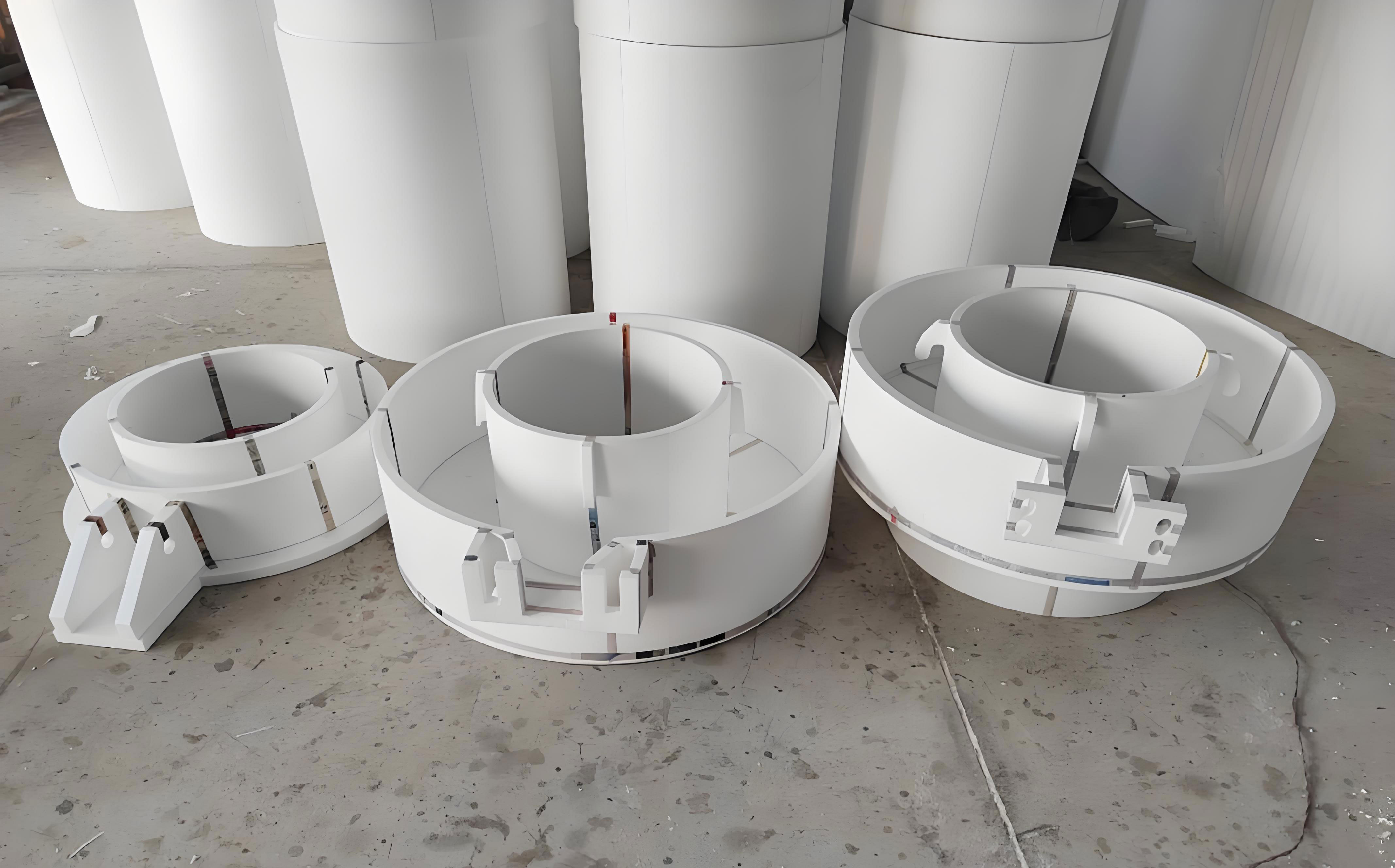
The fundamental principle of lost foam casting involves the use of expendable foam patterns, typically coated with a refractory layer approximately 1 mm thick, which are then embedded in unbonded sand. The mold is placed under a controlled vacuum, and molten metal is poured, causing the foam to vaporize and be replaced by the metal. This very process introduces a complex set of interactions that profoundly influence the final metallurgical structure. The type of foam material, the permeability of the coating, and the stability of the vacuum during pouring collectively exert a far greater influence on the graphite morphology of ductile iron compared to traditional green sand casting. The detrimental effects, particularly on the sphericity and distribution of graphite nodules, can be pronounced if the process is not meticulously controlled.
1. Influence of Foam Pattern Material and Vacuum Stability
In lost foam casting, the foam pattern, most commonly made from Expandable Polystyrene (EPS) or co-polymer resins like EPS-PMMA (often referred to as EPMMA or STMMA), undergoes pyrolysis upon contact with the molten iron. The chemical reactions are complex, but simplified representations highlight the key products:
For EPS (Polystyrene):
$$ C_8H_8 \ (solid) \ \xrightarrow{\Delta} \ 8C \ (soot/char) + 4H_2 \uparrow $$
A more detailed chain reaction model considering monomer styrene release can be represented as:
$$ (C_8H_8)_n \rightarrow n C_8H_8(g) \rightarrow 8n C(s) + 4n H_2(g) + \text{other hydrocarbons} $$
For Co-polymer/EPMMA (Polymethyl Methacrylate):
$$ C_5H_8O_2 \ (monomer) \ \xrightarrow{\Delta} \ 3C \ (soot/char) + 2CO \uparrow + 4H_2 \uparrow $$
The choice of pattern material is critical for ductile iron. EPS, with its higher yield of carbonaceous residue (8C per monomer unit), poses a significant risk of carbon pickup in the already high-carbon-equivalent ductile iron melt. This increases the likelihood of defects like graphite flotation. Consequently, co-polymer materials, which generate less carbonaceous residue and more gaseous products (CO, H₂), are generally preferred for lost foam casting of ductile iron. Despite this precaution,球化不良 (sphere degeneration) defects remain frequent, leading to degraded mechanical properties or scrap castings.
A primary culprit is hydrogen. Literature on casting defects indicates that hydrogen dissolved in molten iron promotes undercooling and increases the tendency for carbide formation (inverse chill). The pyrolysis reactions in lost foam casting are prolific sources of hydrogen. If this hydrogen is not rapidly evacuated from the mold cavity by the applied vacuum, it can dissolve into the molten metal, creating an environment hostile to the nucleation and growth of spherical graphite. Therefore, the time the molten metal is exposed to this hydrogen-rich atmosphere is a critical variable.
This exposure time is governed by a dynamic system represented by the following relationship:
$$ t_{exposure} \propto \frac{[H_2]_{gen} \cdot \delta_{coating}}{k_{coating} \cdot (P_{atm} – P_{vac})} $$
Where:
$t_{exposure}$ = effective contact time between melt and pyrolysis gases,
$[H_2]_{gen}$ = hydrogen generation rate (dependent on foam density/type),
$\delta_{coating}$ = coating thickness,
$k_{coating}$ = permeability coefficient of the coating,
$P_{atm}$ = atmospheric pressure,
$P_{vac}$ = vacuum pressure in the mold.
From this, we can identify key control factors:
- Foam Density and Type: Higher density foam provides better pattern strength but generates more pyrolysis products, including hydrogen ($\uparrow [H_2]_{gen}$).
- Coating Permeability: A highly permeable coating ($\uparrow k_{coating}$) allows faster egress of gases, reducing $t_{exposure}$.
- Vacuum System Performance: The capacity of the vacuum pump, the integrity of the sand box seals, and the maintenance of a stable, high vacuum level during and after pouring are paramount. A rapid drop in vacuum after pouring ($\downarrow (P_{atm}-P_{vac})$) drastically reduces the driving force for gas removal, increasing $t_{exposure}$ and hydrogen pickup risk.
Stabilizing the post-pouring vacuum at a high level (e.g., 0.05-0.06 MPa absolute, often referred to as 0.5-0.6 bar below atmosphere) is essential to minimize the adverse effects of hydrogen. Comparative trials between lost foam casting and furan resin sand casting, using identical casting geometries and metal from the same treated ladle, consistently show that lost foam castings exhibit graphite sphericity grades that are 1 to 2 levels worse on average (e.g., 3-4级 vs. 2级 according to Chinese standards). This systemic difference underscores the inherent metallurgical challenge of the process.
| Factor | Effect on Process | Potential Impact on Ductile Iron Microstructure | Recommended Mitigation in Lost Foam Casting |
|---|---|---|---|
| EPS Foam | High carbon (soot) yield, high $H_2$ generation. | Increased carbon pickup risk (graphite flotation). Strong $H_2$ dissolution promoting undercooling. | Avoid for ductile iron. Use co-polymer (STMMA). |
| Co-polymer Foam (STMMA) | Lower carbon yield, higher $CO/H_2$ gas ratio. | Reduced carbon pickup. $H_2$ generation remains a concern. | Preferred material. Optimize density for strength vs. gas volume. |
| Low Coating Permeability | Traps pyrolysis gases in the cavity, increasing $t_{exposure}$. | Increased $H_2$ dissolution, severe graphite degeneration, pinholes. | Develop/use coatings with optimized high-temperature permeability. |
| Unstable/Low Vacuum | Insufficient driving force to evacuate gases promptly. | Prolonged gas/metal contact, leading to deteriorated graphite shape and possible lustrous carbon defects. | Maintain stable, high vacuum (e.g., 0.05-0.06 MPa abs) throughout pouring and initial solidification. |
2. The Role of Base Sand in Lost Foam Casting
The unbound base sand in lost foam casting serves as the supporting medium. Unlike bonded sand molds, it possesses no inherent collapsibility until the vacuum is released. This, coupled with its thermal properties, creates unique conditions affecting solidification.
Producing ductile iron via lost foam casting involves an additional step—inoculation and magnesium treatment—which consumes significant superheat, resulting in a lower pouring temperature compared to the melting furnace output. To compensate, a higher tap temperature is required, often exceeding 1580°C. This superheating can degrade the metallurgical quality of the iron by increasing the density of oxide nuclei and promoting undercooling.
The sand itself acts as a heat sink. The high pouring temperatures used in lost foam casting transfer substantial heat to the sand, increasing its “heat content” or thermal saturation. This can delay the solidification of the metal, particularly in heavier sections. The extended solidification time in a hydrogen-containing environment, combined with carbon diffusion from the decomposing pattern, can destabilize the austenite shell surrounding growing graphite nodules. This destabilization leads to graphite distortion, resulting in exploded, chained, or irregularly shaped graphite, as shown in micrographs from industrial cases. The relationship can be conceptualized as a competition between graphite growth kinetics and austenite shell stability, influenced by undercooling ($\Delta T$) and local carbon concentration ($C_{local}$):
$$ \text{Graphite Stability} \propto \frac{G_{austenite}}{G_{graphite}} $$
Where growth rates $G$ are functions of $\Delta T$ and solute concentration. Process-induced hydrogen and carbon pickup alter these local conditions unfavorably.
Furthermore, the dry, unbonded sand compacted under vacuum provides no yield or deformation during the contraction of the solidifying metal. This lack of “give” can induce high thermal stresses, particularly in complex, high-strength casing components, increasing their susceptibility to hot tearing or cracking.
To address the thermal issues related to sand, two key strategies are employed:
- Sand Cooling Systems: Actively cooling recycled sand is crucial to control its temperature and maintain consistent thermal conditions, preventing excessive heat buildup in the system.
- Alternative Sands: Replacing silica sand with spherical ceramic sands like “宝珠砂” (a type of fused alumina or mullite-based sand) offers advantages:
- Higher Thermal Conductivity: Faster heat extraction, promoting a denser microstructure.
- Superior Roundness and Flowability: Provides better packing and more uniform support.
- High Refractoriness and Low Thermal Expansion: Reduces risks of veining and penetration.
- Resistance to Attrition: Maintains grain integrity for better long-term permeability.
| Sand Type | Major Composition | Thermal Conductivity (Approx.) | Thermal Expansion | Key Advantages for Lost Foam Casting Ductile Iron | Key Disadvantages |
|---|---|---|---|---|---|
| Silica Sand | SiO₂ | Low | High (abrupt at 573°C) | Low cost, widely available. | Poor cooling, high expansion risk, prone to attrition creating fines. |
| Chromite Sand | FeCr₂O₄ | High | Very Low | Excellent chilling power, very stable. | High density, higher cost, environmental/handling concerns. |
| Zircon Sand | ZrSiO₄ | High | Very Low | Excellent chilling power, low thermal expansion. | High cost, limited availability. |
| Ceramic/Spherical Sand (e.g., Fused Alumina) | Al₂O₃ | Medium-High | Low | Good cooling, high permeability, excellent flowability, durable. | Higher initial cost than silica. |
3. Metallurgical Quality, Pouring Temperature, and Process Integration
The challenges posed by the lost foam casting environment necessitate a heightened focus on the intrinsic metallurgical quality of the iron and precise control over thermal parameters. Simply increasing the amount of nodularizing agent (e.g., to 1.8% or more) to force球化率 (nodularity) is a counterproductive and costly approach. It leads to excessive rare-earth residuals, which exacerbate the risk of graphite flotation, slag inclusions, and micro-shrinkage porosity, while also raising production costs.
Superior strategies involve a holistic metallurgical and process control approach:
1. Optimized Metallurgical Quality:
– Control base iron sulfur to very low levels (e.g., < 0.012%) to minimize the consumption of nodularizing agent and improve treatment efficiency.
– Implement effective desulfurization pre-treatment if necessary.
– Use high-quality, low-rare-earth or rare-earth-free nodularizing alloys tailored for lost foam casting conditions.
– Consider the use of the wire feeding inoculation/nodularization process. This technology offers precise control over magnesium addition, high and reproducible magnesium recovery, and minimal temperature loss, making it particularly suitable for the high-temperature demands of lost foam casting. The reaction can be modeled for control:
$$ \text{Mg Yield} = f(T_{iron}, [S], \text{Wire Feed Rate}, \text{Ladle Geometry}) $$
2. Advanced Inoculation Practices:
– Employ powerful, late-stream inoculation using specialized inoculants with anti-fading properties (e.g., containing Ba, Sr, or Ca-based complex alloys).
– Consider the use of “硫氧孕育剂” (sulfur-oxygen inoculants) which can provide additional nucleation sites in the challenging environment of a lost foam casting mold.
– The inoculant effectiveness $I_{eff}$ under process conditions can be considered as:
$$ I_{eff} = I_0 \cdot e^{-k \cdot t} \cdot f(\Delta T_{pour}, [H], [O]) $$
Where $I_0$ is the inherent potency, $k$ is the fading constant, $t$ is the time from inoculation to solidification, and the function $f$ accounts for the detrimental effects of undercooling ($\Delta T_{pour}$) and dissolved gases.
3. Precise Thermal Management:
– While a high tap temperature is needed to compensate for treatment losses, excessive superheating (>1550-1600°C) should be avoided to prevent degradation of the melt’s innate nucleation potential.
– Optimize the pouring temperature for the specific casting geometry and section size. A balanced temperature is key: high enough to ensure complete filling and pattern decomposition, but low enough to promote a fast, controlled solidification that resists graphite distortion.
4. Integrated Process Monitoring and Control:
– Strictly monitor and control the stability of the vacuum level throughout the cycle.
– Ensure consistency in foam pattern density and coating application (thickness and permeability).
– Implement statistical process control (SPC) on key parameters: tap temperature, treatment alloy addition, post-inoculation temperature, pour temperature, and vacuum curve.
| Primary Influence Area | Specific Factor | Mechanism of Detrimental Effect | Corrective & Optimizing Measures |
|---|---|---|---|
| Pattern & Atmosphere | Foam Material (EPS) | High carbon yield → Carbon pickup → Graphite flotation/explosion. | Use co-polymer (STMMA) patterns. |
| Low Coating Permeability | Traps pyrolysis gases (H₂, hydrocarbons) → Gas/metal interaction → Undercooling, degenerate graphite. | Develop/apply high-permeability coatings for ductile iron. | |
| Unstable/Insufficient Vacuum | Fails to evacuate gases promptly → Prolonged H₂ contact with melt. | Maintain stable, high vacuum (0.05-0.06 MPa abs) during critical phase. | |
| Mold Medium | Silica Sand (Overheated) | Low thermal conductivity → Slow cooling → Extended solidification → Graphite distortion. | Implement sand cooling; Use high-conductivity sands (Ceramic, Chromite). |
| Unbonded Sand (No Collapsibility) | High rigidity during contraction → Induces thermal stress. | Design for even cooling; Optimize vacuum release timing; Consider sand additives for controlled collapse. | |
| Metallurgy & Thermal | Excessive Superheating | Degrades melt nucleation potential → Increases undercooling tendency. | Control tap temperature; Use efficient pre-treatment to allow lower temperatures. |
| High Residual Sulfur | Consumes nodularizer, increases slag, reduces Mg recovery. | Implement effective desulfurization (<0.012% S). | |
| Inadequate/Conventional Inoculation | Insufficient nuclei to counteract process-induced undercooling. | Use potent, late-stream inoculation with anti-fade alloys. | |
| High Rare-Earth Addition | Promotes carbides, increases flotation risk, causes shrinkage. | Use low-RE or RE-free nodularizers; Adopt wire feeding process for precise Mg control. |
4. Interactions and Systems View
The factors discussed do not act in isolation within the lost foam casting process. They interact in complex ways, often amplifying each other’s negative effects. A systems perspective is essential for quality control. For instance, the use of a high-density EPS pattern (high gas load) combined with a low-permeability coating and a weak vacuum system creates a near-certain condition for severe microstructure degradation. Conversely, a well-designed system using a low-density co-polymer, a permeable coating, a robust vacuum, high-quality low-sulfur base iron treated via wire feeding, and inoculated with a potent alloy, all while using a sand with good thermal properties, can yield ductile iron castings with microstructure comparable to, or in some cases superior to, conventional processes due to the rapid, directional solidification enabled by the vacuum and dry sand.
The quality outcome $Q$ for a lost foam casting ductile iron component can be conceptualized as a multivariate function:
$$ Q = f(M, P, S, V, T) $$
Where:
$M$ = Metallurgical quality vector (S content, nucleation state, treatment efficiency),
$P$ = Pattern system vector (material, density, coating permeability/thickness),
$S$ = Sand system vector (type, temperature, grain distribution),
$V$ = Vacuum system vector (stability, level, timing),
$T$ = Thermal vector (tap temp, treatment loss, pour temp).
Optimizing $Q$ requires simultaneous consideration and control of all these vectors, not just individual parameters.
5. Conclusions and Future Perspectives
The production of high-quality ductile iron castings via lost foam casting is distinctly challenging due to the unique physical and chemical interactions between the decomposing pattern, the evolving mold atmosphere, and the solidifying metal. The primary factors influencing the microstructure—pattern material and associated vacuum stability, base sand properties, foundational metallurgical quality, and thermal management—collectively alter the solidification characteristics, often suppressing nodular graphite formation and promoting degenerate forms.
Successful mitigation is not achieved through a single adjustment but through a comprehensive, integrated strategy:
- Selecting appropriate pattern materials (co-polymers over EPS) and ensuring coating permeability.
- Maintaining rigorous control over the vacuum atmosphere to swiftly remove decomposition products.
- Considering advanced sand systems with improved thermal characteristics to control solidification rates.
- Establishing superior metallurgical quality through low-sulfur base iron, efficient and precise nodularization methods like wire feeding, and powerful, engineered inoculation practices.
- Implementing meticulous process monitoring and control across the entire chain from foam to finished casting.
By systematically addressing these interconnected factors, the inherent disadvantages of the lost foam casting environment for ductile iron can be minimized or even eliminated. This enables the full realization of the process’s significant advantages—dimensional precision, lightweight design capability, and environmental benefits—for the production of high-integrity ductile iron components critical to advanced agricultural, automotive, and heavy machinery applications. Future research continues to focus on advanced foam compositions, intelligent real-time vacuum and thermal control systems, and novel coating formulations specifically designed for the demanding conditions of ductile iron lost foam casting.