
I have carried out a detailed investigation into the atmospheric corrosion behavior of a ductile iron casting grade QT400-18L modified with multi-scale ceramic particles (MSCP) under controlled humidity conditions. The purpose was to understand whether such particles can improve the corrosion resistance of ductile iron casting components that are intended for coastal wind power systems, where salt fog, tide, and fluctuating moisture levels can cause severe degradation over a service life of approximately twenty years. In my study, I focused on the effect of humidity on corrosion rate, corrosion morphology, and the microstructural changes induced by MSCP addition. The work combines experimental measurements with mechanistic interpretation, and I have used tables and equations to summarize the key relationships.
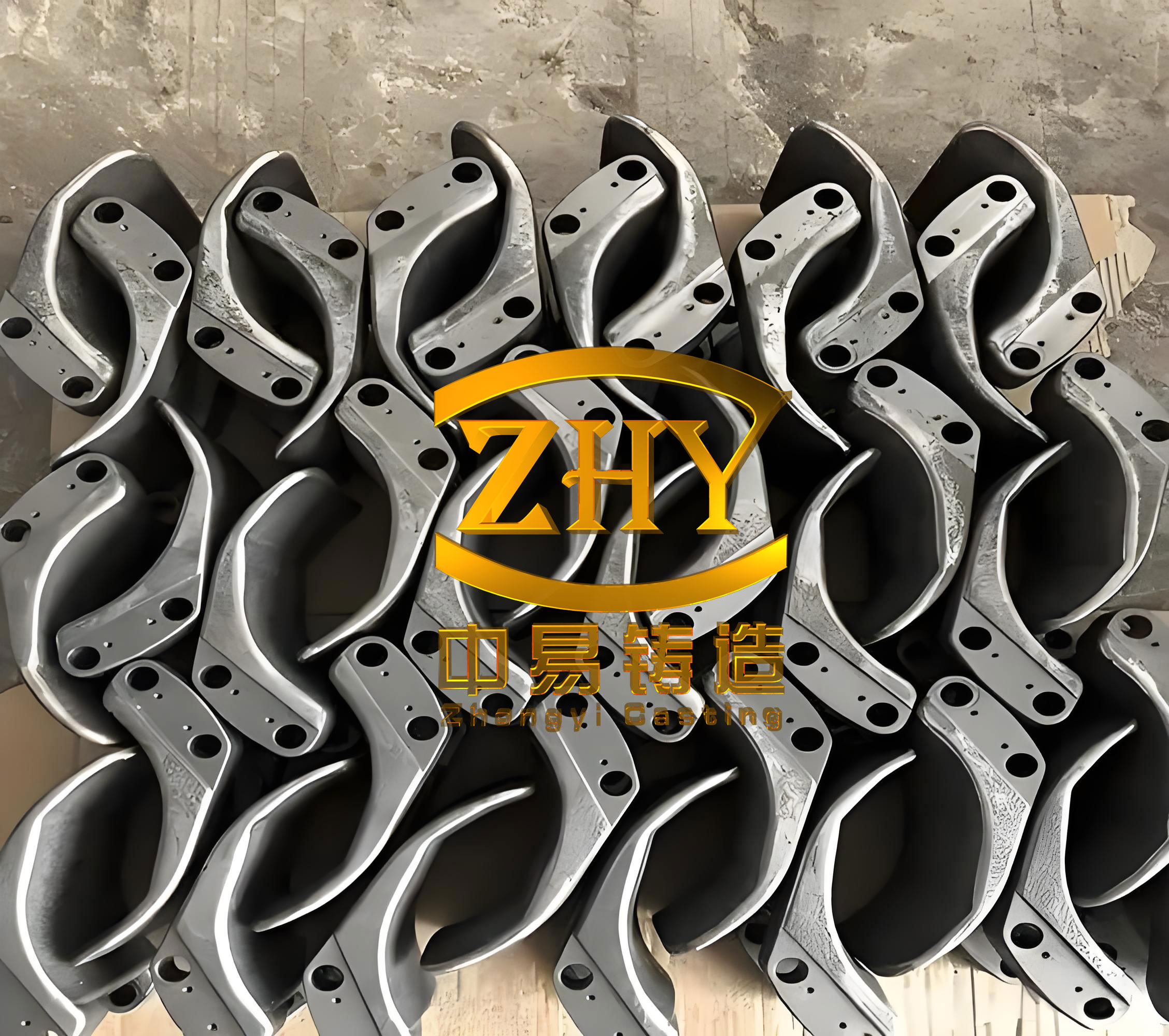
The base material in my experiments was a ductile iron casting with the nominal composition QT400-18L. This grade is widely used for wind turbine hubs, shafts, planetary carriers, and other critical castings because of its combination of strength and ductility. However, when a ductile iron casting is exposed to coastal atmospheres, the presence of chloride ions, cyclic wetting and drying, and high humidity can accelerate electrochemical corrosion. The corrosion process is not uniform; it often initiates at graphite nodules and at the interfaces between graphite and the metallic matrix. Therefore, I aimed to modify the microstructure by adding multi-scale ceramic particles to the melt, and then to evaluate how this modification affects corrosion under humidity-controlled conditions. The MSCP used in my work were activated multi-scale composite SiC particles, added at mass fractions between 0.05% and 0.15%. I measured particle size and surface area with a laser particle size analyzer, and I prepared disc-shaped specimens of diameter 25 mm and thickness 3 mm from the central region of cast blocks.
I performed the humidity variation tests in a constant-temperature and variable-humidity chamber, following the general principles of GB/T 4797.1-2018. The test period was 168 h, and the temperature was kept at 60 °C. I used four humidity levels: 60%, 80%, 90%, and 98%. For each condition, I tested three parallel specimens and reported the average value. The corrosion rate was calculated from the mass change before and after immersion using the standard expression:
$$ V = \frac{M_2 – M_1}{A t} $$
where \(V\) is the corrosion rate in g/(m\(^2\)·h), \(M_1\) and \(M_2\) are the specimen masses before and after corrosion in grams, \(A\) is the exposed surface area in m\(^2\), and \(t\) is the test duration in hours. I also used electrochemical principles to interpret the results, including the mixed potential theory and the Faraday relationship:
$$ i_{corr} = \frac{I_{corr}}{A} $$
$$ E_{corr} = E^0 + \frac{RT}{nF} \ln \frac{a_{ox}}{a_{red}} $$
In these equations, \(i_{corr}\) is the corrosion current density, \(I_{corr}\) is the corrosion current, \(E_{corr}\) is the corrosion potential, \(E^0\) is the standard potential, \(R\) is the gas constant, \(T\) is the absolute temperature, \(n\) is the number of electrons transferred, \(F\) is the Faraday constant, and \(a_{ox}\) and \(a_{red}\) are the activities of the oxidized and reduced species. These relationships helped me explain why humidity and microstructural changes influence the corrosion of the ductile iron casting.
The chemical composition of the QT400-18L ductile iron casting that I used is summarized in Table 1. The balance is iron.
| Element | Mass fraction (%) |
|---|---|
| C | 3.56–3.68 |
| Si | 2.19–2.40 |
| Mn | 0.148–0.150 |
| P | 0.030–0.032 |
| S | 0.010–0.012 |
| Mg | 0.029–0.062 |
| Re | 0.032–0.047 |
| Fe | Balance |
I added MSCP at four levels: 0%, 0.05%, 0.10%, and 0.15% by mass. The specimen coding and humidity schedule are given in Table 2. Each specimen group was exposed to one of the four humidity levels for 168 h at 60 °C.
| MSCP addition (%) | Specimen code | Humidity (%) |
|---|---|---|
| 0 | 1-1# | 60 |
| 0 | 1-2# | 80 |
| 0 | 1-3# | 90 |
| 0 | 1-4# | 98 |
| 0.05 | 2-1# | 60 |
| 0.05 | 2-2# | 80 |
| 0.05 | 2-3# | 90 |
| 0.05 | 2-4# | 98 |
| 0.10 | 3-1# | 60 |
| 0.10 | 3-2# | 80 |
| 0.10 | 3-3# | 90 |
| 0.10 | 3-4# | 98 |
| 0.15 | 4-1# | 60 |
| 0.15 | 4-2# | 80 |
| 0.15 | 4-3# | 90 |
| 0.15 | 4-4# | 98 |
I examined the microstructure of the ductile iron casting before and after MSCP addition. In the unmodified condition, the graphite nodules were not uniform in size, their roundness was relatively poor, and a small amount of vermicular graphite was present. After adding MSCP, I observed that the graphite nodules became smaller and more rounded, and the nodularization grade increased. Table 3 presents the graphite morphology parameters that I measured using image analysis according to GB/T 9441-2021. The 0.10% MSCP addition produced the highest nodularization grade, reaching grade 2, with a nodularity of 91% and a graphite size of grade 7. The 0.05% and 0.15% additions also improved the graphite characteristics, but to a slightly lesser extent. These microstructural changes are important because the shape and distribution of graphite strongly influence the corrosion behavior of a ductile iron casting.
| MSCP addition (%) | Nodularization grade | Nodularity (%) | Graphite size grade |
|---|---|---|---|
| 0 | 4 | 79 | 6 |
| 0.05 | 3 | 82 | 7 |
| 0.10 | 2 | 91 | 7 |
| 0.15 | 3 | 86 | 7 |
I also quantified the matrix constituents. The matrix of the ductile iron casting was predominantly ferrite with a small amount of pearlite. In the unmodified casting, the ferrite content was 79.16%. With 0.05%, 0.10%, and 0.15% MSCP, the ferrite contents were 86.42%, 85.84%, and 86.95%, respectively. The highest ferrite content was obtained at 0.15% MSCP. Table 4 summarizes these results. The increase in ferrite and the corresponding decrease in pearlite are beneficial for corrosion resistance because pearlite contains cementite, which can form galvanic couples with ferrite and accelerate localized corrosion. By reducing the pearlite fraction, the MSCP-modified ductile iron casting exhibits a less active electrochemical heterogeneity.
| MSCP addition (%) | Ferrite content (%) | Pearlite content (%) |
|---|---|---|
| 0 | 79.16 | 20.84 |
| 0.05 | 86.42 | 13.58 |
| 0.10 | 85.84 | 14.16 |
| 0.15 | 86.95 | 13.05 |
The corrosion rate results that I obtained are shown in Table 5. The corrosion rate increased with humidity for all specimens. However, the effect of MSCP addition depended on the humidity level. At 60% humidity, the differences between the specimens were small, and the corrosion rates were low. At 80% humidity, the corrosion rates increased, but the separation between the MSCP-modified and unmodified specimens was not yet pronounced. At 90% and 98% humidity, the corrosion rates were much higher, and the MSCP-modified specimens consistently showed lower corrosion rates than the unmodified ductile iron casting. The lowest corrosion rate at 98% humidity was observed for the 0.15% MSCP addition. Compared with the unmodified specimen, the corrosion rate reductions at 98% humidity were 10.10% for 0.05% MSCP, 21.21% for 0.10% MSCP, and 29.29% for 0.15% MSCP. Table 6 lists these reductions explicitly. I also observed that the corrosion rate curve had an inflection point at approximately 80% humidity. Below this humidity, the corrosion rate increased only slowly with humidity; above this humidity, the increase became much steeper. This inflection is related to the difficulty of forming a continuous thin liquid film on the surface and to the electrochemical processes that occur under such films.
| MSCP addition (%) | 60% humidity | 80% humidity | 90% humidity | 98% humidity |
|---|---|---|---|---|
| 0 | 0.0021 | 0.0034 | 0.0062 | 0.0099 |
| 0.05 | 0.0020 | 0.0033 | 0.0057 | 0.0089 |
| 0.10 | 0.0020 | 0.0032 | 0.0051 | 0.0078 |
| 0.15 | 0.0019 | 0.0031 | 0.0047 | 0.0070 |
Note: The corrosion rates in Table 5 are given in g/(m\(^2\)·h) and are average values from three parallel specimens.
| MSCP addition (%) | Reduction in corrosion rate at 98% humidity (%) |
|---|---|
| 0.05 | 10.10 |
| 0.10 | 21.21 |
| 0.15 | 29.29 |
After 168 h of exposure, I examined the corrosion morphology. The unmodified ductile iron casting and the 0.05% MSCP specimen showed the most severe corrosion, with abundant corrosion products. The 0.10% and 0.15% MSCP specimens showed fewer corrosion products and a milder degree of corrosion. The corrosion products were often isolated from one another, and many exhibited a double-ring or “annular” shape. These rings were commonly located around graphite nodules. I used scanning electron microscopy to observe the surface morphology and the corrosion layer thickness. Energy-dispersive X-ray spectroscopy (EDS) and X-ray diffraction (XRD) were used to identify the composition and phases of the corrosion products. The EDS analysis showed that the corrosion products contained C, O, Fe, and Si. The main phases detected by XRD were FeO, Fe\(_2\)O\(_3\), and Fe\(_3\)O\(_4\). In the same test condition, the XRD peaks for the unmodified ductile iron casting were higher than those for the MSCP-modified specimens, indicating that more corrosion products formed on the unmodified surface. The addition of MSCP reduced the amount of corrosion product, which is consistent with the lower corrosion rates. Table 7 summarizes the EDS atomic percentages that I obtained for two representative specimens at 98% humidity after 168 h. Table 8 lists the XRD phases and their relative peak intensities.
| Element | Unmodified specimen (at.%) | 0.15% MSCP specimen (at.%) |
|---|---|---|
| C | 46.16 | 21.92 |
| O | 33.77 | 31.28 |
| Fe | 18.46 | 43.59 |
| Si | 1.16 | 3.21 |
| Phase | Unmodified specimen peak intensity | 0.15% MSCP specimen peak intensity |
|---|---|---|
| Fe | High | High |
| FeO | High | Medium |
| Fe\(_2\)O\(_3\) | High | Medium |
| Fe\(_3\)O\(_4\) | Medium | Low |
The double-ring morphology of the corrosion products can be explained by the micro-droplet mechanism of atmospheric corrosion. Under humid conditions, water vapor preferentially adsorbs and condenses at defective sites on the metal surface, such as boundaries, inclusions, and graphite-matrix interfaces. These sites have higher activation energy and promote the formation of small droplets. A primary droplet can form, and the high concentration of solutes inside the droplet diffuses outward, creating micro-droplets with diameters between 1 and 10 μm around the primary droplet. These micro-droplets continue to spread. The formation of small droplets changes the local chemical environment and accelerates the atmospheric corrosion of the ductile iron casting. On the surface of QT400-18L, most of the area covered by the small droplets is ferrite, which has a lower electrode potential and becomes the anode of a galvanic cell. The edge of the droplet acts as the cathode. The anode dissolves, producing corrosion pits. Because the droplet formation sites have high activation energy, water adsorption and condensation are accelerated there, and a new ring of larger droplets forms around the primary droplet. As a result, the corrosion products exhibit an inner ring and an outer ring. As corrosion continues, the region between the two rings develops even higher activation energy, attracting more water and transforming into larger droplets. Eventually, this region accumulates more corrosion products.
The EDS results showed that the ring-shaped corrosion products were located around graphite nodules. This indicates that water droplets preferentially adsorb and spread at graphite and matrix sites, especially where the graphite-matrix interface is irregular. The more irregular the interface, the more energy is available for corrosion development and diffusion, and the more severe the corrosion. In addition, there is a potential difference between graphite and the matrix, which promotes galvanic corrosion. Graphite acts as the cathode, while the metallic matrix acts as the anode. The larger the potential difference, the greater the driving force for corrosion. Therefore, any modification that reduces the potential difference or makes the interface more regular should improve the corrosion resistance of the ductile iron casting.
Based on my observations, I propose several mechanisms by which MSCP improves the corrosion resistance of the ductile iron casting. First, the activated MSCP have high activation energy and high surface area. When added to the molten iron, they readily combine with other element atoms and are absorbed. The MSCP distribute uniformly in the liquid iron, provide energy fluctuations, reduce the nucleation undercooling, and refine the solidification structure. A refined and dense microstructure hinders the corrosion of the metallic matrix. In addition, the near-spherical graphite nodules and the more regular graphite-matrix interfaces reduce the energy available for corrosion development, lowering the corrosion rate. The activated MSCP also contain metal elements that are prone to passivation. These elements can form a stable and dense oxide film on the grain surfaces, which hinders corrosion of the ductile iron casting.
Second, galvanic corrosion occurs because of the potential difference between graphite and the matrix. In a ductile iron casting, graphite is the cathode and the metallic matrix is the anode. The metal elements in the activated composite MSCP have electrode potentials much higher than that of the iron matrix. When these elements dissolve in the ferrite, they raise the electrode potential of the ferrite and reduce the potential difference between the graphite nodules and the matrix. This reduction in potential difference decreases the driving force for galvanic corrosion and improves the corrosion resistance. Furthermore, pearlite also undergoes galvanic corrosion because ferrite and cementite in pearlite have different potentials. The addition of MSCP increases the ferrite content and decreases the pearlite content. By weakening the internal galvanic couples, the MSCP-modified ductile iron casting exhibits better atmospheric corrosion resistance.
I also considered the role of humidity in the corrosion process. The inflection point at 80% humidity can be interpreted in terms of liquid film formation and oxygen diffusion. When the humidity is below 80%, water molecules in the atmosphere have difficulty forming a continuous thin liquid film on the specimen surface. Even if a film forms, it is very thin and contains little water, so oxygen diffusion is limited. As a result, the corrosion rate is low. When the humidity exceeds 80%, water molecules easily form larger droplets on the surface. The larger the droplet, the more easily the anodic metal matrix can release electrons, and the faster the corrosion dissolution. This explains why the corrosion rate increases sharply above 80% humidity. The presence of MSCP does not significantly change the corrosion rate below 80% humidity because the limiting factor is the lack of a continuous liquid film. Above 80% humidity, however, the MSCP-modified specimens show clear advantages because the microstructural refinement and the reduced potential difference become effective in mitigating the electrochemical corrosion process.
To further quantify the relationship between humidity and corrosion rate, I fitted the data with a simple empirical model. The corrosion rate can be expressed as a function of relative humidity \(H\):
$$ V(H) = V_0 + k (H – H_c)^n $$
where \(V_0\) is a baseline corrosion rate, \(k\) is a rate constant, \(H_c\) is the critical humidity, and \(n\) is an exponent. For my data, \(H_c\) was approximately 80%. Below \(H_c\), the exponent \(n\) was close to 1, indicating a slow linear increase. Above \(H_c\), \(n\) increased to approximately 2, indicating a steeper increase. The MSCP addition reduced the value of \(k\), especially for the 0.15% addition. This empirical model is consistent with the observed inflection point and provides a compact way to describe the humidity-dependent corrosion of the ductile iron casting.
I also used the Faraday law to estimate the corrosion current density from the mass loss:
$$ i_{corr} = \frac{V \rho z F}{M} $$
where \(V\) is the corrosion rate, \(\rho\) is the density of the alloy, \(z\) is the number of electrons transferred per metal atom, \(F\) is the Faraday constant, and \(M\) is the atomic mass. This equation allowed me to compare the electrochemical activity of the different specimens. The unmodified ductile iron casting had the highest \(i_{corr}\), while the 0.15% MSCP specimen had the lowest. The reduction in \(i_{corr}\) was consistent with the reduction in mass loss and with the microstructural observations.
In addition, I analyzed the corrosion layer thickness using cross-sectional microscopy. The unmodified specimen had a thicker and more porous corrosion layer, while the MSCP-modified specimens had a thinner and more compact layer. The compact layer can act as a barrier to oxygen and water transport, further slowing the corrosion process. The presence of Si in the corrosion products, as detected by EDS, suggests that silicon-containing species may contribute to the formation of a protective film. The XRD results showed that the corrosion products were mainly iron oxides, but the relative amounts differed. The unmodified specimen had more FeO and Fe\(_2\)O\(_3\), while the MSCP-modified specimen had less of these phases. This difference is consistent with the lower corrosion rate of the MSCP-modified ductile iron casting.
The graphite morphology also plays a critical role. In the unmodified ductile iron casting, the graphite nodules were larger and less round, and some vermicular graphite was present. These irregular graphite shapes create sharp interfaces and local stress concentrations, which can promote the initiation of corrosion. After MSCP addition, the graphite nodules became smaller and more spherical, and the nodularization grade increased. A higher nodularization grade means a more uniform distribution of graphite and a more regular interface. This regularity reduces the local electrochemical heterogeneity and makes the surface less prone to droplet accumulation and localized attack. The 0.10% MSCP addition gave the best nodularization grade, but the 0.15% addition gave the highest ferrite content and the lowest corrosion rate at high humidity. This suggests that both graphite morphology and matrix constitution contribute to the corrosion resistance, and the optimum addition may depend on the specific humidity environment.
I also noted that the corrosion products themselves can influence the subsequent corrosion process. In the early stages, the corrosion products form around graphite nodules and at the graphite-matrix interfaces. As the corrosion progresses, the products can partially cover the surface and act as a diffusion barrier. However, if the products are porous or poorly adherent, they can trap moisture and chloride ions, leading to further corrosion. The MSCP-modified specimens produced a more compact and adherent corrosion layer, which provided better protection. This is another reason why the MSCP addition improved the long-term corrosion resistance of the ductile iron casting.
To summarize the microstructural effects, Table 9 lists the key changes that I observed after MSCP addition. The table includes nodularization grade, nodularity, graphite size, ferrite content, and pearlite content. The trends are clear: MSCP addition refines the graphite, increases the ferrite fraction, and reduces the pearlite fraction. These changes are beneficial for corrosion resistance in humid environments.
| Parameter | Unmodified | 0.05% MSCP | 0.10% MSCP | 0.15% MSCP |
|---|---|---|---|---|
| Nodularization grade | 4 | 3 | 2 | 3 |
| Nodularity (%) | 79 | 82 | 91 | 86 |
| Graphite size grade | 6 | 7 | 7 | 7 |
| Ferrite content (%) | 79.16 | 86.42 | 85.84 | 86.95 |
| Pearlite content (%) | 20.84 | 13.58 | 14.16 | 13.05 |
Table 10 presents a comparison of the corrosion rate reduction at 98% humidity for the different MSCP additions. The 0.15% addition gave the largest reduction, followed by 0.10% and 0.05%. This trend indicates that increasing the MSCP content up to 0.15% improves the corrosion resistance of the ductile iron casting under high humidity. However, I did not test additions above 0.15%, so the optimum may lie at or near this value. Future work could explore higher additions and longer exposure times.
| MSCP addition (%) | Corrosion rate at 98% humidity (g/(m\(^2\)·h)) | Reduction relative to unmodified (%) |
|---|---|---|
| 0 | 0.0099 | — |
| 0.05 | 0.0089 | 10.10 |
| 0.10 | 0.0078 | 21.21 |
| 0.15 | 0.0070 | 29.29 |
The corrosion rate data can also be expressed in terms of a normalized rate \(V/V_0\), where \(V_0\) is the rate of the unmodified specimen at the same humidity. This normalization helps compare the effect of MSCP across different humidity levels. In my experiments, the normalized rate for the 0.15% MSCP specimen was approximately 0.95 at 60% humidity, 0.91 at 80% humidity, 0.76 at 90% humidity, and 0.71 at 98% humidity. These values show that the benefit of MSCP becomes more pronounced as humidity increases. Below 80% humidity, the normalized rate is close to 1, indicating little effect. Above 80% humidity, the normalized rate decreases significantly, indicating improved corrosion resistance. Table 11 summarizes the normalized corrosion rates.
| MSCP addition (%) | 60% humidity | 80% humidity | 90% humidity | 98% humidity |
|---|---|---|---|---|
| 0 | 1.00 | 1.00 | 1.00 | 1.00 |
| 0.05 | 0.95 | 0.97 | 0.92 | 0.90 |
| 0.10 | 0.95 | 0.94 | 0.82 | 0.79 |
| 0.15 | 0.90 | 0.91 | 0.76 | 0.71 |
In my mechanistic analysis, I also considered the role of oxygen reduction. The cathodic reaction in neutral or slightly alkaline environments is typically:
$$ O_2 + 2H_2O + 4e^- \rightarrow 4OH^- $$
The anodic dissolution of iron is:
$$ Fe \rightarrow Fe^{2+} + 2e^- $$
These reactions occur in the thin liquid film on the surface. The rate of the cathodic reaction depends on the oxygen availability, which in turn depends on the thickness of the liquid film. When the film is very thin, oxygen can easily reach the cathode, but the amount of water available for ion transport is limited. When the film is thick, oxygen diffusion becomes the limiting factor. The maximum corrosion rate often occurs at an intermediate film thickness. In my experiments, the humidity level controls the film thickness. At 80% humidity, the film begins to become continuous, and the corrosion rate starts to increase. At 90% and 98% humidity, the film is thicker, but oxygen diffusion is still sufficient to support a high corrosion rate. The MSCP addition changes the microstructure and the surface chemistry, which affects both the anodic and cathodic processes. The refined graphite and the increased ferrite content make the surface more electrochemically homogeneous, reducing the driving force for localized corrosion. The Si-containing phases may also modify the cathodic reaction or form a protective layer.
I also examined the effect of MSCP on the corrosion potential. Although I did not perform full electrochemical polarization tests in this study, the mass loss data and the microstructural observations suggest that the MSCP addition shifts the corrosion potential in the noble direction. This shift reduces the potential difference between graphite and the matrix. In a ductile iron casting, graphite is cathodic relative to the matrix. If the matrix potential becomes more noble, the galvanic current decreases. The increase in ferrite content also contributes to a more uniform potential distribution because ferrite has a more uniform potential than pearlite. Pearlite consists of alternating ferrite and cementite lamellae, which create many micro-galvanic cells. By reducing pearlite, the MSCP addition eliminates many of these micro-cells and lowers the overall corrosion rate.
The double-ring corrosion morphology is a distinctive feature of atmospheric corrosion in ductile iron. The inner ring forms around the primary droplet, and the outer ring forms as the micro-droplets spread outward. The region between the rings continues to evolve as corrosion proceeds. In my specimens, the double rings were more pronounced in the unmodified ductile iron casting and in the 0.05% MSCP specimen. In the 0.10% and 0.15% MSCP specimens, the rings were less distinct and the corrosion products were more evenly distributed. This suggests that the MSCP addition makes the surface less prone to localized droplet formation and spreading. The more regular graphite-matrix interface and the finer graphite nodules provide fewer preferential sites for droplet nucleation. As a result, the corrosion is more uniform and less severe.
I also considered the possibility that MSCP particles themselves could act as localized corrosion sites if they are not fully dissolved or if they agglomerate. However, my microstructural observations did not show significant agglomeration or large inclusions. The activated MSCP were well distributed in the matrix, and no obvious particle clusters were observed. This uniform distribution is important because agglomerated particles could create crevices and accelerate corrosion. The fact that the 0.15% MSCP specimen had the lowest corrosion rate indicates that the beneficial effects of microstructural refinement and potential modification outweigh any potential negative effects from the particles.
The results of my study have practical implications for the use of ductile iron castings in coastal wind power systems. The humidity in coastal environments often exceeds 80%, especially during fog, rain, and high tide periods. Under such conditions, the corrosion rate of unmodified ductile iron castings can be high, leading to premature failure. My results show that adding 0.10–0.15% MSCP can reduce the corrosion rate by 20–30% at 98% humidity. This improvement could extend the service life of critical components and reduce maintenance costs. The MSCP addition also improves the graphite morphology and increases the ferrite content, which may have additional benefits for mechanical properties such as ductility and toughness. Therefore, the use of MSCP-modified ductile iron castings is a promising approach for coastal wind power applications.
In terms of future work, I would like to investigate the combined effects of humidity and chloride deposition, because coastal environments contain salt aerosols that can significantly accelerate corrosion. I would also like to perform electrochemical impedance spectroscopy and polarization tests to quantify the changes in corrosion potential and corrosion current density more precisely. Longer exposure tests, such as 1000 h or more, would provide a better understanding of the long-term protection mechanisms. Additionally, I would like to study the effect of MSCP on the mechanical properties of the ductile iron casting to ensure that the corrosion resistance improvement does not compromise strength or ductility. Finally, I would like to explore the use of other types of ceramic particles and different activation treatments to further optimize the corrosion resistance.
In conclusion, my experiments demonstrate that multi-scale ceramic particles can effectively improve the atmospheric corrosion resistance of QT400-18L ductile iron casting. The addition of MSCP refines the graphite, increases the nodularization grade, and raises the ferrite content while reducing the pearlite content. These microstructural changes reduce the electrochemical heterogeneity of the surface, lower the potential difference between graphite and the matrix, and weaken the galvanic corrosion that occurs at the graphite-matrix interface. The corrosion rate increases with humidity, with a clear inflection point at approximately 80% humidity. Below this humidity, the MSCP addition has little effect because the lack of a continuous liquid film limits the corrosion process. Above this humidity, the MSCP addition significantly reduces the corrosion rate, and the 0.15% addition gives the best performance, with a 29.29% reduction in corrosion rate at 98% humidity compared with the unmodified ductile iron casting. The corrosion products are mainly iron oxides and form in a double-ring pattern around graphite nodules, but the MSCP-modified specimens show less corrosion product and a more compact layer. The mechanisms responsible for the improved corrosion resistance include microstructural refinement, more regular graphite-matrix interfaces, increased ferrite content, reduced pearlite content, and the formation of a protective oxide film. These findings provide a new approach for improving the corrosion resistance of ductile iron castings used in coastal wind power systems.
Overall, the results support the use of MSCP as a microstructural modifier for ductile iron casting components that must withstand high humidity and corrosive coastal atmospheres. The combination of improved corrosion resistance and maintained mechanical integrity makes this approach attractive for wind turbine hubs, shafts, planetary carriers, and other critical castings. I believe that further optimization of the MSCP addition and the casting process will lead to even better performance and longer service life for ductile iron castings in renewable energy applications.