
I carried out a systematic industrial verification program to determine whether normalizing can replace annealing in the heat treatment of sand casting groove steel. The groove steel was produced by sand casting for the middle trough of a scraper conveyor, a core load-bearing component used in underground coal mining transport. In my trials, I focused on two sand casting grades: ZG30MnSi and ZG30MnSiMo. The original production route used annealing after sand casting, followed by quenching and tempering. Although that route satisfied the minimum technical requirements, it created a long furnace cycle, high labor and energy consumption, and a tendency toward insufficient hardness and uneven performance. I designed a normalizing route, optimized the tempering cooling method, and verified the route over multiple batches. I used optical microscopy, Brinell hardness testing, tensile testing, and Charpy V-notch impact testing. The results showed that normalizing is feasible for ZG30MnSi sand casting groove steel and can shorten the heat treatment cycle by approximately 30%. The Mo-bearing sand casting grade required more careful control of tempering cooling because its strength response was less consistent when the target tensile strength was very high.
Sand casting groove steel is not a simple structural part. It must provide horizontal offset behavior so that the conveyor can move smoothly on uneven floor plates, and it must provide reliable connections between middle trough sections. Any shrinkage cavity, gas hole, crack, or severe segregation in the sand casting can become a fatigue initiation site. Therefore, the heat treatment of sand casting groove steel must balance strength, hardness, plasticity, and impact toughness. The normalizing process is attractive because it promotes a more uniform austenite decomposition product than slow furnace cooling, refines the ferrite-pearlite morphology, and reduces the time during which the sand casting remains in the furnace. In my view, normalizing is not merely a time-saving substitution. It is also a microstructure-control step that can reduce batch-to-batch variation in sand casting groove steel.
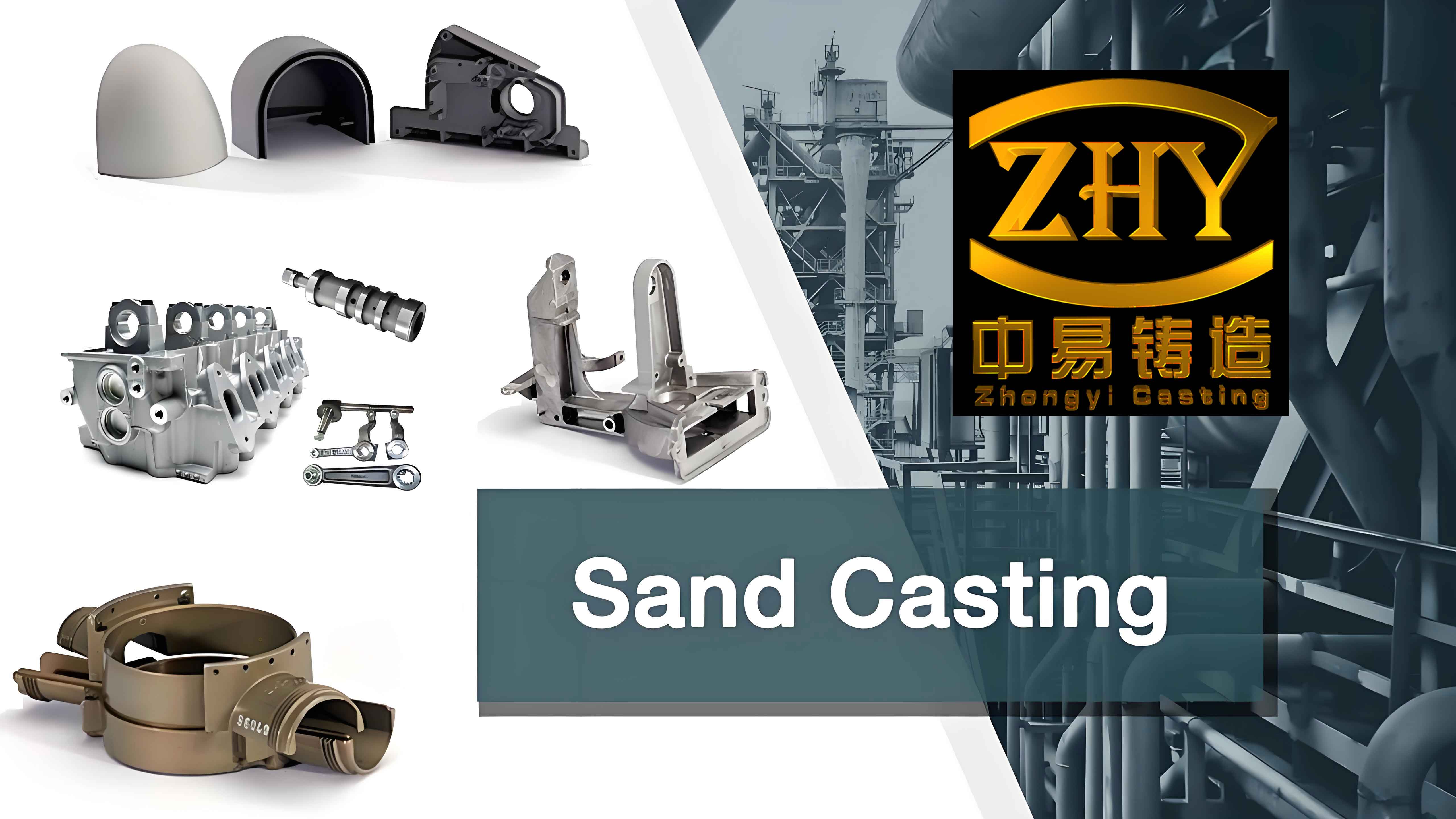
The chemical composition of the two sand casting groove steel grades is the starting point of my analysis. ZG30MnSi relies mainly on Si and Mn for solid-solution strengthening, pearlite refinement, and hardenability improvement. ZG30MnSiMo adds Mo, which increases hardenability, forms stable carbides, refines grains, and retards softening during tempering. These differences explain why the two sand casting grades responded differently to the same normalizing and tempering sequence. The measured compositions were within the specified ranges, as summarized in the following table.
| Grade | Element | Specified range (wt.%) | Measured value (wt.%) |
|---|---|---|---|
| ZG30MnSi | C | 0.26-0.34 | 0.30 |
| ZG30MnSi | Si | 0.60-0.80 | 0.64 |
| ZG30MnSi | Mn | 1.10-1.40 | 1.35 |
| ZG30MnSi | S, P | ≤0.04 | ≤0.02 |
| ZG30MnSi | Mo | – | 0.04 |
| ZG30MnSiMo | C | 0.25-0.33 | 0.28 |
| ZG30MnSiMo | Si | 0.30-0.60 | 0.40 |
| ZG30MnSiMo | Mn | 1.20-1.60 | 1.25 |
| ZG30MnSiMo | S, P | ≤0.03 | ≤0.02 |
| ZG30MnSiMo | Mo | 0.25-0.45 | 0.32 |
I designed the normalizing schedule to replace the original annealing schedule. The normalizing temperature was set at 880 °C ± 10 °C with a soaking time of 3.5 h, followed by air cooling to room temperature. After normalizing, I applied quenching at 880 °C ± 10 °C for 3.0-3.5 h using a polymer quenchant with a concentration between 5% and 15%; the measured concentration was 6.25%. The tempering treatment differed by grade. For ZG30MnSi sand casting groove steel, I used 530 °C ± 10 °C for 5.0-5.5 h. For ZG30MnSiMo sand casting groove steel, I used 560 °C ± 10 °C for 5.0-5.5 h. I then compared two tempering cooling methods: air cooling to room temperature and water cooling to approximately 200 °C followed by air cooling. The grouping is shown in the following table.
| Group | Grade | Normalizing | Quenching | Tempering temperature | Tempering cooling |
|---|---|---|---|---|---|
| 1 | ZG30MnSi | 880 °C ± 10 °C, 3.5 h, air cooling | 880 °C ± 10 °C, 3.0-3.5 h, polymer quenchant | 530 °C ± 10 °C, 5.0-5.5 h | Air cooling to room temperature |
| 2 | ZG30MnSi | 880 °C ± 10 °C, 3.5 h, air cooling | 880 °C ± 10 °C, 3.0-3.5 h, polymer quenchant | 530 °C ± 10 °C, 5.0-5.5 h | Water cooling to 200 °C, then air cooling |
| 3 | ZG30MnSiMo | 880 °C ± 10 °C, 3.5 h, air cooling | 880 °C ± 10 °C, 3.0-3.5 h, polymer quenchant | 560 °C ± 10 °C, 5.0-5.5 h | Air cooling to room temperature |
| 4 | ZG30MnSiMo | 880 °C ± 10 °C, 3.5 h, air cooling | 880 °C ± 10 °C, 3.0-3.5 h, polymer quenchant | 560 °C ± 10 °C, 5.0-5.5 h | Water cooling to 200 °C, then air cooling |
I prepared metallographic samples by wire cutting cubes of approximately 10 mm × 10 mm × 10 mm from the grip regions of the tensile specimens, at a distance of 15-20 mm from the end face. I ground and polished the samples and etched them with a 4% nitric acid ethanol solution. I observed the microstructure with an optical microscope. I measured Brinell hardness with a digital Brinell hardness tester. I conducted tensile tests and Charpy V-notch impact tests according to the relevant GB/T methods. I compared the results with the original annealing-based company standard Q/SN0062—2020 for carbon steel and low-alloy steel castings. The mechanical property targets are summarized in the following table.
| Grade | Brinell hardness (HB) | Yield strength σs (MPa) | Tensile strength σb (MPa) | Elongation (%) | Reduction of area (%) | Impact energy (J) |
|---|---|---|---|---|---|---|
| ZG30MnSi | 230-270 | ≥480 | ≥690 | ≥10 | ≥22 | ≥36 |
| ZG30MnSiMo | 260-300 | ≥650 | ≥1000 | ≥10 | ≥28 | ≥40 |
The normalizing step changed the starting microstructure for quenching. In the sand casting condition, the groove steel contained coarse dendrites and segregated areas inherited from the sand casting process. When I heated the sand casting to 880 °C ± 10 °C and held it for 3.5 h, the material became fully austenitized. Air cooling after normalizing produced a pearlite-ferrite structure with a more uniform distribution than the original annealing treatment. This structure provided a more homogeneous matrix for subsequent quenching. The normalizing treatment also reduced the thermal gradient across the sand casting section, because the air cooling was still slow enough to avoid excessive distortion but fast enough to prevent the coarse carbide networks that can form during furnace cooling. The diffusion-controlled transformation can be described by the Arrhenius relation:
$$D = D_0 \exp\left(-\frac{Q}{RT}\right)$$
where \(D\) is the diffusion coefficient, \(D_0\) is the pre-exponential factor, \(Q\) is the activation energy, \(R\) is the gas constant, and \(T\) is the absolute temperature. A higher normalizing temperature increases \(D\), which promotes homogenization of the sand casting groove steel. However, an excessively high temperature can coarsen the austenite grains. The grain growth kinetics can be approximated by:
$$d^n – d_0^n = K t \exp\left(-\frac{Q}{RT}\right)$$
where \(d\) is the average grain size, \(d_0\) is the initial grain size, \(K\) is a constant, and \(n\) is the grain growth exponent. My chosen normalizing temperature of 880 °C ± 10 °C was a compromise between homogenization and grain coarsening. In the sand casting groove steel, this temperature produced sufficient austenite homogenization without unacceptable grain growth.
After quenching, the microstructure was primarily martensite. During tempering, the martensite decomposed into ferrite and finely dispersed carbides. At the tempering temperatures I used, the dominant microstructure was tempered sorbite with small amounts of ferrite and dispersed carbides. This is a desirable combination for sand casting groove steel because tempered sorbite provides a good balance of strength and toughness. The tempering parameter is often expressed by the Hollomon-Jaffe equation:
$$P = T(\log t + C)$$
where \(P\) is the tempering parameter, \(T\) is the absolute temperature, \(t\) is the tempering time, and \(C\) is a material constant. Because ZG30MnSiMo contains Mo, its tempering resistance is higher, so I used a higher tempering temperature of 560 °C for that sand casting grade. The Mo addition retards the coarsening of carbides and delays the loss of hardness during tempering. This effect is consistent with the theory that Mo reduces the diffusion rate of carbon and alloying elements in the tempered matrix.
The microstructure of the ZG30MnSi sand casting groove steel after normalizing, quenching, and tempering was mainly tempered sorbite with a small amount of ferrite and dispersed carbides. When the tempering was followed by air cooling, the structure was relatively uniform. When the tempering was followed by water cooling to 200 °C and then air cooling, the structure became finer but less uniform. The faster cooling after tempering can suppress the decomposition of retained austenite and, if the core temperature is still above the martensite start temperature, can produce secondary quenching martensite. The coexistence of secondary martensite and tempered sorbite increases microstructural heterogeneity. This heterogeneity can raise local hardness and reduce local toughness, although the overall hardness may still be acceptable. The following table summarizes the microstructural observations.
| Group | Dominant microstructure | Uniformity | Grain size trend | Secondary phases |
|---|---|---|---|---|
| 1 | Tempered sorbite + ferrite + dispersed carbides | High | Uniform, moderate refinement | Small amount of retained austenite |
| 2 | Tempered sorbite + fine ferrite + dispersed carbides | Medium | Finer than group 1 | Possible secondary quenching martensite and retained austenite |
| 3 | Tempered sorbite + fine carbides | High | Finer and more uniform than group 1 | Mo-rich carbides, low retained austenite |
| 4 | Tempered sorbite + fine carbides | Medium to high | Very fine | Mo-rich carbides, possible secondary martensite |
The Mo-bearing sand casting groove steel showed a finer and more uniform microstructure than the ZG30MnSi sand casting groove steel under the same normalizing and quenching conditions. This is because Mo increases hardenability and refines grains. During rapid cooling, the Mo-bearing sand casting grade more readily forms a uniform martensitic structure, which then tempers into a more homogeneous sorbite. The Mo-rich carbides also pin grain boundaries and retard softening. In my optical microscopy observations, the local contrast in the Mo-bearing sand casting groove steel was lower than in the ZG30MnSi sand casting groove steel, which indicates less segregation and more uniform etching response. This is a clear advantage for sand casting groove steel because segregation inherited from sand casting can otherwise cause scattered hardness and toughness values.
The hardness and tensile properties are the most direct indicators of whether normalizing can replace annealing. The following table presents the measured results for all groups. I compare them with the original annealing-based requirements. For ZG30MnSi sand casting groove steel, the hardness, yield strength, tensile strength, elongation, reduction of area, and impact energy all met or exceeded the requirements. The tensile strength was substantially higher than the minimum of 690 MPa, and the impact energy was well above 36 J. For ZG30MnSiMo sand casting groove steel, the hardness and yield strength generally met the requirements, but the tensile strength did not consistently reach 1000 MPa. Only one specimen in group 3 exceeded 1000 MPa. This indicates that the normalizing route is robust for ZG30MnSi but requires further optimization for ZG30MnSiMo when a tensile strength of 1000 MPa is mandatory.
| Grade | Specimen | Hardness (HB) | Yield strength σs (MPa) | Tensile strength σb (MPa) | Elongation (%) | Reduction of area (%) | Impact energy (J) |
|---|---|---|---|---|---|---|---|
| ZG30MnSi | 1-1 | 230 | 580 | 775 | 16.5 | 46.5 | 78 |
| ZG30MnSi | 1-2 | 223 | 600 | 790 | 18.5 | 48.0 | 87 |
| ZG30MnSi | 1-3 | 221 | 570 | 750 | 16.0 | 49.5 | 77 |
| ZG30MnSi | 2-1 | 224 | 585 | 770 | 18.0 | 51.0 | 80 |
| ZG30MnSi | 2-2 | 235 | 555 | 740 | 18.0 | 46.5 | 82 |
| ZG30MnSi | 2-3 | 225 | 605 | 795 | 18.0 | 42.0 | 75 |
| ZG30MnSiMo | 3-1 | 235 | 695 | 915 | 11.0 | 29.5 | 57 |
| ZG30MnSiMo | 3-2 | 275 | 688 | 1060 | 12.0 | 31.0 | 50 |
| ZG30MnSiMo | 3-3 | 259 | 715 | 935 | 15.0 | 37.5 | 52 |
| ZG30MnSiMo | 4-1 | 267 | 740 | 970 | 12.5 | 33.0 | 53 |
| ZG30MnSiMo | 4-2 | 266 | 675 | 900 | 12.5 | 33.0 | 40 |
| ZG30MnSiMo | 4-3 | 255 | 675 | 885 | 13.5 | 36.0 | 51 |
I also calculated the mean values and standard deviations to compare the cooling methods. For ZG30MnSi sand casting groove steel, the air-cooled group 1 had a mean hardness of 224.7 HB, mean yield strength of 583.3 MPa, mean tensile strength of 771.7 MPa, mean elongation of 17.0%, mean reduction of area of 48.0%, and mean impact energy of 80.7 J. The water-cooled group 2 had a mean hardness of 228.0 HB, mean yield strength of 581.7 MPa, mean tensile strength of 768.3 MPa, mean elongation of 18.0%, mean reduction of area of 46.5%, and mean impact energy of 79.0 J. The differences between the two cooling methods were small for ZG30MnSi. The water-cooled group showed slightly higher hardness and elongation, but slightly lower reduction of area and impact energy. Because the scatter was limited, both cooling methods were acceptable for ZG30MnSi sand casting groove steel.
| Grade and group | Mean hardness (HB) | Mean yield strength (MPa) | Mean tensile strength (MPa) | Mean elongation (%) | Mean reduction of area (%) | Mean impact energy (J) |
|---|---|---|---|---|---|---|
| ZG30MnSi, group 1, air cooling | 224.7 | 583.3 | 771.7 | 17.0 | 48.0 | 80.7 |
| ZG30MnSi, group 2, water cooling | 228.0 | 581.7 | 768.3 | 18.0 | 46.5 | 79.0 |
| ZG30MnSiMo, group 3, air cooling | 256.3 | 699.3 | 970.0 | 12.7 | 32.7 | 53.0 |
| ZG30MnSiMo, group 4, water cooling | 262.7 | 696.7 | 918.3 | 12.8 | 34.0 | 48.0 |
For ZG30MnSiMo sand casting groove steel, the air-cooled group 3 had a mean hardness of 256.3 HB, mean yield strength of 699.3 MPa, mean tensile strength of 970.0 MPa, mean elongation of 12.7%, mean reduction of area of 32.7%, and mean impact energy of 53.0 J. The water-cooled group 4 had a mean hardness of 262.7 HB, mean yield strength of 696.7 MPa, mean tensile strength of 918.3 MPa, mean elongation of 12.8%, mean reduction of area of 34.0%, and mean impact energy of 48.0 J. The water-cooled group had higher hardness and reduction of area but lower tensile strength and impact energy. This is consistent with the microstructural observation that water cooling after tempering can produce a less uniform structure with possible secondary martensite and retained austenite. The impact energy of group 4 was still above the minimum of 40 J, but the margin was smaller than that of group 3. If the sand casting groove steel is intended for high-impact service, air cooling after tempering is the safer choice for ZG30MnSiMo.
The relationship between hardness and tensile strength can be approximated for steels by an empirical relation of the form:
$$HB \approx \frac{\sigma_b}{3.3}$$
Using this relation, a tensile strength of 690 MPa corresponds to approximately 209 HB, while 1000 MPa corresponds to approximately 303 HB. The ZG30MnSi sand casting groove steel exceeded the tensile requirement while remaining within the specified hardness range. This shows that normalizing produced a favorable combination of strength and hardness. The ZG30MnSiMo sand casting groove steel had a specified hardness range of 260-300 HB, which is consistent with a tensile strength above 1000 MPa. However, several measured specimens had hardness below 260 HB and tensile strength below 1000 MPa. This indicates that the normalizing and tempering schedule for ZG30MnSiMo sand casting groove steel should be further adjusted if the higher strength target is mandatory. Possible adjustments include lowering the tempering temperature, shortening the tempering time, increasing the quenching cooling rate, or slightly increasing the carbon and Mn content within the specification. Because Mo increases hardenability, the main limitation for ZG30MnSiMo was not hardenability but the degree of tempering and the uniformity of the sand casting itself.
The impact energy is particularly important for sand casting groove steel because the component experiences dynamic loading and occasional impact in service. The Charpy V-notch impact energy can be expressed as:
$$KV = \frac{E}{A}$$
where \(KV\) is the impact energy per unit area, \(E\) is the absorbed energy, and \(A\) is the cross-sectional area at the notch. I found that all ZG30MnSi sand casting groove steel specimens had impact energy well above 36 J. The values ranged from 75 J to 87 J, which indicates a large safety margin. For ZG30MnSiMo sand casting groove steel, the impact energy ranged from 40 J to 57 J. The lowest value was exactly at the minimum requirement. This suggests that the Mo-bearing sand casting grade is more sensitive to tempering cooling and microstructural heterogeneity. When I used air cooling after tempering, the impact energy was more consistent. When I used water cooling to 200 °C followed by air cooling, the impact energy decreased in some specimens. The likely reason is that the fast cooling produced a small amount of secondary martensite and retained austenite, which created local stress concentrations and reduced crack propagation resistance.
The grain size refinement produced by normalizing can be related to the strength increase through the Hall-Petch equation:
$$\sigma_y = \sigma_0 + k_y d^{-1/2}$$
where \(\sigma_y\) is the yield strength, \(\sigma_0\) is the friction stress, \(k_y\) is the strengthening coefficient, and \(d\) is the average grain diameter. Normalizing produced a finer ferrite-pearlite structure than annealing, and after quenching and tempering, the effective microstructural unit was finer and more uniform. This is one of the main reasons why the ZG30MnSi sand casting groove steel exceeded the tensile and yield requirements even though the hardness remained within the specified range. The Mo-bearing sand casting groove steel also benefited from grain refinement, but its higher strength target made the tempering response more critical. The Orowan strengthening contribution from dispersed carbides can be described as:
$$\Delta \sigma = \frac{Gb}{\lambda}$$
where \(G\) is the shear modulus, \(b\) is the Burgers vector, and \(\lambda\) is the interparticle spacing. Mo-rich carbides in the ZG30MnSiMo sand casting groove steel increase the Orowan contribution and improve tempering resistance. However, if the carbides coarsen or become unevenly distributed, the strengthening effect becomes less uniform. This is another reason why the water-cooled tempering route produced lower tensile strength in some ZG30MnSiMo specimens.
The production cycle is a major practical factor in my evaluation. The original annealing route required furnace cooling from the annealing temperature to approximately 300 °C before the parts could be removed from the furnace. This furnace cooling step took about 8 h. The subsequent tempering step used air cooling to room temperature and took about 6 h. In contrast, the normalizing route used air cooling after normalizing, which did not occupy the furnace. The tempering step used water cooling to room temperature and took less than 1 h. The total reduction in heat treatment time was approximately 13 h per furnace load. If the original total cycle was about 40 h, the reduction was about 30%. The cycle time formulas are:
$$t_{\text{anneal}} = t_{\text{heat}} + t_{\text{hold}} + t_{\text{furnace cool}} + t_{\text{temper}} + t_{\text{air cool}}$$
$$t_{\text{normalize}} = t_{\text{heat}} + t_{\text{hold}} + t_{\text{air cool}} + t_{\text{temper}} + t_{\text{water cool}}$$
$$\Delta t = t_{\text{anneal}} – t_{\text{normalize}} \approx 13 \text{ h}$$
$$\eta = \frac{\Delta t}{t_{\text{anneal}}} \times 100\% \approx 30\%$$
The following table summarizes the cycle comparison. The normalizing route not only reduced furnace occupation but also lowered labor intensity. In the annealing route, operators had to wait for slow furnace cooling and then remove the parts. In the normalizing route, the parts could be air cooled in a designated area while the furnace was used for the next batch. This improved furnace utilization and reduced energy consumption per ton of sand casting groove steel.
| Step | Annealing route | Normalizing route | Time saved |
|---|---|---|---|
| Post-austenitization cooling | Furnace cooling to about 300 °C, about 8 h | Air cooling to room temperature, no furnace occupation | About 8 h of furnace time |
| Post-tempering cooling | Air cooling to room temperature, about 6 h | Water cooling to room temperature, less than 1 h | About 5 h |
| Total cooling-related time | About 14 h | Less than 1 h of controlled cooling | About 13 h |
| Furnace utilization | Long occupation | Short occupation | Improved |
| Approximate cycle reduction | Baseline | Reduced by about 30% | Significant |
I also considered the thermal conduction during cooling. The heat flux during cooling can be described by Fourier’s law:
$$q = -k \nabla T$$
where \(q\) is the heat flux, \(k\) is the thermal conductivity, and \(\nabla T\) is the temperature gradient. In a sand casting groove steel part with a complex section, the temperature gradient during cooling is not uniform. Furnace cooling produces a low temperature gradient and therefore low thermal stress, but it also produces coarse microstructures and long cycle times. Air cooling after normalizing produces a moderate temperature gradient, which is sufficient to refine the microstructure without causing excessive distortion. Water cooling after tempering produces a high temperature gradient near the surface, which can create a finer surface structure but may also produce local residual stresses. These residual stresses can affect fatigue life and dimensional stability. This is why I recommend that water cooling after tempering be used only when the hardness target cannot be met by air cooling and when the downstream machining allowance is sufficient to remove any distorted surface layer.
The cooling rate itself can be expressed as:
$$\dot{T} = \frac{\mathrm{d}T}{\mathrm{d}t}$$
For a given sand casting groove steel, the critical cooling rate for martensite formation depends on the chemical composition and austenite grain size. Mo increases hardenability and lowers the critical cooling rate. Therefore, ZG30MnSiMo sand casting groove steel can form martensite at a slower cooling rate than ZG30MnSi. This is beneficial for thick sections of sand casting groove steel, where the core may cool more slowly than the surface. However, the same Mo addition also increases tempering resistance, so the tempering temperature must be adjusted. If the tempering temperature is too low, the material may be too hard and brittle. If the tempering temperature is too high, the strength may fall below the requirement. I found that 560 °C for 5.0-5.5 h was reasonable for ZG30MnSiMo sand casting groove steel in terms of hardness and toughness, but the tensile strength was not consistently above 1000 MPa. I would consider lowering the tempering temperature to 540-550 °C or shortening the tempering time to 4.5 h in future trials.
The sand casting process introduces several inherent factors that affect heat treatment response. Sand casting molds have relatively low thermal conductivity, so solidification is slow, which can cause dendritic segregation, coarse grains, and shrinkage porosity. These features are not completely removed by normalizing, although normalizing improves homogeneity. In my samples, the normalizing step reduced the contrast between dendritic regions and interdendritic regions, but some segregation remained. This is why the Mo-bearing sand casting groove steel, which is more sensitive to segregation, showed more scatter in tensile strength. For critical sand casting groove steel components, I recommend combining normalizing with a longer austenitization time, a slightly higher normalizing temperature within the allowable range, or a pre-normalizing homogenization treatment. I also recommend stricter control of sand casting parameters, such as pouring temperature, mold preheating, riser design, and cooling rate, because the heat treatment cannot fully compensate for severe sand casting defects.
The following table summarizes the advantages and limitations of normalizing compared with annealing for sand casting groove steel. I base this table on my own trials and on the microstructure and mechanical property results. The normalizing route is clearly advantageous for ZG30MnSi sand casting groove steel. For ZG30MnSiMo sand casting groove steel, the normalizing route is promising but requires further optimization of the tempering schedule and stricter sand casting quality control.
| Aspect | Annealing route | Normalizing route | Observed effect in my trials |
|---|---|---|---|
| Microstructure | Coarser pearlite-ferrite, possible carbide networks | Finer pearlite-ferrite, more uniform | Normalizing improved uniformity before quenching |
| Hardness uniformity | Lower and more variable | Higher and more uniform for ZG30MnSi | ZG30MnSi met 230-270 HB consistently |
| Tensile strength | Meets minimum but with less margin | Higher margin for ZG30MnSi | ZG30MnSi exceeded 690 MPa by a large margin |
| Impact toughness | Acceptable | Acceptable, with higher margin for ZG30MnSi | ZG30MnSi impact energy 75-87 J |
| Cycle time | Long | Short | About 30% reduction |
| Furnace utilization | Low | High | Air cooling does not occupy the furnace |
| Mo-bearing grade | Acceptable but slow | Needs optimization for 1000 MPa target | ZG30MnSiMo tensile strength was sometimes below target |
I also analyzed the scatter in the mechanical properties. For ZG30MnSi sand casting groove steel, the coefficient of variation for tensile strength was small. The air-cooled and water-cooled groups had similar means and standard deviations. This indicates that the normalizing route is stable for ZG30MnSi. For ZG30MnSiMo sand casting groove steel, the tensile strength scatter was larger, especially in the water-cooled group. The standard deviation of tensile strength in group 4 was higher than in group 3. This supports my recommendation that air cooling after tempering is more reliable for ZG30MnSiMo sand casting groove steel. The coefficient of variation can be expressed as:
$$CV = \frac{s}{\bar{x}} \times 100\%$$
where \(s\) is the standard deviation and \(\bar{x}\) is the mean. A lower \(CV\) indicates a more stable process. In my data, the \(CV\) of tensile strength for ZG30MnSi was lower than that for ZG30MnSiMo. This is consistent with the greater sensitivity of the Mo-bearing sand casting grade to tempering cooling and microstructural heterogeneity.
The hardness target is also important for machining and wear resistance. The original annealing route often produced hardness below the lower limit or with large local variations. The normalizing route produced hardness within the target range for ZG30MnSi sand casting groove steel. For ZG30MnSiMo sand casting groove steel, some specimens had hardness below 260 HB, which is the lower limit. This is a concern if the component requires high wear resistance. However, hardness alone is not sufficient. A slightly lower hardness with higher toughness may be preferable for sand casting groove steel that experiences impact loading. Therefore, the optimal heat treatment should be selected based on the dominant failure mode. If wear is dominant, a higher hardness target is appropriate. If impact and fatigue are dominant, a slightly lower hardness with higher impact energy is preferable.
Wear resistance is related to hardness and microstructure. In general, a harder matrix with finely dispersed carbides provides better wear resistance. The Archard wear equation can be written as:
$$V = \frac{K W L}{H}$$
where \(V\) is the wear volume, \(K\) is the wear coefficient, \(W\) is the normal load, \(L\) is the sliding distance, and \(H\) is the hardness. According to this relation, increasing hardness reduces wear volume. Normalizing increased the hardness of ZG30MnSi sand casting groove steel to the specified range, which should improve wear resistance compared with the original annealing route. The finer carbides in the Mo-bearing sand casting groove steel also contribute to wear resistance, but the lower hardness in some specimens may reduce the benefit. I did not perform a dedicated wear test in this trial, but the hardness and microstructural results suggest that normalizing is beneficial for wear resistance in ZG30MnSi sand casting groove steel.
The fatigue performance of sand casting groove steel is also influenced by microstructure. Fine grains, uniform carbides, and low residual stress improve fatigue crack initiation resistance. Normalizing refines the microstructure and reduces segregation, which should improve fatigue life. However, water cooling after tempering can introduce residual stresses and local brittle phases, which may reduce fatigue life. For this reason, I recommend air cooling after tempering for sand casting groove steel that will be used in cyclic loading. If water cooling is necessary to meet hardness, a stress-relief treatment or controlled tempering after water cooling may be beneficial. The residual stress can be estimated from the temperature gradient and the thermal expansion coefficient:
$$\sigma_{\text{res}} \approx E \alpha \Delta T$$
where \(E\) is the elastic modulus, \(\alpha\) is the thermal expansion coefficient, and \(\Delta T\) is the temperature difference. A larger \(\Delta T\) during cooling produces a larger residual stress. Water cooling produces a larger \(\Delta T\) than air cooling, so it is more likely to cause residual stress and distortion. This is another reason to prefer air cooling after tempering when the mechanical property targets can still be met.
In my multi-batch verification, I also observed that the normalizing route reduced the labor required for furnace loading and unloading. The original annealing route required the parts to remain in the furnace during slow cooling. This limited the number of batches that could be processed. The normalizing route allowed the parts to be air cooled outside the furnace, so the furnace could be used for the next batch sooner. This improved productivity and reduced energy consumption. The energy saving can be approximated by:
$$E_{\text{saved}} = P_{\text{furnace}} \Delta t_{\text{furnace}}$$
where \(E_{\text{saved}}\) is the saved energy, \(P_{\text{furnace}}\) is the average furnace power, and \(\Delta t_{\text{furnace}}\) is the reduced furnace occupation time. Since the normalizing route saved about 8 h of furnace cooling time per batch, the energy saving was substantial. In addition, the shorter cycle reduced the chance of surface oxidation and decarburization, which can degrade the surface quality of sand casting groove steel.
The normalizing temperature and time must be controlled within a narrow window. If the temperature is too low, the austenitization may be incomplete, and the microstructure may contain undissolved carbides or ferrite. If the temperature is too high, the austenite grains may coarsen, which reduces toughness. In my trials, 880 °C ± 10 °C for 3.5 h was sufficient for both sand casting grades. The soaking time was long enough to homogenize the austenite, especially in the thicker sections of the sand casting groove steel. I recommend using a thermocouple on a representative sand casting groove steel part to verify the actual part temperature, because the furnace thermocouple may not reflect the core temperature of a heavy section. The heat transfer equation for transient conduction can be written as:
$$\rho c_p \frac{\partial T}{\partial t} = \nabla \cdot (k \nabla T) + \dot{q}$$
where \(\rho\) is density, \(c_p\) is specific heat capacity, \(k\) is thermal conductivity, and \(\dot{q}\) is the internal heat generation rate. In heat treatment, \(\dot{q}\) is usually zero, so the temperature distribution depends on the thermal properties and the boundary conditions. A thick sand casting groove steel section will heat and cool more slowly than a thin section. This can cause non-uniform microstructure if the soaking time is too short. My soaking time of 3.5 h was selected to ensure that the core reached the target temperature and that the austenite was sufficiently homogenized.
The quenching step is also critical. I used a polymer quenchant with a concentration of 6.25% because it provides a cooling rate between water and oil. This reduces the risk of cracking while still achieving sufficient hardness. The cooling rate of the quenchant can be characterized by the heat transfer coefficient \(h\):
$$q = h (T_s – T_f)$$
where \(T_s\) is the surface temperature and \(T_f\) is the fluid temperature. A higher \(h\) produces faster cooling and a higher hardness but also a higher risk of distortion and cracking. The polymer quenchant concentration affects \(h\). A lower concentration increases the cooling rate, while a higher concentration decreases it. I measured the concentration regularly to ensure that it remained within the specified range. This is important for reproducibility in sand casting groove steel production.
I also considered the effect of section size on the normalizing and quenching response. The sand casting groove steel parts have variable thickness, and the cooling rate at the surface is higher than at the core. This can produce a hardness gradient. The hardness gradient can be estimated by the Jominy hardenability concept:
$$J = f(\text{composition}, \dot{T})$$
where \(J\) is the Jominy distance and \(\dot{T}\) is the cooling rate. Alloying elements such as Mn and Mo increase hardenability and shift the hardness curve to longer times. ZG30MnSiMo has higher hardenability than ZG30MnSi, so it can achieve martensite at the core of thicker sections. However, the tempering response of the core may differ from that of the surface. This is one reason why the Mo-bearing sand casting groove steel showed more scatter in tensile strength. To reduce this scatter, I recommend increasing the homogeneity of the sand casting, controlling the quenching agitation, and using a longer tempering time to ensure uniform tempering through the section.
The following table summarizes the recommended process window based on my trials. The recommendations are intended for industrial production of sand casting groove steel. They are not universal for all section sizes, but they provide a starting point for further optimization.
| Parameter | ZG30MnSi sand casting groove steel | ZG30MnSiMo sand casting groove steel | Comment |
|---|---|---|---|
| Normalizing temperature | 880 °C ± 10 °C | 880 °C ± 10 °C | Sufficient for austenitization and homogenization |
| Normalizing soaking time | 3.5 h | 3.5 h | Adjust for section size if necessary |
| Normalizing cooling | Air cooling | Air cooling | Does not occupy the furnace |
| Quenching temperature | 880 °C ± 10 °C | 880 °C ± 10 °C | Same as normalizing temperature |
| Quenching soak | 3.0-3.5 h | 3.0-3.5 h | Ensure full austenitization |
| Quenchant | 5%-15% polymer, measured 6.25% | 5%-15% polymer, measured 6.25% | Control concentration and agitation |
| Tempering temperature | 530 °C ± 10 °C | 560 °C ± 10 °C | Mo grade requires higher temperature for tempering resistance |
| Tempering time | 5.0-5.5 h | 5.0-5.5 h | Long enough for uniform tempering |
| Tempering cooling | Air cooling | Air cooling preferred; water cooling only if needed | Air cooling gives better toughness and uniformity |
| Expected hardness | 230-270 HB | 260-300 HB target, sometimes lower | Adjust if hardness is below target |
| Expected tensile strength | ≥690 MPa, easily achieved | ≥1000 MPa, not always achieved | Further optimization needed for Mo grade |
| Expected impact energy | ≥36 J, easily achieved | ≥40 J, usually achieved | Air cooling gives higher margin |
The normalizing route also has environmental and economic benefits. The shorter furnace time reduces fuel consumption and carbon dioxide emissions. The reduced labor requirement lowers production cost. The improved hardness uniformity reduces the need for rework and sorting. The reduced risk of insufficient hardness decreases the chance of early wear failure in service. For a sand casting groove steel producer, these benefits can be significant over many batches. I estimate that the normalizing route can reduce the heat treatment cost per ton by a meaningful amount, although the exact savings depend on furnace efficiency, energy price, and labor cost.
However, I must emphasize that normalizing is not a universal replacement for annealing in every sand casting groove steel application. The decision should be based on the grade, section size, required mechanical properties, and service conditions. For ZG30MnSi sand casting groove steel with the property targets tested here, normalizing is clearly feasible. For ZG30MnSiMo sand casting groove steel, normalizing is feasible for hardness, yield strength, elongation, reduction of area, and impact energy, but the tensile strength target of 1000 MPa was not consistently met. If the design requires 1000 MPa, I would either optimize the tempering schedule, increase the alloy content within the specification, improve the sand casting quality, or use a different heat treatment route such as normalizing plus intercritical annealing or a more controlled quench and temper. If the design can accept a slightly lower tensile strength, the normalizing route can still be used with air cooling after tempering to obtain a good balance of strength and toughness.
I also recommend that future work include fatigue testing, wear testing, and residual stress measurement. Fatigue testing would show whether the finer microstructure from normalizing improves service life. Wear testing would quantify the effect of hardness and carbide distribution on wear resistance. Residual stress measurement would show whether water cooling after tempering introduces harmful stresses. In addition, a full-scale trial on complete sand casting groove steel components would be valuable. Laboratory specimens do not always capture the effect of section size, sand casting defects, and machining. A full-scale trial would provide more confidence for production implementation.
The following table summarizes the key findings of my study in a concise form. The table is intended to help production engineers decide whether to adopt normalizing for sand casting groove steel.
| Finding | ZG30MnSi sand casting groove steel | ZG30MnSiMo sand casting groove steel |
|---|---|---|
| Normalizing feasibility | Feasible and recommended | Partially feasible; needs optimization for 1000 MPa target |
| Microstructure after normalizing and tempering | Tempered sorbite + ferrite + dispersed carbides | Tempered sorbite + fine Mo-rich carbides |
| Hardness | Within 230-270 HB | Sometimes below 260 HB |
| Yield strength | Above 480 MPa | Above 650 MPa |
| Tensile strength | Above 690 MPa with large margin | Sometimes below 1000 MPa |
| Elongation | Above 10% | Above 10% |
| Reduction of area | Above 22% | Above 28% |
| Impact energy | Above 36 J with large margin | Above 40 J, but margin smaller |
| Tempering cooling effect | Small effect | Air cooling better for toughness; water cooling increases hardness but lowers tensile and impact |
| Cycle time | Reduced by about 30% | Reduced by about 30% |
| Recommended cooling after tempering | Air cooling | Air cooling |
In conclusion, my industrial verification shows that normalizing can replace annealing for ZG30MnSi sand casting groove steel. The normalizing route produced a finer and more uniform microstructure, improved hardness uniformity, and provided a large margin above the required strength, plasticity, and impact toughness. The heat treatment cycle was shortened by approximately 30%, and furnace utilization was improved. For ZG30MnSiMo sand casting groove steel, normalizing is promising but requires further optimization because the tensile strength target of 1000 MPa was not consistently achieved. The Mo-bearing sand casting grade was more sensitive to tempering cooling, and water cooling after tempering sometimes reduced tensile strength and impact energy. I recommend air cooling after tempering for both sand casting grades, with further trials on tempering temperature and time for ZG30MnSiMo. I also recommend stricter control of sand casting quality, because segregation and porosity inherited from sand casting can limit the benefits of normalizing. Overall, the normalizing route is a practical, cost-effective, and technically sound improvement for sand casting groove steel production, especially for ZG30MnSi.