
In the realm of manufacturing, casting stands as a pivotal rapid prototyping method for obtaining mechanical components, extensively utilized across industrial production. Traditional casting processes often rely on a “trial-and-error” approach coupled with prototype development to determine optimal parameters. This method, however, is plagued by extended production cycles, low efficiency, and high costs. Research indicates that applying specific vibrations during the molten metal filling phase can enhance the quality of ductile iron castings, reducing defect rates. Nonetheless, existing mechanical vibration and filling techniques suffer from limitations such as single-degree-of-freedom vibrations and the inability to observe real-time flow dynamics within mold cavities, adversely affecting the成型 quality of medium-to-large complex ductile iron castings. While experimental studies offer compelling evidence, conducting numerous physical trials escalates costs, prolongs validation periods, and diminishes observability. To address these challenges, discrete element method (DEM) software has been proposed to simulate the impact of mechanical vibrations on the filling process. By configuring parameters like vibration degrees of freedom, frequency, and amplitude, and employing fine particles to emulate molten metal flow, this approach effectively mitigates the shortcomings inherent in traditional casting and existing simulation tools. In this work, I employ DEM numerical simulation software, focusing on automotive crankshafts as the subject of study. Using controlled variable methods, I analyze the casting filling process under multi-dimensional vibration conditions and apply orthogonal experimental design to assess the influence of vibration parameters—degrees of freedom, frequency, and amplitude—on the filling process of ductile iron castings.
Casting, as a foundational technique, enables the fabrication of intricate geometries essential for components like ductile iron castings. The inherent complexities in achieving uniform filling and solidification often lead to defects such as shrinkage pores or incomplete filling, particularly in large-scale ductile iron castings. The integration of vibration during casting has emerged as a promising avenue to改善 fluidity and reduce imperfections. However, the mechanistic understanding of how multi-dimensional vibrations affect flow behavior remains elusive, necessitating advanced simulation tools. Discrete element method, with its particle-based framework, offers a unique lens to dissect these phenomena without the prohibitive costs of physical experimentation.
The evolution of casting simulation has transitioned from rudimentary empirical models to sophisticated computational techniques. Early approaches relied heavily on continuum-based fluid dynamics, which struggled to capture granular interactions akin to molten metal flow in confined spaces. DEM bridges this gap by treating materials as assemblies of discrete particles, allowing for detailed analysis of collision dynamics and energy dissipation. This paradigm shift is especially pertinent for ductile iron castings, where the铁水’s behavior under vibration can dictate final structural integrity. By leveraging DEM, I aim to unravel the nuanced interplay between vibration parameters and filling efficiency, thereby contributing to optimized processes for ductile iron castings.
Beyond industrial applications, the principles explored here extend to materials science and fluid mechanics. The ability to simulate multi-dimensional vibrations opens doors to tailoring casting processes for diverse alloys, including ductile iron castings, which are prized for their strength and ductility in automotive engines. As global demand for high-performance components rises, refining casting methodologies through simulation becomes imperative. This study, therefore, not only addresses immediate practical concerns but also enriches the theoretical foundation for vibration-assisted casting of ductile iron castings.
Overview of Discrete Element Method
Discrete element method (DEM), first proposed by Cundall P. A. in 1971, is a numerical technique designed for analyzing granular and particulate materials. Initially rooted in geotechnical engineering and geological mechanics, DEM has since permeated fields such as mineral processing, civil engineering, and chemical engineering, where it simulates particle system flows and analyzes shear and packing characteristics. The core principle of DEM involves discretizing a material into individual rigid particles, each governed by Newton’s second law of motion. Through time-stepping algorithms like dynamic relaxation, the kinematic equations for each particle are solved iteratively, enabling the simulation of complex interactions.
The fundamental equations in DEM are derived from classical mechanics. For a particle \(i\) with mass \(m_i\), the translational and rotational motions are described by:
$$ m_i \frac{d\mathbf{v}_i}{dt} = \sum_j \mathbf{F}_{ij} + \mathbf{F}_{ext} $$
$$ I_i \frac{d\mathbf{\omega}_i}{dt} = \sum_j \mathbf{M}_{ij} $$
where \(\mathbf{v}_i\) is the velocity vector, \(\mathbf{F}_{ij}\) represents the contact force from particle \(j\), \(\mathbf{F}_{ext}\) denotes external forces (e.g., gravity), \(I_i\) is the moment of inertia, \(\mathbf{\omega}_i\) is the angular velocity, and \(\mathbf{M}_{ij}\) is the torque due to contacts. The contact forces are typically modeled using spring-dashpot systems, incorporating parameters like stiffness and damping coefficients to reflect material properties. For ductile iron castings, these parameters are calibrated to mimic the behavior of molten iron and mold materials.
DEM’s adaptability stems from its ability to handle large deformations and discontinuous media, making it ideal for simulating the filling stage in casting. Unlike continuum methods, DEM accounts for particle-scale phenomena such as collisions, friction, and cohesion, which are critical in capturing the flow dynamics of ductile iron castings under vibration. The method’s granular perspective aligns with the particulate nature of模拟铁水, allowing for realistic representations of filling patterns and potential defect formation.
The numerical implementation of DEM involves discretizing time into small increments \(\Delta t\). At each time step, contact detection algorithms identify interacting particles, and force-displacement laws compute the resultant forces. The equations of motion are then integrated using explicit schemes, such as the velocity-Verlet algorithm, to update particle positions and velocities. This iterative process continues until the simulation endpoint, providing a time-resolved view of system evolution. For ductile iron castings, this translates to detailed insights into how vibration influences filling progression and final part quality.
Numerical Simulation Setup
To investigate the filling process under multi-dimensional vibration, I selected an automotive engine crankshaft as the representative ductile iron casting. The crankshaft model, with a mass of 44 kg and dimensions of Φ656 × 190 mm, features main journal diameters of Φ85 mm, connecting rod journal diameters of Φ70 mm, and balance weights with a wall thickness of 25 mm. Using SolidWorks, I developed a three-dimensional model of the crankshaft, which was then exported in IGS format for import into the DEM software. This step ensured geometric accuracy while facilitating computational efficiency through appropriate scaling.
The simulation parameters were meticulously configured to mirror real-world casting conditions. Gravity was set at \(9.81 \, \text{m/s}^2\) in the +Y direction, influencing particle settling. The contact model defined interactions between particles and the mold cavity. Particles, representing molten metal, had a radius of \(0.2 \, \text{mm}\) and were generated at a fixed count of 20,000 to balance detail and computational load. Their entry velocity into the mold was \(5 \, \text{m/s}\) in the +X direction, simulating浇注 flow. The simulation duration was \(1 \, \text{s}\), with a grid size of \(0.8 \, \text{mm}\) to resolve spatial features. The filling distance of particles within the cavity served as a proxy for the充型 ability of molten metal in ductile iron castings.
Material properties for the mold and particles were assigned based on typical values for ductile iron castings. The parameters, including Poisson’s ratio, shear modulus, and density, are summarized in Table 1. Additionally, inter-material contact parameters—restitution coefficient, static friction coefficient, and rolling friction coefficient—were specified to govern collision dynamics, as shown in Table 2. These settings ensured that the DEM simulation accurately reflected the mechanical behavior during filling.
| Material | Poisson’s Ratio | Shear Modulus (GPa) | Density (kg/m³) |
|---|---|---|---|
| Mold Cavity | 0.25 | 7 | 7800 |
| Particles | 0.26 | 6.1 | 7300 |
| Contact Pair | Restitution Coefficient | Static Friction Coefficient | Rolling Friction Coefficient |
|---|---|---|---|
| Particle-Particle | 0.15 | 0.3 | 0.05 |
| Particle-Cavity | 0.1 | 0.08 | 0.3 |
The choice of particle size and count was informed by convergence studies to ensure results were independent of discretization. Smaller particles enhance resolution but increase computational cost; thus, \(0.2 \, \text{mm}\) radius struck a balance for capturing flow nuances in ductile iron castings. The shear modulus values correspond to the elastic响应 of materials under stress, critical for simulating vibration effects. Density differences between particles and mold mimic the实际 density contrast in iron casting, influencing gravitational settling and momentum transfer.
Vibration parameters were incorporated as sinusoidal excitations applied to the mold. The general form of vibration displacement for a degree of freedom is given by:
$$ x(t) = A \sin(2\pi f t + \phi) $$
where \(A\) is the amplitude, \(f\) is the frequency, and \(\phi\) is the phase angle. For multi-dimensional vibrations, this equation extends to vector form, with components along X, Y, and Z axes. In simulations, I varied \(A\) from \(0.1 \, \text{mm}\) to \(0.7 \, \text{mm}\), \(f\) from \(10 \, \text{Hz}\) to \(60 \, \text{Hz}\), and degrees of freedom (DOF) from 1 to 3 (e.g., single-axis, two-axis, and three-axis vibrations). This parametric exploration enabled a systematic assessment of how each factor affects filling in ductile iron castings.
Simulation Process and Filling Dynamics
The filling simulation commenced with particles injected from the flange end connected to the riser, flowing into the crankshaft mold cavity at the specified velocity. Under gravity, particles descended, colliding with cavity walls and each other, thereby decelerating and accumulating gradually. As particle generation continued, the cavity filled progressively, with flow patterns influenced by vibration settings. When vibration parameters were optimized and simulation time sufficed, particles eventually permeated the entire cavity, illustrating complete filling for ductile iron castings.
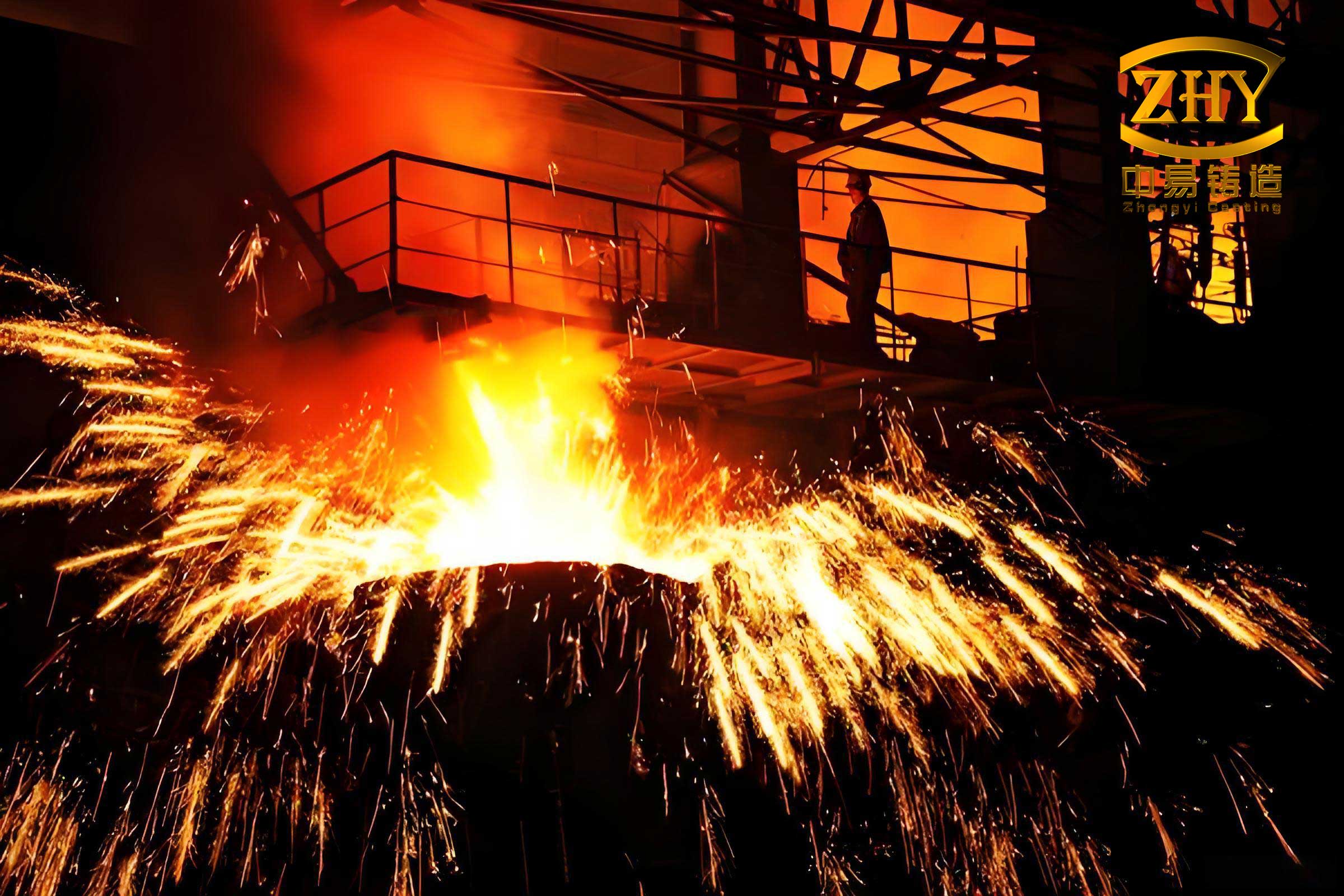
The DEM software provided real-time visualization of particle运动, allowing observation of flow regimes such as laminar streams, turbulent eddies, and stagnant zones. This capability is paramount for ductile iron castings, where incomplete filling can lead to defects like cold shuts or misruns. By tracking particle trajectories, I identified regions prone to air entrapment or premature solidification, informing potential design modifications. The dynamic interaction between particles and vibration forces elucidated mechanisms like inertial mobilization and boundary layer disruption, which enhance fluidity in ductile iron castings.
To quantify filling performance, I measured the充型 distance—the farthest point reached by particles along the cavity length within the simulation time. This metric correlates with the实际充型 ability of molten metal; greater distances imply improved flow penetration, crucial for complex geometries in ductile iron castings. The number of particles at the furthest location also indicated packing density, reflecting how well the cavity is filled. These data points were recorded for each parameter set, forming the basis for comparative analysis.
The simulation revealed that vibration significantly alters flow kinematics. Without vibration, particles tended to settle quickly, leading to uneven filling. With applied vibrations, especially multi-dimensional ones, particles exhibited enhanced dispersion due to oscillatory forces that counteract gravitational settling. This effect is mathematically describable through modified equations of motion that include vibration-induced加速度. For a particle under vibration, the effective acceleration becomes:
$$ \mathbf{a}_{\text{eff}} = \mathbf{g} + \mathbf{a}_{\text{vib}}(t) $$
where \(\mathbf{g}\) is gravity and \(\mathbf{a}_{\text{vib}}(t)\) is the time-dependent vibration acceleration, derived from the second derivative of displacement. This additive acceleration field promotes particle agitation, reducing friction-dominated regions and improving overall filling uniformity for ductile iron castings.
Influence of Vibration Parameters on Filling Ability
Using controlled variable methods, I analyzed the impact of vibration degrees of freedom, frequency, and amplitude on充型 distance, thereby inferring their effects on the filling ability of ductile iron castings. Each parameter was varied while holding others constant, with results tabulated to facilitate comparison.
Effect of Vibration Degrees of Freedom
Vibration degrees of freedom refer to the number of spatial axes along which vibrations are applied: single-degree (X, Y, or Z), two-degree (XY, XZ, or YZ), and three-degree (XYZ). With frequency fixed at \(50 \, \text{Hz}\) and amplitude at \(0.5 \, \text{mm}\), I simulated various DOF configurations. The充型 distances and particle counts at the furthest location are summarized in Table 3. Results indicate that充型 distance increases with higher degrees of freedom, peaking at DOF=3 (XYZ). This trend suggests that multi-dimensional vibrations generate more complex force fields, which better disrupt particle agglomeration and enhance flow propagation in ductile iron castings.
| Degrees of Freedom | Filling Distance (mm) | Particle Count at Furthest Location |
|---|---|---|
| X | 300 | 76 |
| Y | 361 | 2 |
| Z | 300 | 12 |
| XY | 361 | 7 |
| XZ | 401 | 4 |
| YZ | 401 | 7 |
| XYZ | 446 | 10 |
The underlying physics can be explained through vector superposition. Single-axis vibrations produce linear oscillatory motions that may align unfavorably with cavity geometry, limiting their effectiveness. Two-axis vibrations introduce elliptical trajectories, offering better coverage, while three-axis vibrations create spatial helical paths that maximize particle-fluidization. For ductile iron castings, this implies that multi-dimensional vibrations can more effectively reach recessed areas, reducing the likelihood of defects. The particle count data further supports this, showing that higher DOF configurations tend to achieve more uniform particle distribution at distant cavities.
Effect of Vibration Frequency
Vibration frequency governs the rate of oscillatory cycles, influencing energy input and flow regime transitions. Holding DOF=3 and amplitude at \(0.5 \, \text{mm}\), I varied frequency from \(10 \, \text{Hz}\) to \(60 \, \text{Hz}\). The results, presented in Table 4, show that充型 distance peaks at \(50 \, \text{Hz}\), beyond which it declines. This non-linear response highlights an optimal frequency range for ductile iron castings, where vibration energy sufficiently agitates particles without inducing excessive turbulence that impedes flow.
| Vibration Frequency (Hz) | Filling Distance (mm) | Particle Count at Furthest Location |
|---|---|---|
| 10 | 235 | 32 |
| 20 | 300 | 59 |
| 30 | 361 | 6 |
| 40 | 426 | 38 |
| 50 | 446 | 3 |
| 60 | 401 | 2 |
The frequency effect can be modeled using resonance concepts. The natural frequency of the particle-mold system dictates how efficiently vibration energy is transferred. At lower frequencies, energy input is inadequate to overcome viscous forces; at very high frequencies, particles may experience chaotic motion, leading to energy dissipation through increased collisions. The optimal frequency around \(50 \, \text{Hz}\) likely coincides with a resonant mode that amplifies particle velocities, thereby extending充型 distance for ductile iron castings. Mathematically, the kinetic energy imparted per cycle scales with frequency and amplitude, but excessive frequency can cause phase lags that reduce effective displacement.
Effect of Vibration Amplitude
Vibration amplitude determines the magnitude of oscillatory displacement, directly affecting the inertial forces on particles. With DOF=3 and frequency fixed at \(50 \, \text{Hz}\), I tested amplitudes from \(0.1 \, \text{mm}\) to \(0.7 \, \text{mm}\). As shown in Table 5,充型 distance increases with amplitude up to \(0.5 \, \text{mm}\), then plateaus or slightly decreases. This indicates that moderate amplitudes optimally mobilize particles for ductile iron castings, while higher amplitudes may cause overshoot or destabilization.
| Vibration Amplitude (mm) | Filling Distance (mm) | Particle Count at Furthest Location |
|---|---|---|
| 0.1 | 235 | – |
| 0.2 | 361 | 16 |
| 0.3 | 426 | 8 |
| 0.5 | 491 | 38 |
| 0.6 | 466 | 2 |
| 0.7 | 466 | 1 |
The relationship between amplitude and filling distance can be approximated by a power law. Assuming particle motion is driven by forced vibrations, the mean displacement per cycle scales with amplitude. However, at very high amplitudes, geometric constraints of the cavity may limit further gains, or particles may bounce excessively, reducing net forward flow. For ductile iron castings, an amplitude of \(0.5 \, \text{mm}\) appears to balance energy input and flow stability, ensuring thorough cavity filling. The particle count data corroborates this, showing a peak at \(0.5 \, \text{mm}\), suggesting denser packing at the furthest points.
Orthogonal Experimental Analysis
To efficiently evaluate the combined influence of vibration parameters and identify optimal settings for ductile iron castings, I employed orthogonal experimental design. This statistical method reduces the number of required trials while maintaining representativeness. The factors considered were vibration degrees of freedom (B), vibration frequency (C), and vibration amplitude (D), each at three levels, as detailed in Table 6. An \(L_9(3^4)\) orthogonal array was used, with an empty column reserved for error estimation. The response variable was充型 distance, measured in millimeters.
| Factor | Level 1 | Level 2 | Level 3 |
|---|---|---|---|
| B: Degrees of Freedom | 1 (X) | 2 (XY) | 3 (XYZ) |
| C: Frequency (Hz) | 10 | 30 | 50 |
| D: Amplitude (mm) | 0.1 | 0.3 | 0.5 |
The experimental design and results are presented in Table 7. For each factor, I calculated the sum of responses at each level (K1, K2, K3), the average response (k1, k2, k3), and the range (R). The range values indicate the factor’s influence magnitude: larger ranges denote greater impact on充型 distance for ductile iron castings.
| Experiment No. | B | C | D | Empty Column | Filling Distance (mm) |
|---|---|---|---|---|---|
| 1 | 1 | 1 | 1 | 1 | 300 |
| 2 | 1 | 2 | 2 | 2 | 336 |
| 3 | 1 | 3 | 3 | 3 | 361 |
| 4 | 2 | 1 | 2 | 3 | 300 |
| 5 | 2 | 2 | 3 | 1 | 361 |
| 6 | 2 | 3 | 1 | 2 | 426 |
| 7 | 3 | 1 | 3 | 2 | 300 |
| 8 | 3 | 2 | 1 | 3 | 491 |
| 9 | 3 | 3 | 2 | 1 | 426 |
| K1 | 997 | 900 | 1217 | 1087 | |
| K2 | 1087 | 1188 | 1062 | 1062 | |
| K3 | 1217 | 1213 | 1022 | 1152 | |
| k1 | 332.3 | 300.0 | 405.7 | 362.3 | |
| k2 | 362.3 | 396.0 | 354.0 | 354.0 | |
| k3 | 405.7 | 404.3 | 340.7 | 384.0 | |
| R | 73.4 | 104.3 | 65.0 | 30.0 |
From the range values, the order of influence on充型 distance is: C (frequency) > B (degrees of freedom) > D (amplitude). This suggests that vibration frequency is the most critical parameter for enhancing filling in ductile iron castings, followed by degrees of freedom and amplitude. The optimal combination derived from the experiment is B3C3D1, corresponding to three degrees of freedom (XYZ), frequency of \(50 \, \text{Hz}\), and amplitude of \(0.5 \, \text{mm}\). This aligns with earlier controlled-variable findings, reinforcing the robustness of the results.
The orthogonal analysis also facilitates variance examination. The empty column’s small range relative to factors confirms that experimental error is minimal, validating the reliability of conclusions for ductile iron castings. Furthermore, interaction effects between factors, though not explicitly studied here, could be explored in future work to refine understanding. The statistical significance of these results underscores the value of DEM simulations in optimizing vibration-assisted casting processes for ductile iron castings.
Discussion on Mechanisms and Practical Implications
The observed trends in filling distance can be explained through fluid-dynamic and granular theory. Under vibration, particles experience periodic forces that modulate their effective weight and friction. The governing equation for a particle in a vibrating frame is:
$$ m \ddot{\mathbf{r}} = \mathbf{F}_{\text{contact}} + m\mathbf{g} – m \mathbf{A} \omega^2 \sin(\omega t) $$
where \(\mathbf{r}\) is position, \(\mathbf{A}\) is amplitude vector, \(\omega = 2\pi f\) is angular frequency, and the last term represents vibration-induced inertia. This equation shows that vibration can temporarily reduce or reverse gravitational effects, promoting particle suspension and mobility. For ductile iron castings, this means that properly tuned vibrations can counteract gravity-driven settling, enabling more uniform filling of vertical and horizontal sections.
The superiority of multi-dimensional vibrations stems from their ability to generate complex acceleration fields. In single-axis vibrations, particles oscillate along a fixed direction, which may not align with cavity contours. Multi-axis vibrations, however, produce rotational and helical accelerations that can penetrate死角 regions. This is particularly beneficial for ductile iron castings with intricate geometries like crankshafts, where盲孔 and undercuts are common. The DEM simulations visually confirmed that three-degree-of-freedom vibrations induced more chaotic yet directed motion, leading to better cavity coverage.
Frequency optimization relates to the system’s dynamic response. The natural frequency of the particle assembly depends on mass, stiffness, and damping. When external vibration frequency matches or is near this natural frequency, resonance occurs, amplifying particle displacements. However, excessive frequency can lead to wave scattering and energy loss, as particles cannot follow rapid oscillations. The optimal \(50 \, \text{Hz}\) likely represents a compromise between inertial forcing and viscous damping in ductile iron castings. This insight can guide the design of vibration equipment for foundries, ensuring efficient energy use.
Amplitude effects are tied to energy input per cycle. Larger amplitudes increase the work done on particles, but beyond a point, geometric constraints cause collisions that dissipate energy. The plateau in filling distance above \(0.5 \, \text{mm}\) suggests a saturation effect, where additional amplitude yields diminishing returns for ductile iron castings. Practically, this implies that moderate vibration amplitudes are sufficient, reducing mechanical wear and power consumption in industrial settings.
The integration of DEM with orthogonal experimental design offers a powerful framework for process optimization. By simulating numerous parameter combinations computationally, costly physical trials for ductile iron castings can be minimized. This approach is scalable to other casting alloys and geometries, democratizing access to advanced process design. Moreover, the real-time visualization capabilities of DEM aid in educational and training contexts, helping engineers visualize flow phenomena that are otherwise opaque in traditional casting.
Conclusions
In this study, I conducted a numerical simulation of the multi-dimensional vibration casting filling process for ductile iron crankshafts using the discrete element method. Through controlled variable experiments and orthogonal design, I analyzed the effects of vibration degrees of freedom, frequency, and amplitude on充型 distance, serving as an indicator for the filling ability of ductile iron castings. The results demonstrate that vibration frequency exerts the most significant influence, followed by degrees of freedom and amplitude. The optimal parameter set—three degrees of freedom (XYZ), frequency of \(50 \, \text{Hz}\), and amplitude of \(0.5 \, \text{mm}\)—yields the maximum filling distance, thereby enhancing the成型 quality of ductile iron castings.
Compared to traditional casting approaches, DEM simulations provide a realistic representation of molten metal flow within mold cavities, enabling real-time observation and analysis of multi-dimensional vibration impacts. This methodology not only circumvents the high costs and prolonged cycles associated with physical experiments but also deepens the mechanistic understanding of vibration-assisted casting for ductile iron castings. The findings offer a theoretical foundation for applying discrete element method in optimizing vibration parameters, ultimately contributing to improved efficiency and reduced defects in the production of ductile iron castings for automotive and other high-performance applications.
Future work could extend this research by incorporating thermal effects to simulate solidification, exploring vibration patterns beyond sinusoidal waves, or validating DEM predictions with physical experiments on ductile iron castings. Additionally, machine learning techniques could be integrated to automate parameter optimization, further advancing the intelligence of casting process design for ductile iron castings.