
In the modern foundry industry, the design of casting processes is the initial and most critical step in the entire production chain. The quality of the process design directly determines the final product quality and the economic efficiency of the enterprise. Traditional casting process design relies heavily on accumulated empirical knowledge and iterative trial-and-error methods, which often lead to prolonged development cycles, excessive material consumption, and high labor costs. With the rapid advancement of computer technology, numerical simulation has emerged as a powerful tool to transform process design from experience-based judgment into scientific prediction. In this thesis, I focus on the numerical simulation and process optimization of a steel casting product, specifically the K6 bolster, using the ProCAST software. Additionally, I design and develop a casting simulation database system to support the efficient application of simulation tools in an industrial environment.
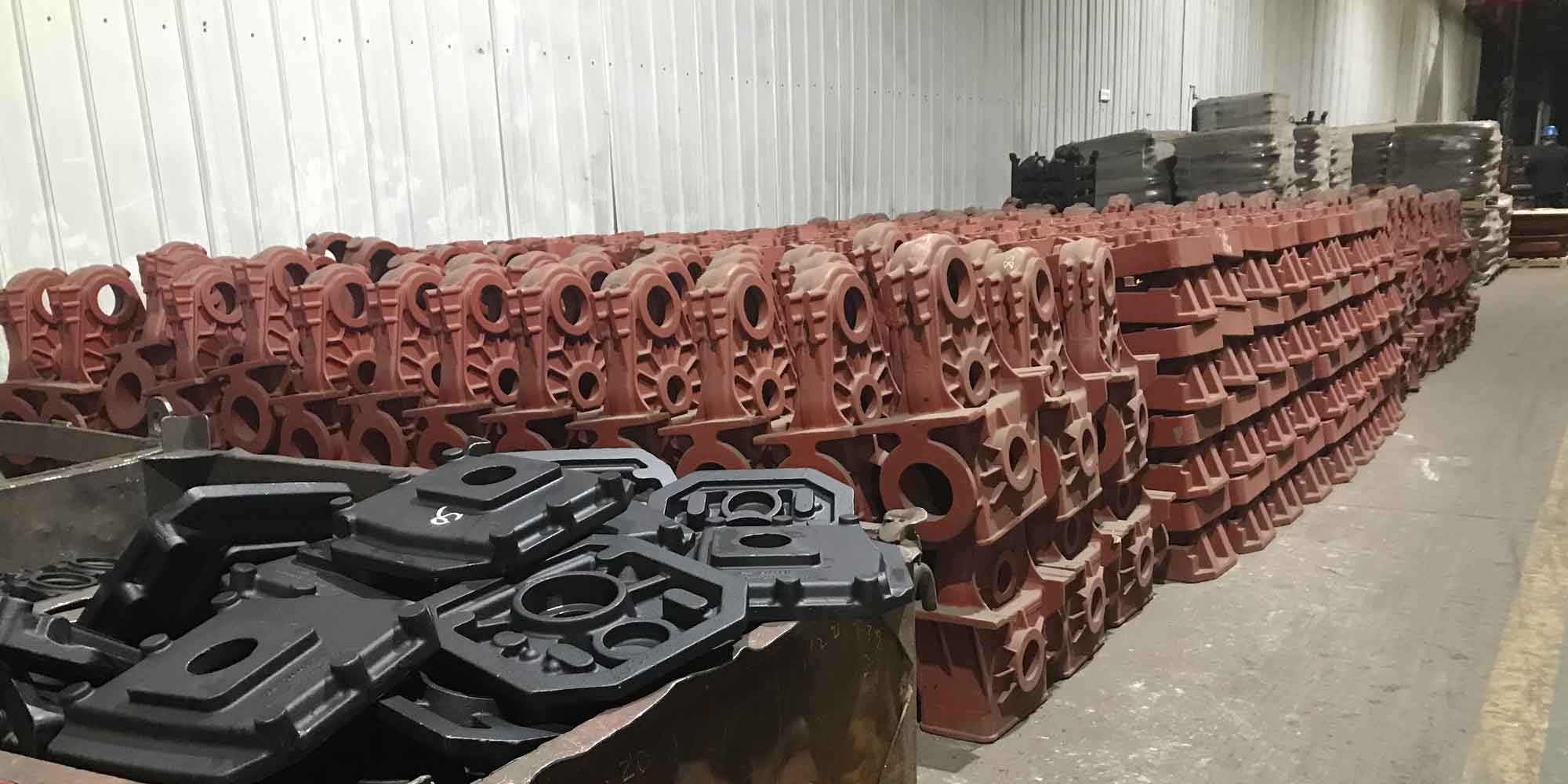
The K6 bolster is a key load-bearing component in railway freight car bogies. Its structure is relatively complex, with uneven wall thickness, multiple internal ribs, and critical mounting surfaces. During service, it must withstand dynamic impact forces from various directions, making it prone to fatigue damage. Therefore, the acceptance criteria for this steel casting are not limited to dimensional accuracy and surface finish; internal soundness and the absence of casting defects are of paramount importance. A robust and well-validated casting process is essential to ensure the reliability of this component. However, the existing process scheme, largely based on traditional experience, still exhibits occasional defects in production, such as shrinkage porosity and hot tears in certain areas. To address these issues, I applied ProCAST to simulate the filling and solidification processes, verified the rationality of the current gating system and pouring temperature, and optimized the process to eliminate defects.
1. Research Background and Significance
China is one of the largest producers of steel castings in the world, yet it is not yet a global leader in casting technology. To enhance competitiveness, the foundry industry must embrace digitalization and simulation-driven design. The casting process involves high-temperature molten metal, complex physical and chemical reactions, and rapid solidification, making direct observation extremely difficult. Traditional empirical methods are insufficient to predict internal defects accurately. Numerical simulation, however, allows engineers to visualize the filling and solidification processes, predict defect locations, and optimize process parameters before physical trials. This approach significantly shortens product development cycles, reduces costs, and improves product quality.
The application of simulation software such as ProCAST, MAGMA, Flow-3D, AnyCasting, and HuaZhu CAE has become increasingly prevalent. While many enterprises have attempted to adopt these tools, only a few have achieved sustained and economically beneficial use. The main barriers include the steep learning curve, the lack of reliable material data, and the difficulty in integrating simulation results into everyday process design. In this thesis, I address these challenges by conducting a comprehensive simulation study on a production steel casting and by building a dedicated casting simulation database system that centralizes material parameters and process data.
2. Casting Simulation Software Overview
Several commercial software packages are available for casting simulation. ProCAST, developed by ESI Group, is based on the finite element method and offers advanced capabilities for predicting flow, thermal distribution, and stress fields. It includes modules for mesh generation, process parameter setting, and post-processing. AnyCasting, developed in Korea, provides comprehensive filling and solidification analysis. HuaZhu CAE, developed by Huazhong University of Science and Technology, is widely used in China for its practical features. Among these, ProCAST is particularly suited for complex steel castings due to its robust thermal and flow solvers, extensive material database, and ability to handle coupled fluid-thermal-stress analysis.
In my work, I utilized ProCAST for the numerical simulation of the K6 bolster. The software comprises four main components: MeshCAST for mesh generation, PreCAST for boundary and initial condition setup, DataCAST/ProCAST for solving, and ViewCAST for post-processing. The accuracy of simulation depends strongly on the quality of the finite element mesh and the accuracy of input material properties.
3. Product Analysis and Three-Dimensional Modeling
The K6 bolster has a length of 2429 mm, a width of 470 mm, and a height of 355 mm, with a part weight of approximately 640 kg. The material is B+ grade steel (ZG25MnCrNi). The product contains two elongated rectangular openings for brake rod passage, three internal ribs connecting the upper and lower walls, and spring seat surfaces. The wall thickness varies significantly, leading to multiple localized hot spots, especially at the intersections of ribs and walls. These hot spots are prone to shrinkage porosity and hot cracking. Additionally, the dimensional requirements for the center plate, side bearing seats, and spring surfaces are stringent, which further complicates the casting process.
Three-dimensional modeling of the K6 bolster was performed using Creo Parametric 2.0. Since ProCAST does not provide solid modeling capabilities, a third-party CAD tool was required. The geometry was built based on detailed product drawings and a physical reference part. Because of the symmetrical nature of the bolster, a one-quarter model was first constructed, and then full geometry was generated using mirror commands. Subsequently, the gating system and risers were added according to the existing process design, including sprue, runner, ingates, risers on the pedestal and center plate, and anti-cracking ribs. The final assembly was exported in IGES format and imported into MeshCAST for mesh generation.
4. Numerical Simulation Setup and Methodology
4.1 Basic Governing Equations
The numerical simulation of steel casting involves solving the conservation equations of mass, momentum, and energy. The molten steel is treated as an incompressible Newtonian fluid. The continuity equation is expressed as:
$$\frac{\partial \rho}{\partial t} + \nabla \cdot (\rho \mathbf{v}) = 0 \tag{1}$$
where \(\rho\) is density and \(\mathbf{v}\) is the velocity vector. The momentum equation is the Navier-Stokes equation:
$$\frac{\partial (\rho \mathbf{v})}{\partial t} + \nabla \cdot (\rho \mathbf{v} \mathbf{v}) = -\nabla p + \nabla \cdot (\mu \nabla \mathbf{v}) + \rho \mathbf{g} \tag{2}$$
where \(p\) is pressure, \(\mu\) is dynamic viscosity, and \(\mathbf{g}\) is gravitational acceleration. The energy equation is:
$$\frac{\partial (\rho h)}{\partial t} + \nabla \cdot (\rho \mathbf{v} h) = \nabla \cdot (k \nabla T) + S_h \tag{3}$$
where \(h\) is enthalpy, \(k\) is thermal conductivity, \(T\) is temperature, and \(S_h\) is the source term accounting for latent heat during phase change. These equations are discretized using the finite element method and solved iteratively.
4.2 Initial and Boundary Conditions
Table 1 lists the initial simulation parameters used for the K6 bolster baseline case.
| Parameter | Value |
|---|---|
| Steel grade | B+ (ZG25MnCrNi) |
| Mold material | Ester-cured sodium silicate sand |
| Pouring temperature | 1570 °C |
| Ambient temperature | 20 °C |
| Pouring rate | 40 kg/s |
| Heat transfer coefficient at mold interface | 500 W/(m²·K) |
The melting temperature (liquidus temperature) of the steel was calculated using the empirical formula:
$$T = 1538 – \left(70 w[\text{C}] + 8 w[\text{Si}] + 5 w[\text{Mn}] + 30 w[\text{P}] + 25 w[\text{S}] + 4 w[\text{Ni}] + 1.5 w[\text{Cr}]\right) \tag{4}$$
Using the chemical composition specified in TB/T3012-2016 for B+ grade steel (shown in Table 2), the computed liquidus temperature is 1505.5 °C. With a superheat of 65 °C, the pouring temperature becomes 1570.5 °C, which matches the current process setting.
| C ≤ | Si ≤ | Mn ≤ | P ≤ | S ≤ | Cu ≤ | Ni ≤ | Cr ≤ | Mo ≤ |
|---|---|---|---|---|---|---|---|---|
| 0.29 | 0.50 | 1.00 | 0.030 | 0.030 | 0.30 | 0.20 | 0.50 | — |
4.3 Finite Element Mesh Considerations
Mesh generation is a critical step that profoundly influences both computational efficiency and simulation accuracy. The K6 bolster geometry is complex, with small fillets and sharp transitions. To ensure high-quality elements, I enlarged insignificant fillets with radii smaller than 3 mm and corrected non-connected lines. The number of mesh elements directly affects computation time and precision, as illustrated by the typical trade-off curve. In my study, I adopted a graded mesh strategy with finer elements in regions expecting steep thermal gradients and potential defects, and coarser elements in uniform sections. The resulting mesh is shown in the earlier figure. ProCAST’s MeshCAST module includes automatic mesh repair features, but manual correction was still necessary for some persistent problematic elements. After optimization, the mesh achieved acceptable quality, enabling stable and accurate simulations.
5. Simulation Results and Analysis
5.1 Validation of Gating System Design
The gating system must deliver molten metal into the cavity smoothly, prevent slag entrapment, and control the solidification sequence. For the K6 bolster, an open-type gating system was designed with the following measured cross-sectional areas: sprue \(F_{\text{直}} = 64\ \text{cm}^2\), runner \(F_{\text{横}} = 104\ \text{cm}^2\), and ingates \(F_{\text{内}} = 112\ \text{cm}^2\). The area ratio is:
$$F_{\text{直}}:F_{\text{横}}:F_{\text{内}} = 1:1.6:1.8 \tag{5}$$
Because the bolster is a box-like structure with high points on the top mold, two ingates were placed on one end, allowing the melt to enter from both the upper and lower cavities simultaneously. The filling process was simulated, and the velocity field was analyzed at various moments. Table 3 summarizes the filling behavior.
| Filling fraction | Velocity magnitude | Flow behavior |
|---|---|---|
| 0–10% | Varies significantly | Turbulent, risk of entrapment |
| 10–25% | Increases to peak | Direction stabilizes |
| 25–50% | Gradually decreases | Mostly laminar |
| 50–100% | Uniformly low | Steady upward rise |
The temperature field during filling was also examined. The results indicated that a large flat area near the bottom experienced lower melt velocity and temperature, which could lead to cold shuts or misruns. However, due to the multi-ingate design and sufficient superheat, these potential defects were mitigated in practice. The solidification temperature field revealed that isolated liquid regions might form in thick sections, especially around the internal rib intersections. This qualitative observation was consistent with typical defect locations in similar steel castings.
Based on these simulation results, the existing gating system was confirmed to be scientifically sound. The open-type design with multiple ingates provides gentle filling, good slag trapping, and controlled solidification gradients. Production data also validated this design, as the castings exhibited minimal filling-related defects.
5.2 Pouring Temperature Optimization
Pouring temperature is a critical parameter that significantly affects the quality of steel castings. If too high, it increases melt shrinkage, gas absorption, and mold erosion, leading to hot tears, shrinkage porosity, and gas holes. If too low, fluidity drops, causing cold shuts and misruns. The current process uses a pouring temperature range of 1560–1575 °C. To verify this setting and to explore the relationship between temperature and defect formation, I conducted three simulations with pouring temperatures of 1560 °C, 1570 °C, and 1580 °C. All other parameters were held constant.
Defect predictions using ProCAST’s porosity module are shown in Table 4. The results indicate that the total predicted shrinkage porosity volume varies slightly among the three cases, with the minimum at 1570 °C. The differences, however, are not significant, suggesting that the current temperature range is robust.
| Pouring temperature (°C) | Relative defect volume | Defect distribution |
|---|---|---|
| 1560 | Baseline + 8% | Scattered porosity in thick sections |
| 1570 | Baseline (minimum) | Isolated small porosity |
| 1580 | Baseline + 5% | Slightly larger porosity near risers |
Random sampling of production pouring records confirmed that the actual pouring temperatures were consistently maintained around 1570 °C. Therefore, the current specification of 1560–1575 °C is both practical and optimal.
5.3 Defect Prediction and Process Optimization
In the baseline simulation, I observed a significant shrinkage porosity concentration below the pedestal (斜楔) area of the bolster. The existing process had no countermeasures for this location. To verify the simulation prediction, I sectioned ten castings from different heats using air arc gouging. Eight of them exhibited obvious shrinkage cavities and porosity, closely matching the simulation location. Figure in the previous section displays the defect as predicted and the actual opened defect.
To solve this problem, I carried out two remedial trials. The first trial used chromite sand in the affected core area, which improved the condition but did not completely eliminate the defects. The second trial used external chills placed on the mold surface. The chill rapidly extracted heat from the hot spot, effectively promoting directional solidification. The results showed that the porosity was completely eliminated in the second trial. Table 5 compares the two countermeasures.
| Countermeasure | Defect elimination ratio | Practical difficulty |
|---|---|---|
| Chromite sand | Partial (~60%) | Low, but gaps in placement |
| External chill | Complete (~100%) | Moderate, requires conformal placement |
Following this successful optimization, the chill was added to the standard process documentation. The same simulation-driven method can be applied to other existing products to uncover hidden risks and improve quality while reducing cost and lead time. This example demonstrates the practical value of ProCAST in optimizing mature process schemes.
6. Development of Casting Simulation Database System
6.1 System Requirements and Evaluation Criteria
To facilitate the widespread use of simulation software, engineers need quick access to reliable material data, process parameters, and product records. Traditional methods of manually searching through drawings and procedures are slow and error-prone. Therefore, I designed a casting simulation database system tailored to the company’s products. The evaluation criteria for this system are:
- Content completeness: The database should contain all necessary material properties and process data for every steel casting product.
- Functional completeness: The system should support searching, adding, modifying, deleting, and viewing records.
- Interoperability: The data should be compatible with simulation software inputs, enabling seamless parameter lookup.
6.2 System Architecture and Technology Selection
The database system is based on the Client/Server (C/S) architecture and was developed using the .NET platform with Windows Forms (Winform) technology. This choice was made because Winform is mature, well-documented, and allows rapid development of rich desktop applications. The development environment is Microsoft Visual Studio 2010 running on Windows 10. No additional hardware was required, making the project economically feasible. The system provides an intuitive user interface with a tree-view navigation for product categories: military products, civil products, and export products. Users can perform fuzzy searches by product name or drawing number, and view detailed information including product number, steel grade, weight, number of cores, pouring temperature, pouring rate, number of chills, and molding method. The system also stores a product drawing image for each steel casting.
6.3 Database Design
Table 6 shows the structure of the product information table.
| Column name | Data type | Primary key | Allow null | Description |
|---|---|---|---|---|
| type | string | No | No | Category (military, civil, export) |
| no | string | Yes | No | Product drawing number |
| name | string | No | No | Product name |
| gType | string | No | No | Steel grade |
| zl | decimal | No | No | Product weight |
| num | int | No | No | Number of cores |
| wendu | decimal | No | No | Pouring temperature |
| sudu | string | No | No | Pouring rate |
| ltNum | int | No | No | Number of chills (internal/external) |
| Zxff | string | No | No | Molding method |
| img | byte[] | No | No | Product drawing image |
The system serializes data using JSON for simplicity and portability. The data layer is implemented as a helper class that reads and writes records to a local binary file. The business layer contains functions for validation, and the UI layer provides forms for list display, editing, and image viewing. The main interface is shown in the previous section.
6.4 Implementation of Core Functions
The product information management form includes buttons for adding, deleting, modifying, searching, and refreshing. When the form loads, it binds data to a DataGridView control, hiding the type and image columns. The search function filters records dynamically based on user input. Adding and editing use a dialog form where the user enters all fields; the system validates required fields and numeric ranges before saving. Deletion prompts for user confirmation and updates the local file. The following pseudo-code illustrates the save and deleting functions used in the system.
Save function core logic:
When saving, the system determines whether it is an add or an update operation based on the existence of a drawing number. If adding, a new Model object is created and appended to the list. If updating, the existing record is removed and the modified one is added. The list is then serialized to JSON and written to the file. The code ensures that all required fields are populated and that numeric fields are correctly parsed.
Delete function core logic:
The delete function obtains the selected row’s drawing number, displays a confirmation message, and then removes the record from the list. The updated list is persisted to the file. The grid is rebound to reflect the change. Error handling is included to manage file access exceptions and to inform the user of failures.
The database system significantly reduces the time required for parameter search and ensures consistency between simulation input and actual production data. It is a practical companion tool for ProCAST users, especially for process engineers who need to prepare multiple simulation cases efficiently.
7. Conclusion
In this thesis, I have presented a comprehensive numerical simulation and process optimization study on a steel casting product, the K6 bolster, using ProCAST software. The main conclusions are as follows:
- Through the analysis of velocity fields, temperature fields during filling, and temperature fields during solidification, the existing gating system design has been verified to be scientifically reasonable. The open-type system with multiple ingates ensures smooth filling and effective slag trapping, which aligns with practical production outcomes.
- The rationality of the current pouring temperature range (1560–1575 °C) was confirmed. Simulations at 1560 °C, 1570 °C, and 1580 °C showed that defect volume is minimal at 1570 °C, but the differences are small. Therefore, the current temperature specification is both feasible and robust.
- The simulation successfully predicted a shrinkage porosity defect below the pedestal area, which was subsequently confirmed in actual castings. By comparing two countermeasures, external chills proved to be effective in completely eliminating the defect, leading to an optimized process scheme. This demonstrates the power of ProCAST in detecting and resolving latent problems in existing steel casting processes.
- A casting simulation database system was designed and implemented using Winform. The system enhances the accessibility of accurate material and process data, thereby supporting efficient simulation workflows and promoting the broader adoption of numerical simulation in the foundry industry.
Numerical simulation is transforming the steel casting industry by reducing reliance on trial-and-error and enabling proactive quality assurance. The combined approach of ProCAST simulation and a dedicated database system provides a robust framework for continuous process improvement. Future work will focus on extending the database to include more material models, integrating thermal-physical property measurements, and coupling simulation results with production traceability for smarter manufacturing.