
In the realm of high-volume production for complex thin-walled cast iron components like automotive engine cylinder blocks, sand casting processes on streamlined assembly lines are predominant. The core jig, a critical tooling fixture, plays a pivotal role in ensuring dimensional accuracy during the assembly and placement of multiple sand cores into the mold cavity, while simultaneously matching the production pace of the流水线. Beyond these functional requirements, an optimal core jig must exhibit structural simplicity, reliability, ease of operation, and cost-effectiveness in manufacturing. However, despite its importance, detailed research on such tooling is scarce, and through my extensive evaluations of numerous foundries specializing in sand casting products, I have observed that many existing core jig designs possess significant shortcomings. This article, therefore, delves into my explorations and insights gained over years of designing, manufacturing, and applying these jigs, focusing on optimization strategies for the jig structure,本体, clamping mechanisms, and core positioning systems. The overarching goal is to enhance the efficiency and quality of producing sand casting products, particularly cylinder blocks, through refined工装设计.
The foundation of any core jig lies in its structural configuration. In practice, two primary types emerge based on balance considerations: single-layer and multi-layer structures. Additionally, based on the clamping power source, they can be categorized into manually operated and pneumatically actuated jigs. The structural choice profoundly influences design complexity, manufacturing cost, and usability. Below, I present a comparative analysis.
| Feature | Multi-Layer Structure (e.g., Two-Layer) | Single-Layer Structure |
|---|---|---|
| Structural Complexity | High; involves multiple框架体 (often aluminum alloy for lightweighting). | Low; a unitary frame body simplifies design. |
| Manufacturing Cost | Substantially higher due to complex components and materials. | Significantly lower, offering economic advantages for sand casting products production. |
| Weight & Handling | Relatively笨重, leading to operational inconvenience and higher energy consumption. | Lighter, especially with optimized壁厚, enhancing operator ergonomics. |
| Balance Stability | Perceived as excellent due to layered support. | Achieves comparable stability using 3-4 balance bars, a crucial yet often overlooked element. |
| Suitability | May be over-engineered for many applications. | Highly versatile and widely preferred in foundries for sand casting products. |
The single-layer structure, as illustrated conceptually, effectively mitigates the drawbacks of multi-layer designs. Its stability is ensured by strategically placed balance bars, which distribute load evenly. This design philosophy not only reduces material usage but also aligns with lean manufacturing principles essential for competitive sand casting products output. The weight reduction can be quantified by considering the volume and density of materials saved. If we denote the volume of the multi-layer frame as \( V_m \) and the single-layer as \( V_s \), with material density \( \rho \), the weight saving \( \Delta W \) is:
$$ \Delta W = \rho (V_m – V_s) $$
For typical aluminum alloys (\( \rho \approx 2.7 \, \text{g/cm}^3 \)), optimizing from a multi-layer to a single-layer design can yield savings of several kilograms, directly lowering inertial forces during handling and improving production line dynamics.
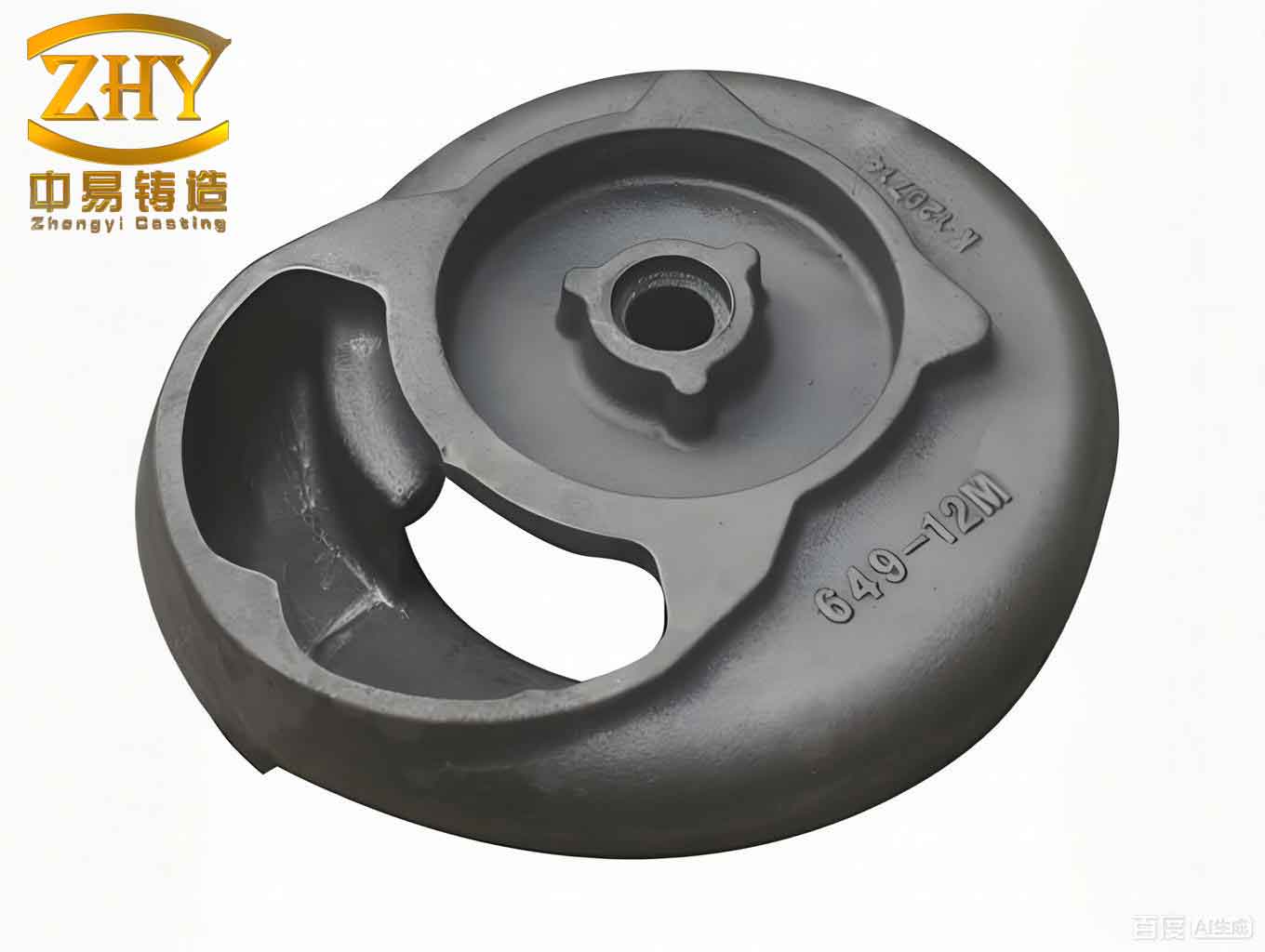
Moving beyond mere functionality, the aesthetic and ergonomic design of the jig本体 is paramount in modern foundries. A well-designed jig should resemble a precision instrument rather than traditional, crude tooling. This is especially true for companies specializing in sand casting products, where工装 reflects technological prowess. Optimization here involves three key aspects: surface finish, application of the golden ratio, and balancing rigidity with weight.
Firstly, all externally visible surfaces should be finely machined. This not only enhances appearance but also reduces friction and wear. Shifting from an externally ribbed, rough finish to an internally ribbed, smooth exterior (as in the single-layer design) achieves this. Secondly, the golden ratio (\( \phi \approx 1.618 \) or \( 0.618 \)) should guide dimensional proportions. For instance, the jig body width \( W \) relative to length \( L \) can be set as \( W = L / \phi \). Similarly, the placement of balance bars and window openings on side panels can follow黄金分割点. Mathematically, if a segment of length \( L \) is divided into two parts \( a \) and \( b \) such that \( \frac{a+b}{a} = \frac{a}{b} = \phi \), then these points create visually harmonious dimensions. Applying this to window dimensions, if a panel has height \( H \) and width \( W_w \), optimal window height \( h_w \) and width \( w_w \) might be:
$$ h_w = H / \phi, \quad w_w = W_w / \phi $$
This principle yields协调的 structures that are aesthetically pleasing and psychologically reassuring to operators, fostering a culture of quality in sand casting products manufacturing.
Thirdly, rigidity and weight must be optimized. While cast structures (e.g., from铸铁 or aluminum) are preferred for stiffness, excessive wall thickness (e.g., 25–35 mm) is wasteful. Through finite element analysis (FEA) simulations, I have determined that a wall thickness \( t \) of 12–15 mm, supplemented with strategic reinforcement ribs, suffices. The bending stiffness \( S \) of a plate section is proportional to \( t^3 \). For a given load \( F \), the deflection \( \delta \) can be approximated by:
$$ \delta \propto \frac{F L^3}{E t^3} $$
where \( E \) is the modulus of elasticity and \( L \) is a characteristic length. Reducing \( t \) from 30 mm to 15 mm increases \( \delta \) by a factor of \( (30/15)^3 = 8 \), but by adding ribs, the effective moment of inertia \( I \) is boosted, maintaining acceptable deflection. Thus, weight reduction \( \Delta m \) is achieved without compromising performance, crucial for energy-efficient handling of sand casting products tooling. The mass saving per unit area is:
$$ \Delta m = \rho A (t_{\text{old}} – t_{\text{new}}) $$
where \( A \) is the surface area. For a typical jig body, this can translate to savings of 10–20 kg, reducing operational fatigue and power consumption on automated lines.
Clamping mechanisms are the active components securing the assembled sand cores during transfer. Two prevalent types exist: rotary and translational (linear) clamping structures, often powered pneumatically or manually. The choice impacts adaptability, cost, and efficiency in sand casting products production.
| Aspect | Rotary Clamping Structure | Translational Clamping Structure |
|---|---|---|
| Actuation | Typically pneumatic; uses cylinders to rotate clamping plates via linkages. | Can be pneumatic or manual; clamping plates move linearly. |
| Automation Level | High, suitable for fast-paced流水线 with quick cycle times. | Equally high with pneumatic actuation; manual versions suit slower lines. |
| Adaptability | Poor; clamping points are fixed, limiting use to specific cylinder block designs. | Excellent; adjustable clamping points allow versatility for similar sand casting products. |
| Design & Cost | Complex, requiring precise kinematics; higher manufacturing cost. | Simpler, with easier fabrication and lower cost. |
| Clamping Force | Can be uneven due to rotational leverage. | More uniform and controllable, especially in manual versions. |
| Preferred Scenario | Dedicated high-volume lines for a single product. | Multi-product lines or non-streamlined production for varied sand casting products. |
From my experience, translational clamping structures are generally superior. Pneumatic versions match the speed of rotary types while offering greater flexibility. For instance, the clamping force \( F_c \) in a translational system can be directly related to pneumatic pressure \( P \) and cylinder area \( A_c \):
$$ F_c = P \cdot A_c $$
This linear relationship simplifies control. In manual versions, lever mechanisms provide mechanical advantage, ensuring adequate force without external power. The force amplification can be expressed as:
$$ F_c = F_{\text{input}} \cdot \frac{L_{\text{effort}}}{L_{\text{load}}} $$
where \( F_{\text{input}} \) is the operator’s force, and \( L_{\text{effort}} \) and \( L_{\text{load}} \) are lever arms. Such designs are invaluable in foundries with fluctuating air supply or those producing low-to-medium volumes of sand casting products. Moreover, the adaptability of translational jigs means one jig can accommodate multiple cylinder block variants with minor adjustments, reducing tooling inventory costs. This is critical for foundries aiming to diversify their sand casting products portfolio without excessive capital expenditure.
The core positioning system on the jig ensures that the assembled sand cores are correctly oriented and seated during placement into the mold. While various定位块 are used, the most critical are height limit blocks, which control the vertical position of the core assembly within the cavity. Omitting these often leads to misalignment, requiring additional tooling or manual intervention, thereby compromising consistency in sand casting products quality.
The height positioning accuracy \( \Delta h \) is influenced by factors like wear and thermal expansion. If the nominal height is \( H_0 \), and the jig’s limit block has a tolerance \( \pm \delta \), then the core position varies by \( \Delta h = 2\delta \). To minimize this, limit blocks should be made from wear-resistant materials and designed for easy replacement. The relationship between core settling force \( F_s \) and friction \( \mu \) can be modeled as:
$$ F_s \geq \mu N $$
where \( N \) is the normal force from clamping. Proper height limitation reduces the need for external settling forces, enhancing precision. In practice, I recommend integrating at least three height limit blocks positioned at黄金分割 points on the jig frame to ensure stable support. This is especially important for complex sand casting products like cylinder blocks, where internal passageways demand tight tolerances. Additionally, for cores with uneven surfaces, the contact pressure \( P_c \) on limit blocks should be checked to avoid core damage:
$$ P_c = \frac{F_c}{A_{\text{contact}}} $$
where \( A_{\text{contact}} \) is the contact area. Ensuring \( P_c \) is below the core material’s compressive strength prevents crushing, a common defect in sand casting products if jigs are poorly designed.
Beyond these technical aspects, the integration of digital tools can further optimize jig design. For example, using CAD software with simulation modules allows virtual testing of jig performance under load. The stress distribution \( \sigma \) in the jig body can be analyzed to identify weak points. According to von Mises criteria, yielding occurs when:
$$ \sigma_{\text{von Mises}} = \sqrt{\frac{(\sigma_1 – \sigma_2)^2 + (\sigma_2 – \sigma_3)^2 + (\sigma_3 – \sigma_1)^2}{2}} \geq \sigma_y $$
where \( \sigma_1, \sigma_2, \sigma_3 \) are principal stresses and \( \sigma_y \) is the material yield strength. Optimizing geometry to reduce \( \sigma_{\text{von Mises}} \) below \( \sigma_y \) ensures durability. Furthermore, lifecycle cost analysis can be applied to jig selection. The total cost \( C_{\text{total}} \) over \( n \) production cycles includes initial cost \( C_0 \), maintenance cost per cycle \( C_m \), and energy cost per cycle \( C_e \):
$$ C_{\text{total}} = C_0 + n (C_m + C_e) $$
For sand casting products with high volumes, investing in optimized jigs (higher \( C_0 \) but lower \( C_m \) and \( C_e \)) proves economical. For instance, a single-layer translational jig may have \( C_0 \) 20% lower than a multi-layer rotary jig, and \( C_e \) reduced by 15% due to lighter weight, leading to substantial savings over time.
In conclusion, the optimization of core jigs for cylinder block sand casting is a multifaceted endeavor that blends engineering rigor with aesthetic sensibility. By prioritizing single-layer structures with balance bars, refining本体 designs using golden ratio principles and weight-conscious engineering, selecting adaptable translational clamping mechanisms, and emphasizing precise height定位, foundries can achieve significant improvements in accuracy, efficiency, and cost-effectiveness. As the demand for high-quality sand casting products grows, especially in automotive sectors, such optimizations become indispensable. An exceptional tooling designer must not only be a technical expert but also an advocate for elegance and continuous improvement, always seeking to surpass previous iterations. Through these strategies, core jigs transform from mere functional aids into catalysts for excellence in sand casting products manufacturing, driving productivity and quality to new heights while fostering a culture of innovation on the shop floor.
To summarize key parameters, here is a table of optimal design values based on my experience for typical cylinder block core jigs in sand casting products production:
| Parameter | Recommended Value/Range | Notes |
|---|---|---|
| Jig Body Wall Thickness (cast) | 12–15 mm | With internal ribs for reinforcement. |
| Balance Bars Count | 3–4 | Placed at golden ratio points along length. |
| Clamping Type Preference | Translational (pneumatic or manual) | For versatility across sand casting products families. |
| Height Limit Blocks | Minimum 3 | Critical for vertical positioning accuracy. |
| Material for Wear Parts | Tool steel or hardened alloy | To withstand repeated use in sand casting environments. |
| Weight Reduction Target | 15–25% vs. traditional designs | Achieved through topology optimization. |
| Design Cycle Time Reduction | 30% using CAD simulations | Virtual prototyping accelerates development for sand casting products. |
Ultimately, the pursuit of optimization is ongoing. As new materials and technologies emerge, such as additive manufacturing for jig components or IoT sensors for real-time monitoring, further enhancements will be possible. For now, adopting the principles outlined here will undoubtedly elevate the performance of core jigs, ensuring that every cylinder block produced via sand casting meets the stringent demands of modern engineering, while keeping production lines agile and cost-competitive in the ever-evolving market for sand casting products.