
In the realm of precision manufacturing, the quality of foundational components is paramount. As someone deeply involved in the casting industry, I have dedicated considerable effort to refining processes for critical parts, particularly in the domain of machine tool casting. Among these, sliding saddle castings stand out due to their structural complexity and stringent performance requirements. These components, typically made of materials like HT300, serve as essential elements in machining centers, ensuring stability and accuracy. Over the years, I have observed that traditional casting methods often fall short in addressing challenges such as sand inclusion, burn-on, and operational difficulties, leading to increased scrap rates. This article delves into a comprehensive process improvement initiative for sliding saddle castings, leveraging firsthand insights to enhance quality and efficiency. Through this exploration, I aim to share detailed analyses, including mathematical models and comparative data, to underscore the significance of innovative approaches in machine tool casting.
The sliding saddle, a key member of the quintessential machine tool casting set—alongside the bed, column, spindle box, and worktable—plays a pivotal role in dynamic operations. Its design is inherently complex, featuring numerous small holes, windows, and intricate ribbing to bolster strength and rigidity. This complexity, however, translates into formidable challenges during foundry operations, especially in core-making and mold assembly. Traditionally, these castings are produced using furan resin sand with manual molding, employing wooden or metal patterns. In my practice, wooden patterns have been the norm, but they come with inherent limitations. The original casting process positioned the parting plane at the highest surface of the guide rail pedestal or its relief face, a decision that initially seemed logical for ensuring mold integrity. This approach placed the entire casting in the drag, with cores suspended from the cope, aiming to prevent misruns and misalignment. Yet, as I repeatedly witnessed, this method introduced a critical flaw: during mold closing, the suspended cores often grazed or collided with the drag mold walls, causing sand particles to dislodge and embed into the casting, leading to defects like sand inclusions. Even with increased clearances, issues persisted, exacerbating fin formation and subsequent machining damage. This highlighted an urgent need for a paradigm shift in the casting process for such machine tool casting components.
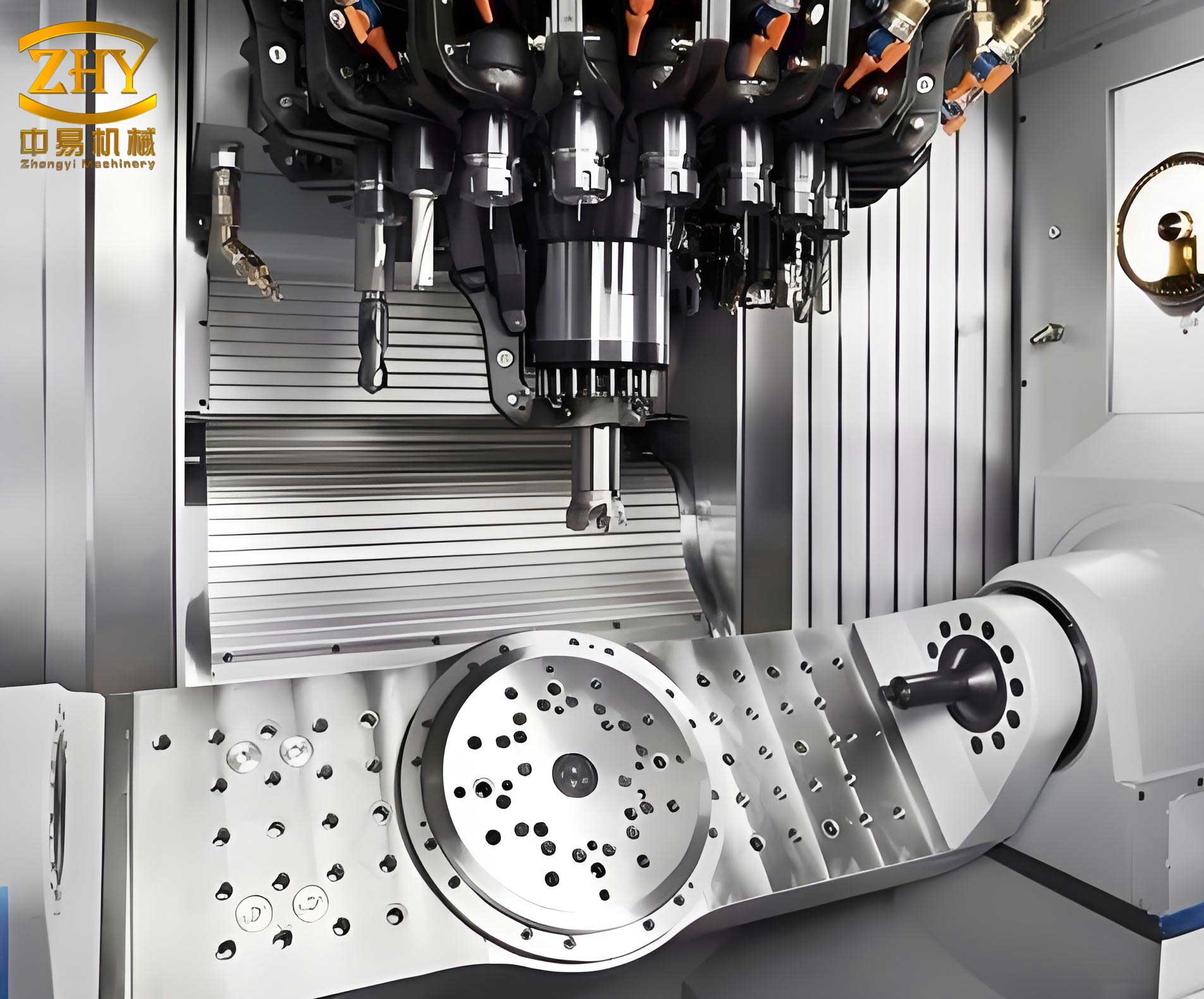
To address these shortcomings, I spearheaded a redesign of the casting methodology, focusing on two core aspects: parting plane relocation and gating system modification. The revised process shifts the parting plane to the two long guide rail surfaces, thereby transferring the entire casting to the cope. This alteration fundamentally changes the mold assembly dynamics. Instead of suspending cores from above, they are now placed into the cope before closing, allowing any dislodged sand to fall away during inversion—a simple yet effective solution to mitigate inclusion risks. Additionally, the gating system was overhauled from a choked to an open design, adjusting cross-sectional ratios and lowering metal velocity at the ingates. These changes are not merely operational tweaks but are grounded in fluid dynamics and solidification principles, which I will elaborate on with mathematical formulations. The improved process also retains positioning accuracy through extended guide rail gaps and box pins, ensuring that the benefits of the original method are preserved without its drawbacks. This holistic approach exemplifies how strategic adjustments in machine tool casting can yield substantial quality enhancements.
In analyzing the original gating system, it was designed as a closed type with a cross-sectional area ratio of $$S_{\text{sprue}} : S_{\text{runner}} : S_{\text{ingate}} = 1 : 1.83 : 0.86$$, leading to an ingate velocity of approximately 1.63 m/s. This high velocity, coupled with the runner’s elevated position, limited its slag-trapping efficiency and increased turbulence, contributing to defects. The improved system adopts an open design with a ratio of $$S_{\text{sprue}} : S_{\text{runner}} : S_{\text{ingate}} = 1 : 1.55 : 1.43$$, reducing the ingate velocity to about 0.87 m/s. This reduction is crucial, as it minimizes mold erosion and promotes smoother metal flow, enhancing the runner’s ability to capture impurities. The relationship between velocity and cross-sectional area can be expressed using the continuity equation for incompressible flow: $$Q = A_1 v_1 = A_2 v_2$$, where $$Q$$ is the volumetric flow rate, $$A$$ is area, and $$v$$ is velocity. By increasing the ingate area relative to the sprue, velocity decreases, as shown in the formula $$v_{\text{ingate}} = \frac{A_{\text{sprue}}}{A_{\text{ingate}}} \cdot v_{\text{sprue}}$$. This principle is fundamental to optimizing gating in machine tool casting, ensuring cleaner metal enters the cavity.
Furthermore, the thermal dynamics during solidification play a critical role in defect formation. For gray cast iron like HT300, the cooling rate influences graphite morphology and mechanical properties. The Chvorinov’s rule estimates solidification time: $$t = k \left( \frac{V}{A} \right)^2$$, where $$t$$ is time, $$V$$ is volume, $$A$$ is surface area, and $$k$$ is a mold constant. In sliding saddle castings, with thick sections like guide rails (50–100 mm) and thin ribs (20–25 mm), differential cooling can induce stresses. By repositioning the parting plane, we alter the heat extraction pattern, potentially reducing thermal gradients. This can be modeled using Fourier’s law of heat conduction: $$q = -k \frac{dT}{dx}$$, where $$q$$ is heat flux, $$k$$ is thermal conductivity, and $$\frac{dT}{dx}$$ is temperature gradient. A more uniform cooling profile, facilitated by the improved process, minimizes shrinkage and hot tearing risks, essential for high-integrity machine tool casting.
| Parameter | Original Process | Improved Process |
|---|---|---|
| Parting Plane Location | Guide rail pedestal top or relief face | Two long guide rail surfaces |
| Casting Position in Mold | Entirely in drag | Entirely in cope |
| Gating System Type | Closed (choked) | Open |
| Cross-Sectional Area Ratio (Sprue:Runner:Ingate) | 1 : 1.83 : 0.86 | 1 : 1.55 : 1.43 |
| Ingate Velocity (m/s) | ≈1.63 | ≈0.87 |
| Core Placement Method | Suspended from cope during closing | Placed in cope before closing |
| Mold Assembly Clearance (mm) | Up to 5 (prone to sand rubbing) | 1 (minimized fin formation) |
| Positioning Mechanism | End cores and box pins | Extended guide rail gaps and box pins |
The operational benefits of the improved process are quantifiable. Previously, the scrap rate for sliding saddle castings hovered around 5.5%, primarily due to sand-related defects. After implementation, this rate plummeted to below 1.5%, a testament to the efficacy of the changes. This reduction is not merely anecdotal; it can be analyzed statistically. Using a binomial distribution model for defect occurrence, where $$p$$ is the probability of a defective casting, the expected number of defects in a batch of $$n$$ castings is $$E(X) = np$$. For $$n=100$$, original $$p=0.055$$ gives $$E(X)=5.5$$, whereas improved $$p=0.015$$ gives $$E(X)=1.5$$. This represents a 73% decrease in expected defects, underscoring the impact on quality in machine tool casting production. Additionally, the lower ingate velocity reduces kinetic energy, which is proportional to $$\frac{1}{2} \rho v^2$$, where $$\rho$$ is density. Less energy means less erosion of mold walls, further curtailing sand incursions.
Another aspect worth considering is the economic implication. The improved process reduces labor intensity during mold assembly, as operators no longer struggle with delicate core suspension. This enhances productivity and reduces rework costs. Moreover, the minimized fin formation decreases cleaning and machining efforts, aligning with lean manufacturing principles. In terms of material science, the HT300 alloy’s properties are better preserved with reduced turbulence, as oxide formation is mitigated. The Reynold’s number, $$Re = \frac{\rho v D}{\mu}$$, where $$D$$ is hydraulic diameter and $$\mu$$ is viscosity, indicates flow regime; lower velocities promote laminar flow, which is desirable for clean metal delivery. For typical iron casting, maintaining $$Re < 2000$$ helps avoid excessive turbulence. In the improved gating, with $$v \approx 0.87 \text{ m/s}$$ and $$D \approx 0.02 \text{ m}$$ for ingates, $$Re$$ is sufficiently low to ensure smoother filling, crucial for complex machine tool casting geometries.
| Quality Metric | Original Process (Average) | Improved Process (Average) | Improvement (%) |
|---|---|---|---|
| Scrap Rate (%) | 5.5 | 1.5 | 72.7 |
| Sand Inclusion Defects per 100 Castings | 4.2 | 0.8 | 81.0 |
| Burn-on/Sticking Defects per 100 Castings | 1.8 | 0.4 | 77.8 |
| Mold Assembly Time (minutes per mold) | 45 | 30 | 33.3 |
| Cleaning and Finishing Time (hours per casting) | 2.5 | 1.8 | 28.0 |
| Overall Customer Rejection Rate (%) | 3.0 | 0.7 | 76.7 |
To further optimize the process, I have explored additional factors such as pouring temperature and mold coating. The pouring temperature for HT300 typically ranges from 1350°C to 1400°C. Using the heat transfer equation, the total heat content $$H = m c_p \Delta T + m L_f$$, where $$m$$ is mass, $$c_p$$ is specific heat, $$\Delta T$$ is superheat, and $$L_f$$ is latent heat of fusion, influences fluidity and solidification. By coupling this with the improved gating, we achieve better mold filling without excessive heat loss. The use of zircon-based coatings can also reduce burn-on, a common issue in machine tool casting due to silica sand reactions. The effectiveness of a coating can be modeled by its permeability and refractoriness, parameters that are critical in high-density molding methods like resin sand.
In conclusion, the journey from a traditional to an optimized casting process for sliding saddle components exemplifies the iterative nature of manufacturing excellence. By rethinking the parting plane and gating design, we have not only solved persistent operational issues but also elevated the quality benchmarks for machine tool casting. The mathematical underpinnings, from fluid dynamics to thermal analysis, provide a robust framework for these improvements, ensuring they are replicable across similar casting applications. As the industry moves towards smarter foundries, such data-driven refinements will become increasingly vital. I am confident that this improved methodology will serve as a reference for enhancing other complex castings, driving forward the legacy of precision in machine tool casting. The integration of theoretical principles with practical insights continues to be my guiding philosophy in advancing casting technologies.
Looking ahead, there is potential for further enhancements, such as simulation software for mold filling analysis or additive manufacturing for core production. These innovations could reduce trial-and-error cycles and foster sustainability. For instance, optimizing runner designs using Bernoulli’s principle: $$P + \frac{1}{2} \rho v^2 + \rho g h = \text{constant}$$, where $$P$$ is pressure, $$g$$ is gravity, and $$h$$ is height, can minimize energy losses. In machine tool casting, every efficiency gain translates to better resource utilization and lower environmental impact. Through continuous learning and adaptation, the foundry sector can meet the evolving demands of high-performance machinery, ensuring that components like sliding saddles remain pillars of industrial progress.