
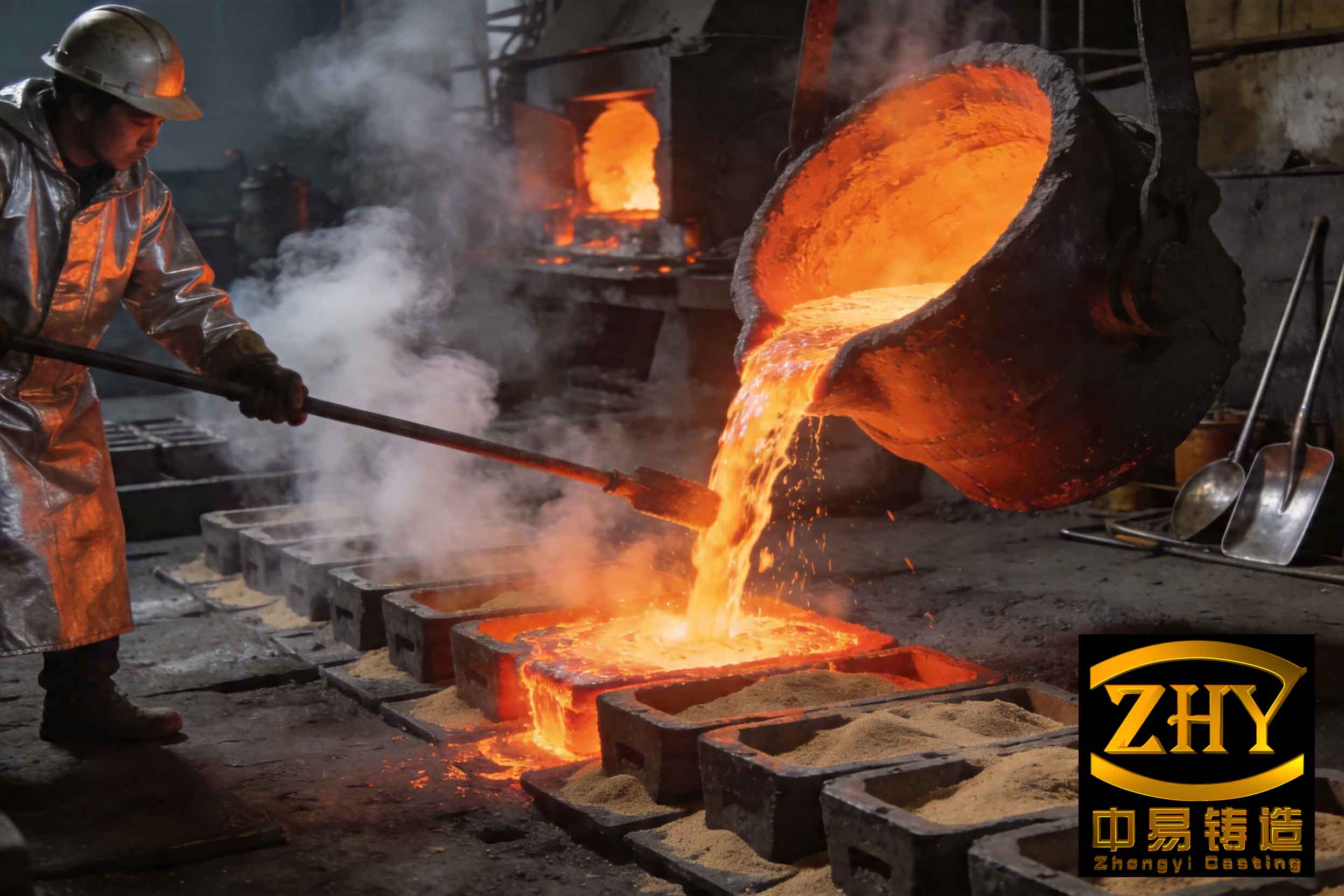
In the production of low-carbon steel slabs via continuous casting, the specific characteristics of the grade typically predispose the strand to surface and subsurface slag inclusion defects, while longitudinal surface cracks are less common. However, a significant challenge was encountered at a domestic steel plant where operating at a higher casting speed of 1.8 m/min led to the concurrent appearance of a high incidence of both defect types. The rate of longitudinal cracks was initially as high as 30%, and even after implementing process adjustments such as reducing mold water flow, increasing mold taper, and controlling superheat, the defect rates remained at approximately 4.5% for cracks and 5% for slag inclusion, which was unacceptable for customer requirements. The fundamental role of the mold flux is integral to strand quality and process stability, encompassing functions such as preventing reoxidation, providing thermal insulation, absorbing non-metallic inclusions, uniformly controlling heat transfer, and lubricating the solidifying shell. This analysis focuses on the redesign of the mold flux to address the dual challenge of surface cracks and slag inclusion defects in low-carbon steel under high-speed casting conditions.
Process Overview and Defect Manifestation
The production route for the low-carbon steel grade SAE1008 involved hot metal pretreatment, Basic Oxygen Furnace (BOF) steelmaking, LF refining, and continuous casting. The caster was a straight-bow type machine with key parameters listed in the table below.
| Parameter | Value / Range |
|---|---|
| Slab Section | 230 mm × (950 – 1650) mm |
| Casting Speed | 1.6 – 1.8 m/min |
| Machine Radius | 10.5 m |
| Metallurgical Length | 38.5 m |
| Mold Water Flow (Broad Face) | 5800 L/min |
| Mold Water Flow (Narrow Face) | 550 L/min |
| Mold Taper | 1.15% |
The target chemical composition for SAE1008 is given in Table 2.
| Element | C | Mn | Si | P | S | Als |
|---|---|---|---|---|---|---|
| Target | 0.05 | 0.35 | 0.30 | 0.02 | 0.015 | 0.025 |
The macroscopic defects on the as-cast slab primarily consisted of longitudinal cracks located around the central region of the broad faces, with lengths ranging from 500 to 1000 mm. After scarfling and subsequent hot rolling, the steel plates exhibited severe defects such as scabs (or “upwarp”) and black lines. Statistical analysis revealed that the slag inclusion defects manifested on the plate within 10-500 mm from the edge, with widths of 1-5 mm and lengths of 200-600 mm.
Root Cause Analysis of Defects
Longitudinal Surface Cracks
Metallographic examination of cross-sections through the cracks revealed features such as embedded FeO and decarburization in the adjacent matrix, confirming that crack initiation occurred within the mold at high temperature. The formation mechanism is directly linked to non-uniform heat extraction at the meniscus region, leading to uneven and weak initial shell growth. Stress concentration at these thin spots, exacerbated by thermal and mechanical forces, exceeds the high-temperature strength of the shell, resulting in crack formation. For the specific high-speed casting condition, the contributing factors were analyzed as:
- Inadequate Mold Flux Performance: A thin liquid slag pool hindered the uniform infiltration of liquid slag into the gap between the mold copper plate and the solidifying shell, causing irregular heat transfer and shell growth.
- High Casting Speed Effect: Increasing casting speed inherently reduces the thickness of the lubricating slag film, which can increase friction and thermal stress, promoting longitudinal cracking.
- Fluid Flow Issues: Although the mold level was stable, biased flow from the submerged entry nozzle (SEN) was frequently observed, contributing to asymmetric shell growth and slag entrainment.
The heat flux $q$ through the mold wall can be related to the slag film’s thermal resistance. A non-uniform slag film leads to localized high heat flux $q_{local}$, creating a thermal gradient and stress $\sigma_{thermal}$:
$$\sigma_{thermal} \propto E \cdot \alpha \cdot \Delta T$$
where $E$ is Young’s modulus, $\alpha$ is the coefficient of thermal expansion, and $\Delta T$ is the temperature gradient induced by uneven cooling.
Surface and Subsurface Slag Inclusion Defects
Scanning Electron Microscopy (SEM) and Energy Dispersive Spectroscopy (EDS) analysis of the scab defects identified the entrapped material as oxides of Si, Al, Ca, Na, Mg, and Fe, with traces of F. The presence of Na and F is a definitive fingerprint of mold flux entrapment. Based on the defect location near the slab edge, the primary mechanism was identified as shear-type slag entrainment. The flow pattern from the SEN ports creates upward and downward flows near the narrow face. The upward flow rolls back at the meniscus, creating a strong surface flow. At this steel-slag interface, droplets of liquid mold flux can be sheared off and entrapped into the molten steel bulk, eventually being captured by the solidifying shell near the meniscus. The propensity for this type of slag inclusion defect is governed by interfacial tension and flow velocity. The critical Weber number $We$ for droplet entrainment is:
$$We = \frac{\rho_{steel} \cdot v^2 \cdot d}{\gamma_{slag/steel}}$$
where $\rho_{steel}$ is steel density, $v$ is the relative velocity at the interface, $d$ is a characteristic length, and $\gamma_{slag/steel}$ is the interfacial tension between steel and slag. A higher $\gamma_{slag/steel}$ and a lower $v$ reduce the risk of slag inclusion defect formation.
The Design Challenge and Strategy for Mold Flux Optimization
The concurrent appearance of longitudinal cracks and slag inclusion defects presents a complex design paradox for the mold flux. To suppress longitudinal cracks, the flux must provide strong and controllable heat transfer, often achieved by promoting a crystalline slag film with high roughness and thermal resistance. This typically requires a higher basicity ($R = \frac{CaO}{SiO_2}$) and appropriate fluoride content. However, for low-carbon steel, which exhibits less shell contraction, excellent lubrication is paramount to prevent sticker alarms and breakouts, especially at high speeds. Furthermore, to reduce the slag inclusion defect rate, a higher viscosity ($\eta$) is beneficial as it increases the slag’s resistance to being sheared into droplets. Previous studies indicate that a viscosity above 0.35 Pa·s can significantly reduce slag inclusion defects. Yet, at a casting speed of 1.8 m/min, a viscosity exceeding approximately 0.25 Pa·s frequently leads to lubrication issues and breakouts. Therefore, the maximum allowable design viscosity was set at 0.22 Pa·s. Similarly, increasing basicity to control heat transfer is limited by its adverse effect on melting rate and lubrication; a maximum basicity of 1.2 was targeted. The core challenge was to reconcile the conflicting requirements of sufficient heat transfer control (to prevent cracks) and adequate lubrication/low entrainment risk (to prevent breakouts and slag inclusion defects) within these operational windows.
Leveraging Li2O and MnO Additives for Performance Enhancement
Conventional raw materials were insufficient to meet these dual demands under high-speed conditions. The strategic incorporation of lithium oxide (Li2O) and manganese oxide (MnO) was investigated. The effects of these additives on the melting temperature and viscosity of a base flux were systematically studied, as summarized in the table and conceptual graphs below.
| Additive (wt.%) | Melting Temp. Trend | Viscosity @ 1300°C Trend | Key Influence on Slag Film |
|---|---|---|---|
| Li2O (1-4%) | Sharp decrease | Sharp decrease | Promotes glass formation, enhances lubrication. |
| MnO (1-4%) | Moderate decrease, plateaus >3.5% | Moderate decrease, plateaus >3.5% | Increases crystallization temperature, can color slag film to moderate heat transfer. |
Li2O is a powerful fluxing agent that significantly lowers both the melting point and viscosity, facilitating the formation of a stable, glassy slag film which improves lubrication. Crucially, it can suppress excessive crystallization, allowing for better control over the slag film’s structure. MnO also reduces melting point and viscosity but demonstrates a plateau effect beyond approximately 3.5% addition. More importantly, MnO is known to increase the crystallization temperature of the slag film and can affect its radiative heat transfer properties, thereby aiding in heat transfer control without severely compromising lubricity. Based on the performance-cost balance, the optimal additions for the new flux design were set at 3% Li2O and 3.5% MnO. The viscosity-temperature relationship can be modeled using an Arrhenius-type equation:
$$\eta = A \cdot \exp\left(\frac{E_\eta}{RT}\right)$$
where $A$ is a pre-exponential factor, $E_\eta$ is the activation energy for viscous flow, $R$ is the gas constant, and $T$ is temperature. Additives like Li2O effectively reduce $E_\eta$, lowering viscosity across the temperature range.
Design and Properties of the Optimized Mold Flux
Building on the analysis, the original Flux A was reformulated into Optimized Flux B. The key changes involved increasing basicity, strategically incorporating Li2O and MnO, and adjusting other components like Na2O and F⁻ to balance melting characteristics and consumption. Both fluxes were pre-fused, hollow sphere powders. Their designed physical and chemical properties are compared below.
| Property / Component | Original Flux A | Optimized Flux B | Design Rationale for Flux B |
|---|---|---|---|
| Basicity (CaO/SiO2) | 0.95 | 1.20 | Increase heat transfer control via more crystalline film. |
| Melting Temperature (°C) | ~1100 | ~1130 | Higher temp. slightly reduces liquid pool depth, aids stability. |
| Crystallization Temperature (°C) | ~1120 | ~1195 | Significantly increased to enhance thermal resistance of slag film. |
| Viscosity @ 1300°C (Pa·s) | 0.18 | 0.22 | Increased to reduce slag inclusion defect risk, but kept below 0.25 Pa·s limit. |
| C (%) | 4.5 | 5.0 | Adjusted for stable melting profile and consumption. |
| Li2O (wt.%) | 0 | 3.0 | Lower viscosity & melting point, promote glassy layer for lubrication. |
| MnO (wt.%) | 0 | 3.5 | Moderate fluxing, increase crystallization temperature, aid heat transfer control. |
| F⁻ (wt.%) | 6.5 | 3.2 | Reduced to moderate excessive fluxing and environmental impact. |
The increase in melting and crystallization temperatures for Flux B strengthens its ability to control heat transfer by forming a more resistant crystalline layer. This promotes more uniform shell solidification, targeting longitudinal crack reduction. The concurrent increase in viscosity, moderated by the powerful fluxing action of Li2O, aims to decrease the susceptibility to slag inclusion defect formation by increasing the shear resistance of the slag at the metal-slag interface.
Industrial Trial Results and Discussion
A comprehensive industrial trial was conducted over several heats casting SAE1008 steel. The performance of Optimized Flux B was monitored and compared against the baseline established with Flux A.
In-Mold Behavior: Flux B exhibited excellent spreadability and consistent melting. The total powder bed thickness was maintained between 50-70 mm, and crucially, the liquid slag pool depth increased significantly from 9-11 mm (with Flux A) to 14-17 mm. This deeper liquid pool ensures better thermal insulation and provides a more stable reservoir for uniform slag infiltration. The mold heat flux, measured from thermocouples, showed a marked improvement in uniformity and a reduction in magnitude. The heat flux on the broad faces decreased from an average of ~1.8 MW/m² to ~1.5 MW/m², and on the narrow faces from ~1.7 MW/m² to ~1.4 MW/m². This confirms the enhanced heat transfer control capability of the new flux. The flux consumption was stable and appropriate for high-speed casting, averaging 0.35-0.40 kg/ton of steel. The process was stable with minimal slag rims and no sticker alarms or breakouts, indicating that the lubrication function was successfully maintained despite the higher designed viscosity and basicity.
Strand and Final Product Quality: The quality of the slabs cast with Flux B showed dramatic improvement. Visual inspection and scarfling records indicated the virtual elimination of the long longitudinal cracks previously observed. After hot rolling, the defect rates were quantitatively assessed:
| Defect Type | Rate with Original Flux A | Rate with Optimized Flux B | Relative Improvement |
|---|---|---|---|
| Longitudinal Surface Cracks | 4.5% | 0.2% | ~95% reduction |
| Plate Slag Inclusion Defects (Scabs/Black Lines) | 5.0% | 0.3% | ~94% reduction |
The reduction in longitudinal cracks is directly attributable to the more uniform and controlled heat extraction facilitated by the higher basicity, crystallization temperature, and stable liquid pool of Flux B, leading to a more homogeneous and stronger initial shell. The drastic decrease in slag inclusion defect rate validates the design approach of increasing viscosity to resist entrainment, while the addition of Li2O ensured that this higher viscosity did not impair lubrication or cause consumption issues. The synergy between Li2O and MnO was critical: Li2O maintained good lubrication by lowering the high-temperature viscosity and promoting a glassy layer adjacent to the shell, while MnO contributed to building a crystalline layer with high thermal resistance near the mold wall. This engineered double-layer slag film structure effectively decoupled and satisfied the conflicting requirements of lubrication and heat transfer control.
Conclusions
The simultaneous occurrence of longitudinal surface cracks and slag inclusion defects in high-speed continuous casting of low-carbon steel presents a significant process challenge rooted in the contradictory functional requirements placed on the mold flux. Through systematic analysis, it was determined that the defects originated from non-uniform heat transfer leading to irregular shell growth and from shear-induced entrainment of mold flux at the meniscus, respectively. Conventional flux design approaches reaching the limits imposed by high casting speed. The innovative solution involved the strategic incorporation of Li2O and MnO additives into the flux formulation. Li2O was essential for maintaining adequate lubrication by significantly reducing viscosity and promoting glass formation, while MnO contributed to enhanced heat transfer control by increasing the crystallization temperature of the slag film. The optimized flux design successfully balanced a higher basicity (1.20) and a tailored viscosity (0.22 Pa·s at 1300°C). Industrial trials confirmed its efficacy, demonstrating stable mold operation with a deep liquid slag pool (~15 mm) and reduced, uniform heat flux. Most importantly, the strand quality improved remarkably, with the longitudinal crack rate plummeting from 4.5% to 0.2% and the slag inclusion defect rate on final rolled product dropping from 5.0% to 0.3%. This case underscores that through precise compositional engineering, particularly using advanced additives, mold flux can be designed to manage multiple, often conflicting, performance criteria, thereby ensuring both process stability and high-quality slab production in demanding high-speed casting applications. The fundamental understanding of the relationship between flux chemistry, slag film structure (glassy vs. crystalline), and its thermophysical properties is key to solving complex defect problems like slag inclusion and longitudinal cracking.