
The automotive industry is undergoing a significant transformation driven by the imperatives of lightweighting, cost reduction, and manufacturing efficiency. A revolutionary approach in this context is the integration of numerous individual structural components into a single, large-scale casting part produced via high-pressure die casting (HPDC). This methodology effectively replaces traditional manufacturing routes involving stamping and welding of dozens, sometimes over a hundred, separate steel parts. The primary benefits are substantial: a drastic reduction in part count, elimination of numerous assembly steps and associated tooling, potential for significant weight savings, and enhanced structural integrity by removing welded joints.
This article focuses on the development and process optimization for one such critical integrated casting part: a vehicle rear floor structure. The transition from a traditional assembly of over 70 components to a monolithic casting part presents unique engineering challenges. The target casting part has considerable dimensions, exceeding 1.5 meters in major axes, with a complex geometry integrating various functional features. This scale amplifies the inherent challenges of HPDC, particularly concerning dimensional stability, internal soundness, and consistent mechanical properties throughout the large casting part.
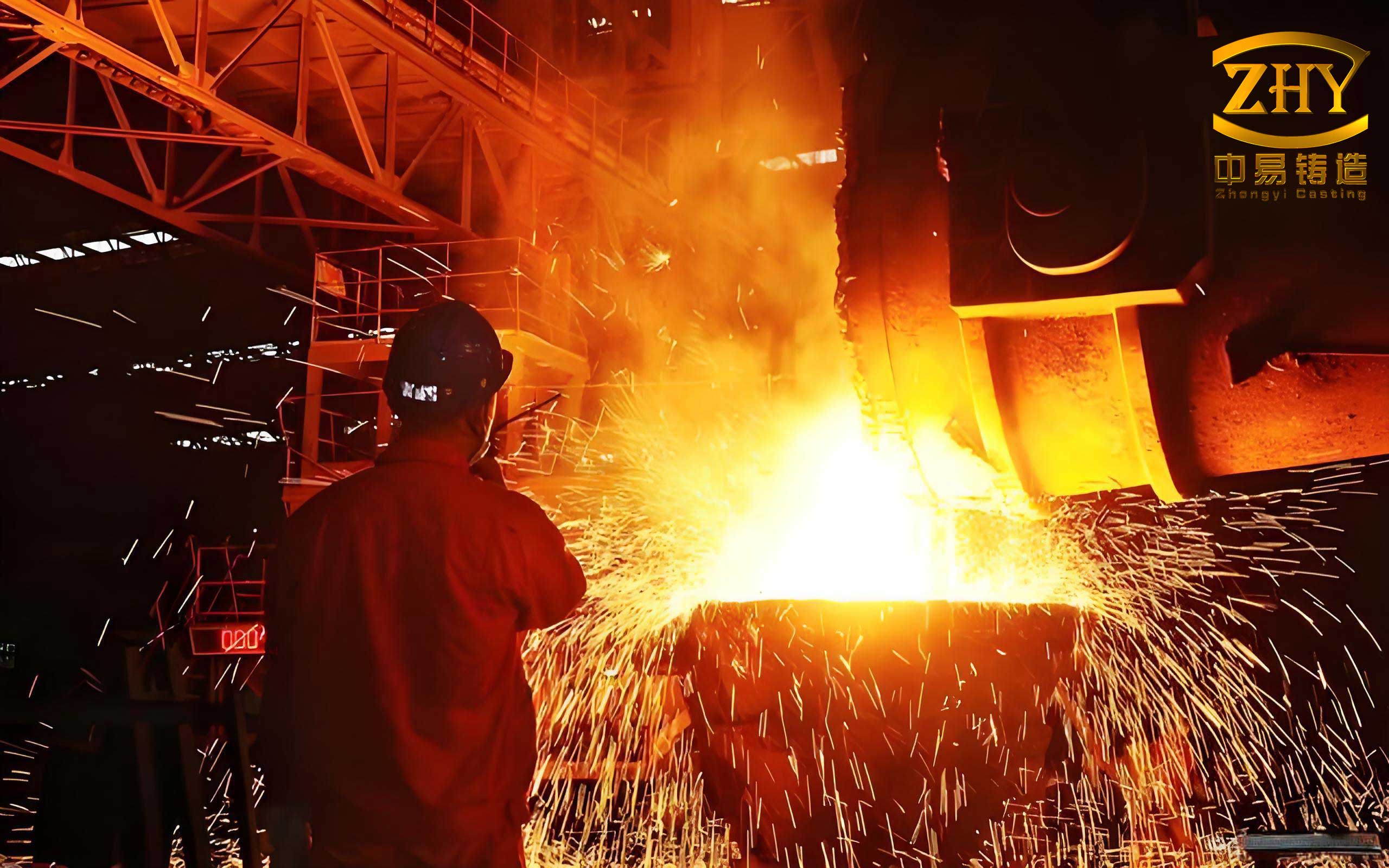
A pivotal enabler for this technology is the use of non-heat-treatable (or “as-cast”) aluminum alloys. Traditional high-strength aluminum castings often require a subsequent T6 heat treatment (solution heat treatment and artificial aging) to achieve their target mechanical properties. However, for a large, thin-walled casting part, this thermal cycle introduces severe risks of distortion, warpage, and surface blistering, which are extremely difficult and costly to correct. Non-heat-treatable alloys are designed to provide the required combination of strength, ductility, and fracture toughness directly in the as-cast state. This eliminates post-casting heat treatment, thereby avoiding associated distortion issues, reducing energy consumption, shortening production cycle time, and lowering overall cost—a crucial factor for high-volume automotive applications.
The specific material employed for this integrated rear floor casting part is a proprietary Al-Si-Mn based alloy, designated here as AlSi8 (HA1-H). Its chemical composition is designed for excellent castability, pressure tightness, and mechanical performance in the as-cast condition. The key alloying elements and their typical ranges are summarized in Table 1.
| Si | Mg | Mn | Fe | Cu | Zn | Ti | Sr | Zr | Other | Al |
|---|---|---|---|---|---|---|---|---|---|---|
| 7.0-9.0 | 0.05-0.25 | 0.1-0.9 | < 0.3 | < 0.5 | < 0.5 | 0.05-0.2 | 0.005-0.5 | 0.01-0.1 | < 0.15 | Bal. |
The production was carried out on a large 7,200-ton clamping force die casting machine, capable of the high injection pressures and precise control needed for such a voluminous casting part. The final integrated casting part weighed approximately 55 kg, achieving a weight reduction of around 18% compared to its conventional multi-piece steel counterpart. The mechanical property requirements for this structural casting part, to meet stringent vehicle crash safety standards, were defined as: Tensile Strength (UTS) ≥ 260 MPa, Yield Strength (YS) ≥ 115 MPa, and Elongation (El) ≥ 10%.
Initial production trials were conducted based on process parameters derived from Computer-Aided Engineering (CAE) simulations. These parameters are listed in Table 2. Tensile test specimens were extracted from seven critical locations on the casting part body (away from separately cast test bars to get true “body yield” properties), categorized into “near-gate” and “far-gate” regions to assess property uniformity.
| Slow Shot Velocity (m/s) | Fast Shot Switch-over Position (mm) | Fast Shot Velocity (m/s) | Melt Temperature (°C) | Intensification Pressure (bar) |
|---|---|---|---|---|
| 0.25 | 1025 | 5.6 | 695 | 300 |
The mechanical properties from the initial trial casting parts are summarized in Table 3. While the near-gate regions marginally met the targets, the far-gate regions exhibited significantly lower properties, particularly in elongation. This gradient is unacceptable for a safety-critical component, as the entire casting part must perform predictably. The sub-par properties indicated that the CAE-derived parameters, while providing a feasible filling pattern, were not optimized for achieving homogeneous, superior as-cast microstructure and mechanical properties throughout the large casting part. This necessitated a systematic, empirical optimization of key process parameters.
| Sample Location | Avg. UTS (MPa) | Avg. YS (MPa) | Avg. Elongation (%) | Status vs. Target |
|---|---|---|---|---|
| Near-Gate (1-4) | 262.6 | 117.4 | 11.2 | Met |
| Far-Gate (5-7) | 244.1 | 109.6 | 9.2 | Failed |
| Design Target | ≥ 260 | ≥ 115 | ≥ 10 | – |
Systematic Optimization of Critical Process Parameters
The mechanical properties of a die-cast aluminum casting part are predominantly governed by its microstructure, which includes features like grain size, morphology of the α-Al phase, size and distribution of eutectic Si particles, and the presence of defects like porosity and oxide films. In HPDC, these microstructural attributes are highly sensitive to the thermal and flow conditions during filling and solidification, which are directly controlled by process parameters. For this large, integrated casting part, three parameters were identified as having the most pronounced influence: Fast Shot Velocity, Melt (Pouring) Temperature, and the Fast Shot Switch-over Position. Their effects were investigated sequentially.
1. Influence of Fast Shot Velocity
The fast shot velocity, or gate speed, determines the velocity at which the molten metal enters the die cavity. It critically influences the filling mode (laminar vs. turbulent), heat transfer to the die, and the final microstructure of the casting part. Too low a velocity leads to premature freezing, resulting in cold shuts, misruns, and coarse microstructure. Excessively high velocity can cause turbulent entrapment of air and gases, severe die erosion, and flashing. The relationship between flow velocity (v) and the likelihood of turbulent entrainment of oxides can be considered by a critical velocity threshold, often related to the melt’s properties and gate geometry.
Four different fast shot velocities were tested (V1: 5.2 m/s, V2: 5.6 m/s, V3: 6.0 m/s, V4: 6.5 m/s), keeping other parameters constant as per the initial baseline (Table 2). The average mechanical properties for near-gate and far-gate regions are plotted in Figure 1 (data represented in subsequent summary table).
The results demonstrated a clear trend: as the fast shot velocity increased from 5.2 m/s to 6.5 m/s, all three mechanical properties (UTS, YS, El) improved in both regions of the casting part. The improvement can be attributed to enhanced heat extraction and a higher shear rate during filling, promoting finer α-Al grains and a more refined eutectic structure. The grain size (d) relationship with cooling rate (ε̇) is often described by empirical relationships like:
$$ d = a + b \cdot \dot{\varepsilon}^{-n} $$
where \(a\), \(b\), and \(n\) are material constants. A higher injection velocity increases the effective cooling rate by reducing the time for heat transfer to the die before solidification initiates, leading to grain refinement. However, at 6.5 m/s, visual inspection of the casting part revealed minor flashing, indicating that the dynamic pressure during filling was sufficiently high to slightly overcome the clamping force at certain die parting lines. This poses risks for dimensional accuracy and die wear. Therefore, 6.0 m/s was selected as the optimal compromise, providing significant property enhancement without introducing flashing-related defects in the final casting part.
2. Influence of Melt Temperature
The temperature of the aluminum melt when it enters the shot sleeve (pour temperature) is a critical thermal boundary condition. It affects fluidity, die thermal balance, solidification time, and the nucleation and growth of microstructural constituents. A lower temperature reduces fluidity and increases viscosity, risking mistuns. A higher temperature increases fluidity but extends solidification time, potentially leading to coarser grains, shrinkage porosity, and soldering on the die surface. The solidification time (\(t_s\)) for a casting can be approximated by Chvorinov’s rule:
$$ t_s = B \cdot \left( \frac{V}{A} \right)^n $$
where \(V\) is volume, \(A\) is surface area, \(B\) is a mold constant that depends on mold material and casting metal properties (including superheat), and \(n\) is an exponent (usually ~2). A higher superheat (melt temperature above liquidus) increases the mold constant \(B\), prolonging \(t_s\).
Building on the optimized fast shot velocity of 6.0 m/s, four melt temperatures were evaluated (T1: 670°C, T2: 695°C, T3: 720°C, T4: 745°C). The results showed a non-linear relationship. Properties initially improved from 670°C to 695-720°C, plateauing in strength while elongation peaked and then dropped sharply at 745°C. The lower temperature (670°C) likely resulted in poorer feeding to the extremities of the casting part and a higher fraction of cold defects. The very high temperature (745°C) led to excessive grain growth and possibly increased gas porosity, severely compromising ductility. The 695°C condition provided an optimal balance of good fluidity for complete filling of the complex casting part and sufficiently rapid heat extraction to achieve a fine, ductile microstructure, while also being less aggressive on the die steel compared to higher temperatures.
3. Influence of Fast Shot Switch-over Position
This parameter determines when the injection system transitions from the slow shot phase to the high-speed fast shot phase. It controls the volume of molten metal in front of the shot sleeve plunger at the moment high-speed filling begins. A position that is too far forward (i.e., switching early) means a smaller metal volume is accelerated, which can lead to excessive air entrapment and inconsistent cavity fill. A position that is too far back (switching late) means a larger metal volume is accelerated, but the metal has advanced further into the runner system during the slow phase, potentially starting to solidify before the high-pressure phase can effectively pack the casting part.
For a large casting part with long flow lengths, this parameter is crucial for ensuring that metal reaches the farthest corners while still in a sufficiently liquid state to be effectively pressurized during intensification. The position is essentially a control for the fraction of the total shot volume (\(V_{total}\)) that undergoes acceleration during the fast shot phase (\(V_{fast}\)). An optimal switch-over ensures \(V_{fast}\) is large enough to fill the cavity rapidly but not so large that it causes severe turbulence.
To address the persistent property deficit in the far-gate regions, the switch-over position was varied (L1: 925 mm, L2: 975 mm, L3: 1025 mm [baseline], L4: 1075 mm) while maintaining the optimized fast shot speed (6.0 m/s) and melt temperature (695°C). The results revealed a critical trade-off: as the switch-over position was moved forward (e.g., to 925 mm), initiating the fast shot earlier, the properties in the far-gate regions improved significantly, while the near-gate properties remained excellent. Conversely, a later switch-over (1075 mm) improved near-gate properties slightly but severely degraded far-gate properties. This is because an earlier fast shot ensures the metal front has higher kinetic energy and thermal content when it reaches the extremities of the casting part, reducing premature freezing and allowing for better feeding and microstructure refinement in those critical areas. The 925 mm position was thus selected as optimal for achieving the most homogeneous properties across the entire integrated casting part.
Consolidated Results and Optimal Process Window
The systematic optimization of the three key parameters converged on a definitive set of process conditions for manufacturing the high-integrity rear floor casting part. The final, optimized process parameters are listed in Table 4.
| Slow Shot Velocity (m/s) | Fast Shot Switch-over Position (mm) | Fast Shot Velocity (m/s) | Melt Temperature (°C) | Intensification Pressure (bar) |
|---|---|---|---|---|
| 0.25 | 925 | 6.0 | 695 | 300 |
Production trials using this parameter set consistently yielded casting parts that met all quality criteria. The mechanical properties from body samples, presented in Table 5, show that both near-gate and far-gate regions now comfortably exceed the design targets. This demonstrates a successful homogenization of the microstructure throughout the large-scale casting part.
| Sample Location | Avg. UTS (MPa) | Avg. YS (MPa) | Avg. Elongation (%) |
|---|---|---|---|
| Near-Gate Regions | 268 – 275 | 118 – 125 | 11.5 – 13.0 |
| Far-Gate Regions | 260 – 268 | 115 – 122 | 10.5 – 12.0 |
| All Locations vs. Target | > 260 (Met) | > 115 (Met) | > 10 (Met) |
Furthermore, the visual quality of the casting part was excellent, free from cold shuts, cracks, or significant flashing. Non-destructive evaluation via X-ray radiography confirmed the internal soundness of the casting part, with no major shrinkage or gas porosity defects detected in critical structural areas. The success of this optimization highlights that for large, integrated casting parts, achieving target properties is not just about selecting an appropriate non-heat-treatable alloy but is profoundly dependent on precise, well-understood control of the dynamic filling and solidification process.
Conclusions
1. The production of a large, integrated automotive rear floor structure as a single casting part using a non-heat-treatable AlSi8 alloy is a viable and advantageous manufacturing strategy, enabling part consolidation, weight reduction, and cost savings.
2. The as-cast mechanical properties of such a large-scale casting part are highly sensitive to HPDC process parameters. A systematic optimization focusing on Fast Shot Velocity, Melt Temperature, and Fast Shot Switch-over Position is essential to achieve a homogeneous, defect-free microstructure meeting stringent automotive safety standards.
3. An increase in Fast Shot Velocity from 5.2 m/s to 6.0 m/s significantly enhanced the strength and ductility of the casting part by promoting finer grain structure, but excessive speed (6.5 m/s) induced flashing.
4. A Melt Temperature of 695°C provided the optimal balance between fluidity (for complete filling of the complex casting part) and solidification rate (for a refined, ductile microstructure), with higher temperatures (745°C) notably reducing elongation.
5. Adjusting the Fast Shot Switch-over Position forward to 925 mm was critical for improving the properties in the far-gate regions of the casting part, ensuring property uniformity. This parameter controls the thermal history of the metal reaching the extremities of the large casting part.
6. The final optimized process window (Slow shot: 0.25 m/s, Fast shot switch: 925 mm, Fast shot velocity: 6.0 m/s, Melt Temp: 695°C, Intensification Pressure: 300 bar) consistently produced casting parts with body yield properties exceeding UTS ≥ 260 MPa, YS ≥ 115 MPa, and El ≥ 10%, with excellent surface quality and internal soundness. This work provides a validated framework for process development for other large, structural, integrated casting parts.