
In the manufacturing industry, the removal and surface grinding of gates and risers on casting parts are critical steps that directly impact the final product’s appearance quality and dimensional accuracy. Traditional methods often rely on manual operations, which suffer from high labor intensity, low efficiency, and poor consistency. To address these challenges, I have developed an optimized five-axis machining process aimed at enhancing automation and precision for grinding casting part gates and risers. This study focuses on structural design, trajectory generation, and parameter optimization to build a reusable grinding system. The goal is to reduce grinding time, improve surface quality, and ensure dimensional consistency, thereby advancing the automation level and processing stability for complex casting parts.
The importance of this optimization stems from the growing demand for high-quality casting parts in sectors such as automotive, aerospace, and machinery. Casting parts often feature irregular surfaces and complex transitions near gate and riser areas, making manual grinding prone to errors like under-grinding or over-grinding. By leveraging five-axis technology, I aim to overcome these limitations and provide a scalable solution for industrial applications. Throughout this article, I will use the term “casting part” repeatedly to emphasize the focus on these components, and I will incorporate tables and formulas to summarize key aspects systematically.
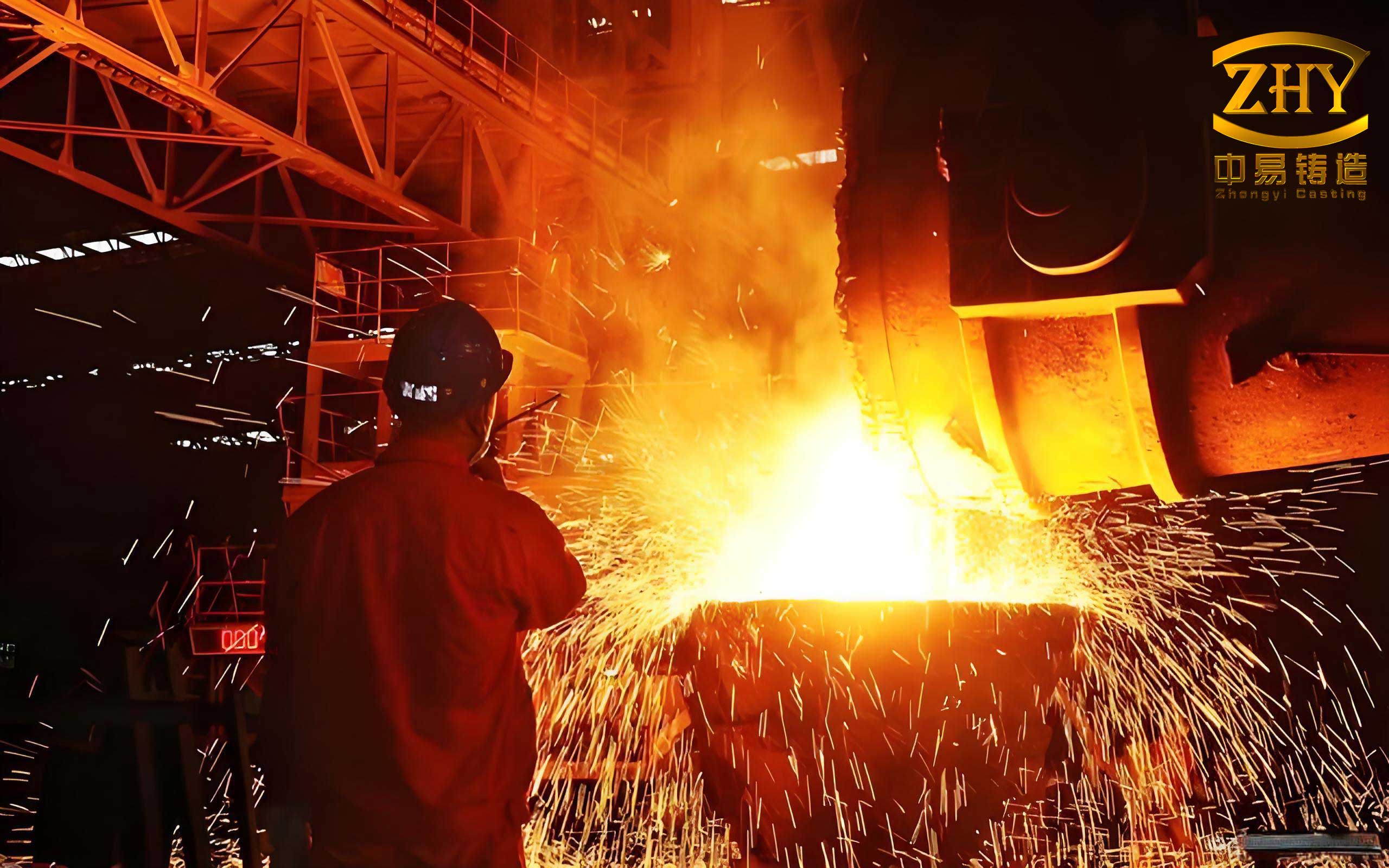
Traditional grinding methods for casting part gates and risers typically involve manual tools like angle grinders or bench grinders. While cost-effective and adaptable, these approaches lead to inconsistencies, high labor costs, and health hazards from dust and noise. In batch production, such methods often result in defects such as missed spots, excessive material removal, and dimensional deviations, compromising the uniformity of casting parts. Moreover, semi-automatic machines, such as retrofitted gantry machining centers, are limited by their rigid structures and control logic, which are not suited for the complex曲面 of casting parts. These machines require advanced CNC programming skills, increasing training costs and reducing flexibility. The core issues can be summarized as follows: low precision due to unstable tool contact, inefficiency from manual interventions, and poor consistency across different operators or batches. For instance, in curved regions of a casting part, varying tool angles cause uneven grinding, affecting both aesthetics and functionality.
To tackle these problems, I designed an automatic grinding device based on five-axis联动. The overall structure integrates three-axis linear slide modules, a rotation module, and a dual-station turntable within a robust frame. The three-axis slides use ball screw modules for precise spatial movement: the X-axis slide carries a fixed frame nesting the Z-axis slide, while the Y-axis slide联动 with the Z-axis for coordinated control. A rotation module at the Y-axis end allows tool orientation adjustments, and a servo motor-driven turntable enables flexible positioning. The dual-station turntable consists of a base, motors, and reducers, facilitating seamless switching between loading and grinding tasks to enhance efficiency. This design ensures high repeatability and adaptability for diverse casting part geometries. The control system supports two operation modes: manual teaching and external import. In manual teaching, operators guide the tool along a standard casting part gate and riser path, recording key points and motion types (linear or circular) to generate preliminary grinding工艺 files. For external import, CAD models of the casting part are used with simulation software to design and validate grinding trajectories, which are then converted into executable files. Auxiliary features include dust-proof covers for运动 components and a chip collection system beneath the grinding area, improving maintenance and cleanliness.
The generation of grinding paths is crucial for achieving high-quality results on casting parts. In manual teaching mode, parameters such as axis movement speeds and overlap rates are set via the controller. The system records示教 points and automatically creates a path file, which is ideal for non-standard casting parts due to its intuitiveness. For external导入, I employ a digital workflow: first, extract the 2D轮廓 of the gate and riser from the casting part’s 3D CAD model; then, generate initial trajectories based on material properties, dimensions, and tool parameters. Simulation software verifies these paths by accounting for factors like speed and acceleration, with iterative corrections until精度 is met. The motion type significantly affects grinding outcomes: linear motion suits flat areas for high-speed grinding, but may cause abrupt changes in curved regions; circular motion ensures stable tool姿态 on continuous surfaces, enhancing consistency. A hybrid approach is often optimal, where the controller intelligently selects motion types based on geometric relationships between points. This optimization minimizes errors and improves surface finish for casting parts.
Process parameter optimization plays a key role in refining the grinding of casting parts. The movement speeds and rates of the X, Y, and Z axes determine grinding rhythm and precision. I adjust these dynamically: for complex曲面 or corners of a casting part, speeds are reduced to improve path conformity, while flat areas allow higher speeds for efficiency. The relationship can be expressed using a speed adjustment formula:
$$ v = v_{base} \times k \times f(\rho) $$
where \( v \) is the adjusted speed, \( v_{base} \) is the base speed, \( k \) is the rate multiplier, and \( f(\rho) \) is a function of path curvature \( \rho \). For instance, \( f(\rho) = 1 / (1 + \alpha \rho) \) with \( \alpha \) as a damping coefficient, ensuring smoother transitions on highly curved sections of the casting part. Additionally, grinding depth, tool path overlap rate, and contact angle are critical. The overlap rate \( O_r \) controls coverage and is typically set between 20% and 50% to avoid gaps or excessive overlap. It can be calculated as:
$$ O_r = \left(1 – \frac{d}{w}\right) \times 100\% $$
where \( d \) is the step distance and \( w \) is the tool width. The contact angle \( \theta \) influences cutting efficiency and surface quality, and it is automatically adjusted based on tool morphology and casting part contour. Table 1 summarizes key parameters and their optimal ranges for grinding casting parts:
| Parameter | Symbol | Optimal Range | Impact on Casting Part |
|---|---|---|---|
| Axis Speed (m/min) | \( v_x, v_y, v_z \) | 0.5–5.0 | Higher speeds increase efficiency but may reduce precision in curves. |
| Overlap Rate (%) | \( O_r \) | 20–50 | Ensures uniform material removal on casting part surfaces. |
| Grinding Depth (mm) | \( d_g \) | 0.1–0.5 | Deeper cuts risk tool wear but improve throughput for thick casting parts. |
| Contact Angle (degrees) | \( \theta \) | 30–60 | Optimal angles enhance tool life and surface finish on casting parts. |
To further illustrate the parameter interactions, I derived a model for surface roughness \( R_a \) based on these factors. The roughness can be approximated as:
$$ R_a = \beta_0 + \beta_1 \cdot \frac{1}{v} + \beta_2 \cdot O_r + \beta_3 \cdot \sin(\theta) $$
where \( \beta_0, \beta_1, \beta_2, \beta_3 \) are coefficients determined empirically for specific casting part materials. This formula helps in predicting and controlling the quality of grinding outcomes.
The optimization results demonstrate significant improvements over traditional methods for casting parts. I conducted comparative tests on a batch of casting parts, measuring metrics such as grinding time, surface roughness, and dimensional consistency. The data are presented in Table 2, highlighting the advantages of the five-axis process. For example, grinding time per casting part decreased by approximately 35%, from an average of 7.8 minutes to 5.1 minutes. Surface roughness \( R_a \) improved from 3.2 μm to 1.8 μm, indicating smoother finishes. Dimensional errors were reduced to within ±0.15 mm, compared to ±0.5 mm with manual methods. Additionally, the reusability of process files cut adjustment time from 20 minutes to under 5 minutes per casting part, boosting overall productivity. These gains stem from the precise control enabled by the five-axis system, which adapts to the complex geometries of casting parts more effectively than human operators or rigid machines.
| Metric | Traditional Manual Grinding | Optimized Five-Axis Grinding | Improvement |
|---|---|---|---|
| Grinding Time (min per casting part) | 7.8 | 5.1 | 34.6% reduction |
| Surface Roughness \( R_a \) (μm) | 3.2 | 1.8 | 43.8% improvement |
| Dimensional Consistency Error (mm) | ±0.5 | ±0.15 | 70% reduction |
| Setup/Adjustment Time (min) | 20 | 5 | 75% reduction |
The efficiency gains can be modeled using a productivity index \( P \), defined as the number of casting parts processed per hour. For the optimized system:
$$ P = \frac{60}{T_g + T_s} $$
where \( T_g \) is the grinding time per casting part and \( T_s \) is the setup time. With \( T_g = 5.1 \) minutes and \( T_s = 5 \) minutes, \( P \approx 5.9 \) parts per hour, compared to \( P \approx 4.3 \) parts per hour for traditional methods (using \( T_g = 7.8 \) minutes and \( T_s = 20 \) minutes). This represents a 37% increase in throughput, underscoring the value of the optimization for high-volume casting part production.
In conclusion, the optimized five-axis machining process for grinding casting part gates and risers addresses key challenges in precision, efficiency, and consistency. By integrating advanced structural design, flexible path generation, and refined parameter settings, this approach enables automated, high-quality processing of casting parts. The use of manual teaching and external import modes ensures adaptability to various casting part geometries, while mathematical models and tables provide a framework for continuous improvement. Future work could explore adaptive control algorithms or AI-based path optimization to further enhance performance for casting parts. Overall, this research contributes to the advancement of smart manufacturing, offering a scalable solution that meets the stringent demands of modern casting part applications. The repeated emphasis on “casting part” throughout this article highlights its central role, and the inclusion of formulas and tables summarizes the technical insights effectively, paving the way for broader adoption in industry.