
The foundational stability and precision of any high-end machine tool are intrinsically linked to the quality of its base castings. Components such as beds, columns, saddles, and tables, collectively termed machine tool casting, constitute over 80% of the machine’s weight. Their performance characteristics—including dimensional stability, wear resistance, damping capacity, and rigidity—directly dictate the overall machining accuracy, surface finish capability, and long-term reliability of the equipment. Among the materials used for these critical components, gray cast iron, particularly grade HT300, remains predominant due to its excellent castability, favorable damping properties, and good machinability, compared to the less frequently employed ductile iron.
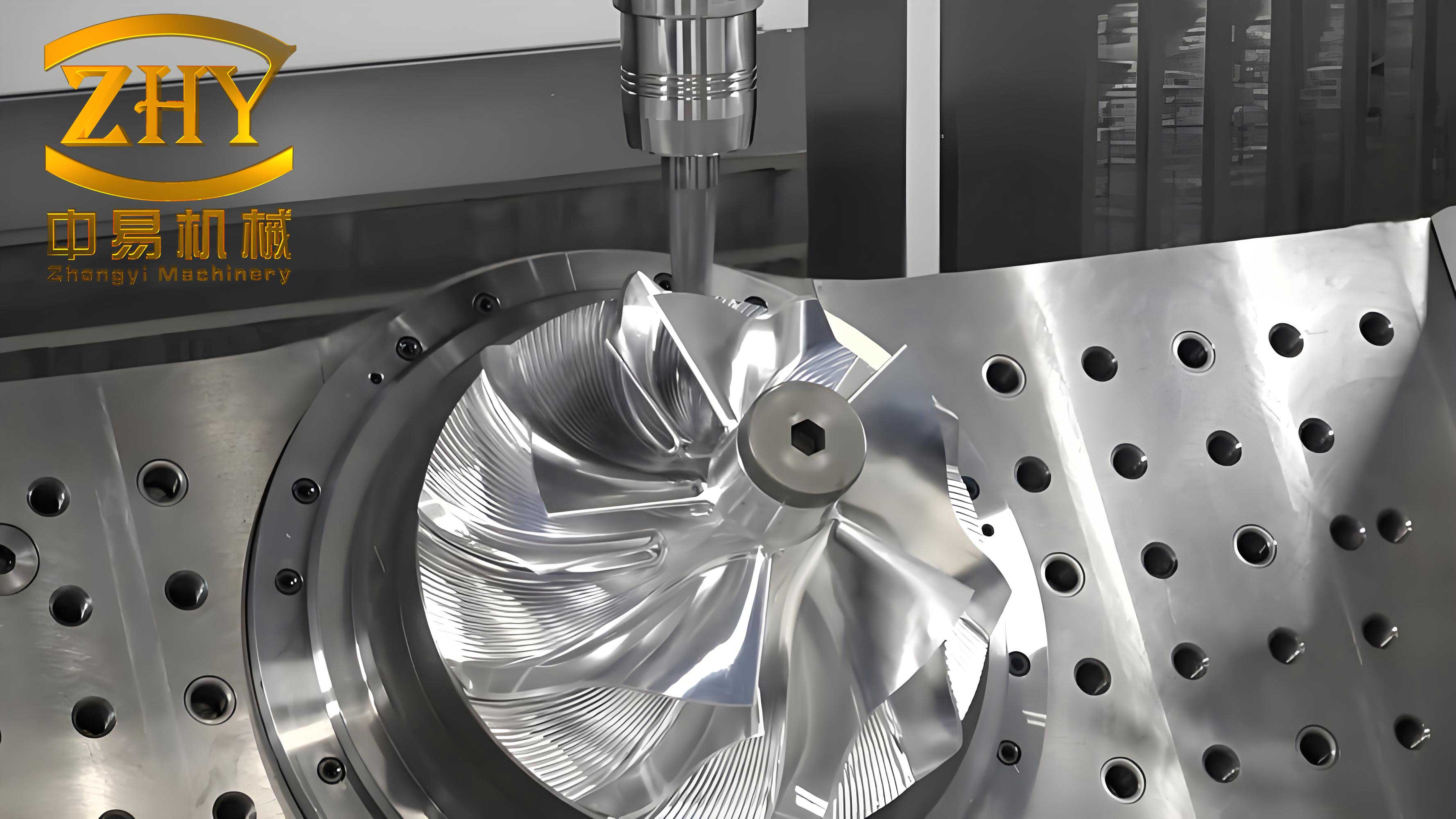
Producing a high-quality machine tool casting demands a delicate balance of seemingly contradictory properties. The casting must possess high compressive and tensile strength coupled with a high modulus of elasticity (stiffness) to resist deformation under load. Simultaneously, it must exhibit low internal residual stress to ensure dimensional stability over time, avoiding distortion during machining or in service. Furthermore, excellent wear resistance and vibration damping are essential. Achieving high strength and stiffness typically necessitates a lower Carbon Equivalent (CE) to promote a finer matrix structure, while achieving low stress and good castability often benefits from a higher CE. The core challenge in producing premium machine tool casting is therefore unifying these demands: attaining high strength and stiffness at an elevated carbon equivalent.
Fundamental Metallurgy of Gray Iron for Machine Tool Castings
The properties of gray iron are governed by its microstructure, primarily the form and distribution of graphite flakes within a metallic matrix (usually pearlite). The Carbon Equivalent (CE) is a pivotal parameter, summarizing the combined graphitizing effect of carbon and silicon, calculated as:
$$CE = C\% + \frac{1}{3}(Si\% + P\%)$$
where $C\%$, $Si\%$, and $P\%$ are the weight percentages of carbon, silicon, and phosphorus, respectively. For standard gray irons, the relationship between tensile strength ($TS$) and CE can be approximated by empirical formulas, often following a trend where strength decreases as CE increases. A common form is:
$$TS (MPa) \approx K_1 – K_2 \cdot CE$$
where $K_1$ and $K_2$ are constants dependent on cooling rate and other alloying elements. The goal in optimizing machine tool casting is to shift this relationship, achieving higher strength at a given CE through microstructural control.
Graphite morphology is classified from A (uniform, randomly oriented flakes) to E (interdendritic). Type A graphite is most desirable for machine tool casting as it provides the best combination of strength, thermal conductivity, and damping. The matrix is strengthened by a fully pearlitic structure, with ferrite reducing strength and hardness. Alloying elements like Copper (Cu) and Tin (Sn) are potent pearlite stabilizers. Their effectiveness can be related to their ability to suppress the ferrite transformation temperature. The combined effect of multiple pearlite stabilizers is often synergistic. The hardenability contribution of alloys can be estimated using a carbon equivalent for hardenability, such as:
$$CE_{H} = C\% + \frac{Mn\%}{6} + \frac{Cr\% + Mo\% + V\%}{5} + \frac{Cu\% + Ni\%}{15}$$
Although more common for steels, this concept highlights how multiple elements contribute to matrix transformation. For gray iron, the focus is on promoting fine, fully pearlitic matrices without creating excessive carbides.
Initial Production Methodology and Identified Challenges
The initial strategy for producing HT300 machine tool casting relied on a low-carbon-equivalent approach to inherently promote strength.
Chemical Composition and Rationale
The target composition was designed to achieve a CE between 3.60% and 3.70%, as detailed in Table 1. This low CE was selected to widen the solidification range, promote austenite dendrite growth, refine the matrix structure, and thereby increase tensile strength. Micro-additions of Tin (Sn) and Antimony (Sb) were employed to ensure a high pearlite content and refine the pearlite lamellae.
| CE | C | Si | Mn | P | S | Sb | Sn |
|---|---|---|---|---|---|---|---|
| 3.60-3.70 | 3.00-3.10 | 1.60-1.70 | 0.80-1.00 | <0.05 | 0.06-0.10 | 0.02-0.03 | 0.02-0.03 |
Melting and Inoculation Practice
A 2-ton medium-frequency induction furnace was used. To minimize the genetic inheritance effects from pig iron, a synthetic iron approach was adopted, using a high charge of steel scrap (60-70%) with limited pig iron (10%) and returns (20-30%). Carburization was achieved using high-purity graphite-based recarburizers and silicon carbide (SiC, >90% purity, 1.0-1.5% addition). SiC serves a dual purpose: it acts as a source of silicon and carbon while also providing an inoculating effect and helping to reduce oxygen content in the melt.
The inoculation strategy was critical. A long-lasting Silicon-Barium-Calcium (Si-Ca-Ba) inoculant was used for primary treatment at the spout (0.4% addition). Barium enhances nucleation potency and delays fade. A secondary, late stream inoculation (0.05-0.10%) with a fine-grade inoculant was performed during pouring to maximize graphite nucleation sites just before solidification, countering inoculation fade. The melt was superheated to 1480-1500°C and held for 3-5 minutes to ensure homogeneity and dissolution of nuclei.
Resultant Properties and Pervasive Defects
Statistical process control data from 100 consecutive casts of a bed casting confirmed the process was hitting its targets. Average CE was 3.635%, C was 3.077%, and Si was 1.652%. The tensile strength from separately cast test bars was excellent, averaging 364 MPa, well above the 300 MPa requirement. Metallography showed a desirable microstructure: >90% Type A graphite and >98% pearlite.
However, this apparent success in test bars masked significant problems in the actual machine tool casting:
- Cracking in Bed Castings: After rough grinding, fine cracks appeared in the internal ribs, particularly near heavy sections like guideways. The linear shrinkage was measured at 1.4%, excessively high compared to the typical 1.0-1.2% for gray iron. This indicated high solidification stresses. The thermal gradient between thin ribs (fast cooling) and thick sections (slow cooling) created internal stresses that exceeded the material’s hot strength, leading to hot tearing.
- Shrinkage Porosity in Table Castings: Machining of T-slots in work table castings revealed unacceptable shrinkage cavities. Scanning Electron Microscopy (SEM) and Energy Dispersive X-ray Spectroscopy (EDS) confirmed the defects were shrinkage porosity, not slag inclusions or gas holes. The composition was primarily iron oxides and graphite, with no evidence of a decarburized zone indicative of gas reactions. This defect occurred in isolated hot spots within the T-slot geometry that were not adequately fed during solidification.
- Non-Uniform Hardness and Poor Machinability: During machining, the castings exhibited “hard spots” or chilled edges, leading to tool chipping and drill breakage, especially on edges and mounting bosses. The low-CE iron had a high sensitivity to section size (high “section sensitivity”), meaning the cooling rate drastically affected the microstructure. Thin sections cooled too quickly, promoting the formation of iron carbides (cementite) instead of graphite, leading to localized hard, unmachinable areas.
The root cause analysis pointed to the inherent limitations of the low-CE approach. While providing high strength in standard test bars, it led to:
- Increased shrinkage tendency: Lower CE reduces the graphitic expansion phase during eutectic solidification, increasing overall linear shrinkage and the risk of shrinkage porosity.
- Higher internal stresses: Due to increased shrinkage and greater thermal gradients.
- Poor hardness uniformity: High section sensitivity leads to inconsistent microstructure and properties throughout a complex machine tool casting.
Comprehensive Process Optimization Strategy
The optimization philosophy shifted from “low CE for strength” to “high CE for low stress, augmented by alloying for strength.” The target was to raise the CE into the range of 3.75-3.85% to improve castability, reduce shrinkage and stress, and improve hardness uniformity. To compensate for the strength loss associated with higher CE, a synergistic micro-alloying approach using Copper and Tin was implemented.
Revised Chemical Composition Design
The new composition targets are shown in Table 2. Copper (Cu) was added at 0.4-0.5%. Copper is a strong pearlite promoter, refines pearlite, improves uniformity of properties across section sizes (reduces section sensitivity), and mildly enhances corrosion resistance. Tin (Sn) was maintained at 0.02-0.03% for its powerful pearlite-stabilizing effect. The combined effect of Cu and Sn is greater than the sum of their individual effects. A general rule of thumb applied was to keep $(Cu\% + 10 \times Sn\%) < 0.8\%$ to avoid risking embrittlement. Manganese was slightly lowered as the alloying elements provided sufficient hardenability.
| CE | C | Si | Mn | P | S | Cu | Sn |
|---|---|---|---|---|---|---|---|
| 3.75-3.85 | 3.15-3.25 | 1.65-1.75 | 0.80-0.90 | <0.05 | 0.06-0.10 | 0.40-0.50 | 0.02-0.03 |
Enhanced Melting and Process Control
To further improve melt cleanliness and graphite nucleation, the superheating temperature was increased to 1500-1520°C. The high-temperature hold time was maintained at 5 minutes. This practice helps in:
- Dissolving undesirable non-metallic inclusions.
- Ensuring complete dissolution of the recarburizer and alloying elements.
- Creating a more homogeneous melt, which leads to a more consistent undercooling behavior during solidification.
The inoculation practice remained unchanged, as it was already a robust two-stage process. The effectiveness of inoculation ($I_E$) can be conceptually related to the number of active nuclei per unit volume ($N_v$) after a time ($t$), considering a fade constant ($\lambda$):
$$N_v(t) = N_{v0} \cdot e^{-\lambda t}$$
Where $N_{v0}$ is the initial nucleus count. The late stream inoculation effectively resets $t \approx 0$ at the point of pour, maximizing $N_v$ at the critical moment of solidification, regardless of furnace holding time.
Quantitative Validation of Optimized Process
A rigorous validation was conducted on the same bed machine tool casting, analyzing 100 consecutive pours under the new parameters.
Chemical Composition Consistency
The process demonstrated excellent control. Average CE increased to 3.768%, with average Carbon at 3.189% and average Silicon at 1.711%, all within the new, higher target bands.
Mechanical and Physical Properties
The tensile strength from separately cast test bars remained well above the 300 MPa specification, with an average of 341 MPa. Crucially, the range tightened, and the maximum value reduced from 400 MPa to 380 MPa, indicating a more consistent, lower-stress material. Excessive strength (>350 MPa) in gray iron is often correlated with higher residual stress. The new target range of 300-350 MPa is considered optimal for machine tool casting.
A key indicator of stiffness, the Modulus of Elasticity (E), was measured on 70 samples. The results showed a significant and consistent level of stiffness, with an average value of 126.64 GPa and a range between 110-150 GPa. This high and consistent E modulus is critical for the rigidity of the final machine tool casting.
Metallographic examination confirmed the desired microstructure was maintained: predominantly Type A graphite (4-5 on the ASTM scale) in a matrix of over 99% fine pearlite. The alloying elements effectively countered the tendency for ferrite formation at the higher CE.
Casting Quality and Machinability Improvement
The most significant validation came from the castings themselves:
- Elimination of Cracks: No cracking defects were observed in the internal ribs of bed castings after the process change. The measured linear shrinkage reduced to between 1.2% and 1.3%, aligning with normal expectations for gray iron and confirming the reduction in solidification stress.
- Resolution of Shrinkage Porosity: No shrinkage defects were reported in the T-slots of work table castings. The improved fluidity and feeding characteristics of the higher-CE iron, combined with the refined eutectic structure from effective inoculation and alloying, allowed for proper feeding of thermal centers.
- Superior Hardness Uniformity and Machinability: Brinell hardness tests taken directly on 20 consecutive bed castings showed excellent consistency, with an average hardness of 188.85 HBW and all values within the 180-200 HBW range required by customers. Feedback from machining operations confirmed a dramatic improvement. Tool life increased, and issues with hard spots, chipping on edges, and drill breakage were virtually eliminated. The reduction in section sensitivity due to Copper addition ensured a more uniform microstructure from the surface to the interior and from thin to thick sections of the machine tool casting.
| Metric | Initial Process | Optimized Process | Impact |
|---|---|---|---|
| Average CE (%) | 3.635 | 3.768 | Improved castability, lower stress |
| Avg. Tensile Strength (MPa) | 364 | 341 | More optimal, consistent strength; lower stress state |
| Avg. Modulus of Elasticity (GPa) | Not Systematically Measured | 126.64 | Quantified high stiffness achieved |
| Linear Shrinkage (%) | ~1.4 | 1.2-1.3 | Reduced, minimizing cracking risk |
| Cracking Defect Rate | ~10% | ~0% | Major quality improvement |
| Hardness Uniformity | Poor (Hard spots) | Excellent (180-200 HBW) | Dramatically improved machinability |
Conclusions and Industrial Significance
This detailed investigation into the production of HT300 machine tool casting demonstrates that the traditional low-carbon-equivalent path for achieving high strength is suboptimal for complex, high-integrity castings. It leads to elevated internal stresses, shrinkage issues, and inconsistent machinability—all critical failures for precision machine tool components.
The successful optimization strategy involved a fundamental paradigm shift:
- Elevated Carbon Equivalent (3.75-3.85%): This primary change reduced the solidification shrinkage, minimized thermal gradients and associated stresses, and improved the overall castability and feeding of the iron, directly addressing cracking and shrinkage porosity defects.
- Strategic Micro-alloying with Cu and Sn: The addition of 0.4-0.5% Copper and 0.02-0.03% Tin created a powerful synergistic effect. This combination effectively refined the pearlitic matrix, increased and stabilized the pearlite content at the higher CE, and, crucially, reduced the section sensitivity of the iron. The relationship between final tensile strength ($TS_f$), base strength from CE ($TS_{CE}$), and alloy contribution can be conceptualized as:
$$TS_f = TS_{CE} + \Delta_{Cu} + \Delta_{Sn} + \Delta_{Synergy(Cu,Sn)}$$
where $\Delta_{Synergy(Cu,Sn)}$ represents the non-linear strengthening increment from their combined use.
The resultant material exhibits a superior balance of properties essential for a high-performance machine tool casting: consistent and sufficient tensile strength, high and consistent stiffness (modulus of elasticity), excellent hardness uniformity across complex geometries, and intrinsically low levels of residual stress. This leads to castings with superior dimensional stability, reliability in service, and excellent manufacturability. The principles established here—prioritizing castability and low stress via higher CE, then using targeted micro-alloying to reclaim and enhance specific mechanical properties—provide a robust framework for producing high-quality, reliable castings not only for machine tools but for any application requiring dimensional stability and complex geometry.