
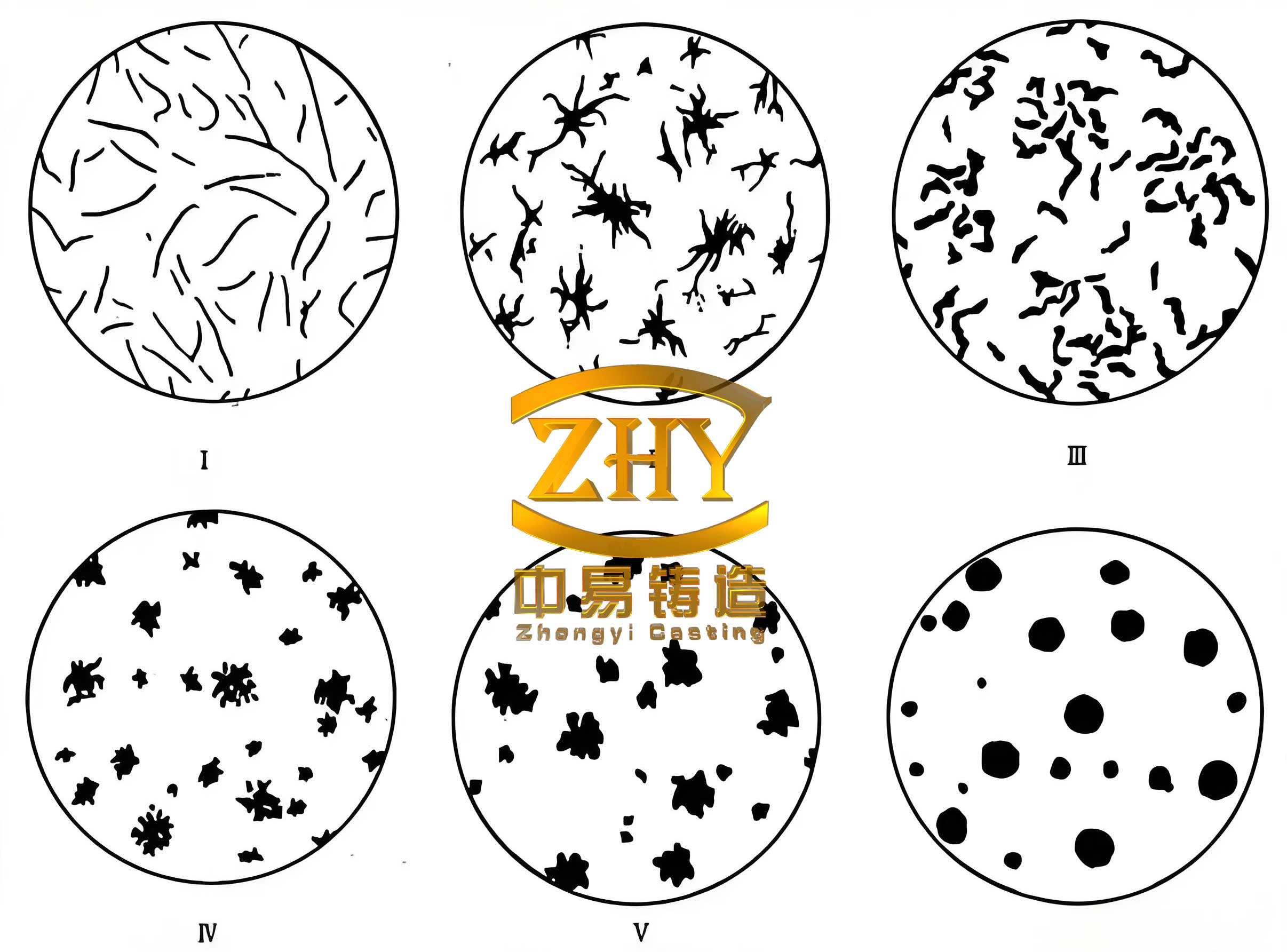
In the manufacturing of critical engine components, such as oil pans, the selection of material and the corresponding casting process are paramount to achieving the necessary combination of strength, durability, and leak-tight integrity. While the referenced work details a successful optimization for a gray iron oil pan, this discussion will expand upon those principles with a particular focus on the application and processing considerations for spheroidal graphite iron. The graphite morphology in spheroidal graphite iron fundamentally alters its mechanical properties compared to flake graphite iron, presenting unique challenges and opportunities in founding large, thin-walled geometries.
The primary function of an engine oil pan is to seal the crankcase, serve as a reservoir for lubrication oil, and aid in heat dissipation. These duties necessitate a casting free from defects like porosity, inclusions, or cracks that could compromise its pressure tightness or structural integrity. A typical large oil pan can have dimensions exceeding 2000 mm in length with a nominal wall thickness of 5-8 mm, presenting a classic “thin-wall, large-plane” casting challenge. For such demanding applications, spheroidal graphite iron grades (e.g., EN-GJS-400-18, EN-GJS-500-7) are often specified for their superior tensile strength, toughness, and fatigue resistance compared to gray iron. The nodular graphite structure in spheroidal graphite iron impedes crack propagation more effectively than the flake graphite in gray iron, which is a critical advantage in dynamically loaded components.
The key challenges in producing a sound large oil pan casting, whether in gray or spheroidal graphite iron, are multifaceted:
- Filling Thin Sections: Ensuring complete mold filling without cold shuts or mistuns in extensive thin-walled areas requires precise control over metal fluidity and gating design.
- Gas Defects: The large upper surface area of the casting is susceptible to blowholes and pinhole porosity from entrapped air, core gases, or moisture from the molding sand.
- Dross and Slag Inclusions: Turbulent filling can oxide the melt, leading to inclusions, especially critical in magnesium-treated spheroidal graphite iron which has a higher propensity for dross formation.
- Dimensional Accuracy & Core Stability: Preventing shifting or floating of large, complex sand cores is essential to maintain wall thickness and internal geometry.
- Solidification Control: Promoting directional solidification to avoid shrinkage porosity, particularly in sections where isolated hot spots may form.
To address these challenges systematically, a holistic process optimization strategy is required. This involves decisions on molding orientation, gating and feeding system design, core venting, and precise parameter control.
Material Considerations: Gray Iron vs. Spheroidal Graphite Iron
The choice between gray iron and spheroidal graphite iron significantly influences the process design. The table below summarizes key comparative aspects relevant to casting an oil pan.
| Property / Aspect | Gray Iron (e.g., G3000/HT300) | Spheroidal Graphite Iron (e.g., EN-GJS-400-18) |
|---|---|---|
| Tensile Strength | ~300 MPa | ~400-500 MPa |
| Elongation | < 1% | ~12-18% |
| Fluidity | Excellent due to graphite expansion | Good, but sensitive to fading and trace elements |
| Shrinkage Behavior | Low net shrinkage, often “self-feeding” | Higher volumetric shrinkage, requires feeding |
| Dross Formation | Moderate | High (MgO, MgS, SiO2) |
| Key Process Concern | Avoiding chilling, promoting graphitization | Nodularity control, dross prevention, feeding |
The superior mechanical properties of spheroidal graphite iron come with increased complexity in process control. The metallurgy of spheroidal graphite iron must be carefully managed to ensure a high nodule count and avoid degenerated graphite forms like vermicular or flake. The reaction during treatment and post-inoculation significantly impacts fluidity. The fluidity of molten iron can be described by a simplified relation considering superheat and composition:
$$ L_f = k \cdot \Delta T_s $$
where \( L_f \) is the fluidity length, \( k \) is a constant dependent on alloy properties and mold characteristics, and \( \Delta T_s \) is the superheat above the liquidus temperature. For spheroidal graphite iron, the constant \( k \) can be adversely affected by the presence of oxide films from poor treatment or handling.
Systematic Process Optimization Strategy
1. Molding Orientation and Parting Line Selection
The initial critical decision is the casting’s orientation in the mold. The referenced article explored a “horizontal molding, vertical pouring” approach to move the large plane to the side wall, theoretically mitigating top-surface defects. However, the practical difficulties in core support and mold handling were deemed prohibitive. For most production foundries, a “horizontal molding, horizontal pouring” approach with the parting line on the component’s flange is the most feasible. This places the large, critical sealing surface of the oil pan in the drag (lower mold half) and the extensive, thinner upper surface in the cope. This orientation simplifies molding, coring, and closing but transfers the challenge of gas and inclusion management to the cope-side surface, necessitating a robust gating and venting strategy.
2. Gating System Design for Clean, Laminar Filling
The gating system must achieve two primary goals for a large thin-walled casting: minimize turbulence to prevent slag/dross entrainment, and ensure sufficiently rapid filling to avoid cold shuts. For spheroidal graphite iron, a pressurized or semi-pressurized system is often preferred over a fully open system to promote a faster, more controlled fill and reduce oxidation. A common ratio is:
$$ \sum A_{choke} : \sum A_{runner} : \sum A_{gate} = 1 : 1.2 : 1.5 $$
The use of a filter—either ceramic foam or a rigid refractory filter—at the entrance to the runner system is highly recommended, especially for spheroidal graphite iron. The filter reduces turbulent energy, filters out macroscopic inclusions, and promotes a more laminar flow into the mold cavity. The pressure drop across the filter must be accounted for in the gating calculation using a simplified form of the Bernoulli equation with a loss coefficient \( C_f \) for the filter:
$$ v = C_f \cdot \sqrt{2gh} $$
where \( v \) is the gate velocity, \( g \) is gravity, and \( h \) is the effective metallostatic head. Optimal gate velocity for thin-section iron castings is typically between 0.4 and 0.8 m/s to balance fill time and turbulence.
3. Core Design, Venting, and Stabilization
The large internal core forming the oil sump is a primary source of potential gas defects. Its design must prioritize排气 (venting). This involves:
- Incorporating abundant internal vent channels (e.g., using perforated core boxes or vent rods) that lead to external venting points.
- Using highly permeable core sand mixes.
- Ensuring all core vent passages are connected to the mold exterior via vents drilled in the drag or cope.
Core stabilization is equally critical. The core must be positively located in the drag using core prints with adequate clearance for thermal expansion. For large cores, anti-flotation designs such as elongated prints or strategic use of non-metallic core supports (chaplets) approved for the application may be necessary. A core will float if the buoyant force exceeds its weight and the restraining force from the prints. The buoyant force \( F_b \) can be estimated as:
$$ F_b = \rho_{metal} \cdot g \cdot V_{core\_displaced} – \rho_{core} \cdot g \cdot V_{core} $$
where \( \rho \) denotes density, \( g \) is gravity, and \( V \) is volume. The core prints must be designed to provide sufficient mechanical resistance to counter \( F_b \).
4. Feeding, Venting, and Overflow Design for the Upper Surface
Since the large upper surface is in the cope, it becomes the last point to fill and the primary collection area for slag and entrapped gases. A multi-pronged approach is essential:
- Venting: Strategic placement of multiple vent points (e.g., small-diameter vents or permeable venting strips) along the highest points of the cope mold cavity to allow air to escape.
- Overflow/Scum Risers: Placing small, open risers or “wash” risers at the end of filling paths and at junctions where cold metal or oxides may accumulate. These act as reservoirs for contaminated metal and provide an additional escape route for gas. Their size is not for feeding shrinkage but for collection.
- Feeding for Spheroidal Graphite Iron: Unlike gray iron, spheroidal graphite iron requires feeding to compensate for its significant shrinkage. Depending on the modulus of critical sections, small feeder heads or heating pads (exothermic/insulating) might be necessary on heavier sections like flange junctions to prevent micro-shrinkage.
5. Process Parameter Optimization
Precise control of the following parameters is non-negotiable for achieving consistency, particularly with spheroidal graphite iron.
| Parameter | Optimization Target & Rationale | Consideration for Spheroidal Graphite Iron |
|---|---|---|
| Pouring Temperature | High (e.g., 1380-1420°C) to ensure fluidity for thin walls. Higher temperature reduces surface tension and viscosity, improving fill. Must be balanced against sand penetration and gas pickup. | Critical. Must be high enough to avoid dross entrapment and ensure good nodularity “fade” resistance. Often at the upper end of the range. |
| Pouring Time | Calculated based on desired gate velocity and total gating area. Too slow risks cold shuts; too fast risks turbulence. For a large oil pan, 40-60 seconds is typical. | Similar principle. Fast fill minimizes temperature loss but must be managed with filters to control turbulence. |
| Mold Sand Properties | Low moisture (<3.0% for green sand, <0.3% for resin-bonded sand) to minimize hydrogen gas evolution. High permeability (>100). Good collapsibility. | Especially sensitive to sulfur and nitrogen from binders, which can degenerate graphite nodules. Use low-nitrogen, low-sulfur resin systems. |
| Metal Quality | Low oxide content, correct chemistry, effective inoculation (for gray iron) or nodularization (for S.G. iron). | Paramount. Requires strict control of treatment alloy, post-inoculation practice, and holding time to maintain nodule count and avoid fading. |
Numerical Simulation as a Verification Tool
Modern casting simulation software is indispensable for validating the designed process before committing to tooling and production trials. It provides insights that are difficult or impossible to obtain otherwise.
- Filling Analysis: Visualizes flow patterns, identifies potential areas of turbulence, air entrapment, and cold metal meeting. It helps optimize gate locations and sizes to ensure a progressive, front-to-back fill of the cavity.
- Solidification & Cooling Analysis: Predicts the order of solidification, identifies isolated hot spots that may lead to shrinkage porosity, and helps determine the need for and placement of feeders. The solidification time \( t_s \) for a sand casting can be approximated by Chvorinov’s Rule:
$$ t_s = B \cdot \left( \frac{V}{A} \right)^n $$
where \( V \) is volume, \( A \) is cooling surface area, \( B \) is a mold constant, and \( n \) is an exponent (often ~2). Simulation refines this calculation for complex geometries, showing the thermal gradients.
- Stress & Distortion Analysis: Predicts residual stresses and potential warping during cooling, which is crucial for maintaining dimensional accuracy of the large, flat sealing surface.
Simulation allows for virtual iteration—testing the “horizontal pour” vs. a theoretical “vertical pour,” adjusting feeder sizes, or modifying gate positions—to converge on a robust process with minimal physical trial cost.
Production Validation and Results
Implementing the optimized horizontal process with enhanced core venting, strategic gating with filters, and controlled parameters leads to measurable improvements. A hypothetical comparison based on the principles discussed would show results aligned with the following:
| Performance Metric | Initial Problematic Process | Optimized Process (Horizontal) |
|---|---|---|
| Mold/Sand-to-Metal Ratio | High (~6:1), inefficient | Significantly improved (~4.5:1) |
| Process Yield (Cast Weight/Poured Weight) | Lower (e.g., ~70%) due to excessive risering | Higher (e.g., ~80%) with efficient gating/venting |
| Defect Rate (e.g., Gas Porosity, Slag) | High (e.g., >30%) | Dramatically reduced (e.g., <5%) |
| Dimensional Consistency | Potentially variable due to core movement | Improved via positive core locking |
| Applicability to Spheroidal Graphite Iron | High risk of dross and shrinkage defects | Feasible with added focus on filters, feeding, and metal treatment |
Conclusion
The successful production of large, thin-walled castings like engine oil pans demands a holistic and meticulously controlled approach. While gray iron presents specific challenges, the principles of clean metal handling, laminar filling, aggressive venting, and core stability are universal. Transitioning to a higher-performance material like spheroidal graphite iron intensifies these requirements, adding the critical layers of shrinkage feeding management and strict control over melt quality to preserve nodularity. The key conclusions are:
- Practical Orientation: While alternative orientations like “vertical pouring” may offer theoretical benefits for specific defects, the practical complexities often render them unsuitable for robust, safe, and efficient production. A well-engineered horizontal pour is typically the most viable solution.
- Combatting Cope-Surface Defects: For castings with large upper surfaces, gas and inclusion defects are best mitigated not by avoiding the cope, but by attacking the root causes: implementing superior core and mold venting, ensuring core stability to prevent “pumping” actions, and using overflow risers and filters to trap contaminants.
- Parameter Precision: Pouring temperature is a supremely critical factor for thin-wall castings, directly governing fluidity and fill integrity. This must be complemented by tight control over sand properties, pouring speed, and, for spheroidal graphite iron, the entire treatment and inoculation process.
- Simulation-Driven Design: Numerical simulation is an essential tool for validating gating and feeding logic, predicting defect formation, and reducing the time and cost associated with physical trials, especially when dealing with premium materials like spheroidal graphite iron.
By adhering to these principles—rigorous gating design, exhaustive venting, absolute core control, and precise parameter management—foundries can consistently produce high-integrity, complex castings in both gray and spheroidal graphite iron, meeting the stringent demands of modern engine technology.