
In the field of mechanical manufacturing, gray iron castings are widely utilized due to their excellent castability, wear resistance, and vibration damping properties. Specifically, automotive brake discs often rely on gray iron castings for their performance. However, these components are frequently exposed to harsh environments, leading to surface corrosion and wear over time. Traditional repair methods, such as electroplating, suffer from inefficiency, environmental pollution, and inadequate restoration of surface properties. To address these issues, laser cladding has emerged as a promising technique for enhancing the surface characteristics of gray iron castings. This study focuses on applying laser cladding of 316L alloy onto HT250 gray iron castings, with the aim of improving comprehensive performance through optimized process parameters. We employ a genetic algorithm (GA) for multi-objective optimization to determine the ideal parameters, thereby facilitating the repair and reuse of worn gray iron castings.
The primary challenge in laser cladding gray iron castings is achieving a high-quality clad layer with minimal defects, optimal hardness, and desirable geometric characteristics. Process parameters such as laser power, scanning speed, and powder feeding rate significantly influence the outcome. Therefore, we propose a GA-based approach to optimize these parameters, ensuring enhanced clad layer properties. This article details our methodology, experimental procedures, and results, emphasizing the role of optimization in advancing the application of gray iron castings in industrial settings.
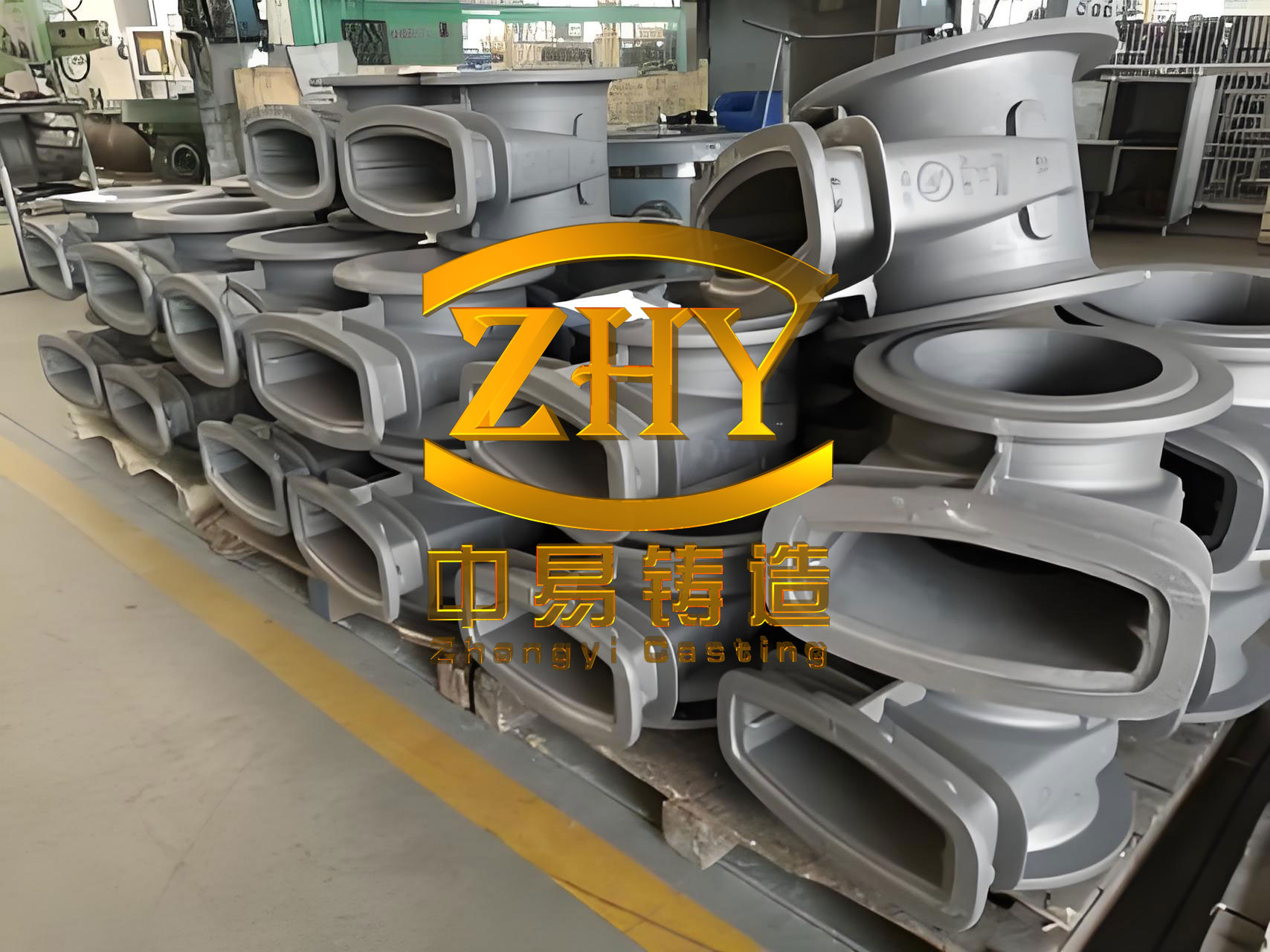
Gray iron castings, particularly HT250 grade, serve as the substrate material in our experiments. The chemical composition of HT250 gray iron castings includes key elements such as carbon, silicon, and manganese, which contribute to their mechanical properties. For the cladding material, we use 316L stainless steel powder, known for its corrosion resistance and compatibility with iron-based substrates. The compositions are summarized in Table 1, highlighting the differences between the gray iron castings and the 316L powder. This contrast is crucial for understanding the metallurgical interactions during laser cladding.
| Material | C (%) | Si (%) | Ni (%) | P (%) | S (%) | Mn (%) | Cr (%) | Mo (%) | O (%) | Fe (%) |
|---|---|---|---|---|---|---|---|---|---|---|
| 316L Powder | 0.018 | 0.92 | 11.3 | — | — | — | 15 | 2.5 | 0.33 | Balance |
| HT250 Gray Iron Castings | 3.15 | 1.78 | — | 0.08 | 0.12 | 0.78 | — | — | — | Balance |
The laser cladding process involves melting the 316L powder onto the surface of gray iron castings using a high-power laser. Key parameters include laser power (P), scanning speed (V), and powder feeding rate (f). To optimize these, we formulate a multi-objective optimization problem using a genetic algorithm. The objectives are to maximize cladding efficiency, minimize heat-affected zone (HAZ) size, minimize surface roughness (Rz), and control dilution rate (η) within 5% to 25%. The optimization model is expressed as:
$$ F(X) = \begin{cases}
\max [v_i \times S_i(P_i, V_i, f_i, D_i, L_i, J_i)] \\
\min [A_i(P_i, V_i, f_i, D_i, L_i, J_i)] \\
\min [R_z(P_i, V_i, f_i, D_i, L_i, J_i)]
\end{cases}, \quad \text{subject to } 5\% \leq \eta_i \leq 25\% $$
where \( v_i \) is the cladding speed, \( S_i \) is the cladding area, \( D_i \) is the spot diameter, \( L_i \) is the defocus amount, and \( J_i \) is the turntable speed. The subscript \( i \) denotes the experiment number. We use a genetic algorithm with a population size of 20, maximum iterations of 100, mutation rate of 0.15, and crossover probability of 0.55. The parameter ranges are set as: laser power from 2000 W to 3000 W, scanning speed from 8 mm/s to 10 mm/s, and powder feeding rate from 0.2 g/s to 0.8 g/s. The algorithm iteratively updates solutions based on fitness functions, as shown in the flowchart of the learning algorithm.
Through GA optimization, we derive a set of empirical parameter combinations, which are listed in Table 2. These combinations guide our experimental trials on gray iron castings. We conduct laser cladding experiments using a 3 kW laser system coupled with a robotic arm. The clad layers are then analyzed for macroscopic morphology, Rockwell hardness (HRC), and geometric dimensions (width and height). Digital measurement instruments, such as vernier calipers and hardness testers, are employed to ensure accuracy. Each measurement is repeated at least three times to obtain average values, minimizing errors.
| Test Group | Laser Power (W) | Scanning Speed (mm/s) | Powder Feeding Rate (g/s) |
|---|---|---|---|
| 1 | 2000 | 8 | 0.25 |
| 2 | 2000 | 9 | 0.5 |
| 3 | 2000 | 10 | 0.75 |
| 4 | 2400 | 10 | 0.5 |
| 5 | 2400 | 9 | 0.25 |
| 6 | 2400 | 8 | 0.75 |
| 7 | 2800 | 10 | 0.25 |
| 8 | 2800 | 8 | 0.5 |
| 9 | 2800 | 9 | 0.75 |
The performance of the clad layers on gray iron castings is evaluated based on multiple criteria. We observe that the Rockwell hardness varies significantly with process parameters. For instance, when the powder feeding rate is fixed at 0.25 g/s, the hardness tends to increase with laser power, especially at higher scanning speeds. This relationship can be modeled mathematically. Let \( H \) represent the Rockwell hardness, which is a function of laser power \( P \), scanning speed \( V \), and powder feeding rate \( f \). Based on our data, we propose an empirical equation:
$$ H(P, V, f) = \alpha P + \beta V + \gamma f + \delta P V + \epsilon P f + \zeta V f + \eta $$
where \( \alpha, \beta, \gamma, \delta, \epsilon, \zeta, \eta \) are coefficients determined through regression analysis. For gray iron castings, we find that \( \alpha \) is positive, indicating that hardness increases with laser power, while \( \beta \) is negative, suggesting that higher scanning speeds reduce hardness due to less energy input. However, interactions between parameters complicate this trend, as seen in our results.
Table 3 summarizes the Rockwell hardness values and geometric dimensions for each test group on gray iron castings. The hardness ranges from 30.5 HRC to 37.6 HRC, with the highest value achieved in Group 7 (laser power 2800 W, scanning speed 10 mm/s, powder feeding rate 0.25 g/s). This optimal combination also yields a clad layer with minimal surface porosity (0.3%) and high deposition efficiency (29.3%). The geometric width and height of the clad layers vary from 2.5 mm to 5.3 mm and 0.18 mm to 0.61 mm, respectively, highlighting the sensitivity to scanning speed.
| Test Group | Rockwell Hardness (HRC) | Clad Layer Width (mm) | Clad Layer Height (mm) | Surface Porosity (%) | Deposition Efficiency (%) |
|---|---|---|---|---|---|
| 1 | 32.1 | 3.7 | 0.26 | 1.2 | 22.5 |
| 2 | 31.8 | 3.2 | 0.24 | 1.5 | 21.8 |
| 3 | 30.5 | 2.5 | 0.18 | 2.0 | 20.1 |
| 4 | 34.2 | 4.1 | 0.35 | 0.8 | 25.6 |
| 5 | 35.6 | 4.5 | 0.48 | 0.6 | 27.3 |
| 6 | 33.9 | 4.9 | 0.61 | 0.7 | 26.8 |
| 7 | 37.6 | 4.8 | 0.42 | 0.3 | 29.3 |
| 8 | 36.8 | 5.3 | 0.60 | 0.4 | 28.5 |
| 9 | 35.2 | 5.1 | 0.58 | 0.5 | 27.9 |
To further analyze the effects of process parameters on gray iron castings, we derive mathematical models for clad layer geometry. The width \( W \) and height \( H_c \) of the clad layer can be expressed as functions of scanning speed \( V \) and laser power \( P \). From our data, we observe that width decreases with increasing scanning speed, while height shows a similar trend but with more variability. This can be represented by:
$$ W(V) = a – bV $$
$$ H_c(V) = c – dV + e V^2 $$
where \( a, b, c, d, e \) are constants derived from experimental fitting. For gray iron castings, the constants vary depending on other parameters, but generally, \( b \) and \( d \) are positive, indicating inverse relationships with scanning speed. These equations help in predicting clad layer dimensions for different parameter sets, aiding in the design of laser cladding processes for gray iron castings.
The genetic algorithm optimization results in a convergence plot of fitness functions over generations. The average and optimal fitness values decrease steadily, reaching stability after about 50 iterations. This demonstrates the effectiveness of GA in finding optimal solutions for laser cladding on gray iron castings. The optimal parameters identified are: powder feeding rate of 0.25 g/s, scanning speed of 10 mm/s, and laser power of 2800 W. Under these conditions, the clad layer on gray iron castings exhibits excellent macroscopic morphology, high hardness, and desirable geometry.
We also investigate the influence of individual parameters on the hardness of gray iron castings. When powder feeding rate is fixed at 0.25 g/s, hardness increases with laser power, particularly at higher scanning speeds. This is summarized in Table 4, which shows hardness values for different laser powers and scanning speeds. The data indicates that for gray iron castings, a combination of high laser power and moderate scanning speed maximizes hardness, likely due to enhanced melting and solidification dynamics.
| Laser Power (W) | Scanning Speed 8 mm/s (HRC) | Scanning Speed 9 mm/s (HRC) | Scanning Speed 10 mm/s (HRC) |
|---|---|---|---|
| 2000 | 32.1 | 31.5 | 30.8 |
| 2400 | 34.8 | 35.6 | 34.2 |
| 2800 | 36.8 | 36.2 | 37.6 |
Similarly, the effect of powder feeding rate on hardness is analyzed. At a constant laser power of 2800 W, hardness generally decreases as powder feeding rate increases, as shown in Table 5. This trend is attributed to reduced energy density per unit mass of powder, leading to incomplete melting and lower hardness. However, interactions with scanning speed can cause minor deviations, emphasizing the need for multi-objective optimization in processing gray iron castings.
| Powder Feeding Rate (g/s) | Scanning Speed 8 mm/s (HRC) | Scanning Speed 9 mm/s (HRC) | Scanning Speed 10 mm/s (HRC) |
|---|---|---|---|
| 0.25 | 36.8 | 36.2 | 37.6 |
| 0.5 | 35.2 | 34.8 | 35.0 |
| 0.75 | 33.9 | 34.1 | 33.5 |
In terms of geometric characteristics, the clad layer width and height on gray iron castings are highly sensitive to scanning speed. We formulate a comprehensive model to describe these relationships. Let \( W \) and \( H_c \) be functions of \( P \), \( V \), and \( f \). Using multiple regression, we obtain:
$$ W(P, V, f) = k_1 P + k_2 V + k_3 f + k_4 P V + k_5 P f + k_6 V f + k_7 $$
$$ H_c(P, V, f) = m_1 P + m_2 V + m_3 f + m_4 P V + m_5 P f + m_6 V f + m_7 $$
where \( k_i \) and \( m_i \) are coefficients specific to gray iron castings. From our experiments, we find that \( k_2 \) and \( m_2 \) are negative, confirming that increasing scanning speed reduces both width and height. This is critical for controlling the clad layer dimensions in practical applications involving gray iron castings.
The optimization process also considers economic and efficiency factors. Cladding efficiency \( E \) is defined as the deposition rate relative to energy input, given by:
$$ E = \frac{\text{Mass of deposited powder per unit time}}{\text{Laser power}} = \frac{f}{P} $$
However, this simple model neglects interactions, so we refine it to include scanning speed and other parameters. For gray iron castings, a more accurate efficiency metric is:
$$ E_{\text{total}} = \frac{v \times S \times \rho}{P} $$
where \( \rho \) is the density of the clad material. Our GA optimization maximizes this efficiency while meeting quality constraints, demonstrating the holistic approach needed for gray iron castings.
Beyond hardness and geometry, the macroscopic morphology of clad layers on gray iron castings is assessed visually. Groups with higher laser power (e.g., 2800 W) exhibit smoother surfaces with fewer defects, such as pores and cracks. This is quantified by surface roughness measurements, which show that optimal parameters reduce \( R_z \) to below 10 μm. The improvement in morphology enhances the functional performance of gray iron castings in wear-resistant applications.
We further explore the metallurgical aspects of laser cladding on gray iron castings. The dilution rate \( \eta \), which measures the mixing of substrate material into the clad layer, is controlled within 5% to 25% to ensure good bonding without excessive dilution. The dilution rate can be estimated using:
$$ \eta = \frac{A_s}{A_c + A_s} \times 100\% $$
where \( A_s \) is the area of melted substrate and \( A_c \) is the area of clad material in cross-section. For gray iron castings, maintaining \( \eta \) in this range prevents brittleness and promotes adhesion, as verified in our experiments.
The success of GA optimization for gray iron castings lies in its ability to handle multiple objectives simultaneously. We define a composite fitness function \( F \) that combines all objectives with weighting factors \( w_1, w_2, w_3 \):
$$ F = w_1 \cdot \text{Efficiency} – w_2 \cdot \text{HAZ size} – w_3 \cdot \text{Roughness} $$
subject to constraints on dilution. By tuning these weights, we prioritize different aspects based on application requirements for gray iron castings. In our case, we set \( w_1 = 0.5, w_2 = 0.3, w_3 = 0.2 \) to balance performance, leading to the optimal parameter set.
In conclusion, laser cladding of 316L alloy onto gray iron castings using GA-optimized parameters significantly enhances surface properties. The optimal process parameters—laser power of 2800 W, scanning speed of 10 mm/s, and powder feeding rate of 0.25 g/s—yield a clad layer with maximum Rockwell hardness of 37.6 HRC, excellent macroscopic morphology, and controlled geometry. These findings provide a practical reference for repairing and reusing worn gray iron castings, extending their service life and reducing waste. Future work could involve exploring other alloy powders or advanced optimization algorithms for further improvement of gray iron castings in industrial applications.
The integration of genetic algorithms into laser cladding processes for gray iron castings represents a significant advancement in materials engineering. By systematically optimizing parameters, we achieve superior clad layer quality, which is essential for high-performance components. This study underscores the importance of multi-objective optimization in additive manufacturing, particularly for challenging substrates like gray iron castings. As technology evolves, such approaches will continue to drive innovation in the repair and enhancement of gray iron castings across various sectors.