
In my research, I focus on improving the pre-painting corrosion protection for engine components, which are predominantly manufactured from gray cast iron. Gray cast iron, particularly grade HT250, presents unique challenges due to its graphite inclusions that can hinder the formation of uniform and adherent phosphate coatings. Traditional phosphating processes, such as high-temperature manganese-based and medium-temperature zinc-based systems, have limitations when applied to gray cast iron. The high-temperature manganese process yields relatively good corrosion resistance but is energy-intensive, while the medium-temperature zinc process often results in poor film adhesion and inferior protection. Therefore, I embarked on developing an optimized medium-temperature zinc-calcium-manganese phosphating process tailored specifically for gray cast iron HT250. The goal is to achieve a fine, dense phosphate microstructure that ensures excellent corrosion resistance while operating at moderate temperatures for energy efficiency.
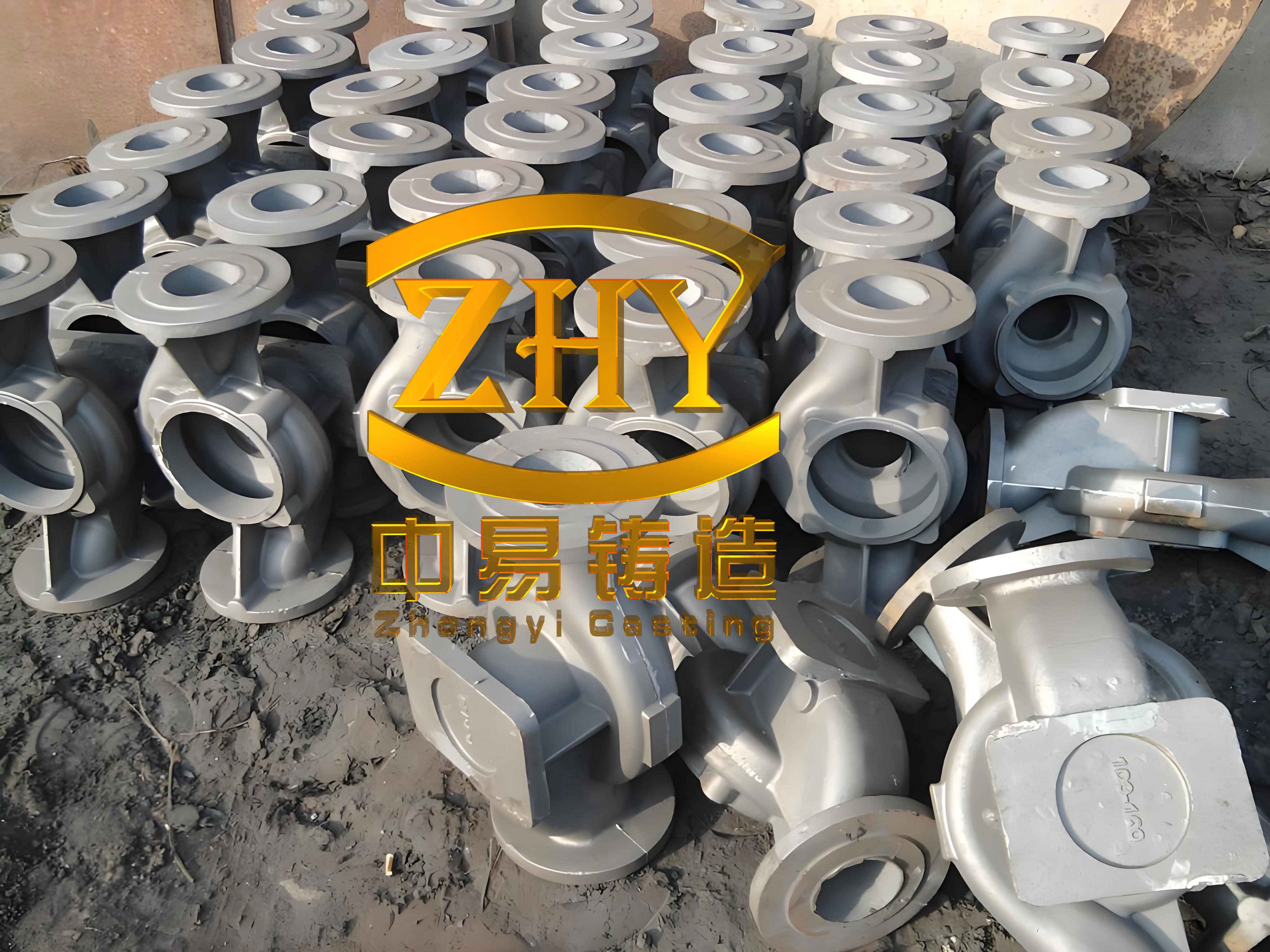
The substrate material used in my experiments was gray cast iron HT250, with a nominal composition of 2.5–4.0% C, 1.0–1.3% Si, 0.9–1.3% Mn, 0.3% P, 0.15% S, and balance Fe. This gray cast iron is characterized by its flake graphite structure, which influences surface reactivity during chemical treatments. Specimens were cut into dimensions of 50 mm × 10 mm × 5 mm. Prior to phosphating, each gray cast iron sample underwent meticulous preparation: grinding with 240-grit and 400-grit sandpapers to achieve a smooth surface, followed by degreasing in a phosphate-free alkaline cleaner at room temperature for 5 minutes, and then acid pickling in a 50 g/L phosphoric acid solution at ambient temperature to remove oxides and rust. The pickling time was varied as part of the experimental design. After each step, the gray cast iron samples were rinsed thoroughly with flowing tap water for 1 minute to prevent contamination.
The phosphating bath formulation was based on a medium-temperature zinc-calcium-manganese system, comprising zinc nitrate, calcium dihydrogen phosphate, acid manganese phosphate, and tartaric acid as an additive. The standard composition was 32 g/L Zn(NO3)2, 10 g/L Ca(H2PO4)2, 9.5 g/L acid manganese phosphate, and 1 g/L tartaric acid. Phosphating was conducted at a temperature range of 70–80°C. To optimize the process for gray cast iron HT250, I designed an orthogonal experiment using an L16(410) array, investigating four critical factors: total acidity (TA), acid ratio (TA/FA, ratio of total acidity to free acidity), acid pickling time, and phosphating time. Each factor had four levels, as detailed in Table 1.
| Factor | Level 1 | Level 2 | Level 3 | Level 4 |
|---|---|---|---|---|
| Total Acidity (TA, points) | 20 | 30 | 40 | 50 |
| Acid Ratio (TA/FA) | 18.0 | 14.0 | 10.0 | 6.6 |
| Acid Pickling Time (s) | 20 | 30 | 40 | 50 |
| Phosphating Time (min) | 5 | 10 | 15 | 20 |
Total acidity and free acidity are key parameters in phosphating solutions, typically measured by titration. Total acidity (TA) represents the concentration of all acid species, including phosphoric acid and its salts, while free acidity (FA) indicates the concentration of free hydrogen ions. The acid ratio (TA/FA) is a critical control parameter affecting the nucleation and growth of phosphate crystals. In this study, TA was adjusted by varying the concentrations of phosphate salts, and FA was monitored to maintain the desired ratio. The relationship can be expressed conceptually as:
$$TA \propto \sum [H^+]_{total} + [Metal^{2+}]_{phosphate}, \quad FA \propto [H^+]_{free}$$
where the exact proportionality depends on the specific chemistry. For practical purposes, TA is often measured in “points” via titration with NaOH, and FA is similarly determined. The phosphating mechanism on gray cast iron involves electrochemical reactions at the metal-solution interface. The overall process can be simplified as:
$$3Zn(H_2PO_4)_2 \rightarrow Zn_3(PO_4)_2 \downarrow + 4H_3PO_4$$
$$2Ca(H_2PO_4)_2 + 2Mn(H_2PO_4)_2 + Fe \rightarrow (Ca,Mn,Fe)_3(PO_4)_2 \downarrow + 4H_3PO_4 + H_2 \uparrow$$
These reactions are facilitated by the dissolution of iron from the gray cast iron substrate, which creates micro-cathodic and anodic sites. The graphite in gray cast iron can act as a barrier, disrupting the uniformity of these sites and thus affecting film formation.
Corrosion resistance of the phosphate coatings was evaluated using the drop test according to QB/T 3824-1999. The test solution consisted of a mixture of 0.25 mol/L CuSO4·5H2O, 10% NaCl, and 0.1 mol/L HCl in a volume ratio of 40.0:20.0:0.8. Drops were placed on the phosphated gray cast iron surface at 25 ± 2°C, and the time to appearance of red rust spots was recorded under a 6× magnifier. Longer times indicate better corrosion resistance. Surface morphology of the phosphate films was examined using scanning electron microscopy (SEM) to correlate microstructure with performance.
The orthogonal experiment results are summarized in Table 2, which includes the drop test times for each trial. To analyze the effect of each factor, I calculated the sum of drop times for each level (Ii, IIi, IIIi, IVi) and the range (Ri), which indicates the factor’s influence magnitude.
| Trial | Total Acidity (points) | Acid Ratio (TA/FA) | Acid Pickling Time (s) | Phosphating Time (min) | Drop Test Time (s) |
|---|---|---|---|---|---|
| 1 | 20 | 18.0 | 20 | 5 | 61 |
| 2 | 20 | 14.0 | 30 | 10 | 35 |
| 3 | 20 | 10.0 | 40 | 15 | 24 |
| 4 | 20 | 6.6 | 50 | 20 | 20 |
| 5 | 30 | 18.0 | 40 | 20 | 445 |
| 6 | 30 | 14.0 | 50 | 15 | 937 |
| 7 | 30 | 10.0 | 20 | 10 | 90 |
| 8 | 30 | 6.6 | 30 | 5 | 25 |
| 9 | 40 | 18.0 | 50 | 10 | 572 |
| 10 | 40 | 14.0 | 40 | 5 | 70 |
| 11 | 40 | 10.0 | 30 | 20 | 324 |
| 12 | 40 | 6.6 | 20 | 15 | 69 |
| 13 | 50 | 18.0 | 30 | 15 | 80 |
| 14 | 50 | 14.0 | 20 | 20 | 280 |
| 15 | 50 | 10.0 | 50 | 5 | 30 |
| 16 | 50 | 6.6 | 40 | 10 | 40 |
| Sum for Level I (Ii) | 140 | ||||
| Sum for Level II (IIi) | 1497 | ||||
| Sum for Level III (IIIi) | 1035 | ||||
| Sum for Level IV (IVi) | 330 | ||||
| Range (Ri) | 750.5 | ||||
From the range analysis, the order of influence on corrosion resistance is: Acid Ratio > Phosphating Time > Total Acidity > Acid Pickling Time. This indicates that for gray cast iron phosphating, controlling the acid ratio and phosphating time is paramount. The optimal combination derived from the orthogonal analysis is: Total Acidity at 30 points, Acid Ratio at 14.0, Acid Pickling Time at 30–40 s, and Phosphating Time at 15 min. This combination yielded the highest drop test time of 937 seconds in Trial 6, demonstrating superior corrosion protection for the gray cast iron substrate.
To further elucidate the effects, I examined each parameter individually. Total acidity (TA) influences the concentration of phosphate ions available for deposition. Higher TA increases the supersaturation, promoting nucleation and growth of phosphate crystals. However, excessive TA can lead to coarse crystals and inclusion of impurities, reducing film density. The relationship between TA and film quality can be modeled as:
$$Growth\ Rate \propto k_{1}[PO_4^{3-}]^{n} – k_{2}[H^+]^{m}$$
where \(k_1\) and \(k_2\) are rate constants, and \(n\) and \(m\) are reaction orders. For gray cast iron, the optimal TA was found at 30 points, as shown in Figure 1 (conceptual plot). At this level, the phosphate film on gray cast iron is dense and uniform, with minimal porosity.
The acid ratio (TA/FA) is critical because it governs the pH at the metal-solution interface. A higher ratio (lower free acidity) reduces hydrogen evolution, allowing a gradual pH rise that favors the formation of fine crystals. Conversely, a low ratio (high free acidity) accelerates hydrogen bubbling, which can disrupt film adhesion and result in coarse, porous coatings. The optimal acid ratio of 14.0 for gray cast iron HT250 ensures a balanced reaction rate, as illustrated in Figure 2 (conceptual plot). This ratio supports the development of a compact phosphate layer that effectively covers the graphite inclusions in gray cast iron.
Phosphating time directly affects film thickness and completeness. Insufficient time leads to incomplete coverage, while excessive time can cause over-etching and coarsening. The film growth on gray cast iron follows a logarithmic trend, initially rapid then plateauing as the film acts as a barrier. The thickness \( \delta \) as a function of time \( t \) can be approximated by:
$$\delta = A \ln(Bt + 1)$$
where \(A\) and \(B\) are constants dependent on bath composition and temperature. For the gray cast iron used, 15 minutes provided optimal thickness without degradation, as seen in Figure 3 (conceptual plot).
Acid pickling time prepares the gray cast iron surface by removing oxides and activating the metal. Too short a time leaves oxides that hinder phosphating, while too long a time exposes excessive graphite, which can act as a barrier. In 50 g/L phosphoric acid, 30–40 seconds was ideal for gray cast iron HT250, balancing oxide removal with minimal graphite exposure (Figure 4, conceptual plot).
To correlate microstructure with performance, I selected four representative samples from the orthogonal array with varying corrosion resistance, as detailed in Table 3. SEM analysis revealed distinct morphological differences.
| Sample | Total Acidity (points) | Acid Ratio | Acid Pickling Time (s) | Phosphating Time (min) | Drop Test Time (s) | Corrosion Resistance |
|---|---|---|---|---|---|---|
| A | 30 | 14.0 | 50 | 15 | 937 | Excellent |
| B | 40 | 18.0 | 50 | 10 | 572 | Good |
| C | 40 | 10.0 | 30 | 20 | 324 | Moderate |
| D | 50 | 6.6 | 40 | 10 | 40 | Poor |
Sample A (excellent resistance) showed a uniform coating composed of flattened block-like crystals, 2–3 μm in size, packed tightly to form a dense, continuous film on the gray cast iron. Sample B (good resistance) exhibited feathery and plate-like crystals, 4–5 μm, interlocked to create a relatively dense layer. Sample C (moderate resistance) had cuboid block crystals, 1–2 μm, but with some looseness and pores. Sample D (poor resistance) displayed irregular spherical particles, 0.5–3.0 μm, with poor packing and high porosity. These observations confirm that fine, uniform crystal packing is essential for corrosion resistance on gray cast iron.
The phosphating process on gray cast iron involves complex interactions between the bath chemistry and the heterogeneous substrate. The presence of graphite in gray cast iron creates galvanic couples with the iron matrix, influencing local dissolution and deposition rates. This can be described by a modified Butler-Volmer equation for mixed electrode systems:
$$i_{net} = i_{0,Fe} \left[ \exp\left(\frac{\alpha_{Fe} F \eta}{RT}\right) – \exp\left(-\frac{(1-\alpha_{Fe}) F \eta}{RT}\right) \right] + i_{0,C} \left[ \exp\left(\frac{\alpha_{C} F \eta}{RT}\right) \right]$$
where \(i_{net}\) is the net current density, \(i_{0,Fe}\) and \(i_{0,C}\) are exchange current densities for iron and graphite, \(\alpha\) are transfer coefficients, \(F\) is Faraday’s constant, \(R\) is the gas constant, \(T\) is temperature, and \(\eta\) is overpotential. Graphite, being cathodic, can accelerate iron dissolution locally, but if excessive, it may block phosphate nucleation. Optimizing bath parameters mitigates this issue, ensuring uniform coverage over the gray cast iron surface.
Furthermore, the zinc-calcium-manganese system offers synergistic benefits. Zinc phosphate provides rapid nucleation, calcium enhances film density and reduces solubility, and manganese improves adhesion and corrosion resistance. The combined film on gray cast iron likely has a mixed composition such as (Zn,Ca,Mn)3(PO4)2·4H2O (hopette-type phases), which contributes to the observed performance. The film weight \(W\) per unit area can be estimated from Faraday’s law considering the charge passed during phosphating:
$$W = \frac{Q M}{n F}$$
where \(Q\) is charge, \(M\) is molar mass of the phosphate, and \(n\) is electrons transferred per formula unit. For gray cast iron, the charge is affected by surface roughness and graphite content, making process control crucial.
In practical applications, this optimized medium-temperature process for gray cast iron HT250 offers significant advantages over traditional methods. It operates at 70–80°C, reducing energy consumption compared to high-temperature manganese processes (often above 90°C). The corrosion resistance achieved, with drop times exceeding 900 seconds, meets or exceeds industrial requirements for engine components. Additionally, the bath stability is good, with tartaric acid acting as a complexing agent to prevent sludge formation and control crystal growth on the gray cast iron substrate.
To ensure reproducibility, I recommend regular monitoring of bath parameters. Total acidity and acid ratio should be checked daily using titration methods. For gray cast iron parts with varying geometries, agitation may be beneficial to ensure uniform exposure. Post-phosphating rinsing and sealing can further enhance corrosion resistance, but the base phosphate film itself is robust due to the optimized microstructure.
In conclusion, my investigation demonstrates that medium-temperature zinc-calcium-manganese phosphating is highly effective for gray cast iron HT250 when parameters are precisely controlled. The optimal conditions are: total acidity of 30 points, acid ratio of 14.0, acid pickling for 30–40 seconds in 50 g/L H3PO4, and phosphating for 15 minutes at 70–80°C. This yields a fine, densely packed phosphate film with excellent corrosion resistance, addressing the challenges posed by graphite in gray cast iron. Future work could explore the incorporation of nano-additives or alternate accelerators to further improve performance, but the current process provides a reliable and energy-efficient solution for protecting gray cast iron components in automotive and machinery industries.
The success of this phosphating process hinges on understanding the unique properties of gray cast iron. Gray cast iron’s microstructure, with its graphite flakes, requires tailored surface treatments to ensure coating integrity. By optimizing the zinc-calcium-manganese system, I have developed a method that not only enhances corrosion resistance but also maintains operational efficiency. This approach can be extended to other grades of gray cast iron, with adjustments based on specific composition and application requirements. Continuous emphasis on the role of gray cast iron substrate characteristics is essential for advancing phosphating technology in industrial settings.