
As a researcher focused on advancing manufacturing technologies, I have been deeply involved in the study of additive manufacturing for foundry applications. In this article, I present my comprehensive investigation into the optimization of process parameters for inkjet 3D printing (3DP) of sand molds and cores, which are critical components in the production of high-quality sand casting products. The ability to rapidly produce complex geometries through 3DP has revolutionized the casting industry, enabling the fabrication of intricate parts like engine blocks, turbine blades, and other industrial components. However, to ensure the economic viability and sustainability of this technology, it is essential to address material reuse, particularly the recycling of used sand, without compromising the mechanical properties of the printed molds and cores. My study aims to identify the optimal combination of material composition and printing parameters to achieve desirable tensile strength and loss on ignition, thereby enhancing the efficiency and cost-effectiveness of manufacturing sand casting products.
The core of my research revolves around the use of inkjet 3DP, a binder jetting technique that selectively deposits adhesive onto a powder bed to solidify layers. Compared to other methods like selective laser sintering, 3DP offers advantages such as faster production speeds, lower residual stresses, and reduced operational costs, making it highly suitable for foundry applications. In the context of sand casting products, the quality of the mold or core directly impacts the final casting’s integrity, surface finish, and dimensional accuracy. Therefore, understanding how process variables influence the performance of 3DP sand molds and cores is paramount. This work delves into the effects of used sand proportion, layer thickness, and resolution in the X-direction on tensile strength and loss on ignition, utilizing orthogonal experiments to systematically analyze these factors. By doing so, I aim to provide practical guidelines for the industry to adopt sustainable practices while maintaining high standards for sand casting products.
In my experiments, I employed silica sand with a particle size ranging from 70 to 140 mesh, characterized by irregular shapes to enhance interlocking and bonding. The used sand, collected from previous 3DP cycles, had a loss on ignition of approximately 0.28%, indicating residual binder and curing agent on its surface. This reuse aligns with circular economy principles, reducing waste and material costs in the production of sand casting products. The binder was a furan resin, and the curing agent was p-toluenesulfonic acid, which together facilitate the acid-catalyzed hardening reaction. For printing, I used an ExOne MAX 3DP printer with a build volume of 1,800 mm × 1,000 mm × 700 mm, capable of producing large-scale molds and cores for industrial sand casting products. Tensile strength specimens were printed according to a standardized geometry, cleaned after printing, and tested after 24 hours of curing using a hydraulic strength tester. Loss on ignition was determined by combusting the binder at high temperatures and calculating the mass loss relative to the initial weight.
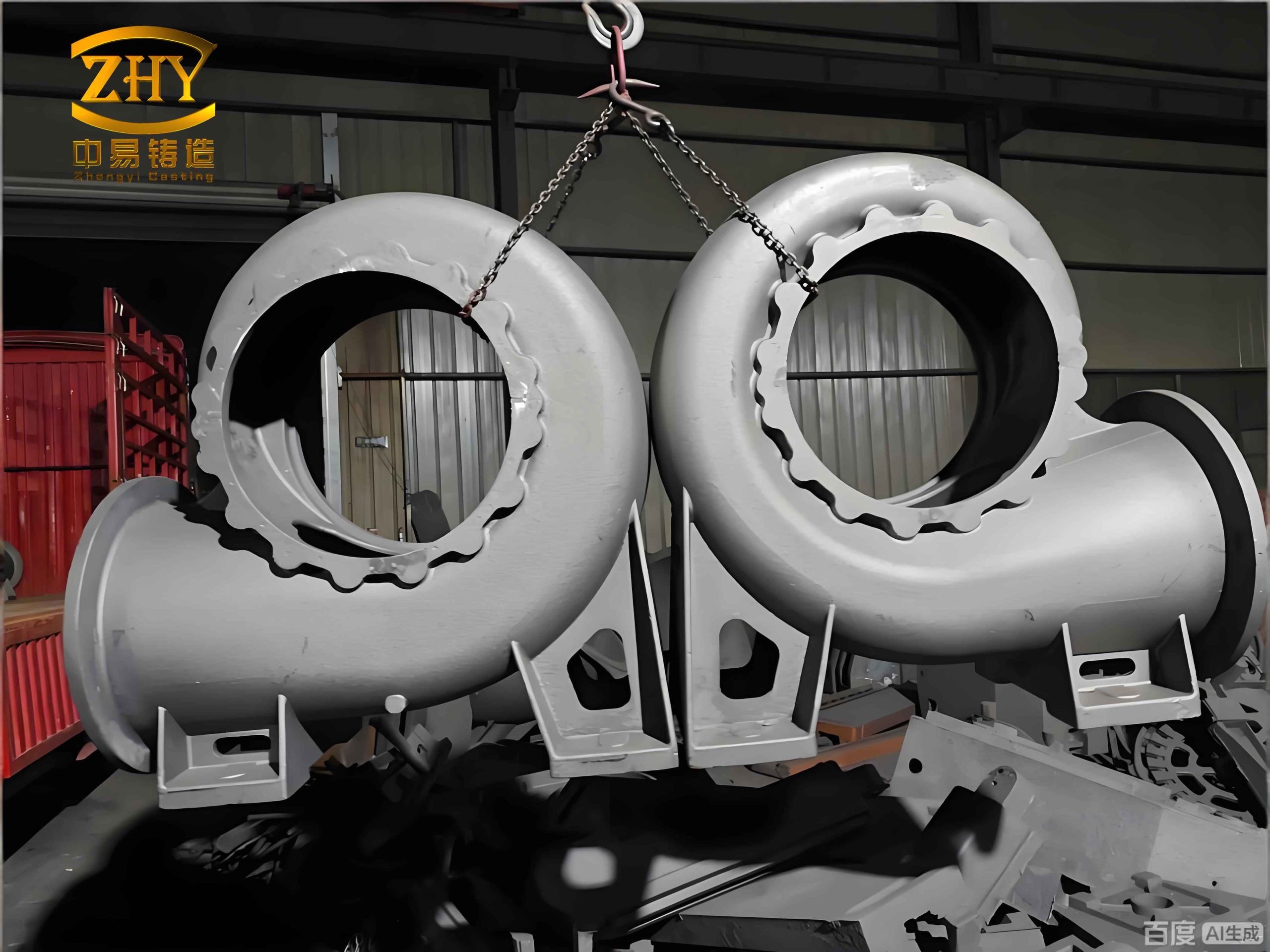
To efficiently explore the parameter space, I designed a three-factor, four-level orthogonal experiment. The factors included used sand proportion (0%, 30%, 60%, 90%), layer thickness (0.24 mm, 0.28 mm, 0.32 mm, 0.36 mm), and resolution in the X-direction (0.06 mm, 0.07 mm, 0.08 mm, 0.09 mm), which correlates with binder dosage. The orthogonal array allowed me to reduce the number of trials while capturing the main effects and interactions. Each combination was replicated to ensure statistical reliability, and the responses measured were tensile strength (in MPa) and loss on ignition (in percentage). The experimental design is summarized in Table 1, which outlines the factor levels and the corresponding trial configurations. This methodological approach ensures a robust analysis for optimizing the manufacturing of sand casting products via 3DP.
| Level | (A) Used Sand Proportion (%) | (B) Layer Thickness (mm) | (C) X-Direction Resolution (mm) |
|---|---|---|---|
| 1 | 0 | 0.24 | 0.06 |
| 2 | 30 | 0.28 | 0.07 |
| 3 | 60 | 0.32 | 0.08 |
| 4 | 90 | 0.36 | 0.09 |
The results from the orthogonal experiments are presented in Table 2, which lists the tensile strength and loss on ignition for each trial. From this data, I observed that Trial 1 (0% used sand, 0.24 mm layer thickness, 0.06 mm resolution) yielded the highest tensile strength of 3.61 MPa, while Trial 4 (0% used sand, 0.36 mm layer thickness, 0.09 mm resolution) had the lowest loss on ignition of 1.93%. However, to meet industrial standards for sand casting products—typically requiring a tensile strength of at least 1.75 MPa and a loss on ignition not exceeding 2.2%—several combinations were viable, such as Trials 8, 12, and 14. This preliminary assessment highlights the trade-offs between strength and thermal decomposition, guiding the selection of optimal parameters for practical applications in sand casting products.
| Trial No. | Used Sand Proportion (%) | Layer Thickness (mm) | X-Direction Resolution (mm) | Tensile Strength (MPa) | Loss on Ignition (%) |
|---|---|---|---|---|---|
| 1 | 0 | 0.24 | 0.06 | 3.61 | 3.67 |
| 2 | 0 | 0.28 | 0.07 | 3.10 | 2.67 |
| 3 | 0 | 0.32 | 0.08 | 2.32 | 2.22 |
| 4 | 0 | 0.36 | 0.09 | 1.48 | 1.93 |
| 5 | 30 | 0.28 | 0.06 | 3.02 | 2.97 |
| 6 | 30 | 0.24 | 0.07 | 3.22 | 2.74 |
| 7 | 30 | 0.36 | 0.08 | 1.70 | 1.99 |
| 8 | 30 | 0.32 | 0.09 | 1.82 | 2.04 |
| 9 | 60 | 0.32 | 0.06 | 2.47 | 3.09 |
| 10 | 60 | 0.36 | 0.07 | 1.73 | 2.23 |
| 11 | 60 | 0.24 | 0.08 | 3.03 | 2.72 |
| 12 | 60 | 0.28 | 0.09 | 2.19 | 2.18 |
| 13 | 90 | 0.36 | 0.06 | 2.04 | 2.70 |
| 14 | 90 | 0.32 | 0.07 | 2.27 | 2.17 |
| 15 | 90 | 0.28 | 0.08 | 2.41 | 2.38 |
| 16 | 90 | 0.24 | 0.09 | 2.69 | 2.34 |
To quantify the influence of each factor, I performed analysis of variance (ANOVA) on the tensile strength and loss on ignition data. The ANOVA results for tensile strength are shown in Table 3. The F-values indicate that layer thickness has the most significant effect (F = 217.18), followed by X-direction resolution (F = 59.81), and then used sand proportion (F = 9.67). All factors exceed the critical F-value of 4.76 at a 95% confidence level, confirming their statistical significance. This hierarchy underscores the critical role of printing parameters over material composition in determining the mechanical performance of 3DP sand molds and cores for sand casting products. Similarly, for loss on ignition, as presented in Table 4, X-direction resolution is the most influential factor (F = 64.82), with layer thickness also being significant (F = 27.9), while used sand proportion has a lesser impact (F = 3.89). These insights guide parameter optimization to balance strength and thermal properties in sand casting products.
| Source of Variance | Sum of Squares (S) | Degrees of Freedom | Mean Square | F-Value | Critical F-Value (α=0.05) |
|---|---|---|---|---|---|
| Used Sand Proportion | 0.19371 | 3 | 0.06457 | 9.67 | 4.76 |
| Layer Thickness | 4.34845 | 3 | 1.44948 | 217.18 | |
| X-Direction Resolution | 1.19759 | 3 | 0.39920 | 59.81 | |
| Error | 0.04004 | 6 | 0.00667 | — | — |
| Source of Variance | Sum of Squares (S) | Degrees of Freedom | Mean Square | F-Value | Critical F-Value (α=0.05) |
|---|---|---|---|---|---|
| Used Sand Proportion | 0.13103 | 3 | 0.04368 | 3.89 | 4.76 |
| Layer Thickness | 0.93854 | 3 | 0.31285 | 27.9 | |
| X-Direction Resolution | 2.18077 | 3 | 0.72692 | 64.82 | |
| Error | 0.06728 | 6 | 0.01121 | — | — |
The main effects plots, generated using statistical software, further illustrate the relationships between factors and responses. For tensile strength, as shown in Figure 4 (conceptual representation), increasing the used sand proportion gradually reduces strength, likely due to weak interfacial layers formed by contaminants on recycled sand particles. This phenomenon can be described by the adhesion-cohesion model, where the bond failure occurs either within the binder bridge (cohesive fracture) or at the sand-binder interface (adhesive fracture). The presence of impurities in used sand promotes adhesive fracture, weakening the overall structure. This is crucial for sand casting products, as weak molds can lead to casting defects such as sand inclusion or mold collapse during metal pouring. Therefore, while reusing sand is economically beneficial, it must be balanced with strength requirements for reliable sand casting products.
Regarding X-direction resolution, which dictates binder dosage, I observed an inverse relationship with tensile strength. As resolution decreases (finer printing), binder injection frequency increases, enhancing the bonding between sand grains. This can be expressed mathematically by considering the binder coverage area per unit volume. If we define the binder volume per layer as $$ V_b = k \cdot \frac{1}{R_x} $$ where \( k \) is a constant related to printer settings and \( R_x \) is the X-direction resolution, then a smaller \( R_x \) leads to higher \( V_b \), resulting in stronger bonds. However, excessive binder can increase loss on ignition, causing gas evolution during casting that may porosity in sand casting products. Thus, optimizing resolution is key to achieving both mechanical integrity and low gas generation in sand casting products.
Layer thickness exhibits a pronounced effect on tensile strength, with thicker layers reducing strength due to diminished interlayer bonding. This can be explained by the capillary action during binder penetration, governed by the Laplace equation: $$ \Delta P = \frac{2\gamma \cos \theta}{r} $$ where \( \Delta P \) is the capillary pressure, \( \gamma \) is the surface tension of the binder, \( \theta \) is the contact angle, and \( r \) is the effective pore radius. As layer thickness increases, the pore structure becomes more open, increasing \( r \) and reducing \( \Delta P \), which hinders binder infiltration and weakens interlayer bonds. Additionally, the bonding area between layers can be modeled as $$ A_b \propto \frac{1}{h} $$ where \( h \) is the layer thickness, implying that thinner layers provide larger bonding areas for stronger cohesion. This principle is vital for producing durable sand molds and cores for sand casting products, especially for complex geometries requiring high dimensional accuracy.
To validate the optimal parameters, I conducted confirmation trials using the combination of 30% used sand, 0.28 mm layer thickness, and 0.09 mm X-direction resolution. This set was selected based on the orthogonal analysis, as it meets the industrial standards while incorporating a substantial amount of recycled material. The resulting tensile strength was 1.97 MPa, and the loss on ignition was 2.2%, both within acceptable ranges for sand casting products. This outcome demonstrates that sustainable practices, such as sand reuse, can be effectively integrated into 3DP processes without sacrificing performance. Moreover, this optimization contributes to cost reduction and environmental benefits in the mass production of sand casting products, aligning with global trends toward green manufacturing.
In summary, my research highlights the intricate interplay between material composition and printing parameters in inkjet 3DP of sand molds and cores. The orthogonal experiment methodology proved effective in identifying key factors and their optimal levels. The findings underscore that layer thickness is the most critical parameter for tensile strength, while X-direction resolution primarily influences loss on ignition. Used sand proportion, though less impactful, still plays a role in determining mechanical properties. By adopting the recommended parameters—30% used sand, 0.28 mm layer thickness, and 0.09 mm X-direction resolution—manufacturers can produce high-quality sand casting products with enhanced efficiency and sustainability. Future work could explore additional factors, such as binder chemistry or sand particle size distribution, to further refine the process for diverse applications in sand casting products. Ultimately, this study advances the adoption of additive manufacturing in foundries, paving the way for innovative and eco-friendly production of sand casting products.