
In the production of critical components for industrial machinery, such as injection molding machines, the integrity and performance of ductile iron castings are paramount. This article delves into the comprehensive process design for manufacturing high-pressure ductile iron castings, specifically focusing on a front plate application. The challenges associated with achieving precise machining tolerances and enduring extreme hydraulic pressures necessitate a meticulous approach to casting design, material selection, and process control. Through first-hand experience and rigorous analysis, we have developed a robust methodology that ensures the reliability of these ductile iron castings under demanding operational conditions.
The front plate, a vital element in injection molding systems, must exhibit exceptional mechanical properties and structural integrity. Our work centers on a ductile iron casting weighing approximately 1,700 kg in its raw form, with a pouring weight of 1,850 kg. Key dimensions include 1,330 mm in length, 620 mm in width, and 850 mm in height, featuring a maximum wall thickness of 360 mm and a minimum of 40 mm. Critical areas, such as the oil cylinder holes, require machining allowances of 12 mm on the upper surfaces and 8 mm on other sides, underscoring the need for defect-free ductile iron castings to meet stringent standards.
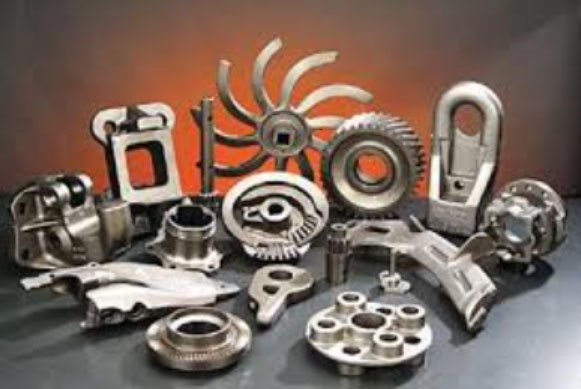
Technical specifications for these ductile iron castings mandate a QT450-10A grade, with attached test blocks demonstrating tensile strength ≥ 390 MPa, yield strength ≥ 260 MPa, and elongation ≥ 8%. Microstructurally, a nodularity ≥ 85% and graphite size of 4–7 are essential. The oil cylinder holes must be free from shrinkage porosity and voids, with post-machining surface roughness between Ra 0.4–0.8 μm and the ability to withstand hydraulic pressures up to 20 MPa. Achieving these criteria in ductile iron castings involves addressing inherent solidification challenges and optimizing every stage of the casting process.
Technical Requirements and Design Principles
The foundation of producing high-quality ductile iron castings lies in a thorough understanding of the component’s operational demands. For the front plate, the oil cylinder holes are particularly critical, as any defects could compromise performance under high-pressure conditions. Our design philosophy prioritizes a holistic approach, integrating gating, cooling, and feeding systems to minimize shrinkage and porosity in these ductile iron castings. The goal is to achieve uniform cooling and controlled solidification, thereby enhancing the density and mechanical properties of the final ductile iron casting.
To quantify the gating system design, we employ fluid dynamics principles, such as the large orifice outflow theory, to calculate key parameters. The cross-sectional area of the sprue is determined using the formula:
$$ F_{\text{sprue}} = \frac{G}{0.31 \times \mu \times t \times \sqrt{H_p}} $$
where \( G \) is the molten iron weight (1,850 kg), \( \mu \) is the flow coefficient (0.35), \( t \) is the pouring time (140 s), and \( H_p \) is the average pressure head (10.02 mm). Substituting these values yields \( F_{\text{sprue}} = 38.48 \, \text{cm}^2 \), corresponding to one ceramic tube with an inner diameter of 70 mm. The gating ratio is set at \( \Sigma F_{\text{sprue}} : \Sigma F_{\text{runner}} : \Sigma F_{\text{ingate}} = 1 : 1.25 : 1.10 \), with six ingates of 30 mm inner diameter each, ensuring a balanced and efficient fill for the ductile iron castings.
| Component | Cross-Sectional Area (cm²) | Dimensions | Quantity |
|---|---|---|---|
| Sprue | 38.48 | Φ70 mm ID ceramic tube | 1 |
| Runner | 48.10 | 30/40 mm × 70 mm | – |
| Ingate | 42.33 | Φ30 mm ID ceramic tube | 6 |
Gating and Feeding System Design
For ductile iron castings, the gating system must facilitate rapid, turbulence-free filling while minimizing slag inclusion and gas entrapment. We adopted a semi-open, bottom-gating configuration with multiple ingates positioned unilaterally. This design promotes uniform temperature distribution and reduces the risk of shrinkage defects in the ductile iron castings. Ceramic tubes are used throughout the sprue and ingates to prevent erosion and sand inclusion, crucial for maintaining the surface quality of the ductile iron casting.
The feeding system incorporates two safety risers located above the oil cylinder holes. These risers serve dual purposes: providing supplemental liquid metal during solidification shrinkage and venting gases generated during pouring. By leveraging the graphitization expansion characteristic of ductile iron, these risers enhance the density of the critical sections in the ductile iron castings. The overall gating and riser layout, designed for three-part molding, simplifies patternmaking and improves production efficiency for complex ductile iron castings.
Mathematically, the pouring time is optimized to balance fill velocity and thermal management. The relationship between pouring time and defect formation can be expressed as:
$$ t_{\text{optimal}} = k \cdot \sqrt[3]{W} $$
where \( t_{\text{optimal}} \) is the ideal pouring time, \( k \) is a material-dependent constant (approximately 1.5 for ductile iron), and \( W \) is the casting weight. For our 1,850 kg ductile iron casting, this correlates with the empirical range of 120–150 s, ensuring adequate fluidity without excessive temperature loss.
Cooling System and Sand Core Innovation
Effective cooling is vital to mitigate thermal hotspots in thick sections of ductile iron castings. We identified four凸台 regions prone to shrinkage due to their geometry. To address this, four chill plates measuring 100 mm × 100 mm × 80 mm are strategically placed to accelerate cooling and reduce the effective thermal modulus. The chill design follows the principle:
$$ M = \frac{V}{A} $$
where \( M \) is the thermal modulus, \( V \) is volume, and \( A \) is surface area. By decreasing \( M \) through chills, we shift solidification fronts away from critical zones in the ductile iron castings.
For the oil cylinder holes, a novel sand core combination is employed, comprising a cast iron core骨架 coated with a 20–30 mm layer of blended sand (30% chromite sand and 70% silica sand). This hybrid core achieves uniform cooling and minimizes defects like white iron formation, which is common in rapidly cooled ductile iron castings. The core sand strength is maintained at 0.9–1.1 MPa to prevent collapse during pouring. Comparative simulations reveal that this approach significantly reduces thermal hotspots and shrinkage porosity compared to conventional sand cores, as summarized below:
| Core Type | Thermal Hotspot Severity | Shrinkage Defect Index | Risk of White Iron |
|---|---|---|---|
| Standard Sand Core | High | 0.75 | Elevated |
| Hybrid Core (Chill + Sand) | Low | 0.25 | Minimal |
The simulation data, derived from finite element analysis, confirms that the hybrid core reduces the shrinkage defect index by approximately 67% in these ductile iron castings. This improvement is critical for meeting the Ra 0.4–0.8 μm surface roughness and 20 MPa hydraulic pressure requirements for the oil holes in the ductile iron casting.
Chemical Composition Optimization
The material composition directly influences the mechanical and microstructural properties of ductile iron castings. For QT450-10A grade, we carefully balance elements to achieve high nodularity, strength, and ductility. Carbon and carbon equivalent (CE) are maximized within non-floating graphite limits to enhance fluidity and self-feeding through graphitization expansion. The CE is calculated as:
$$ \text{CE} = \%C + \frac{\%Si + \%P}{3} $$
targeting 4.30–4.45% for our ductile iron castings. Silicon is controlled to foster ferrite formation without excessive hardening, while manganese is minimized to reduce segregation and pearlite stabilization. Harmful elements like phosphorus and sulfur are restricted to prevent embrittlement and impaired nodularization.
| Element | Target Range (wt%) | Influence on Ductile Iron Castings |
|---|---|---|
| C | 3.45–3.65 | Promotes graphite nucleation, improves fluidity |
| Si | 2.3–2.6 | Enhances ferrite, increases ductility |
| Mn | < 0.4 | Limits pearlite, reduces segregation |
| P | < 0.02 | Prevents phosphide eutectic formation |
| S | < 0.015 | Minimizes sulfide inclusions, improves nodularity |
| Mgres | 0.03–0.05 | Ensures effective spheroidization |
| REres | 0.01–0.03 | Suppresses impurities, refines graphite |
Melting and Treatment Control
The production of high-integrity ductile iron castings demands precise control over spheroidization and inoculation. We use a spheroidizing agent addition of 1.10–1.20%, resulting in residual magnesium and rare earth levels that optimize nodule formation in the ductile iron castings. The process involves high-flow-rate pouring into treatment ladles to enhance reagent efficiency and desulfurization. Post-treatment, slag is thoroughly removed, and the melt is covered with perlite to prevent sulfur reversion.
Inoculation is performed multiple times, including stream inoculation during pouring, with a total inoculant addition of 0.10%. This step refines graphite size and improves nodularity in the ductile iron castings. The inoculation effect can be modeled as:
$$ N = N_0 \cdot e^{-k \cdot t} $$
where \( N \) is the effective nuclei count, \( N_0 \) is the initial nuclei, \( k \) is a decay constant, and \( t \) is time. Stream inoculation counteracts fading, ensuring consistent microstructure in the ductile iron castings.
Pouring temperatures are maintained between 1,290–1,320°C to balance fluidity and residual stress. Low-temperature, high-speed pouring reduces turbulence and oxidation, critical for defect-free ductile iron castings. The entire process from treatment to pouring is completed within 20 minutes to preserve spheroidization efficacy in the ductile iron casting.
Implementation and Quality Assurance
Three trial productions of the front plate ductile iron castings were conducted, with comprehensive evaluations of mechanical properties and microstructure. Penetrant testing (PT) according to EN1371 standard revealed no defects in the oil cylinder holes, achieving Grade I quality. The attached test blocks exhibited properties exceeding specifications, as detailed below:
| Property | Standard Requirement | Measured Value |
|---|---|---|
| Tensile Strength (MPa) | ≥ 390 | 480 |
| Yield Strength (MPa) | ≥ 260 | 340 |
| Elongation (%) | ≥ 8 | 11 |
| Hardness (HB) | 160–210 | 162 |
| Nodularity (%) | ≥ 85 | 90 |
| Graphite Size | 4–7 | 6 |
Microstructural analysis showed well-dispersed spherical graphite in a ferritic matrix, confirming the efficacy of our process for ductile iron castings. The successful outcomes underscore the importance of integrated design and control in producing reliable ductile iron casting components for high-pressure applications.
Conclusion
In summary, the manufacturing of high-performance ductile iron castings for severe service conditions requires a synergistic approach. Key findings include the optimal chemical composition with controlled carbon, silicon, and low impurities to achieve desired properties in ductile iron castings. The gating system, featuring bottom pouring and multiple ingates, ensures smooth filling and reduces shrinkage in ductile iron castings. Innovative cooling methods, such as hybrid sand cores with chills, effectively manage solidification in critical areas of the ductile iron casting. Multiple inoculation stages, including stream inoculation, enhance graphite morphology and mechanical performance in ductile iron castings. Ultimately, this comprehensive strategy validates the production of ductile iron castings that meet rigorous standards, highlighting the adaptability and robustness of ductile iron casting technologies in advanced industrial applications.