
In my extensive work within the foundry and materials engineering field, enhancing the performance of gray iron castings, particularly for critical applications like engine cylinders and blocks, has been a primary focus. A persistent challenge encountered in production, especially within joint-venture manufacturing environments, is the discrepancy in tool wear during machining. It is not uncommon to produce castings with equivalent mechanical properties and metallurgical structures to imported counterparts, yet experience tool wear rates an order of magnitude higher. This observation strongly directed my research towards processing techniques that influence the inherent machinability of the material. Among these, inoculation stands out as a particularly effective and industrially viable method to refine the microstructure and consequently improve the properties of gray iron castings. This article details my first-person investigation into the effects of various single and compound inoculants on the tensile strength, section sensitivity, and, most crucially, the machining performance of gray iron castings designated for cylinder bodies.
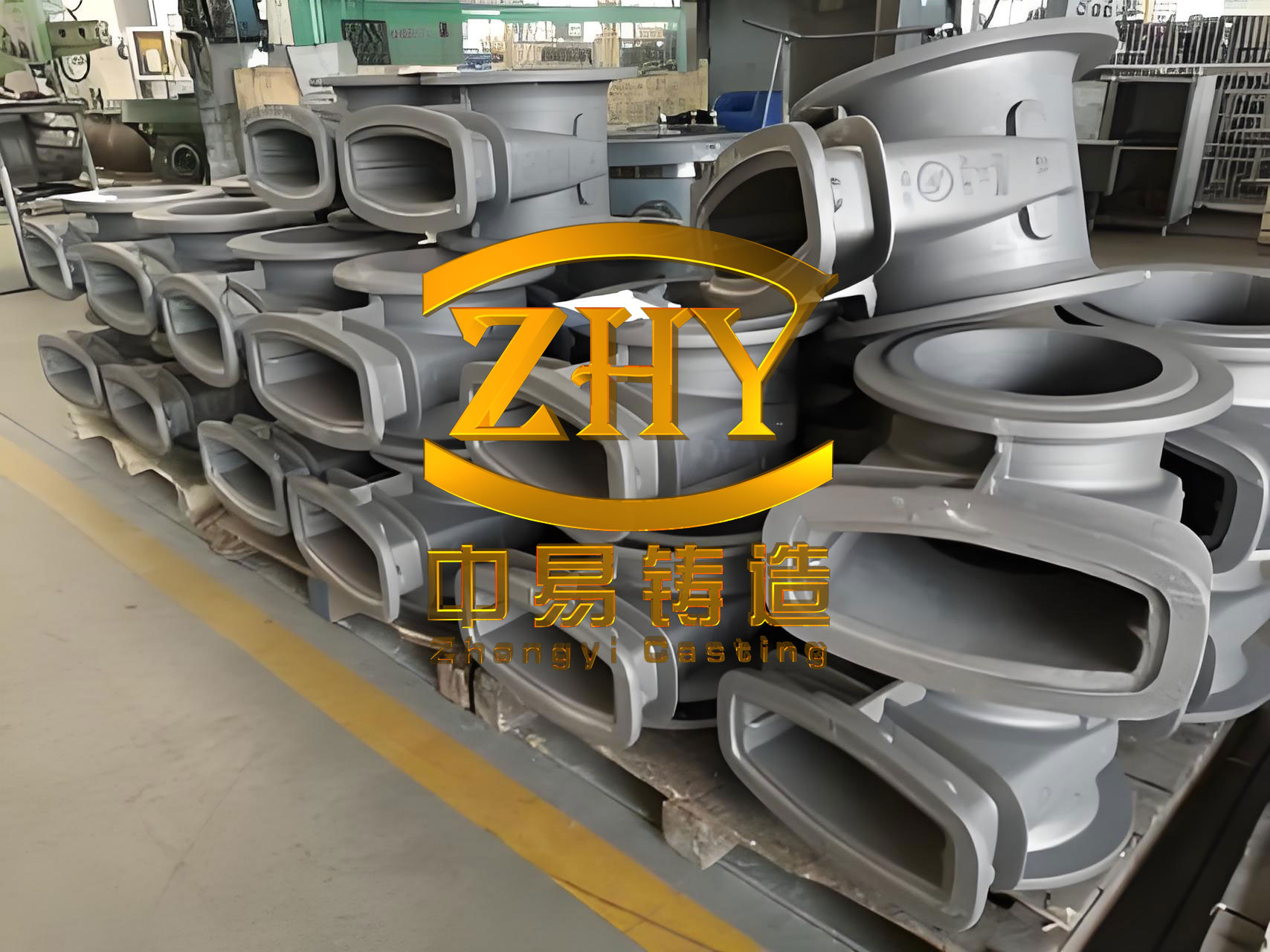
The fundamental properties of any gray iron casting are dictated by its matrix structure and, more importantly, the morphology and distribution of the graphite flakes. The goal of inoculation is to promote the formation of a uniform, fine, type A graphite structure throughout the casting, regardless of section thickness. This refinement leads to improved mechanical properties and reduced section sensitivity—the variation in hardness between thin and thick sections of a casting. For an engine block, which features complex geometries with varying wall thicknesses, minimizing this sensitivity is crucial to ensure consistent machinability and performance. Furthermore, the graphite flakes act as natural chip-breakers and lubricants during machining. An optimal graphite structure directly correlates with lower cutting forces, reduced tool wear, and better surface finish, defining superior machinability for the gray iron casting.
In my experiments, I aimed to quantitatively assess how different inoculant combinations influence these key parameters. The base iron chemistry was carefully controlled to be typical for high-quality engine components. The melt was prepared in a 100 kg medium-frequency induction furnace, with a target tapping temperature of 1510°C. The charge composition consisted of 50% pig iron, 30% returns, and 20% steel scrap, with minor alloying additions of chromium and copper to enhance strength and hardness. The target final composition range was as follows:
| Element | Target Range (wt.%) |
|---|---|
| C | 3.2 – 3.4 |
| Si | 1.8 – 2.0 |
| Mn | 0.8 – 1.0 |
| P | ≤ 0.08 |
| S | < 0.1 |
| Cr | 0.2 – 0.3 |
| Cu | 0.6 – 0.8 |
The carbon saturation degree or carbon equivalent (CE) and the eutectic saturation (Sc) are critical parameters for predicting the behavior of gray iron. They were calculated using the standard formulas, where the eutectic saturation is particularly useful for assessing the predisposition towards a fully gray structure:
$$ CE = C + \frac{Si + P}{3} $$
$$ Sc = \frac{C_{measured}}{4.26 – 0.31(Si) – 0.27(P)} $$
For our composition, the Sc values typically ranged between 0.90 and 0.95, indicating a slightly hypereutectic composition prone to undercooling, which is ideal for responding to inoculation in gray iron casting.
The core of my study involved three primary inoculants: a standard 75% Ferrosilicon (75SiFe), a rare earth (RE) containing inoculant, and a strontium (Sr) based inoculant. Their nominal compositions are summarized below:
| Inoculant | Si | Al | Ca | Ce | Sr | Fe |
|---|---|---|---|---|---|---|
| 75SiFe | 74.60 | 1.3 | – | – | – | Bal. |
| Rare Earth (RE) | 41.10 | 0.35 | 0.96 | 9.08 | – | Bal. |
| Strontium (Sr) | 46.59 | 0.36 | 0.014 | – | 0.99 | Bal. |
I designed nine distinct test groups. The first three groups used single inoculants (75SiFe, RE, Sr) as a baseline. The remaining groups used compound inoculants created by physically mixing 75SiFe with RE, and Sr with RE, in various weight ratios before addition to the melt. The total addition rate for all inoculants was maintained between 0.3% and 0.6% of the iron melt weight. Inoculation was performed at 1480°C with thorough stirring, followed by a 5-minute holding period before pouring. For each test condition, I poured two types of sand molds: one containing a stepped-bar pattern (with sections of 8, 11, 17, 30, and 45 mm thickness) to evaluate section sensitivity, and another containing a Ø200 mm x 20 mm disk specimen for machinability testing.
The stepped-bar samples were sectioned longitudinally, and Brinell hardness (HB) measurements were taken along the diagonal of each section. The maximum difference in average hardness between any two sections (ΔHBmax) was recorded as the quantitative measure of section sensitivity for that gray iron casting. To assess machinability, a direct tool-wear test was devised. A standard HSS drill bit was used to drill a series of through-holes in the disk specimen—15 holes at a 50 mm radius, 20 holes at 100 mm, and 35 holes at 150 mm radius, for a total of 70 holes per sample. After drilling, the uniform flank wear land width (VB) on the drill bit’s cutting edges was meticulously measured using a toolmaker’s microscope. A smaller VB indicates better machinability of the gray iron casting.
In addition to tensile strength (σb) and hardness, I calculated several quality indices commonly used to evaluate the effectiveness of the melt preparation and solidification of gray iron:
- Relative Strength (Maturity Degree, RG): Compares actual tensile strength to the theoretical maximum for the iron’s composition.
$$ R_G = \frac{\sigma_{b(measured)}}{981 – 785 \times S_c} $$
A value >1 indicates a well-inoculated iron where strength potential is fully realized. - Relative Hardness (Hardening Degree, HG): Compares actual hardness to the theoretical hardness.
$$ H_G = \frac{HB_{S(measured)}}{530 – 344 \times S_c} $$ - Quality Factor (Qi): The ratio of maturity to hardening. A higher Qi signifies a favorable combination of high strength and relatively low hardness, often associated with good machinability.
$$ Q_i = \frac{R_G}{H_G} $$
The initial experiments focused on binary Sr-RE compounds. The results revealed clear trends. As the proportion of RE in the Sr-RE inoculant increased, the hardness of the resulting gray iron casting showed a non-linear response, initially decreasing before rising again. The minimum hardness was observed with the 40%RE-60%Sr blend. Tensile strength, however, increased monotonically with RE content, with the 60%RE-40%Sr blend yielding the highest strength, well above 250 MPa. This inverse relationship between strength and hardness trends for some blends is a key finding, suggesting microstructural changes that I will elaborate on later.
Building on this, I expanded the study to include 75SiFe-RE compounds. The comprehensive data for the most promising compound inoculants from both series is presented in the following table, which clearly shows the performance variations achievable in gray iron casting.
| Compound Inoculant Blend | Tensile Strength (MPa) | Hardness (HB) | Maturity (RG) | Hardening (HG) | Quality Factor (Qi) |
|---|---|---|---|---|---|
| 60% Sr + 40% RE | 277 | 218 | 1.02 | 1.00 | 1.02 |
| 50% Sr + 50% RE | 284 | 223 | 1.05 | 1.02 | 1.03 |
| 40% Sr + 60% RE | 291 | 227 | 1.07 | 1.03 | 1.04 |
| 80% 75SiFe + 20% RE | 267 | 232 | 0.98 | 1.06 | 0.92 |
| 60% 75SiFe + 40% RE | 295 | 229 | 1.09 | 1.05 | 1.04 |
| 40% 75SiFe + 60% RE | 276 | 222 | 1.02 | 1.01 | 1.01 |
| 20% 75SiFe + 80% RE | 270 | 226 | 1.00 | 1.03 | 0.97 |
Analysis of this data highlights two standout performers from the perspective of strength and quality index: the 40% Sr + 60% RE and the 60% 75SiFe + 40% RE blends. Both produced gray iron castings with tensile strengths near 295 MPa and quality factors of 1.04. The 60% 75SiFe + 40% RE blend achieved the highest maturity degree (1.09), indicating exceptionally efficient use of the iron’s inherent strength potential. These results demonstrate that compound inoculation can tailor the balance between strength and hardness more effectively than single inoculants for high-performance gray iron casting.
The evaluation of section sensitivity provided further critical insights. The maximum hardness differential (ΔHBmax) across the stepped-bar is a direct indicator of how uniformly the graphite structure forms in different cooling conditions. The results are summarized below:
| Inoculant Blend | ΔHBmax |
|---|---|
| 80% 75SiFe + 20% RE | 19 |
| 60% Sr + 40% RE | 20 |
| 40% 75SiFe + 60% RE | 21 |
| 50% Sr + 50% RE | 25 |
| 40% Sr + 60% RE | 27 |
| 60% 75SiFe + 40% RE | 30 |
| 80% 75SiFe + 20% RE (from earlier) | 35 |
A clear trend emerged: for both compound systems, increasing the RE content generally increased section sensitivity (higher ΔHBmax). The most homogeneous properties, and thus the lowest sensitivity, were achieved with blends lower in RE, particularly the 80% 75SiFe + 20% RE blend, which showed a remarkably low ΔHBmax of only 19 HB. This is a vital characteristic for an engine block gray iron casting, ensuring consistent hardness and machinability in both thin crankcase walls and thick cylinder barrel sections.
The most significant part of my research was the direct measurement of machining performance through tool wear. The flank wear width (VB) after drilling 70 holes in each sample provided an unambiguous ranking. The relationship between RE content in the compound inoculant and tool wear revealed an optimal “sweet spot.” For the Sr-RE system, tool wear decreased with the initial addition of RE to Sr, reaching a minimum with the 40% RE + 60% Sr blend, before increasing again with higher RE levels. The 75SiFe-RE system showed a more pronounced trend: wear was highest for the single RE inoculant, decreased significantly with the addition of 75SiFe, reached an absolute minimum for the 20% RE + 80% 75SiFe blend, and then began to climb once more. This minimum-wear blend coincidentally also provided the lowest section sensitivity, making it an exceptionally promising candidate for production.
To understand these macroscopic property trends, we must consider the microstructural mechanisms at play. Inoculation primarily works by providing heterogeneous nucleation sites for graphite during solidification. Different inoculant elements have varying potencies and interactions. Ferrosilicon (75SiFe) provides silicon and some aluminum, which promote graphitization. Strontium (Sr) is a powerful graphitizer that effectively suppresses the formation of undesirable undercooled (D-type) graphite and promotes fine, type A flakes. Rare earth (RE) elements are strong desulfurizers and deoxidizers; they modify inclusions and can also refine graphite. However, an excess of RE can lead to carbide stabilization, increasing hardness and chilling tendency, which explains the rise in hardness and section sensitivity at high RE levels in my experiments.
The superior machinability and low hardness sensitivity of the 20% RE + 80% 75SiFe treated gray iron casting can be attributed to a synergistic effect. The RE effectively cleanses the melt and modifies harmful inclusions, while the dominant 75SiFe provides abundant, consistent nucleation sites. This combination likely results in a very uniform, fine, and well-distributed type A graphite structure throughout the casting cross-section. This ideal graphite morphology offers several benefits: it ensures consistent mechanical properties (low ΔHB), provides effective internal lubrication during cutting (reducing friction and heat), and facilitates easy chip breaking (reducing cutting forces). The simultaneous achievement of adequate strength (~267 MPa), low section sensitivity (ΔHB=19), and minimal tool wear underscores how a carefully balanced compound inoculant can optimize the complex property matrix required for a machinable gray iron casting.
For foundry engineers seeking to optimize production, the choice of inoculant depends on the primary goal. If maximizing tensile strength is paramount, such as for highly stressed components, a blend like 60% 75SiFe + 40% RE is highly effective. However, for a complex, heavily machined component like an engine block, where consistent machinability across varying sections is the dominant economic and quality driver, my research strongly indicates that a blend high in 75SiFe with a moderate addition of RE—specifically in the range of 80% 75SiFe + 20% RE—offers the best overall performance for the gray iron casting. This blend delivers the crucial combination of low tool wear and minimal section sensitivity, directly translating to longer tool life, fewer machine stoppages, consistent part quality, and lower overall manufacturing cost.
In conclusion, my systematic investigation demonstrates that compound inoculation is a powerful and precise tool for tailoring the properties of gray iron casting. Moving beyond single-element inoculants allows for the fine-tuning of microstructure to achieve specific, sometimes competing, property targets. The quantitative correlations established between inoculant composition, tensile strength, section sensitivity, and—most importantly—directly measured tool wear provide a practical framework for selecting inoculants in industrial settings. The pursuit of the optimal, machinable gray iron casting is a balance of chemistry and nucleation control, and compound inoculants offer the nuanced control necessary to achieve it. Future work could involve more sophisticated microstructural analysis using image analysis to quantify graphite parameters and correlate them directly with the measured flank wear data, further refining our predictive models for the performance of engineered gray iron castings.