
In the realm of manufacturing high-integrity metallic components, the synergy between advanced heat treatment methodologies and precision foundry processes is paramount. This discussion delves into two critical, yet seemingly distinct, areas: the metallurgical mechanisms underpinning the suppression of temper embrittlement through intercritical hardening, and the intricate design principles for reliable sand casting of complex aluminum alloy parts. While one focuses on the microstructural manipulation of steel, the other addresses the challenges of defect-free shaping via sand casting services. Together, they represent the foundational knowledge required to produce components that meet stringent demands for strength, toughness, and reliability. This comprehensive analysis, drawn from practical and research perspectives, aims to elucidate these complex interactions.
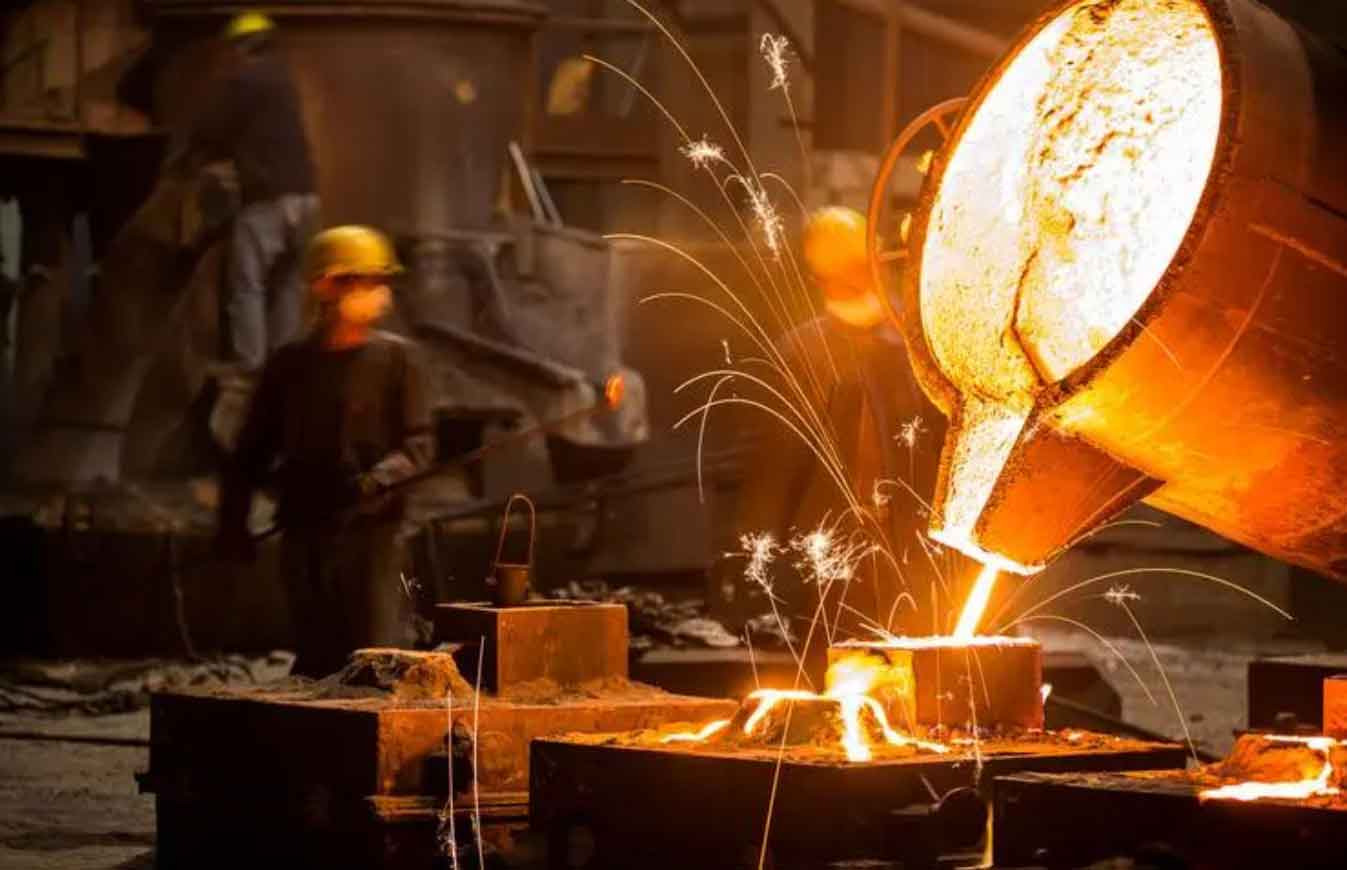
The successful delivery of robust sand casting services often depends on components that have undergone tailored heat treatments. Understanding phenomena like high-temperature temper embrittlement (HTTE) is crucial for steels used in demanding applications. Intercritical hardening, or subcritical quenching, has emerged as a potent technique to mitigate this brittleness. The core mechanism involves austenitizing the steel at a temperature within the intercritical range (between Ac1 and Ac3), resulting in a microstructure of proeutectoid ferrite and carbon-enriched austenite. Upon quenching, this austenite transforms to martensite.
The martensite formed from this carbon-enriched austenite has a carbon content significantly higher than the steel’s nominal average. During subsequent tempering, this leads to the precipitation of coarser and more numerous carbides. Consequently, the carbon retained in the ferrite matrix is lower. This has a critical implication during slow cooling after tempering, which is the stage where HTTE typically manifests. The reduced carbon in ferrite means fewer chromium-iron carbonitride precipitates form and re-precipitate within the ferrite. These precipitates are known to strongly “pin” mobile dislocations. With this hard pinning effect weakened, the material can undergo more substantial plastic deformation under stress before fracture, thereby improving toughness and raising the ductile-to-brittle transition temperature (DBTT).
The efficacy of intercritical hardening can be summarized by several interconnected mechanisms. Firstly, it refines the prior austenite grain size. Secondly, it is believed to strengthen and purify grain boundaries by altering the segregation behavior of embrittling elements like phosphorus and tin. Thirdly, as explained, it alleviates the hard pinning of dislocations by coarse precipitates. The combined effect is a significant reduction in the susceptibility to HTTE. The relationship between the DBTT and grain size is also diminished.
A generalized expression for the temper embrittlement susceptibility (S) could be conceptualized as a function of these factors:
$$ S = f(P_{gb}, D^{-1/2}, N_p \cdot d_p) $$
where \( P_{gb} \) represents the concentration of embrittling elements at grain boundaries, \( D \) is the prior austenite grain diameter (with refinement reducing susceptibility), and \( N_p \cdot d_p \) represents the potency of precipitate pinning (number \( N_p \) and size \( d_p \) of pinning particles). Intercritical hardening favorably modifies all these variables.
The following table summarizes the key mechanisms and their effects:
| Mechanism | Microstructural Change | Effect on Property |
|---|---|---|
| Grain Refinement | Reduced prior austenite grain size. | Increases toughness, lowers DBTT. |
| Boundary Strengthening/Purification | Altered segregation of impurities at boundaries. | Inhibits intergranular fracture, suppresses HTTE. |
| Precipitate Morphology Control | Coarser, fewer intra-ferritic carbides after tempering. | Reduces hard pinning of dislocations, allows greater plasticity. |
For a medium-carbon, low-alloy steel, an optimized process sequence might involve a conventional full austenitization and quench (e.g., 880°C oil quench) followed by an intercritical hardening step (e.g., 790°C) and final tempering (e.g., 550°C). This dual-phase treatment refines the microstructure and optimizes the carbide distribution. The strength contribution from grain refinement can be approximated by the Hall-Petch relationship:
$$ \sigma_y = \sigma_0 + k_y D^{-1/2} $$
where \( \sigma_y \) is the yield strength, \( \sigma_0 \) is the friction stress, and \( k_y \) is the strengthening coefficient. The intercritical treatment effectively reduces \( D \), thereby increasing \( \sigma_y \). The improvement in impact toughness and the suppression of HTTE, however, come from the combined mechanisms beyond just grain size strengthening.
| Processing Step | Temperature | Primary Microstructural Objective |
|---|---|---|
| Initial Austenitization | Full Austenite Region (e.g., 880°C) | Dissolution of carbides, homogenization. |
| First Quench | Rapid Cool (Oil) | Formation of martensite. |
| Intercritical Hardening | α+γ Region (e.g., 790°C) | Formation of carbon-enriched austenite within a ferrite matrix. |
| Final Quench | Rapid Cool (Oil) | Transformation of enriched austenite to martensite. |
| Tempering | e.g., 550°C | Carbide precipitation, stress relief, ductility recovery. |
In conclusion, for susceptible steels, intercritical hardening is a highly effective thermo-mechanical processing route to enhance strength-toughness synergy and inhibit high-temperature temper embrittlement. Its success lies in the tripartite mechanism of grain refinement, grain boundary engineering, and modulation of dislocation-precipitate interactions. Implementing such advanced heat treatments is essential for preparing high-performance blanks that will be machined into final components, many of which originate from sophisticated sand casting services.
Shifting focus to the manufacturing origin of many such components, the domain of sand casting services presents its own set of complex challenges. The production of a critical aluminum alloy cylinder block for a high-voltage circuit breaker exemplifies the depth of process design required. The component, with a complex geometry featuring multiple precision sealing grooves, demands exceptional soundness, pressure tightness, and freedom from defects like slag inclusions and porosity—common pitfalls in aluminum casting due to its high oxidation and gas absorption tendency.
The foundational step in providing reliable sand casting services is a meticulous gating and feeding system design. For the cylinder block, four potential gating schemes were analyzed based on the component’s orientation during pouring. The primary evaluation criteria were the quality of the critical sealing surfaces (preferentially placed in vertical or lower positions), ease of molding and pouring, control of metal flow to avoid turbulence, and effectiveness of feeding for soundness.
| Scheme | Orientation & Gating | Advantages | Disadvantages | Verdict |
|---|---|---|---|---|
| 1 | Flange down, vertical gate on cylinder. | – | Key seals in poor position; difficult molding; poor thermal gradient for feeding. | Unfeasible |
| 2 | Horizontal mold, gating into cylinder body. | Good seal positioning; easy molding; good feeding setup. | Severe metal fall and splashing between sections causes dross. | Poor |
| 3 | Horizontal mold, gating into flange. | Good seal positioning; easy molding; good feeding; eliminates metal fall. | Long flow path; potential for localized overheating. | Acceptable |
| 4 | Horizontal mold, two gates: primary at flange, secondary at cylinder end. | All advantages of Scheme 3; controlled sequential filling avoids overheating and long flow. | More complex gating design. | Optimal |
The optimal Scheme 4 employs a step-gating system with a primary sprue. The total cross-sectional area of the downsprue (\(A_{choke}\)) is calculated based on the casting weight, pour time, and effective metal head. For aluminum alloys, to avoid turbulence and aspiration, a flat rectangular downsprue is preferred over a large round one if the calculated area is significant. The area ratios for the gating system are designed to be open (pressurized systems are generally avoided for aluminum): \( A_{sprue} : A_{runner} : A_{gate} = 1 : 2 : 1.5 \). The key innovation is the stepped runner which controls the timing of gate opening. The primary gate at the flange opens first. Once the metal level in the mold rises above the entrance to the secondary gate at the cylinder end, it begins to flow, ensuring a calm, sequential fill without turbulent waterfall effects within the cavity.
Feeding design is equally critical. The main thermal centers (hot spots) are identified at the flange top, a boss, and a thickened section. Riser dimensions are calculated using the modulus method. The modulus (M) of a section is its volume-to-surface area ratio (\(M = V/A\)). A riser must have a larger modulus than the section it feeds and sufficient volume to compensate for shrinkage. For a cylindrical riser feeding a flange, the required diameter \(D_r\) can be estimated as \(D_r = 1.2 \times M_{casting} \times C\), where C is a shape factor. In practice, for non-cylindrical attachments, equivalent rectangular risers are used. Chills are strategically placed at critical sealing groove locations on the flange faces and cylinder interior. Their function is twofold: to create a rapid chill zone for finer microstructure at the seals and to promote directional solidification towards the risers by effectively increasing the local cooling rate, thereby modifying the thermal gradient. The thickness of a single-sided chill is typically equal to the thickness of the casting wall at that point.
The alloy, an Al-Si-Mg type, requires careful melt handling. The processing parameters must be tightly controlled to minimize gas pickup and oxidation.
| Process Parameter | Value / Specification | Purpose |
|---|---|---|
| Melting Temperature | ~720°C – 740°C | Minimize oxidation and gas dissolution. |
| Degassing / Refining | Hexachloroethane or N2 + Cl2, ~0.5% wt. | Remove dissolved hydrogen. |
| Modification | Na or Sr-based modifier | Refine eutectic silicon morphology. |
| Pouring Temperature | ~700°C – 720°C | Balance fluidity and shrinkage. |
Furthermore, the gating system incorporates multiple ceramic foam filters—one at the sprue base and another in the runner—to trap oxides and inclusions. The gates are designed as tapered, web-like (or “gooseneck”) connections to further reduce flow velocity and erosion at the entry point. This comprehensive approach to process design is what defines high-quality sand casting services. The proof of efficacy is in the production results.
| Production Batch | Quantity Cast | Sound Castings | Yield Rate |
|---|---|---|---|
| Initial Trials | 15 | 14 | 93.3% |
| Full Production | 200 | 192 | 96.0% |
The consistent yield above 95%, along with the component’s performance in helium leak tests and mechanical validation, confirms the success of the designed sand casting process. The controlled filling eliminated oxide formation from splashing, the strategic use of chills ensured soundness at critical sections, and the risers adequately fed the thermal centers. This methodology has since been successfully applied to other complex components, demonstrating the robustness of the underlying principles for advanced sand casting services.
In synthesis, the journey of a high-performance metal component is a tapestry woven from multiple specialized threads. The initial shape is conferred through meticulous sand casting services, where fluid dynamics, solidification science, and defect prevention strategies converge to produce a sound casting. This casting then becomes the substrate for microstructural engineering through heat treatments like intercritical hardening. Here, solid-state phase transformations are manipulated to optimize the arrangement of atoms, grains, and precipitates, unlocking properties of strength and toughness that the raw casting does not possess. The two disciplines are intrinsically linked: the quality of the heat treatment outcome is bounded by the inherent soundness and homogeneity achieved during casting. Conversely, the most perfectly cast component may fail in service if its microstructure is not appropriately designed for the application environment. Therefore, a holistic engineering approach that integrates deep knowledge from both foundry practice (like advanced gating design, feeding calculations with modulus methodology \(M=V/A\), and controlled melting for alloys) and physical metallurgy (leveraging relationships like Hall-Petch \( \sigma_y = \sigma_0 + k_y D^{-12} \) and controlling precipitation kinetics) is essential. It is this synergy that enables the reliable manufacturing of critical components, where every step—from the flow of metal into a sand mold to the precise thermal cycles in a furnace—is calculated and controlled to achieve final performance. Mastery in both domains expands the capabilities of modern manufacturing, allowing for the production of lighter, stronger, and more reliable parts across industries such as energy, transportation, and heavy machinery.