
In the field of metal casting, porosity in casting remains a pervasive and costly defect that compromises structural integrity, surface finish, and overall product quality. As an engineer deeply involved in foundry operations, I have encountered numerous instances where porosity in casting led to significant scrap rates and increased production costs. This article delves into a specific case study where porosity in casting was successfully addressed through the implementation of an overflow process, among other complementary measures. The focus will be on detailing the problem, analyzing the root causes, and presenting a comprehensive solution, all while emphasizing the critical role of process optimization in combating porosity in casting. Throughout this discussion, I will employ tables and mathematical formulations to summarize key points, ensuring a thorough understanding of the mechanisms and improvements.
The casting in question was a support ring component for a concentrator machine used in coal washing plants. This part, fabricated from HT250 gray iron, exhibited a classic cylindrical sleeve structure. Despite standard foundry practices, porosity in casting persistently appeared, particularly at the top surfaces, leading to rejection rates of 20–30%. This defect not only weakened the component but also required additional machining, driving up costs and delaying deliveries. The urgency to resolve this issue stemmed from rising market demands for refined coal, which increased the need for reliable washing equipment. Thus, tackling porosity in casting became a priority for enhancing productivity and competitiveness.
Initially, the casting process employed a conventional approach. The mold was created using a sweep pattern, with a stepped gating system designed for sand casting. The top of the casting included a machining allowance of 20–30 mm and was equipped with vent risers to facilitate gas escape. The gating system was not optimized to minimize turbulence or oxidation, which often exacerbates porosity in casting. Below is a table summarizing the original process parameters:
| Parameter | Specification |
|---|---|
| Molding Method | Sweep Pattern Sand Casting |
| Gating System | Stepped Gating |
| Machining Allowance (Top) | 20–30 mm |
| Vent Risers | Present on Top Surface |
| Material | HT250 Gray Iron |
| Typical Defect | Porosity in Casting at Top Area |
Upon machining and inspection, the porosity in casting manifested as irregular pores with diameters ranging from 3 to 20 mm, often interconnected and containing granular or powdery slag residues. The depth of these pores extended 3–8 mm beneath the machined surface, indicating severe subsurface defects. This porosity in casting was primarily localized at the top surface (denoted as A-side in the original setup), which corresponded to the final resting place of the first flow of molten metal during pouring. The presence of slag within the pores suggested that inclusions played a role in initiating or exacerbating the porosity in casting.
To understand the genesis of this porosity in casting, a detailed analysis was conducted. The first flow of molten iron, known as the “head stream,” is particularly susceptible to oxidation and slag entrainment due to prolonged exposure to air during pouring. This leads to two primary mechanisms for pore formation. First, oxidation of iron oxide (FeO) in the slag or from air reaction can produce carbon monoxide (CO) gas via the following reaction: $$ \text{FeO} + \text{C} \rightarrow \text{Fe} + \text{CO} \uparrow $$ This reaction occurs during solidification when the metal becomes viscous, trapping CO bubbles and creating smooth, metallic-luster pores—a direct contributor to porosity in casting. Second, slag components such as FeO and manganese oxide (MnO) can dissolve into the iron melt, where they react with carbon to generate CO gas: $$ \text{FeO/MnO} + \text{C} \rightarrow \text{Fe/Mn} + \text{CO} \uparrow $$ Additionally, sulfur in the iron can form iron sulfide (FeS), which interacts with manganese (Mn) in an exothermic reaction: $$ [\text{FeS}] + [\text{Mn}] \rightarrow [\text{Fe}] + [\text{MnS}] $$ The manganese sulfide (MnS) can then dissolve into slag phases rich in FeO and MnO, lowering the slag’s melting point and allowing it to mix into the iron stream. This slag-rich head flow ultimately concentrates at the top, leading to pore formation coupled with slag inclusions—a compounded form of porosity in casting.
The analysis underscored that porosity in casting in this case was multifactorial, involving gas generation, slag entrapment, and fluid dynamics. To quantify the risk, consider the solubility of gases in iron, which decreases with temperature drop during solidification. The ideal gas law can be adapted to estimate gas bubble formation: $$ PV = nRT $$ where \( P \) is pressure, \( V \) is volume, \( n \) is moles of gas, \( R \) is the gas constant, and \( T \) is temperature. During cooling, if the partial pressure of CO exceeds the metallostatic pressure, bubbles nucleate and grow, leading to porosity in casting. Furthermore, the propensity for slag entrainment can be modeled using dimensionless numbers like the Reynolds number for fluid flow: $$ Re = \frac{\rho v L}{\mu} $$ where \( \rho \) is density, \( v \) is velocity, \( L \) is characteristic length, and \( \mu \) is viscosity. High Reynolds numbers indicate turbulent flow, which promotes slag mixing and gas absorption, exacerbating porosity in casting.
To mitigate porosity in casting, a multi-pronged approach was adopted, focusing on process optimization, material control, and innovative techniques. The measures are summarized in the table below:
| Measure | Description | Impact on Porosity in Casting |
|---|---|---|
| Optimized Gating System | Switched to a semi-closed system with area ratios: \( F_{\text{spru}}: F_{\text{runner}}: F_{\text{ingate}} = 1.2:1.4:1 \) | Reduces turbulence and oxidation, minimizing gas entrainment. |
| Reduced Slag Content | Lowered S and Mn levels; used standardized raw materials (pig iron, scrap steel). | Decreases slag-forming elements, reducing inclusion-related pores. |
| Controlled CO Gas Content | Increased pouring temperature to 1420–1450°C; used 75FeSi inoculant (0.3–0.4%) via stream inoculation. | Enhances fluidity and gas escape, lowering CO solubility. |
| Overflow Process Implementation | Added overflow chambers near the top mold to capture head flow and slag. | Directly removes defect-prone metal, eliminating top-surface porosity. |
The overflow process proved to be the cornerstone of solving porosity in casting. This technique involves incorporating overflow chambers—cavities designed into the mold—that intercept the initial flow of molten iron before it reaches the casting’s top surface. These chambers, typically cylindrical with dimensions around φ60 mm × 15 mm, are positioned 15–20 mm below the top mold face. During pouring, the head stream, which carries oxidized metal, slag, and dissolved gases, is diverted into these chambers instead of remaining in the casting cavity. As a result, the defect-laden metal is segregated, preventing it from contributing to porosity in casting at the critical top region. The effectiveness of this method hinges on proper placement and sizing of the overflow chambers, which can be calculated based on fluid dynamics principles. For instance, the volume of the overflow chamber \( V_{\text{overflow}} \) should accommodate the head stream volume \( V_{\text{head}} \), estimated as: $$ V_{\text{head}} = A_{\text{gating}} \times v_{\text{pour}} \times t_{\text{head}} $$ where \( A_{\text{gating}} \) is the cross-sectional area of the gating system, \( v_{\text{pour}} \) is pouring velocity, and \( t_{\text{head}} \) is the time duration of the head stream. By ensuring \( V_{\text{overflow}} \geq V_{\text{head}} \), complete capture of problematic metal is achieved, thereby mitigating porosity in casting.
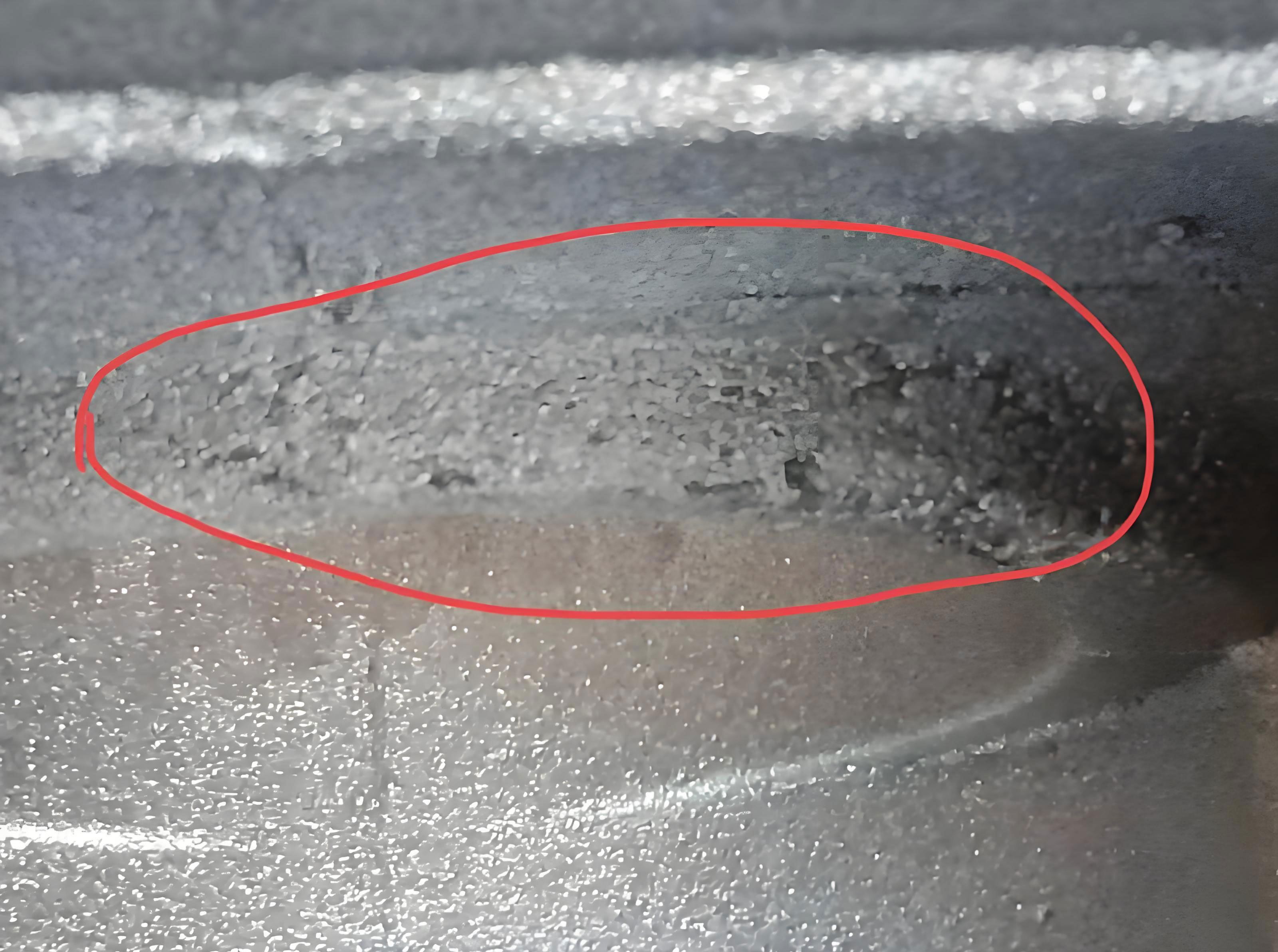
The image above illustrates a typical setup of the overflow process in casting, highlighting how chambers are integrated into the mold to combat porosity in casting. This visual aid underscores the practical application of the technique, showing the diversion pathways for molten metal. Implementing this required careful mold design adjustments, but the benefits far outweighed the modifications. Beyond just addressing porosity in casting, the overflow process synergized with other measures to enhance overall quality. For example, the optimized gating system reduced reoxidation, while temperature control minimized gas solubility—all contributing to a holistic reduction in porosity in casting.
To evaluate the impact, a series of castings were produced using the revised process, and results were compared against the baseline. The table below summarizes key performance metrics:
| Metric | Original Process | Improved Process with Overflow | Improvement |
|---|---|---|---|
| Defect Rate (Porosity in Casting) | 20–30% | 0% | 100% reduction |
| Machining Allowance (Top) | 20–30 mm | 10–15 mm | Reduction of 10–15 mm |
| Iron Usage per Ton Casting | Baseline | Reduced by 10–30 kg | Savings of 1–3% |
| Cost Savings per Ton Casting | Baseline | Approximately 5% lower | Due to less material and machining |
| Surface Quality | Poor, with visible pores | Excellent, defect-free | Enhanced aesthetics and strength |
The data clearly demonstrates that porosity in casting was entirely eliminated through the combined measures, with the overflow process playing a pivotal role. The reduction in machining allowance from 20–30 mm to 10–15 mm aligns with international standards like GB/T 13501-89, facilitating leaner manufacturing. Moreover, the decrease in iron usage by 10–30 kg per ton of casting translates to material cost savings, while reduced machining hours lower labor and energy expenses. Overall, a 5% cost reduction per ton was achieved, making the process economically viable and sustainable. This success story underscores that porosity in casting is not an insurmountable problem but can be tackled through systematic engineering interventions.
Expanding on the technical aspects, let’s delve deeper into the science behind porosity in casting and how the overflow process addresses it. Porosity in casting generally stems from gas evolution, shrinkage, or inclusions. In this case, gas porosity dominated, primarily due to CO formation. The thermodynamic driving force for CO bubble nucleation can be expressed using the Gibbs free energy change: $$ \Delta G = -RT \ln K + RT \ln Q $$ where \( K \) is the equilibrium constant for the reaction \( \text{FeO} + \text{C} \rightleftharpoons \text{Fe} + \text{CO} \), and \( Q \) is the reaction quotient. During solidification, local supersaturation of CO increases \( Q \), making \( \Delta G \) negative and favoring bubble formation—thus leading to porosity in casting. The overflow process mitigates this by removing metal rich in FeO and C before solidification, effectively reducing \( Q \) in the casting body. Additionally, fluid flow simulations using Navier-Stokes equations can model metal flow: $$ \rho \left( \frac{\partial \mathbf{v}}{\partial t} + \mathbf{v} \cdot \nabla \mathbf{v} \right) = -\nabla p + \mu \nabla^2 \mathbf{v} + \mathbf{f} $$ where \( \mathbf{v} \) is velocity, \( p \) is pressure, and \( \mathbf{f} \) is body force. By optimizing gating and adding overflow chambers, velocity gradients are minimized, reducing turbulence and gas entrapment—key factors in porosity in casting.
Furthermore, the role of slag in porosity in casting cannot be overstated. Slag inclusion often acts as nucleation sites for gas bubbles, worsening porosity. The overflow chambers capture slag-laden metal, as demonstrated by mass balance equations. If \( m_{\text{slag}} \) is the slag mass in the head stream, and \( m_{\text{overflow}} \) is the mass diverted, the efficiency \( \eta \) of slag removal is: $$ \eta = \frac{m_{\text{slag, overflow}}}{m_{\text{slag, total}}} \times 100\% $$ In practice, \( \eta \) approached nearly 100% with proper design, virtually eliminating slag-related porosity in casting. This is complemented by chemical controls; for instance, lowering sulfur content reduces FeS formation, which in turn minimizes MnS dissolution into slag. Empirical relationships show that for gray iron, keeping S below 0.05% and Mn below 0.5% significantly cuts slag volume, thereby reducing porosity in casting.
The implementation of these measures required rigorous process monitoring. Pouring temperature was tracked using thermocouple potentiometers, ensuring consistency. Inoculation with 75FeSi improved graphite morphology, enhancing mechanical properties and reducing shrinkage tendencies that could synergize with gas porosity. Statistical process control (SPC) charts were employed to monitor defect rates over time, confirming the sustained absence of porosity in casting. The table below outlines key process parameters monitored during production:
| Parameter | Target Range | Measurement Method | Influence on Porosity in Casting |
|---|---|---|---|
| Pouring Temperature | 1420–1450°C | Thermocouple Potentiometer | Higher temperature reduces gas solubility and improves fluidity. |
| Inoculation Amount | 0.3–0.4% 75FeSi | Weight-based Stream Addition | Promotes uniform solidification, minimizing gas entrapment. |
| Gating Area Ratio | \( 1.2:1.4:1 \) (Sprue:Runner:Ingate) | Geometric Calculation | Ensures laminar flow, reducing oxidation. |
| Overflow Chamber Volume | ≥ Estimated Head Stream Volume | Design Simulation | Captures defect-prone metal, preventing top porosity. |
Beyond the immediate case, the principles applied here have broad applicability in foundry industries worldwide. Porosity in casting is a common challenge in various alloys, from gray iron to aluminum and steel. The overflow process, combined with gating optimization and melt treatment, can be adapted to other geometries and materials. For example, in aluminum casting, hydrogen porosity is analogous to CO porosity in iron; overflow chambers can help remove hydrogen-rich first flow. Mathematical models like the Chvorinov’s rule for solidification time: $$ t_s = B \left( \frac{V}{A} \right)^n $$ where \( t_s \) is solidification time, \( V \) is volume, \( A \) is surface area, \( B \) and \( n \) are constants, can be used to design overflow chambers for different casting shapes to ensure timely capture of problematic metal. This versatility makes the approach a valuable tool in combating porosity in casting across sectors.
In reflection, the journey to eliminate porosity in casting taught valuable lessons about integrated problem-solving. It wasn’t a single silver bullet but a combination of fluid dynamics control, chemistry management, and innovative mold design that yielded success. The overflow process, in particular, proved to be a simple yet highly effective mechanical solution to a complex metallurgical issue. By physically diverting the head stream, it addresses the root cause of porosity in casting at its source. Moving forward, foundries can leverage similar strategies, supported by computational fluid dynamics (CFD) simulations to optimize chamber placement and size. As industries strive for higher quality and sustainability, reducing defects like porosity in casting will remain paramount, and techniques like the overflow process will play a crucial role.
To conclude, porosity in casting is a defect that can be systematically overcome through targeted engineering interventions. This article has detailed how an overflow process, alongside gating optimization, melt control, and temperature management, completely eradicated porosity in casting for a critical industrial component. The use of tables and formulas has highlighted the technical rigor involved, while the repeated emphasis on “porosity in casting” underscores its significance. As foundries continue to innovate, such holistic approaches will ensure that casting defects are minimized, enhancing product reliability and economic efficiency. The overflow process stands as a testament to the power of practical ingenuity in solving persistent engineering challenges like porosity in casting.