
In my extensive experience in foundry engineering, the transition from sand casting to permanent mold casting for Al-Si alloy shell castings has proven to be a transformative improvement. Shell castings, particularly those designed for load-bearing and pressure-containing applications, demand high precision and integrity. The initial sand casting process for these shell castings, while conventional, was fraught with challenges that led to significant waste. This narrative details our journey in redesigning the casting process, emphasizing the implementation of a slit gate system and other metallurgical enhancements. The goal was to achieve superior quality in shell castings, reducing defects and boosting productivity.
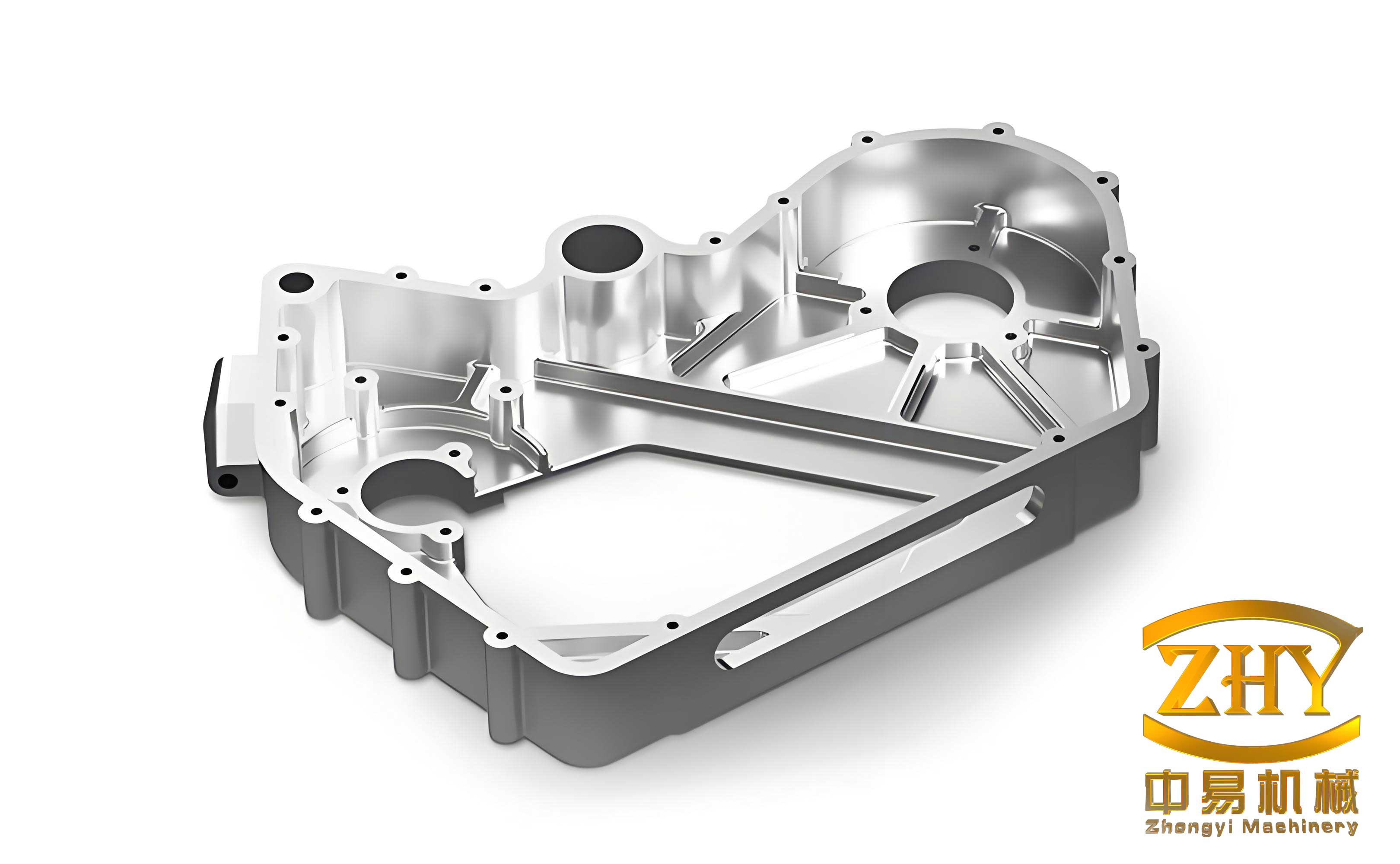
Shell castings made from ZL104 Al-Si alloy, with a primary wall thickness of 4 mm and a rough weight of 0.8 kg, were originally produced via sand casting. The process utilized oil sand cores and a semi-open gating system with a middle pour. The cross-sectional areas were designed with a ratio of $$F_{\text{vertical}}: F_{\text{horizontal}}: F_{\text{inner}} = 1: 2: 1.5$$, where the minimum choke area $$F_{\text{vertical}}$$ was 2.65 cm². To address two thicker sections, chills and risers were incorporated. However, this approach resulted in inconsistent wall thickness, shrinkage porosity, slag inclusion, and gas holes in the shell castings. The rejection rate soared to 40%, which was economically unsustainable. The defects primarily arose from turbulent metal flow, inadequate feeding, and poor venting in the sand molds. This highlighted the need for a more controlled solidification environment, prompting our shift to permanent mold casting for these critical shell castings.
The core of our new methodology was the adoption of permanent mold casting, specifically tailored for Al-Si alloy shell castings. This process offers better thermal management, dimensional accuracy, and surface finish compared to sand casting. A pivotal innovation was the design of a slit gate system, which revolutionized the filling and feeding dynamics for shell castings. The system ensures laminar, bottom-up filling of the mold cavity, minimizing turbulence and oxide formation. The design principles are grounded in fluid dynamics and heat transfer theories. The minimum cross-sectional area of the gate, $$F_{\text{min}}$$, was calculated to be 2.5 cm² based on the casting weight and desired fill time. The key dimensions were set as: slit thickness $$t = 12 \text{ mm}$$, slit width $$b = 12 \text{ mm}$$, runner diameter $$D = 25 \text{ mm}$$, and pour height $$H_1 = 170 \text{ mm}$$. A large slag trap was integrated to capture inclusions and facilitate排气. The filling time $$t_f$$ can be estimated using the Bernoulli-based equation:
$$ t_f = \frac{V}{A \cdot v} $$
where $$V$$ is the volume of the shell casting, $$A$$ is the choke area ($$F_{\text{min}}$$), and $$v$$ is the flow velocity, which is controlled by the head pressure. For our shell castings, this ensured a calm fill, essential for defect-free components.
The metal mold itself was engineered with complex cores to form the internal geometries of the shell castings. Given the long cylindrical core, which posed significant ejection challenges due to high clamping forces, we split it into upper and lower sections. The upper cylindrical core and side cores were designed for manual extraction, while the lower cylindrical core employed a hydraulic mechanism for smooth withdrawal. To prevent flash formation, the side cores and the split cylindrical cores utilized an interlocking insert structure. The ejection force $$F_e$$ required can be modeled as:
$$ F_e = P \cdot A_c \cdot \mu $$
Here, $$P$$ is the residual pressure from solidification shrinkage, $$A_c$$ is the contact area between the core and the shell casting, and $$\mu$$ is the coefficient of friction, which is minimized by proper coating and draft angles. This design was crucial for maintaining the dimensional stability of the shell castings.
Venting is critical in permanent mold casting to avoid back pressure and gas entrapment in shell castings. Beyond the vent slots machined along the parting lines, we installed four cylindrical vent pins at the boss locations (recesses in the metal mold). These vents allow air to escape while preventing metal penetration. The vent area $$A_v$$ is proportionally related to the choke area to ensure adequate排气 during the rapid fill. A common rule of thumb is:
$$ A_v \approx 0.2 \times F_{\text{min}} $$
For our shell castings, this amounted to approximately 0.5 cm² of total vent area, distributed across the pins and slots, ensuring no gas-related defects.
The application of coatings to the permanent mold surfaces is paramount for controlling heat transfer, preventing soldering, and enhancing surface finish on shell castings. We formulated two distinct coatings, as summarized in the table below, tailored for different regions of the mold.
| Coating Number | Zinc Oxide (wt%) | Whiting Powder (wt%) | Asbestos Powder (wt%) | Water Glass (wt%) | Water (wt%) | Application Area |
|---|---|---|---|---|---|---|
| 1 | 4 | – | 8 | 7.5 | Remainder | Mold Cavity Surface |
| 2 | – | 11 | 6.5 | 6 | Remainder | Gating System |
The spraying protocol began with low-pressure sand blasting to degrease and clean the cavity. The mold was then preheated to 180–200°C to ensure proper adhesion and moisture removal. Using a spray gun, the coatings were applied in a uniform, mist-like layer. The sequence prioritized thicker sections before thinner ones to achieve differential coating thickness. For the gating system, a coating layer of 1.0–1.5 mm was applied to insulate and slow solidification, whereas the main cavity surface received a thinner layer of 0.1–0.5 mm to promote faster cooling. The coating thickness $$\delta$$ influences the interfacial heat transfer coefficient $$h_i$$, which governs the cooling rate of shell castings. This relationship can be approximated by:
$$ h_i = \frac{k_c}{\delta} $$
where $$k_c$$ is the thermal conductivity of the coating material. By modulating $$\delta$$, we controlled the solidification sequence, ensuring directional solidification toward the feeder in the slit gate system for optimal soundness in shell castings.
Preheating and pouring parameters were meticulously optimized. The mold temperature was maintained within the 180–200°C range to avoid thermal shock and ensure proper fluidity. The Al-Si alloy (ZL104) was poured at a temperature of 700–720°C. This temperature range balances fluidity for filling thin sections of shell castings while minimizing gas absorption and oxidation. The pouring time was kept short, typically under 5 seconds, to maintain a thermal gradient. After pouring, the shell casting was allowed to solidify for approximately 2 minutes before mold opening and extraction. The solidification time $$t_s$$ for a permanent mold casting can be estimated using Chvorinov’s rule, modified for mold material:
$$ t_s = B \cdot \left( \frac{V}{A} \right)^n $$
Here, $$B$$ is a mold constant dependent on mold material and coating, $$V$$ is the volume of the shell casting, $$A$$ is its surface area, and $$n$$ is an exponent typically near 2. For our thin-walled shell castings, the high surface-area-to-volume ratio led to rapid solidification, necessitating precise timing.
The success of this permanent mold casting process for Al-Si alloy shell castings is quantitatively evident in the dramatic reduction of defects. The implementation of the slit gate system, coupled with optimized venting, core design, and coating strategies, elevated the product合格 rate to 94%. This represents a substantial improvement over the 40% rejection rate encountered with sand casting. The consistency in wall thickness, elimination of shrinkage porosity, and reduction in slag and gas inclusions have made this process highly reliable for producing high-integrity shell castings. Furthermore, the permanent mold offers longer tool life and higher production rates compared to disposable sand molds, making it economically advantageous for large-volume orders of shell castings.
To further elucidate the technical parameters, the following table compiles key process variables and their values for the permanent mold casting of these shell castings.
| Parameter | Symbol | Value | Unit | Remarks |
|---|---|---|---|---|
| Casting Material | – | ZL104 (Al-Si Alloy) | – | Equivalent to A360.1 |
| Casting Weight | $$W$$ | 0.8 | kg | Rough weight |
| Main Wall Thickness | $$d$$ | 4 | mm | Uniform sections |
| Pouring Temperature | $$T_p$$ | 700–720 | °C | Optimized range |
| Mold Preheating Temperature | $$T_m$$ | 180–200 | °C | Before each pour |
| Slit Gate Thickness | $$t$$ | 12 | mm | Part of gating system |
| Slit Gate Width | $$b$$ | 12 | mm | Choke dimension |
| Runner Diameter | $$D$$ | 25 | mm | Feeds slit gate |
| Minimum Gate Area | $$F_{\text{min}}$$ | 2.5 | cm² | Calculated choke |
| Coating Thickness (Cavity) | $$\delta_c$$ | 0.1–0.5 | mm | Promotes cooling |
| Coating Thickness (Gate) | $$\delta_g$$ | 1.0–1.5 | mm | Insulates for feeding |
| Solidification Time | $$t_s$$ | ~120 | seconds | Approximate dwell time |
| Product合格 Rate | – | 94 | % | Post-implementation |
In terms of metallurgical principles, the Al-Si alloy’s behavior during solidification is crucial for shell castings. The eutectic composition in Al-Si systems enhances fluidity and reduces hot tearing, but proper feeding is essential to avoid microporosity. The slit gate system acts as an effective feeder due to its thermal design. The heat transfer during solidification can be modeled using Fourier’s law in one dimension for simplification:
$$ q = -k \frac{dT}{dx} $$
where $$q$$ is the heat flux, $$k$$ is the thermal conductivity of the mold material (typically iron or steel for permanent molds), and $$\frac{dT}{dx}$$ is the temperature gradient. By having a thicker coating on the gate, we reduce $$q$$ in that region, making it solidify last and thereby feed the shell casting effectively. This is quantified by the thermal diffusivity $$\alpha$$ of the mold-coating system:
$$ \alpha = \frac{k}{\rho c_p} $$
Here, $$\rho$$ is density and $$c_p$$ is specific heat capacity. A lower $$\alpha$$ in the gating area, achieved via coating, delays solidification, proving vital for sound shell castings.
Another aspect is the calculation of the required metal head for the slit gate system. Using the principle of conservation of energy, the velocity $$v$$ at the gate can be derived from Torricelli’s theorem for an idealized fluid:
$$ v = \sqrt{2 g H_1} $$
where $$g$$ is acceleration due to gravity (9.81 m/s²) and $$H_1$$ is the pour height (0.17 m). This gives a theoretical velocity, but in practice, viscous losses in the gating system reduce it. The actual flow rate $$Q$$ is:
$$ Q = C_d \cdot A \cdot v $$
with $$C_d$$ being the discharge coefficient (typically 0.6–0.8 for well-designed systems). For our shell castings, this ensured adequate metal delivery without excessive turbulence.
The design of the cores also involved stress analysis to prevent deformation during casting. The thermal stress $$\sigma_{\text{thermal}}$$ induced in the core due to differential expansion can be estimated as:
$$ \sigma_{\text{thermal}} = E \cdot \alpha_t \cdot \Delta T $$
where $$E$$ is Young’s modulus of the core material, $$\alpha_t$$ is the coefficient of thermal expansion, and $$\Delta T$$ is the temperature change. By using split cores and proper materials, we minimized these stresses, ensuring accurate dimensions in the final shell castings.
In conclusion, the permanent mold casting process, centered on a slit gate system, has revolutionized the production of Al-Si alloy shell castings. The systematic approach to gating, core design, venting, coating, and thermal management has yielded a robust process with a 94%合格 rate. The use of engineering formulas and tailored parameters, as detailed in the tables and equations, provides a replicable framework for similar shell castings. This methodology not only enhances quality but also offers economic benefits through reduced scrap and higher throughput. The success underscores the importance of integrating fundamental principles of fluid dynamics and heat transfer into foundry practice for advanced shell castings. Future work may explore simulation-based optimization to further refine the process for even more complex geometries in shell castings.