
Lost foam casting, often referred to as EPC (Expendable Pattern Casting) or LFC (Lost Foam Casting), is hailed as a 21st-century casting technique, but it faces significant environmental challenges due to pollutant emissions, particularly from the decomposition of foam patterns during pouring. This process utilizes materials like EPS (Expandable Polystyrene) and STMMA, with EPS being the most cost-effective and widely adopted in foundries. In this article, I will explore the emission characteristics, current research, and effective control strategies for pollutants in lost foam casting and EPC processes, emphasizing practical solutions and safety considerations.
The lost foam casting method involves using foam patterns in unbonded dry sand with vacuum technology, while full mold casting (FM) employs foam patterns with organic binder-based self-hardening sands. Lost foam casting is typically used for batch production of small to medium-sized castings, whereas full mold casting suits larger, individual pieces. Despite their differences, both methods generate substantial volatile organic compounds (VOCs) and particulate matter during pouring, necessitating robust treatment approaches. I will delve into the specifics of these pollutants, their impacts, and the evolution of control technologies, incorporating data tables and mathematical models to clarify key points.
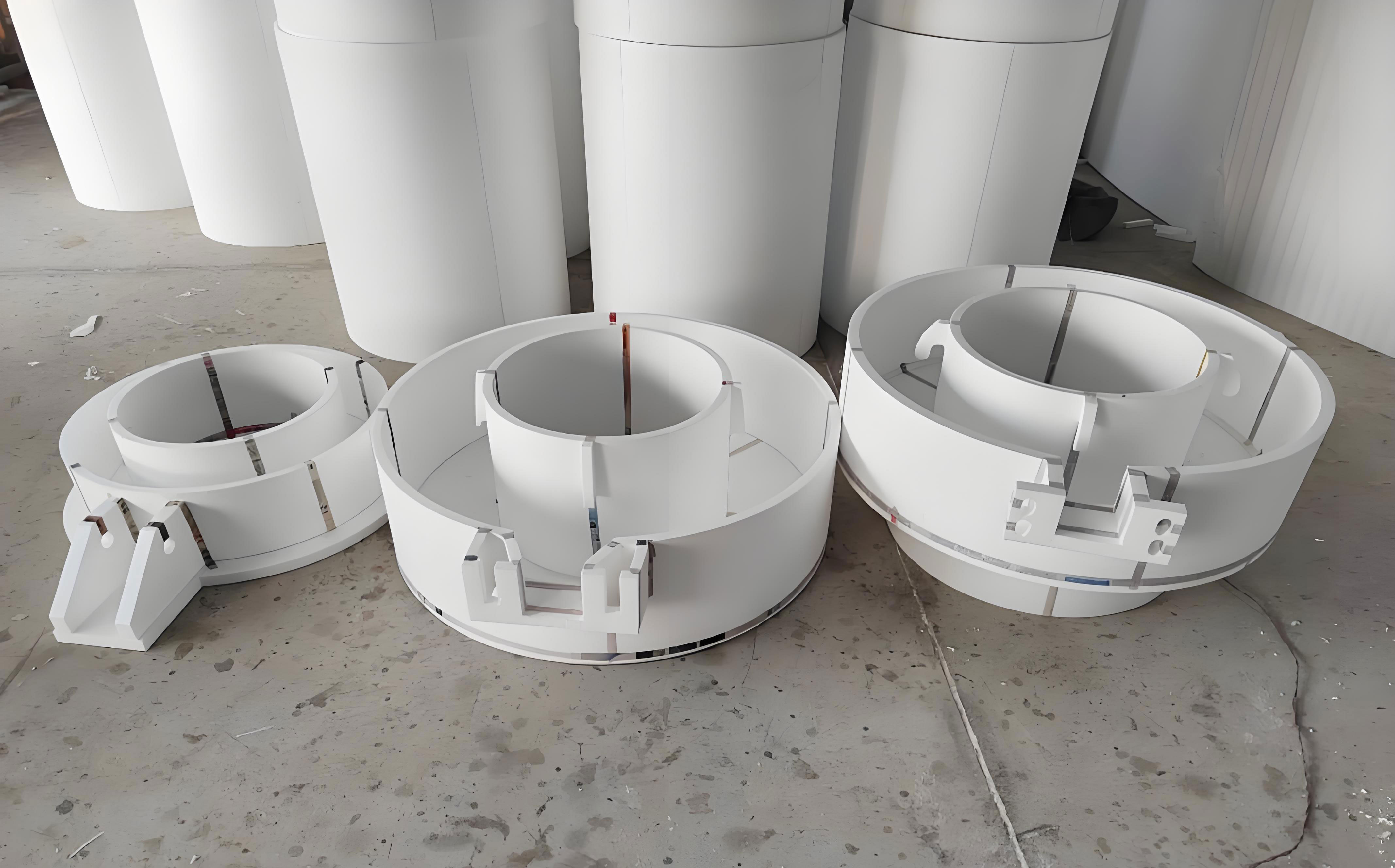
Research on tail gas treatment in lost foam casting has progressed differently across regions. In China, studies began relatively late, with catalytic combustion emerging as a theoretically optimal method for converting VOCs into harmless water and carbon dioxide. For instance, domestic investigations have shown that catalysts can facilitate this reaction at lower temperatures, achieving purification rates up to 99.7%. A pilot catalytic combustion device tested in a Wuhan steel company’s lost foam production line demonstrated post-treatment concentrations of benzene below 10 mg/m³, toluene under 1 mg/m³, and styrene less than 3 mg/m³. In contrast, international efforts, such as those by General Motors in the U.S., have long employed catalytic incinerators, while European countries like Germany and France use vacuum systems combined with activated carbon capture and burners. Full mold casting tail gas treatment remains less documented, likely due to lower production volumes, with some Chinese foundries using water-ring vacuum pumps to mitigate black smoke, though this offers limited VOC reduction without additional measures.
The primary pollutants in lost foam casting facilities include废气 emissions from medium-frequency furnace melting, sand processing, and shot blasting, which release smoke and dust. During vacuum pouring, high-temperature VOCs and particulates are generated. Full mold casting adds VOCs from the thermal decomposition of organic binders and catalysts. Laboratory studies on the thermal decomposition products of lost foam casting and EPC have identified key components, though real-world data varies widely due to factors like pattern material and process conditions. VOCs emission factors range from 4,718 to 9,864 mg/m³, with major constituents being benzene, toluene, styrene, ethylbenzene, small molecules (e.g., CH₄, C₂H₄, C₂H₂), and carbon black. Full mold casting VOCs depend on binder types, such as phenolic resins yielding phenols and anilines, or furan resins producing aldehydes and toluenes. To quantify this, the emission factor for lost foam casting can be modeled using the formula: $$ E = F \times P $$ where \( E \) is the total VOC emissions, \( F \) is the emission factor (e.g., 462.66 g/t as per AFS data), and \( P \) is the production output. For example, with a global production of 4 million tons, estimated VOC emissions are approximately 1,850 tons, representing a small fraction of industrial VOC outputs.
| Pollutant | Concentration Range (mg/m³) | Common Sources |
|---|---|---|
| Benzene | 5–50 | EPS decomposition |
| Toluene | 1–20 | Binder thermal breakdown |
| Styrene | 3–30 | STMMA and EPS patterns |
| Ethylbenzene | 2–15 | Secondary reactions |
| Small Molecules (CH₄, C₂H₄) | 10–100 | Incomplete combustion |
Effective management of pollutants in lost foam casting requires attention to capture and pretreatment. Foundries commonly use two废气 capture methods: fixed pouring positions with movable molds or mobile collection systems. However, diluting废气 with air in whole-plant ventilation reduces VOC concentrations, hindering treatment efficiency. Water-ring vacuum pumps, widely used for negative pressure in lost foam casting, can trap particulates and carbon black through water contact but have minimal impact on VOCs due to their low solubility. Therefore, pretreatment is crucial; for instance, dust removal should achieve particle concentrations below 10 mg/m³ for catalytic combustion and under 1 mg/m³ for activated carbon adsorption, as per standards like HJ 2027 and HJ 2026. The relationship between particle concentration and treatment efficiency can be expressed as: $$ \eta = 1 – e^{-k \cdot C} $$ where \( \eta \) is efficiency, \( k \) is a constant, and \( C \) is concentration. For full mold casting, “active” ignition of vents and risers before spontaneous combustion is a practical, low-cost method to reduce VOCs, though it is unsuitable for vacuum systems due to explosion risks.
Operational timing of treatment systems is critical in intermittent production settings. Research indicates that VOC emissions peak rapidly during pouring and persist for up to an hour post-pouring. Thus, treatment facilities should activate before pouring and run for at least one hour afterward. Additionally, controlling废气 concentration is vital for safety; VOC levels must remain below 25% of the lower explosion limit (LEL) before entering adsorption or catalytic units. This can be calculated as: $$ C_{\text{safe}} = 0.25 \times \text{LEL} $$ For example, if the LEL for benzene is 1.2%, the safe concentration is 0.3%. Misconceptions, such as the erroneous claim that EPS organic emissions constitute 0.3% of poured iron weight, must be addressed through accurate data—e.g., for 1 ton of iron, only 2.5 kg of foam is used, making such percentages implausible.
| Technology | Efficiency (%) | Key Considerations | Suitability for EPC |
|---|---|---|---|
| Catalytic Combustion | 95–99 | Requires low dust and moisture; high safety standards | High for continuous processes |
| Activated Carbon Adsorption | 80–90 | Needs frequent regeneration; sensitive to contaminants | Moderate for batch operations |
| Water-Ring Vacuum Pump | 50–70 for particulates | Low VOC removal; improves workplace conditions | Widely used but limited |
| Active Ignition (FM) | 70–85 | Simple and cost-effective; not for vacuum systems | Ideal for full mold casting |
In conclusion, lost foam casting and EPC processes demand tailored pollution control strategies based on specific operational contexts. Effective废气 capture is foundational; without it, end-of-pipe treatments are ineffective. Pretreatment steps, such as using advanced sands like zircon sand to reduce dust, can prolong the life of VOC control systems. Safety must be prioritized, with equipment complying to technical standards like the “Technical Specification for Application and Issuance of Pollutant Discharge Permits for Metal Casting Industry” to ensure stable,达标 emissions. As the industry evolves, continuous innovation in lost foam casting technologies will be essential to minimize environmental footprints while maintaining productivity. By integrating these insights, foundries can achieve sustainable operations in lost foam casting and EPC applications, contributing to broader industrial environmental goals.
To further optimize lost foam casting processes, mathematical models can aid in predicting emissions. For instance, the VOC generation rate during pouring can be described by: $$ \frac{dC}{dt} = k \cdot A \cdot e^{-E_a / RT} $$ where \( C \) is concentration, \( t \) is time, \( k \) is a rate constant, \( A \) is surface area, \( E_a \) is activation energy, \( R \) is the gas constant, and \( T \) is temperature. Such models help in designing real-time monitoring and control systems for lost foam casting facilities, ensuring that EPC methods align with environmental regulations and best practices.