
In the realm of advanced aerospace and defense applications, the demand for lightweight, high-strength, and geometrically intricate components has driven the development of novel alloys and manufacturing techniques. Among these, beryllium-aluminum (Be-Al) alloys have emerged as a critical material due to their exceptional specific stiffness, thermal properties, and dimensional stability. However, the casting of complex Be-Al alloy parts, such as structural brackets, presents significant challenges, including susceptibility to defects like shrinkage porosity, hot tears, and cold shuts. In this study, I focus on the precision investment casting process for a complex Be-Al alloy bracket used in satellite systems. Through a combination of process design, numerical simulation, and experimental validation, I aim to optimize the precision investment casting methodology to eliminate defects and enhance mechanical performance. The core of this work revolves around refining the precision investment casting parameters to achieve high-integrity castings, underscoring the versatility and criticality of precision investment casting in producing high-performance metal components.
The Be-Al alloy system, typically comprising 60–65 wt% Be and 30–35 wt% Al with minor additions of Ag, Co, and Ge, exhibits a unique metallurgical behavior characterized by a wide freezing range and limited mutual solubility between Be and Al phases. This leads to formation of coarse Be-rich dendrites and Al-rich interdendritic regions during solidification, often resulting in segregation and porosity. Precision investment casting, also known as lost-wax casting, is particularly suited for such alloys because it allows for intricate shapes, excellent surface finish, and controlled solidification conditions. However, the success of precision investment casting for Be-Al alloys hinges on meticulous control over mold preheating, pouring temperature, gating system design, and cooling rates. In this investigation, I employ computational simulation to predict defect formation and iteratively refine the precision investment casting process, thereby demonstrating how advanced modeling tools can augment traditional foundry practices.
To commence, I detail the alloy’s thermophysical properties, which are fundamental to simulating the precision investment casting process. The Be-Al alloy used here has a density range of 2.05–2.15 g/cm³, thermal conductivity of 95–105 W·m⁻¹·K⁻¹, liquidus temperature of 1,355 K, solidus temperature of 919 K, dynamic viscosity between 1.17–1.83 mPa·s, and a solidification shrinkage ratio of 0.7%. These parameters are input into the simulation software to accurately replicate the casting environment. A key metric for assessing shrinkage susceptibility is the residual melt modulus, Rm, defined as:
$$ R_m = \frac{R_v}{R_a} $$
where Rv is the residual melt volume and Ra is the residual melt surface area. This modulus helps identify regions prone to shrinkage porosity by evaluating the local thermal gradients and feeding capabilities during solidification. In precision investment casting, controlling Rm through gating and riser design is essential to mitigate defects.
The bracket geometry, as illustrated in the initial design, features a complex structure with pronounced variations in wall thickness—thick annular sections transition to thin webs and perforated side plates. Such heterogeneity exacerbates thermal stresses and feeding difficulties during precision investment casting. To address this, I developed a three-dimensional model of the bracket and its gating system for simulation using casting simulation software. The mold material was predominantly mullite, with a thickness of 8 mm, and the boundary conditions accounted for radiation heat transfer in a preheated environment. The simulation encompassed both filling and solidification stages, with initial conditions set to a mold preheat temperature of 775°C and a pouring temperature of 1,300°C. The filling sequence revealed that metal flow fronts converged in thin sections, leading to potential cold shuts, while the solidification analysis indicated isolated hot spots in thick regions where shrinkage defects were likely to occur.
Based on the simulation outputs, I identified critical defect zones: severe shrinkage porosity in the central platform due to inadequate feeding, hot tears in reinforcing ribs owing to thermal stress concentration, and cold shuts in deep window sections from premature solidification. These issues are inherent to precision investment casting of wide-freezing-range alloys like Be-Al, where differential cooling rates and limited fluidity in the mushy zone hinder effective compensation. To counteract these, I implemented several modifications to the precision investment casting process. First, the gating system was redesigned to incorporate elliptical ingates and blind risers at the platform to enhance localized feeding. Second, vent tubes were added along the ribs to alleviate gas entrapment and reduce tensile stresses during cooling. Third, the mold preheating protocol was standardized using resistive heating with ceramic fiber insulation to ensure uniform temperature distribution—a crucial aspect of precision investment casting that minimizes thermal shock and promotes directional solidification.
The optimized precision investment casting parameters were evaluated through a series of experimental trials, as summarized in Table 1. Each trial varied mold preheat temperature and pouring temperature to assess their impact on defect formation. The results underscored that a mold preheat of 775°C and a pouring temperature of 1,300°C yielded the best outcomes, effectively eliminating cracks and cold shuts while minimizing shrinkage. This optimal combination balances fluidity and cooling control, which is paramount in precision investment casting for achieving defect-free components.
| Trial Set | Mold Preheat Temperature (°C) | Pouring Temperature (°C) | Crack Severity | Shrinkage Porosity | Cold Shuts |
|---|---|---|---|---|---|
| Set 1 | 750 | 1,290 | Moderate | Moderate | Frequent |
| Set 1 | 750 | 1,300 | Low | Moderate | Moderate |
| Set 1 | 750 | 1,310 | Low | Moderate | Low |
| Set 2 | 775 | 1,290 | None | Moderate | Low |
| Set 2 | 775 | 1,300 | None | Low | None |
| Set 2 | 775 | 1,310 | Low | Moderate | None |
| Set 3 | 800 | 1,290 | None | Moderate | None |
| Set 3 | 800 | 1,300 | Low | Moderate | None |
| Set 3 | 800 | 1,310 | Low | High | None |
Following the optimization, the cast brackets were subjected to macro- and microstructural examination. Macroscopically, the brackets exhibited smooth surfaces without visible cracks or cold shuts, confirming the efficacy of the revised precision investment casting approach. X-ray radiography further verified the internal soundness, with no significant porosity detected in critical sections like the thin side plates and central platform. This non-destructive evaluation is a standard practice in precision investment casting to ensure component reliability. To delve deeper, metallographic analysis of the as-cast microstructure revealed that shrinkage pores, initially prevalent along grain boundaries and surrounded by Al-rich phases, were substantially reduced after optimization. The refinement in feeding via risers altered the solidification pattern, diminishing pore formation but slightly increasing Al segregation—a minor trade-off that does not compromise mechanical integrity. The microstructural evolution can be described using the Fourier heat conduction equation, which governs temperature distribution during precision investment casting:
$$ \frac{\partial T}{\partial t} = \alpha \nabla^2 T $$
where T is temperature, t is time, and α is thermal diffusivity. By controlling boundary conditions through mold preheating, the thermal gradient ∇T is modulated to favor progressive solidification from thin to thick sections, a principle central to precision investment casting defect mitigation.
The mechanical properties of the optimized brackets were evaluated through tensile testing, with results presented in Table 2. The as-cast specimens demonstrated a tensile strength of 248.6 MPa, yield strength of 191.8 MPa, elongation of 2.10%, and elastic modulus of 195 GPa, meeting the requisite standards for aerospace applications. Compared to pre-optimization values, these represent improvements of 23.7% in tensile strength and 40.4% in elastic modulus, attributable to the reduction in defect density and more homogeneous microstructure achieved through precision investment casting optimization. The relationship between defect fraction and mechanical performance can be approximated by the rule of mixtures for porous materials:
$$ \sigma_c = \sigma_0 (1 – f)^n $$
where σc is the composite strength, σ0 is the defect-free material strength, f is the porosity volume fraction, and n is an empirical exponent. By minimizing f via precision investment casting refinements, the overall strength is enhanced, underscoring the process’s impact on material performance.
| Condition | Tensile Strength (MPa) | Yield Strength (MPa) | Elongation (%) | Elastic Modulus (GPa) |
|---|---|---|---|---|
| Pre-Optimization | 200.9 | 184.7 | 1.86 | 138.9 |
| Post-Optimization | 248.6 | 191.8 | 2.10 | 195.0 |
| Specification Requirement | ≥210 | ≥165 | ≥1.5 | ≥170 |
In discussing the broader implications, it is evident that precision investment casting is a versatile manufacturing route for complex Be-Al alloy components. The integration of simulation tools allows for predictive defect analysis and iterative process improvement, reducing trial-and-error in foundry operations. For instance, the use of vent tubes and localized feeders in this study directly addresses gas entrapment and shrinkage—common pitfalls in precision investment casting. Moreover, the controlled mold preheating and pouring temperatures stabilize the solidification front, minimizing thermal stresses that lead to hot tears. These strategies are universally applicable to other alloy systems processed via precision investment casting, highlighting the methodology’s adaptability.
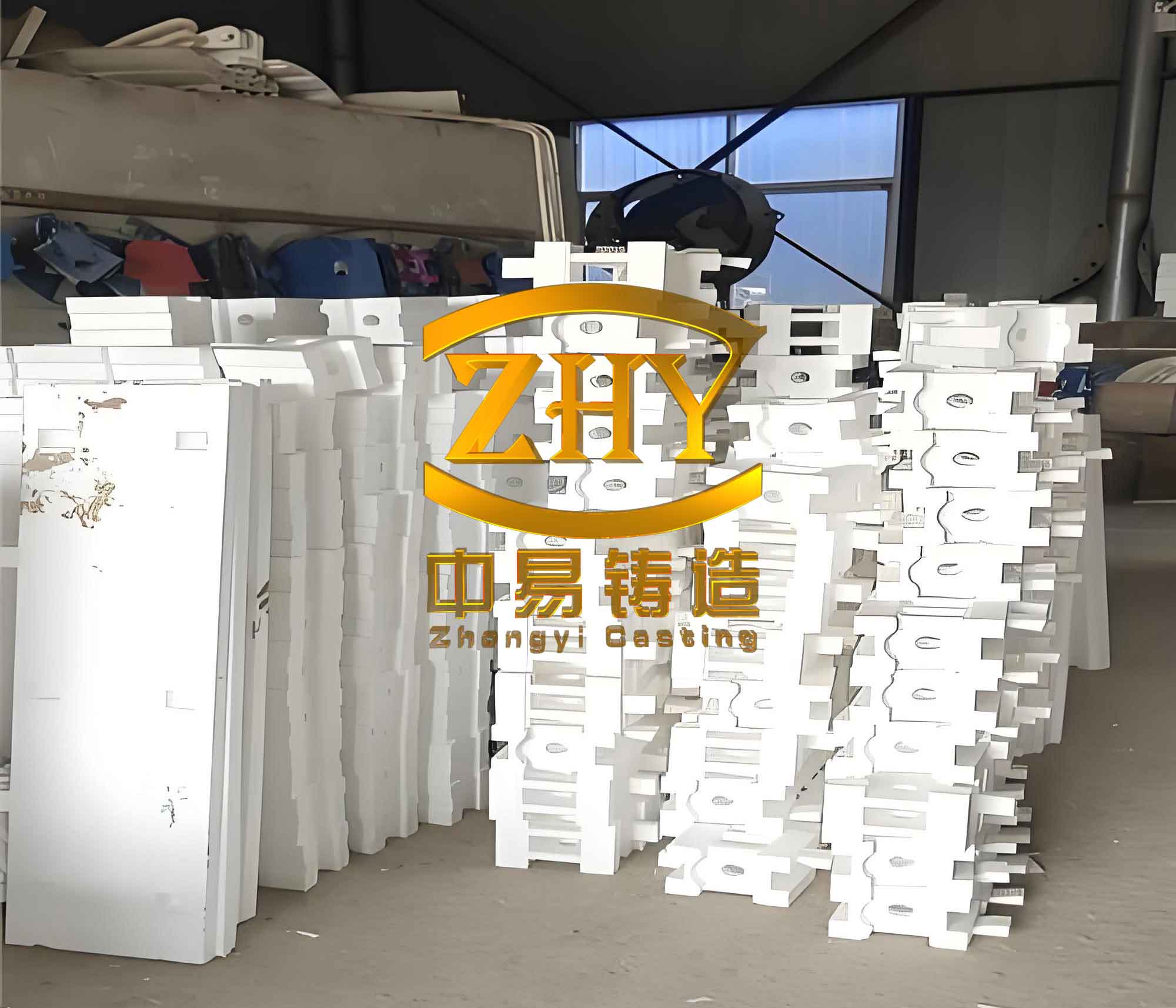
The image above illustrates a casting process akin to precision investment casting, emphasizing the intricate mold assemblies and metal flow dynamics involved. Such visual aids underscore the complexity of crafting detailed components through investment-based methods. In my work, similar principles apply, where wax patterns and ceramic shells are engineered to replicate the bracket geometry with high fidelity. The success of precision investment casting hinges on this synergy between pattern making, shell building, and metallurgical control—a triad that defines modern investment casting advancements.
To further elucidate the thermal dynamics during precision investment casting, I consider the energy balance at the mold-metal interface. The heat flux q across the boundary can be expressed as:
$$ q = h (T_m – T_s) $$
where h is the heat transfer coefficient, Tm is the metal temperature, and Ts is the mold surface temperature. By preheating the mold to 775°C, the temperature difference ΔT = Tm – Ts is reduced, thereby lowering the initial cooling rate and promoting smoother filling—a critical aspect of precision investment casting for alloys with poor fluidity. This mathematical framing helps quantify the benefits of mold preheating, a routine practice in precision investment casting foundries.
Additionally, the solidification kinetics of Be-Al alloys involve nucleation and growth of Be-phase dendrites, which can be modeled using the Johnson-Mehl-Avrami-Kolmogorov (JMAK) equation:
$$ X(t) = 1 – \exp(-k t^n) $$
where X(t) is the fraction transformed, k is a rate constant dependent on temperature, and n is the Avrami exponent. In precision investment casting, controlling cooling rates through mold design influences k and n, thereby affecting grain size and phase distribution. The optimized process here likely refined the microstructure by moderating solidification kinetics, contributing to the improved mechanical properties. This interplay between process parameters and metallurgy is a cornerstone of precision investment casting optimization.
Looking ahead, there are several avenues to enhance precision investment casting for Be-Al alloys. First, incorporating additive manufacturing for wax patterns could allow for even more complex geometries with internal channels for improved feeding. Second, real-time monitoring of temperature and pressure during casting could enable dynamic control, further reducing defects. Third, exploring hybrid processes like vacuum-assisted precision investment casting might mitigate gas-related porosity. Each of these innovations builds upon the foundational principles of precision investment casting, demonstrating its evolving role in advanced manufacturing.
In conclusion, this study comprehensively addresses the challenges of producing complex Be-Al alloy brackets via precision investment casting. Through simulation-guided design and parameter optimization, I achieved defect-free castings with superior mechanical properties, validating the precision investment casting approach. The optimal conditions—mold preheat at 775°C and pouring at 1,300°C—along with gating modifications, effectively eliminated cracks, cold shuts, and minimized shrinkage. The mechanical metrics, including a tensile strength of 248.6 MPa and elongation of 2.10%, meet aerospace standards, underscoring the viability of precision investment casting for critical applications. This work not only advances the specific domain of Be-Al alloy casting but also contributes to the broader knowledge base of precision investment casting methodologies, highlighting its indispensability in fabricating high-performance, intricate metal components. As industries continue to demand lighter and stronger parts, precision investment casting will remain at the forefront of manufacturing innovation, with continuous refinements driven by integrated modeling and experimental validation.