
The development and successful production of a critical gyroscope component stand as a testament to the capabilities of advanced investment casting processes. This component, a large, structurally intricate, and thin-walled aluminum alloy shell casting, presented a formidable set of challenges that demanded a meticulous and optimized approach. From the initial analysis, it was clear that conventional casting methods were inadequate. The path forward led to the adoption of a refined investment casting technique, where every stage—from pattern making to heat treatment—was scrutinized and controlled to achieve the requisite quality for these demanding shell castings.
The primary challenges posed by this specific shell casting were multifaceted. Geometrically, the part was exceptionally complex, featuring significant variations in wall thickness, from sections exceeding 6mm down to delicate areas of only 1.5mm. This non-uniformity inherently created difficulties in achieving complete mold filling and uniform solidification. Furthermore, the surface finish requirements were stringent, with a specified roughness average (Ra) of 3.2 µm. Internally, the casting had to be free from cold shuts, cracks, and mis-runs, with porosity levels strictly controlled to not exceed a Grade 2 standard. Dimensional tolerances were tight, with the most critical being ±0.1 mm. Finally, the mechanical property benchmark was set at a minimum tensile strength of 300 MPa. These collective requirements positioned this component at the high end of manufacturability for shell castings.
The selection of the manufacturing process was a critical first decision. Pressure die casting, while offering excellent surface finish and precision, was immediately ruled out due to the part’s extreme complexity, which made core retraction and part ejection impossible.石膏型 (石膏型) casting, commonly used abroad for complex thin-walled parts, was still in its experimental stages domestically at the time, and the urgent project timeline did not permit the lengthy development cycle it would require. Consequently, investment casting emerged as the most viable solution. Its inherent ability to reproduce intricate geometries, coupled with the potential for excellent surface quality and dimensional accuracy, made it the preferred choice. Collaborating with a facility possessing leading-edge equipment and expertise in precision investment casting was key to undertaking this development.
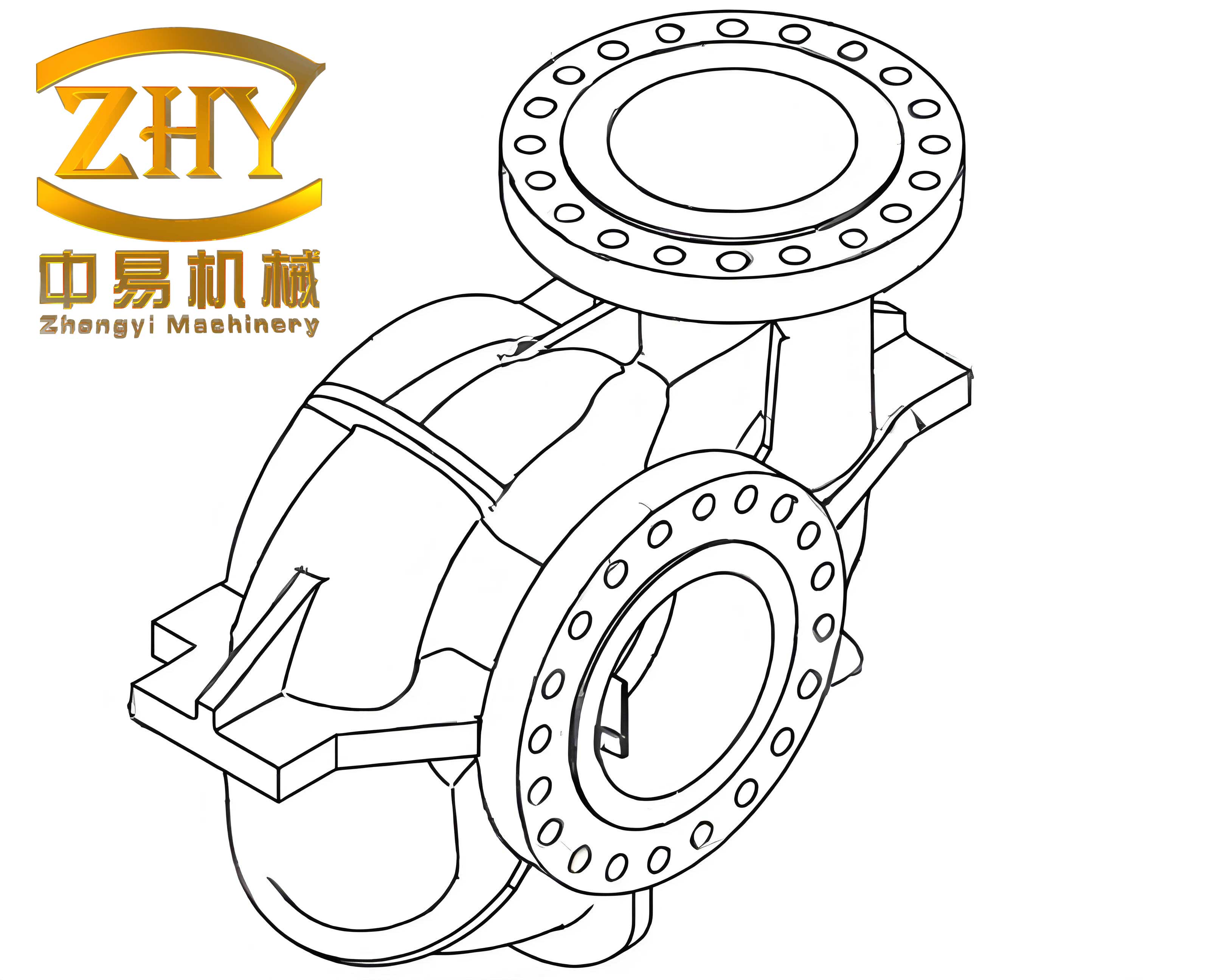
The heart of the successful process lay in a series of carefully engineered and controlled steps, each tailored to the unique demands of producing these high-integrity shell castings.
Pattern Material Selection and Injection
The foundation of any investment casting is the expendable pattern. For these shell castings, the pattern material needed to fulfill several critical criteria: excellent replication to capture fine details, low shrinkage to maintain dimensional stability, sufficient mechanical strength at room temperature to withstand handling and assembly, and good wettability to ensure a uniform ceramic coating. A zero-contraction (low-shrinkage) wax formulation was selected. Its composition and key properties are summarized below.
| Component | Ratio (wt.%) |
|---|---|
| Microcrystalline Wax | ~60% |
| Polyethylene Wax | ~25% |
| Other Additives (E.g., Fillers, Plasticizers) | ~15% |
| Property | Value / Description |
|---|---|
| Melting Point | ~65 °C |
| Softening Point | ~35 °C |
| Ash Content | < 0.05% |
| Linear Shrinkage | < 1.0% |
Pattern injection was performed on specialized automatic equipment with tightly controlled parameters to ensure consistency and quality across all patterns for the shell castings.
| Process Parameter | Setting / Range |
|---|---|
| Injection Temperature | 48 – 52 °C |
| Injection Pressure | 2.5 – 3.5 bar |
| Die Temperature | 20 – 25 °C |
| Hold Pressure Time | 30 – 60 seconds |
Shell Mold Building
Constructing a robust yet permeable ceramic shell is paramount for thin-walled shell castings. A single-pour, multi-layer shell system was employed. The primary requirements for an aluminum casting shell are high surface finish, adequate permeability to allow gases to escape, and sufficient green and fired strength. The shell system was designed with a hybrid approach: the face coat used a colloidal silica binder with zircon flour (ZrSiO₄) refractory to achieve a smooth casting surface. The subsequent backup coats utilized hydrolyzed ethyl silicate binder with calcined clay (mullite-based) refractory to build strength. Zircon flour is particularly beneficial for aluminum shell castings due to its high chemical stability, low reactivity with molten aluminum, and favorable thermal properties which promote fine grain structure.
The shell building sequence is detailed in the table below.
| Layer Number | Binder | Refractory Flour | Stucco Sand |
|---|---|---|---|
| 1 (Face Coat) | Colloidal Silica | Zircon Flour | Zircon Sand |
| 2 | Hydrolyzed Ethyl Silicate | Calcined Clay | Calcined Clay |
| 3 to 5+ (Backup Coats) | Hydrolyzed Ethyl Silicate | Calcined Clay | Fused Alumina |
| Final Seal Coat | Hydrolyzed Ethyl Silicate | Fused Alumina | – |
An important process refinement involved adjusting the calcined clay composition. Initially, shells exhibited excessive strength, making knockout difficult and risking damage to the delicate shell castings. By using a clay with a lower alumina (Al₂O₃) content (below 40%), the room-temperature strength was reduced, and the knockout characteristic (collapsibility) was significantly improved without compromising the necessary fired strength. The relationship between shell properties and temperature is critical. The high-temperature strength of the mullite-based system is superior to pure alumina for this application, as shown conceptually below. The tensile strength $\sigma_s$ as a function of temperature $T$ for different compositions can be modeled. For a clay with lower Al₂O₃ content, the strength decreases more rapidly at lower temperatures, aiding knockout: $$\sigma_s(T) \approx \sigma_0 \cdot \exp\left(-k \cdot (T – T_0)\right)$$ where $\sigma_0$ is the reference strength, $k$ is a material-dependent decay constant, and $T_0$ is a reference temperature. Permeability $\kappa$, vital for allowing air and gas to escape during metal pour, increases with temperature, which is beneficial for casting thin sections: $$\kappa(T) = \kappa_0 + \alpha \cdot T$$ where $\kappa_0$ is the baseline permeability and $\alpha$ is a coefficient of thermal expansion for pore structure.
Pattern Removal and Shell Firing
Pattern removal was conducted in a high-pressure autoclave using steam. The principle of “fast pressure rise, slow pressure release” was applied. A rapid pressure increase to 0.6-0.7 MPa ensured the wax melted and was expelled quickly, minimizing expansion-related shell cracking. The subsequent slow pressure release prevented thermal shock to the ceramic mold. Following dewaxing, the shell undergoes a pre-firing or baking cycle. This serves to: 1) Remove all residual pattern material via oxidation, 2) Drive off chemically bound water from the silica binders, completing the ceramic polymerization, and 3) Develop the final high-temperature strength. The standard firing cycle was: heat to $850 \pm 10^{\circ}C$, hold for 120 minutes, then cool to the desired pouring temperature.
Alloy Melting, Pouring, and Solidification
The alloy specified was ZL114A (equivalent to A357), an Al-Si-Mg casting alloy known for excellent castability, low hot tearing tendency, and good mechanical properties after heat treatment. Melting was performed in a resistance crucible furnace using pre-alloyed ingots with magnesium additions. Key melting practices included:
- Refining and Degassing: Mandatory use of a refining flux to remove dissolved hydrogen and non-metallic inclusions. The efficiency of hydrogen removal is crucial for minimizing porosity in the final shell castings. The relationship can be described by Sieverts’ Law for hydrogen solubility in aluminum: $$[H] \propto \sqrt{P_{H_2}}$$ where $[H]$ is the dissolved hydrogen concentration and $P_{H_2}$ is the partial pressure of hydrogen at the melt surface. Degassing reduces $P_{H_2}$ effectively.
- Temperature and Time Control: Melt temperature was strictly controlled not to exceed $750^{\circ}C$, and the total time from melt start to completion of pouring was kept under 120 minutes to prevent excessive gas pickup and oxidation.
The pre-fired shells were heated to approximately $450^{\circ}C – 500^{\circ}C$ to ensure thermal equilibrium and promote fluidity. Pouring was performed at a temperature of $700 – 720^{\circ}C$ at a controlled, rapid rate to ensure complete filling of the thin sections before solidification commenced. The criticality of filling thin walls can be related to the fluidity length $L_f$, which is a function of superheat $\Delta T$, heat transfer coefficient $h$, and solidification interval $\Delta T_f$: $$L_f \propto \frac{v \cdot \Delta T}{h \cdot \Delta T_f}$$ where $v$ is the flow velocity. A higher pouring temperature ($\Delta T$) and preheated mold (lower $h$) are essential for these shell castings.
Castings Knockout, Cleaning, and Heat Treatment
After cooling, the removal of the ceramic shell (knockout) required careful attention. Mechanical vibration methods were used, but the process was calibrated to avoid excessive impact on the fragile casting itself, preventing distortion or cracking—a non-trivial task for complex shell castings. Following cleaning, the castings underwent a T6 heat treatment cycle:
- Solution Treatment: $535 \pm 5^{\circ}C$ for 8 hours, followed by rapid quenching in water at ~$60^{\circ}C$.
- Artificial Aging: $160 \pm 5^{\circ}C$ for 6 hours, followed by air cooling.
This treatment dissolves the Mg₂Si precipitates and subsequently produces a fine, uniform dispersion during aging, significantly enhancing strength. The mechanical properties obtained from investment-cast separately poured test bars were compared to the standard sand-cast specifications, as shown below.
| Property | Investment Cast Test Bar (Average) | Sand Cast Specification (Typical Min) | Comparison |
|---|---|---|---|
| Tensile Strength ($\sigma_b$) | ~320 MPa | >= 310 MPa | Met |
| Yield Strength ($\sigma_{0.2}$) | ~250 MPa | >= 240 MPa | Met |
| Elongation ($\delta$) | ~4.5% | >= 3% | Met |
The data confirmed that the mechanical properties of the investment-cast shell castings met and slightly exceeded the required benchmarks, validating the process integrity.
Persistent Challenges and Conclusions
Despite the overall success, one area requiring ongoing improvement is the knockout process. A significant proportion of scrapped shell castings were attributed to damage incurred during shell removal. This highlights the delicate balance required in shell design: sufficient strength to withstand handling and metal static pressure, yet sufficient collapsibility after casting to allow clean separation without damaging the part. Further research into binder systems, refractory materials, and knockout techniques (e.g., enhanced chemical dissolution) is warranted for such complex geometries.
In conclusion, the production of these highly complex, thin-walled aluminum shell castings was achieved through a rigorously controlled and optimized investment casting process. The journey involved the strategic selection of a zero-shrinkage pattern material, the engineering of a hybrid ceramic shell system balancing strength and permeability, precise thermal cycles for pattern removal and shell firing, stringent melt treatment and pouring practices, and a final heat treatment to unlock the alloy’s mechanical potential. The process demonstrated a first-pass yield approaching 90%, proving its capability to manufacture high-integrity, precision shell castings for critical aerospace applications. The experience underscores that success in investment casting lies in the holistic control and synchronization of every sub-process, each playing a vital role in determining the final quality of the casting.