
In the realm of advanced manufacturing, precision investment casting stands as a cornerstone technology for producing complex, high-integrity components, particularly in aerospace applications. My exploration into this field focuses on the fabrication of turbojet compressor blades, where the demands for dimensional accuracy, surface finish, and material properties are exceptionally high. Precision investment casting, often referred to as lost-wax casting, involves creating a wax pattern, encasing it in a ceramic or plaster mold, melting out the wax, and then pouring molten metal into the resultant cavity. This process is pivotal for turbine and compressor blades, which require intricate geometries and superior performance under extreme conditions. The shift from forged to cast blades, especially with the advent of directionally solidified and single-crystal superalloys, has cemented the dominance of precision investment casting in modern jet engine production. In this article, I delve into the comprehensive process, from digital design and simulation to practical execution and defect analysis, emphasizing the critical role of precision investment casting throughout.
The journey begins with meticulous process design and simulation, which are essential to anticipate and mitigate potential issues before physical production. Utilizing SolidWorks software, I developed a detailed three-dimensional model of a turbojet compressor blade based on initial two-dimensional drawings. The blade’s outer diameter is 66 mm, with an inner diameter of 44 mm, and the overall weight of the casting, including the gating system, is 237 grams. This digital model serves as the foundation for all subsequent steps in precision investment casting. To ensure successful casting, key parameters such as machining allowances and shrinkage must be carefully selected. For instance, the machining allowance is set at 0.8 mm, while the overall linear shrinkage, accounting for wax pattern contraction, plaster dehydration, and metal solidification, ranges from 1.5% to 2.0%. This can be expressed with a formula for total shrinkage ($S_t$):
$$S_t = S_w + S_p + S_m$$
where $S_w$ is wax shrinkage (0.4–0.6%), $S_p$ is plaster mold shrinkage (0–0.5%), and $S_m$ is metal shrinkage (1.1–1.3%). Accurate prediction of these factors is vital for dimensional fidelity in precision investment casting.
Numerical simulation plays a crucial role in optimizing the precision investment casting process. I employed AnyCasting virtual simulation software to analyze the filling and solidification stages. The 3D model was imported into anyPRE to generate a finite difference mesh, followed by setting process parameters: the casting method as investment casting, material as 304 stainless steel (liquidus temperature 1454°C, solidus temperature 1399°C), and mold material as plaster with an initial temperature of 630°C to reflect preheating after burnout. The pouring time was set to 10 seconds. The simulation solves governing equations for fluid flow and heat transfer, such as the Navier-Stokes equations for momentum conservation and the energy equation for thermal evolution. For instance, the heat conduction during solidification can be modeled using:
$$\rho c_p \frac{\partial T}{\partial t} = \nabla \cdot (k \nabla T) + Q$$
where $\rho$ is density, $c_p$ is specific heat, $T$ is temperature, $t$ is time, $k$ is thermal conductivity, and $Q$ represents latent heat release due to phase change. The anySOLVER module computes these equations, while anyPOST visualizes results like filling sequences, solidification times, and defect probabilities. Through simulation, I identified potential issues such as mistruns or porosity, allowing for iterative design improvements. This virtual prototyping is indispensable in precision investment casting to reduce costly trial-and-error in physical trials.
To complement the simulation, I summarize key material properties and process settings in the following tables, which are integral to precision investment casting success.
| Parameter | Value | Description |
|---|---|---|
| Machining Allowance | 0.8 mm | For final dimensional accuracy |
| Wax Shrinkage ($S_w$) | 0.4–0.6% | Contraction during pattern making |
| Plaster Shrinkage ($S_p$) | 0–0.5% | Dehydration during mold burnout |
| Metal Shrinkage ($S_m$) | 1.1–1.3% | Thermal contraction of 304 stainless steel |
| Pouring Temperature | 1454°C | Liquidus point for optimal fluidity |
| Mold Initial Temperature | 630°C | Preheated to reduce thermal shock |
Another table highlights the properties of materials used in precision investment casting, particularly for mold fabrication.
| Material | Melting Point (°C) | Density (g/cm³) | Linear Expansion Coefficient (×10⁻⁶ K⁻¹) | Application |
|---|---|---|---|---|
| α-Hemihydrate Plaster | N/A (decomposes) | ~2.6 | Variable | Primary mold material |
| Silica Sand | 1713 | 2.65 | 12.5 | Filler for strength |
| Silimanite | 1800 | 3.25 | 3.1–3.4 | Alternative filler |
| 304 Stainless Steel | 1454 (liquidus) | 7.9 | 17.3 | Casting alloy |
Moving from digital to physical, the precision investment casting process for the compressor blades involves several meticulous steps. Pattern making is the first critical phase. Instead of traditional wax injection, I leveraged additive manufacturing for rapid and accurate pattern production. A 3D Systems ProJet 2500 series printer was used, which employs UV-curable plastic to build the wax pattern layer by layer with a thickness of 0.032 mm. This technology, based on discrete deposition principles, allows for direct digital manufacturing of patterns without dedicated tooling, aligning perfectly with the flexibility demands of precision investment casting. The printed pattern replicates the 3D model precisely, ensuring that the final casting mirrors the design intent. This approach reduces lead times and enhances geometric complexity capabilities in precision investment casting.
The mold material selection is paramount in precision investment casting. I opted for α-hemihydrate plaster due to its dense, coarse-grained structure, which provides better strength and lower shrinkage compared to β-hemihydrate. To enhance mold properties, fillers such as silica sand or silimanite are added. The typical plaster-to-filler mass ratio is 40:60. The strength of the mold mixture can be described empirically: after 7 hours of setting, the compressive strength ($\sigma_c$) might approximate:
$$\sigma_c = A \cdot e^{-B \cdot t} + C$$
where $A$, $B$, and $C$ are constants dependent on filler type and processing conditions. For instance, with silimanite filler, the strength after drying at 90°C for 4 hours reaches 2.8 MPa, sufficient to withstand metal pouring in precision investment casting. The slurry preparation involves mixing water and plaster-filler blend under vacuum to eliminate entrapped air, a common source of defects. The mixing parameters include a vacuum level of 0.05–0.06 MPa, stirring speed of 250–350 rpm, and duration of 3–5 minutes. Proper slurry rheology is crucial for complete pattern coating in precision investment casting.
Once the slurry is ready, it is poured into a flask containing the wax pattern assembly under vacuum to ensure thorough infiltration and bubble removal. After hardening for about 1 hour, the mold undergoes burnout in a furnace to remove the wax and dehydrate the plaster. The burnout cycle is carefully controlled: first, dewaxing at 100°C for 1–2 hours, followed by gradual heating to 700°C over several hours to avoid thermal cracking. This step eliminates residual volatiles and stabilizes the mold dimensions, which is critical for achieving precision in investment casting. The temperature profile during burnout can be modeled as a time-dependent function:
$$T(t) = T_0 + \alpha t – \beta t^2$$
where $T_0$ is initial temperature, and $\alpha$ and $\beta$ are heating rate coefficients. Controlled burnout ensures mold integrity for the subsequent casting stage.
Pouring is conducted using a vacuum casting machine, such as the MC100V medium-frequency induction furnace, which melts the 304 stainless steel under vacuum to prevent oxidation. The molten metal is poured into the preheated mold at 1454°C, with the vacuum maintained to facilitate complete filling. This environment minimizes gas entrapment, a key advantage of precision investment casting. After solidification, the mold is broken away to reveal the raw casting, which is then cleaned and inspected. Throughout this process, precision investment casting demonstrates its capability to produce near-net-shape components with minimal post-processing.
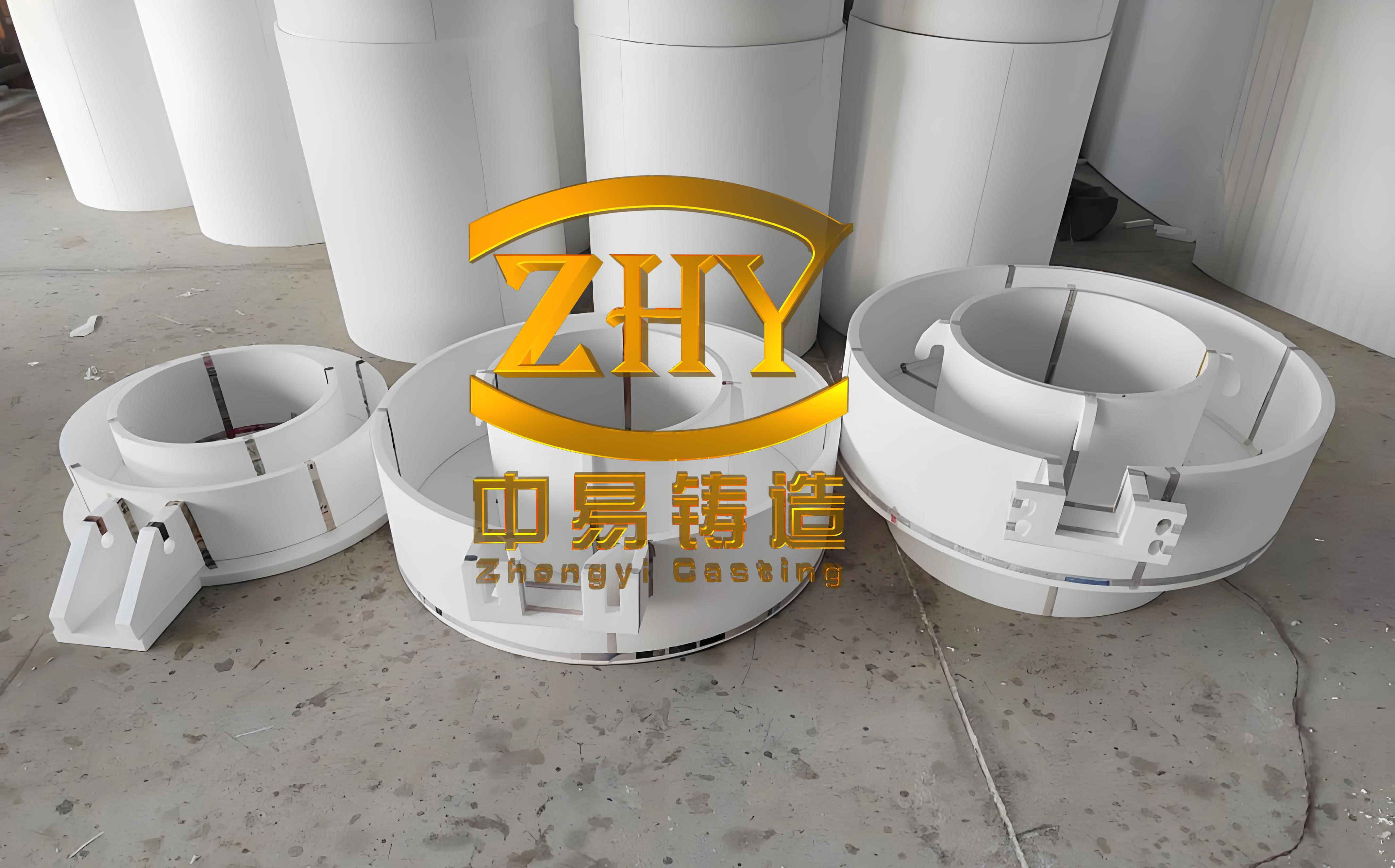
Despite careful process control, defects can arise in precision investment casting, necessitating thorough analysis and corrective measures. In my work, two primary defects were observed: spherical protrusions on the casting surface and porosity coupled with incomplete filling. The spherical defects likely resulted from inadequate slurry deaeration during mixing, leading to gas pockets that become filled with metal. This underscores the importance of vacuum mixing in precision investment casting. The defect formation can be related to the gas law: if a bubble of volume $V_g$ persists, the metal pressure $P_m$ during pouring must overcome it for proper filling, as per:
$$P_m > P_{atm} + \frac{2\gamma}{r}$$
where $\gamma$ is surface tension and $r$ is bubble radius. To prevent this, I ensured correct water-to-powder ratios (typically 100:40 by weight), maintained slurry temperature at 20–22°C, and verified vacuum system integrity.
Porosity and incomplete filling often stem from improper burnout or low metal temperature. Incomplete wax removal leaves residues that gasify during pouring, creating pores. The solution involves optimizing burnout parameters: extending time at 730°C to ensure complete wax elimination without exceeding this temperature to avoid plaster degradation. Additionally, metal cleanliness is vital; recycled alloy content should be limited to 50% to minimize impurities. Incomplete filling may also occur if metal or mold temperatures are too low, causing premature solidification. The thermal balance during pouring can be expressed as:
$$Q_{metal} = m c_p (T_{pour} – T_{solidus})$$
$$Q_{mold} = \int k \Delta T \, dA$$
where $Q_{metal}$ is the heat content of the metal, $m$ is mass, $c_p$ is specific heat, $T_{pour}$ is pouring temperature, $T_{solidus}$ is solidus temperature, $Q_{mold}$ is heat absorbed by the mold, $k$ is thermal conductivity, and $\Delta T$ is temperature gradient. Ensuring adequate superheat and mold preheating mitigates this issue in precision investment casting.
To systematically address defects, I compiled a table of common issues and solutions in precision investment casting.
| Defect Type | Possible Causes | Corrective Actions |
|---|---|---|
| Spherical Protrusions | Insufficient slurry deaeration; thin mold walls; vacuum pump issues | Use correct water-powder ratio; ensure adequate mold thickness; check vacuum equipment |
| Porosity | Incomplete wax burnout; dirty metal; rapid cooling | Extend burnout time at 730°C; limit recycled alloy; increase mold temperature |
| Incomplete Filling | Low metal/mold temperature; poor gating design; residual air | Raise pouring temperature; optimize runner system; ensure full vacuum during pouring |
| Surface Cracks | Thermal shock during burnout; high plaster shrinkage | Implement gradual heating cycles; use low-shrinkage fillers like silimanite |
Through iterative adjustments based on defect analysis, I successfully produced a sound compressor blade casting, validating the precision investment casting process. The final component exhibited the required dimensional accuracy and surface quality, demonstrating the efficacy of integrating simulation, additive manufacturing, and controlled processing. Precision investment casting, with its ability to fabricate intricate geometries in high-performance alloys, remains a vital technology for aerospace components like turbojet blades.
In conclusion, my exploration of turbojet compressor blade fabrication underscores the multifaceted nature of precision investment casting. From initial digital modeling and simulation to pattern printing, mold making, and defect troubleshooting, each step requires meticulous attention to detail. The synergy between advanced software tools and traditional craft techniques enables the production of complex parts with high reliability. Precision investment casting continues to evolve, driven by innovations in materials and processes, ensuring its relevance in demanding applications. As I reflect on this journey, the iterative learning and problem-solving inherent in precision investment casting highlight its role as both an art and a science, essential for pushing the boundaries of modern manufacturing.
To further elaborate on the technical aspects, the thermal dynamics during solidification in precision investment casting can be modeled using the Fourier equation with phase change boundary conditions. For a cylindrical coordinate system appropriate for blade geometries, the heat equation becomes:
$$\frac{1}{r} \frac{\partial}{\partial r} \left( r k \frac{\partial T}{\partial r} \right) + \frac{1}{r^2} \frac{\partial}{\partial \theta} \left( k \frac{\partial T}{\partial \theta} \right) + \frac{\partial}{\partial z} \left( k \frac{\partial T}{\partial z} \right) = \rho c_p \frac{\partial T}{\partial t} – L \frac{\partial f_s}{\partial t}$$
where $r$, $\theta$, and $z$ are radial, angular, and axial coordinates, $L$ is latent heat, and $f_s$ is solid fraction. This complexity necessitates numerical simulation for accuracy. Moreover, the fluid flow during mold filling in precision investment casting involves viscous effects, described by the Navier-Stokes equations:
$$\rho \left( \frac{\partial \mathbf{v}}{\partial t} + \mathbf{v} \cdot \nabla \mathbf{v} \right) = -\nabla p + \mu \nabla^2 \mathbf{v} + \rho \mathbf{g}$$
where $\mathbf{v}$ is velocity vector, $p$ is pressure, $\mu$ is dynamic viscosity, and $\mathbf{g}$ is gravity. Solving these equations helps optimize gating design to ensure laminar flow and minimize turbulence-induced defects.
The economic and environmental considerations of precision investment casting also warrant discussion. While the process minimizes material waste compared to machining, energy consumption for melting and burnout is significant. Optimizing cycle times and recycling materials can enhance sustainability. For instance, using reclaimed plaster filler or implementing energy-efficient furnaces reduces the carbon footprint. In my practice, I aimed to balance technical excellence with resource efficiency, a growing priority in precision investment casting industries.
Future directions for precision investment casting include integration with Industry 4.0 technologies, such as real-time monitoring via IoT sensors and AI-driven defect prediction. These advancements could further elevate the precision and reliability of the process. As I continue to explore this field, the fusion of traditional expertise with digital innovation promises to unlock new potentials for complex component manufacturing. Precision investment casting, with its rich history and ongoing evolution, remains a testament to human ingenuity in overcoming manufacturing challenges.