
In modern industrial finishing, the demand for high-performance, aesthetically pleasing, and durable surface treatments is paramount. My experience encompasses the operation of advanced automated plating lines and the meticulous refinement of chemical conversion processes for non-ferrous and ferrous alloys. This article delves into the critical operational philosophies of contemporary plating systems and provides a detailed, first-person account of optimizing specific processes for brass blackening and, more extensively, for the challenging task of electroplating chromium onto cast iron parts. The latter presents unique difficulties, and achieving a high-quality, adherent, and functional hard chromium deposit on these components requires a deep understanding of material science and precise process control, which will be a central focus of this discussion.
The foundational environment for precision plating is the automated electroplating line. A well-designed system incorporates comprehensive safety and quality assurance features directly into its electrical framework. Interlocks and anti-overtravel/anti-drop devices are installed at multiple critical junctions. These are not merely for routine operation; their true value is demonstrated during unforeseen events. Should a momentary malfunction, component failure, or sensor error occur during a production run, these systems are programmed to initiate an immediate shutdown of the line and trigger audible and visual alarms. Furthermore, the cause of the stoppage can be promptly diagnosed by querying the system status through a centralized computer interface, where relevant error codes and operational parameters are displayed. This integration of safety, diagnostics, and control minimizes downtime and prevents defective batches from proceeding.
Material selection and system design further define the capability of such a line. The primary structure is often constructed from robust profiles, with components exposed to chemical vapors or mechanical wear fabricated from stainless steel or specialized alloys for longevity. A significant advancement in environmental and process control is the implementation of bidirectional ventilation—both interior and exterior to the plating tanks—to effectively capture fumes. The entire utility network, encompassing supply lines for water, air agitation, spray, solution transfer, recirculation filtration, heating, and cooling, is arranged in a segregated, enclosed piping manifold. This organized, closed-loop approach, combined with features like live entry/exit (minimizing drag-out), automatic temperature regulation, zero waste steam emission, and centralized electrical command, represents the advanced standard of modern domestic automatic electroplating loops.
Optimization of Brass Blackening for Superior Aesthetic Quality
Moving from system-wide considerations to specific chemical processes, the blackening of brass is a common requirement for achieving an anti-glare, decorative, or functional finish. In many facilities, the prevalent method is the ammonia-based chemical blackening process, while some opt for electroplated black nickel. Each method has its trade-offs. Black nickel coatings often provide excellent initial appearance but are prone to tarnishing and color change. The ammonia-based black oxide film generally offers better wear resistance but can suffer from inconsistent and poor visual quality, appearing patchy or non-uniform.
However, this dichotomy is not absolute. Through careful observation and process refinement, I have confirmed that the ammonia-based process is fully capable of producing a uniform, deep black finish rivaling the best aesthetic results of black nickel. The cornerstone of this achievement is ensuring a homogeneous surface alloy composition on the brass substrate before oxidation. Non-uniform distribution of copper and zinc leads to inconsistent oxidation rates and, consequently, a splotchy appearance. The following measures are critical for success.
First, the pre-treatment sequence must be tailored to brass. The use of strong alkaline cleaners is detrimental as it promotes selective dezincification, leaching zinc from the surface and altering the alloy composition. A mild, non-etching cleaner is preferred. Crucially, a controlled acid etching step is indispensable to achieve a uniform, active surface. An effective etching formulation I have employed is:
- Sulfuric Acid (H₂SO₄): 50-100 mL/L
- Thiourea: 1-2 g/L (as a mild inhibitor to prevent over-etching)
- Non-ionic Surfactant: 1-2 mL/L (e.g., a neutral detergent)
This solution effectively removes oxides and micro-roughens the surface uniformly without excessive attack. The subsequent steps are equally important. After acid etching, the parts must be thoroughly neutralized in a dilute alkaline solution, followed by a cathodic electroclean (if suitable) and a final mild acid activation (e.g., 5% sulfuric acid) immediately before the blackening tank.
Second, proper racking is non-negotiable. Placing large quantities of brass parts in a mesh basket for bulk processing is a recipe for failure. Inadequate rinsing leads to solution contamination and drag-in/drag-out issues. More critically, in the blackening tank itself, parts lying flat against each other or overlapping create areas of poor solution exchange. This can cause precipitated basic copper carbonates to deposit on the parts, resulting in greenish stains, blotches, and a finish that may later develop reddish spots (“blushing”). All but the smallest parts like screws should be individually racked to ensure free solution flow on all surfaces.
Third, meticulous control of the blackening solution is paramount. The standard ammonia-based blackening solution operates through the formation of copper oxide. The basic reaction can be summarized as:
$$ \text{Cu} + 2\text{NH}_4\text{OH} + (\text{NH}_4)_2\text{CO}_3 + [O] \rightarrow \text{CuO} + 4\text{NH}_3 + \text{CO}_2 + 3\text{H}_2\text{O} $$
Where [O] represents the oxidizing agent, often sodium persulfate or similar. When the oxidation rate slows significantly or the black color becomes weak and brownish, it indicates depletion of active components—typically free ammonia and the copper complex. Additions of ammonia water and basic copper carbonate must be made according to the bath’s analysis and replenishment schedule.
Finally, a post-treatment or “sealing” step is essential for durability. Immersing the freshly blackened parts in a hot (80-90°C), dilute sodium hydroxide solution (3-5% NaOH) for 2-5 minutes stabilizes the coating. This alkaline dip helps prevent the later development of reddish or greenish discolorations during storage. For parts requiring rework due to poor quality, the only acceptable method is gentle mechanical brushing or polishing. Chemical stripping in acid is strictly prohibited, as it will re-etch the surface unevenly, destroying the carefully achieved alloy homogeneity. Restoring that uniformity would then require aggressive etching in chromic acid-based solutions, which is environmentally hazardous and operationally burdensome.
Specialized Chromium Electroplating Process for Cast Iron Parts
Transitioning to ferrous substrates, one of the most technically demanding applications in electroplating is the deposition of hard chromium onto cast iron parts. Components such as sealing rings, piston rings, and cylinder liners, which endure significant wear and heavy loads, are frequently manufactured from various grades of cast iron and subsequently chrome-plated to meet extreme performance specifications. The process is fraught with challenges, including poor adhesion, pitting, burning, and failure to plate in recessed areas. Based on extensive hands-on practice, I will detail the特殊性 (special characteristics) of these substrates and the precise methodology required to achieve a high-integrity chromium coating that meets stringent technical requirements.
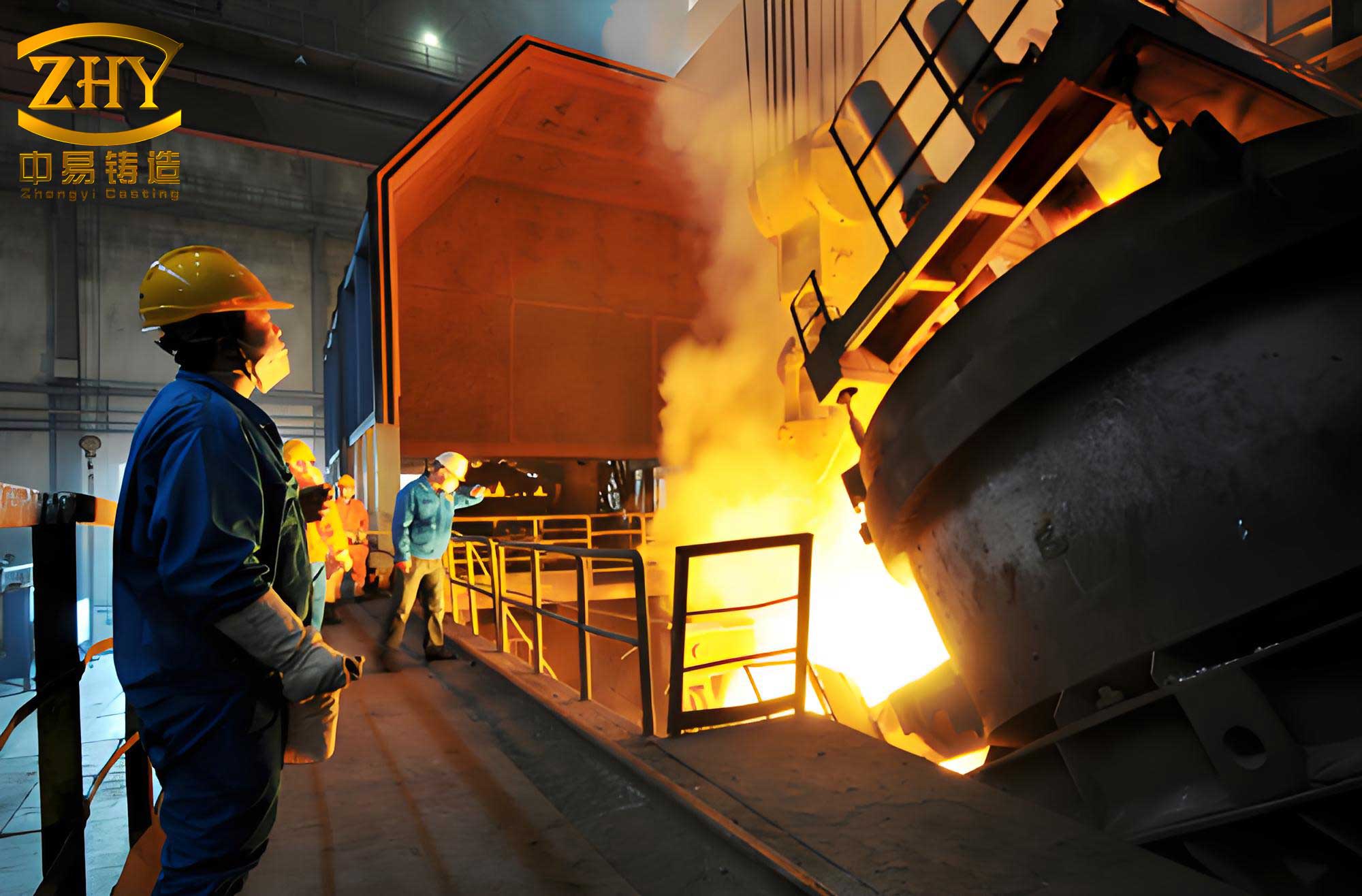
The technical specifications for chromium-plated cast iron parts are typically rigorous:
| Requirement | Description |
|---|---|
| Adhesion | Excellent bond strength with no blistering, peeling, or flaking. |
| Thickness & Appearance | Conformance to specified dimensional build-up; deposit must be smooth, bright, and nodule-free. |
| Hardness & Wear Resistance | High microhardness (often >800 HV) and superior abrasion resistance. |
| Micro-crack Network (“Web Pattern”) | A controlled network of micro-cracks is often desirable to retain lubricating oil, reducing friction coefficient and enhancing part lifespan. |
The inherent properties of cast iron make it a difficult substrate for electroplating, akin to plating on nitrided steel. Its high carbon content, porosity, and the presence of graphite flakes and silicon inclusions create a non-uniform, catalytically heterogeneous surface. Standard pre-treatment cycles often fail. Therefore, a specialized approach is mandatory.
Specialized Pre-treatment for Cast Iron
- Mechanical Preparation: Prior to any chemical step, the surface of the cast iron parts must be polished to the highest possible degree using fine abrasives like alumina or chromium oxide paste. This helps smearing the surface, minimizing the exposure of graphite nodules and creating a more uniform topography.
- Cleaning: Electrochemical (anodic) cleaning is generally avoided for cast iron parts as it can oxidize and smut the surface. Even chemical soak cleaning should be brief. Alkaline solutions can react with silicon, forming silicates that remain on the surface as tenacious films. A sequence of solvent degreasing followed by manual scrubbing with a slurry of pumice and mild alkali (e.g., soda ash) is highly effective and minimizes surface contamination.
- Activation / Etching: This is the most critical step. Hydrochloric acid is unsuitable as it causes severe over-etching, liberating carbon and creating a smutty, high-resistance surface with low hydrogen overpotential. A mixed-acid solution is superior:
- Sulfuric Acid (H₂SO₄, d=1.84): 200-250 mL/L
- Hydrofluoric Acid (HF, 40%): 80-120 mL/L
The hydrofluoric acid is crucial as it attacks and removes silicon inclusions and helps clean out graphite pockets, leaving a uniformly active, metallic surface. Etching is performed at room temperature for a very short duration, typically 15-45 seconds, followed by immediate and thorough rinsing.
- Racking & Fixturing: Fixtures must have massive, positive contact points to carry the high currents (often 50-100 A/dm²) without overheating. Parts must be racked to allow free escape of hydrogen gas during plating. Non-plating areas must be meticulously stopped off with appropriate lacquers or tapes. Auxiliary cathodes and conforming anodes are often necessary to achieve uniform thickness distribution on complex cast iron parts.
- Pre-heating: After the final rinse, cast iron parts must be immersed in a clean hot water tank (near the plating bath temperature) for several minutes to minimize thermal shock upon entry into the hot chromic acid solution. A cold part will initiate plating poorly, risking adhesion failure.
Plating Cycle & Parameters
The plating solution is a conventional “standard” or “Sargent” bath, known for its balance of covering power, efficiency, and hardness:
| Component | Concentration |
|---|---|
| Chromium Trioxide (CrO₃) | 225 – 275 g/L |
| Sulfate Catalyst (as SO₄²⁻) | 2.25 – 2.75 g/L (Ratio CrO₃:SO₄ = 100:1) |
The plating sequence is as follows:
- Entry & Anodic Etch: The pre-heated part is immersed live (under current) or connected immediately. A brief reverse-current etch is applied: 20-40 seconds at an anodic current density of 15-25 A/dm². This provides a final micro-etch and activation.
- Cathodic Strike: Without interruption, the current is switched to cathodic. The initial current density is raised rapidly to a high value, 80-100 A/dm², to initiate a continuous, fine-grained deposit over the entire active surface of the cast iron parts. This “cathodic strike” or “boost” lasts for 1-3 minutes.
- Plating: The current density is then gradually reduced to the normal operating range, typically 45-60 A/dm². Bath temperature is critically maintained at 55 ± 2°C. Plating continues for the calculated time to achieve the required thickness (T), which can be estimated using the formula for cathode current efficiency (η, ~13-18% for hard chrome):
$$ T = \frac{ I \times t \times \eta \times 0.323 }{ A \times d } $$
Where:- T = Thickness (μm)
- I = Current (A)
- t = Time (minutes)
- η = Cathode Current Efficiency (decimal)
- A = Plated Area (dm²)
- d = Density of Chromium (~7.1 g/cm³)
- 0.323 = Combined constant incorporating electrochemical equivalent.
Post-plating, cast iron parts must be rinsed thoroughly, neutralized in a dilute reducing solution (e.g., sodium bisulfite) to remove residual chromic acid, rinsed again, dried, and then immediately baked at 180-220°C for 2-4 hours to relieve hydrogen embrittlement stresses.
Controlling the Micro-crack Network (Web Pattern)
The formation of a micro-cracked structure in chromium deposits is related to high internal tensile stress. During plating, the cathodic reaction involves both chromium deposition and massive hydrogen evolution. Some hydrogen codeposits as unstable chromium hydrides (e.g., CrH, CrH₂), which have a hexagonal crystal structure. These subsequently decompose into the stable body-centered cubic (BCC) chromium:
$$ \text{CrH}_x \rightarrow \text{Cr} + \frac{x}{2}\text{H}_2 \uparrow $$
The phase transformation from the hexagonal hydride to BCC chromium involves a volume contraction, generating immense internal stress. When this stress exceeds the fracture strength of the deposit, a network of microscopic cracks propagates. This network is beneficial for oil retention. The density and pattern of this network are highly dependent on plating parameters, especially temperature (T) and current density (i).
| Parameter | Effect on Micro-crack Network | Optimal Range for Cast Iron Parts |
|---|---|---|
| CrO₃ Concentration | Lower concentrations (<200 g/L) promote denser, finer cracks but narrow the operational window. Higher concentrations (>300 g/L) reduce crack density and hardness. The standard 250 g/L bath offers a good compromise. | 225 – 275 g/L |
| Catalyst Ratio (CrO₃:SO₄) | Deviating from the 100:1 ratio significantly affects crack pattern. A higher sulfate ratio (e.g., 80:1) produces a very dense, “mud-crack” pattern which can be brittle. A lower ratio (e.g., 120:1) results in sparse, wide cracks. | 100:1 ± 5 |
| Temperature (T) | The most sensitive parameter. Lower temperatures (<50°C) with high i produce very hard, highly stressed deposits with coarse cracks. Higher temperatures (>60°C) move towards softer, crack-free milky deposits. The micro-cracked, bright, hard chrome exists in a specific T-i window. | 55 ± 2°C |
| Current Density (i) | Interacts directly with temperature. For a given T, there is a minimum i for deposition and an upper limit above which burning occurs. The correct pairing with T controls stress and crack formation. | 50 – 60 A/dm² (after strike) |
The relationship can be conceptualized by the empirical observation that crack density (C_d) increases with internal stress (σ), which is a complex function of T, i, and bath composition:
$$ \sigma = f(T, i, [\text{CrO}_3], [\text{SO}_4^{2-}]) $$
$$ C_d \propto \sigma \quad \text{for} \quad \sigma > \sigma_{\text{critical}} $$
Where σ_critical is the stress level needed to initiate cracking in the chromium matrix. For cast iron parts requiring a functional web pattern, maintaining the bath at 55°C and a current density of 55 A/dm² typically yields an optimal network of fine, interconnected micro-cracks that enhance tribological performance without compromising adhesion or thickness uniformity.
In conclusion, mastering the surface treatment of demanding materials like brass and cast iron requires moving beyond standard recipes. For brass blackening, success lies in achieving substrate homogeneity through tailored pre-treatment and meticulous process control. For cast iron parts, it demands a respect for the material’s heterogeneity, a rigorously controlled pre-treatment to unify the surface, and a scientifically precise control of the electroplating parameters—particularly the temperature-current density balance—to engineer not just a coating, but a functional, integral surface layer with the required hardness, adhesion, and micro-crack architecture. These processes exemplify the precision and depth of understanding required in advanced industrial surface engineering.