
In the field of metal casting, porosity in casting remains one of the most pervasive and detrimental defects, particularly in aluminum alloy components produced via sand casting processes. As a researcher and practitioner in foundry technology, I have extensively studied the mechanisms behind porosity formation and the critical role that molding materials play in either mitigating or exacerbating this issue. Porosity in casting, often manifesting as gas pores or pinholes, significantly compromises the mechanical properties, pressure tightness, and overall reliability of cast parts. For high-performance applications, such as in aerospace or military sectors, stringent standards demand porosity levels within strict limits, making the control of this defect a paramount concern. This article delves into the scientific underpinnings of porosity in casting, with a focus on aluminum alloys, and provides a comprehensive guide on how rational selection and optimization of molding materials can effectively reduce or eliminate gas-related defects.
The formation of porosity in casting is fundamentally linked to the dissolution and evolution of gases during the melting, pouring, and solidification stages. For aluminum alloys, hydrogen is the primary culprit due to its high solubility in liquid aluminum and negligible solubility in the solid state. According to Sieverts’ law, the solubility of hydrogen in molten aluminum is proportional to the square root of the partial pressure of hydrogen in the surrounding atmosphere. The relationship can be expressed as:
$$[H] = S \sqrt{P_{H_2}}$$
where [H] is the hydrogen concentration in the melt, S is the temperature-dependent solubility constant, and \(P_{H_2}\) is the partial pressure of hydrogen. At temperatures above the liquidus, aluminum can dissolve substantial amounts of hydrogen—up to 0.6 cm³ per 100 grams of metal at around 100°C above the melting point. However, upon solidification, the solubility drops dramatically to nearly zero (approximately 0.03 cm³ per 100 grams), representing a reduction by a factor of 20. This abrupt change forces hydrogen to precipitate out of solution during cooling. If the hydrogen cannot escape the solidifying metal due to rapid solidification rates or barriers within the mold, it forms dispersed pores, leading to porosity in casting.
Sources of hydrogen and other gases are twofold: metallurgical factors and molding material factors. Metallurgical factors involve hydrogen pickup during melting, often from moisture in charge materials, tools, or the atmosphere. Molding material factors, which are the focus of this discussion, involve gas generation from the sand molds and cores upon contact with the hot metal. In sand casting, binders such as furan resins, along with moisture and organic additives, decompose under high temperatures, releasing voluminous gases including hydrogen, water vapor, and hydrocarbons. This gas evolution can lead to “secondary absorption,” where aluminum melt with initially low hydrogen content reabsorbs gas from the mold environment, aggravating porosity in casting. Thus, controlling the gas-generation potential of molding materials is essential for producing sound castings.
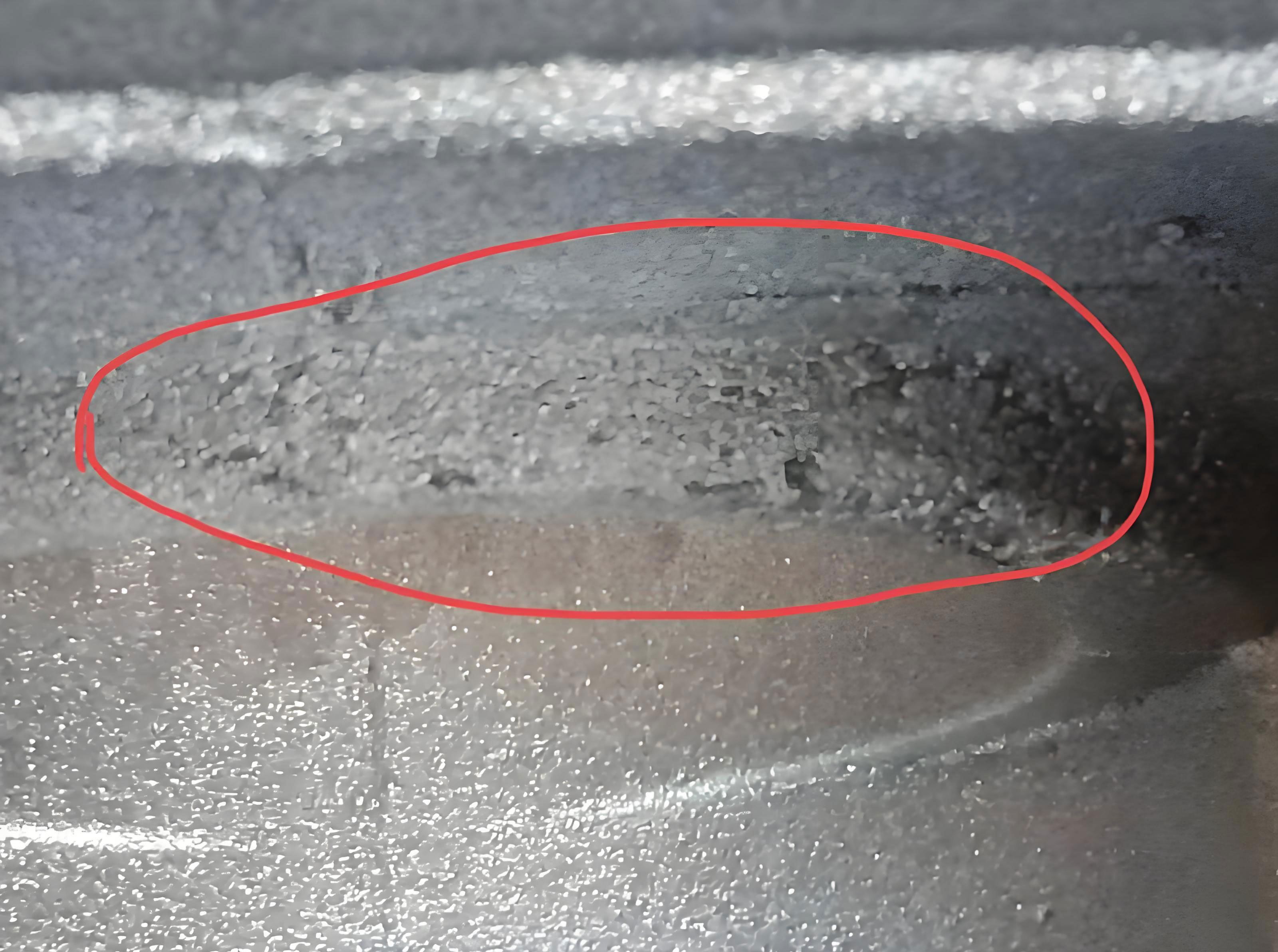
To understand the impact of molding materials on porosity in casting, it is crucial to examine the composition and behavior of common sand mixtures. Furan resin-bonded sands are widely used for their excellent dimensional accuracy and collapsibility, but they pose significant risks for gas-related defects. Furan resins typically contain nitrogen and water, both of which contribute to gas formation. The decomposition of resin involves complex reactions, including the breakdown of organic components and the release of water from condensation during curing. The gas evolution rate from furan resin is high, with approximately 80% of the total gas released within the first minute after pouring. This rapid gas generation can overwhelm the permeability of the mold, leading to gas entrapment and porosity in casting. Therefore, selecting and optimizing these materials is key to minimizing defects.
One effective strategy is to choose low-water-content furan resins. The water content in furan resins is often correlated with nitrogen content; higher nitrogen levels generally mean higher moisture. For aluminum casting, resins with water content below 5% are recommended to reduce the source of hydrogen from decomposition. The reaction of water with molten aluminum is particularly problematic, as it dissociates into hydrogen and oxygen, with the oxygen forming alumina that further drives hydrogen absorption. The overall reaction can be summarized as:
$$2Al + 3H_2O \rightarrow Al_2O_3 + 6H$$
This highlights how moisture in resins directly contributes to hydrogen pickup and subsequent porosity in casting. Additionally, using high-strength resins allows for reduced addition rates, typically between 0.9% to 1.1% by weight of sand, which lowers the total gas evolution. The gas generation per gram of resin can be quantified, with typical values ranging from 12 to 15 cm³/g at 850°C. By minimizing resin content, the overall gas pressure within the mold decreases, reducing the risk of gas penetration into the casting.
Another critical aspect is the application of specialized coatings to the mold surface. Coatings serve not only to improve surface finish but also to act as a barrier against gas infiltration. Research has shown that coatings with high-temperature integrity can significantly reduce gas permeability, effectively shielding the molten metal from mold gases. For instance, studies indicate that coated molds can reduce gas penetration by over 30% compared to uncoated ones. To enhance this shielding effect, coatings should contain minimal organic binders—preferably less than 2%—to avoid gas generation from the coating itself. Instead, inorganic binders and refractory fillers with high density and thermal conductivity are preferred. These materials promote faster heat transfer, accelerating solidification and reducing the time available for gas absorption, thereby mitigating porosity in casting.
The choice of refractory fillers in coatings influences both barrier properties and thermal behavior. Dense fillers improve thermal conductivity, which helps in rapid cooling and reduces gas solubility in the solidifying metal. Below is a table comparing the densities of common refractory materials used in coatings for aluminum casting:
| Material Name | Density (g/cm³) |
|---|---|
| Quartz Powder | 1.8 |
| Magnesite Powder | 2.5 |
| Silicon Carbide Powder | 3.0 |
| Alumina Powder | 4.0 |
| Zircon Flour | 4.5 |
As seen, zircon flour has the highest density, making it advantageous for enhancing thermal conductivity and barrier effectiveness. Additionally, the base sand used in molds affects coating performance. Quartz sand, commonly used in foundries, undergoes phase transformations at elevated temperatures, leading to volumetric expansions that can crack coatings and compromise their gas-blocking ability. For example, at 573°C, quartz transforms from β to α phase with a volume expansion of 0.45%, and at 870°C, it converts to α-tridymite with a 16% expansion. To mitigate this, blending quartz sand with 10–15% zircon sand or chromite sand, or pre-calcining quartz at 900°C to reduce expansion, can help maintain coating integrity and prevent gas ingress, thus controlling porosity in casting.
Beyond material selection, process parameters also interact with molding materials to influence porosity in casting. The permeability of the sand mold is a key factor; higher permeability allows gases to escape more easily, but it must be balanced against strength requirements. The gas pressure buildup in molds can be modeled using Darcy’s law for flow through porous media:
$$Q = \frac{k A \Delta P}{\mu L}$$
where Q is the gas flow rate, k is the permeability, A is the cross-sectional area, ΔP is the pressure gradient, μ is the gas viscosity, and L is the thickness. Optimizing sand grain size distribution and binder content can enhance permeability without sacrificing strength. Furthermore, the pouring temperature and rate affect gas solubility; lower pouring temperatures reduce hydrogen pickup but must be managed to avoid mistruns. Empirical studies suggest that for aluminum alloys, maintaining a pouring temperature within 50°C above the liquidus minimizes gas absorption while ensuring fluidity.
In addition to molding materials, metallurgical practices play a complementary role in combating porosity in casting. Degassing treatments, such as rotary impeller degassing or flux injection, can reduce hydrogen levels in the melt prior to pouring. The efficiency of these treatments can be expressed in terms of hydrogen removal rates. For example, rotary degassing systems can achieve over 70% reduction, lowering hydrogen content from 0.12–0.16 cm³/100g to 0.04–0.05 cm³/100g. Combining such melt treatments with optimized molding materials creates a synergistic effect, further minimizing the risk of porosity. However, even with thorough degassing, poor mold materials can reintroduce hydrogen, underscoring the importance of an integrated approach.
To quantify the impact of material choices on porosity in casting, statistical models and experimental data are invaluable. For instance, the relationship between resin content and gas pressure can be derived from gas evolution tests. The total gas volume V_g generated from a mold can be approximated as:
$$V_g = m_s \cdot w_r \cdot G_r$$
where m_s is the mass of sand, w_r is the weight percentage of resin, and G_r is the specific gas evolution of the resin. By reducing w_r, V_g decreases linearly, leading to lower gas pressures. Similarly, the effectiveness of coatings in reducing gas penetration can be modeled using diffusion equations. Fick’s first law describes the flux J of gas through a coating layer:
$$J = -D \frac{\partial C}{\partial x}$$
where D is the diffusion coefficient, C is gas concentration, and x is distance. Coatings with low D values, achieved through dense, impermeable structures, significantly reduce flux and protect against porosity in casting.
Case studies from industrial applications reinforce these principles. In one example, switching to a low-water furan resin (water content <5%) and applying a zircon-based coating reduced porosity defects in aluminum engine blocks by 60%. Measurements showed that hydrogen levels in castings decreased from 0.10 cm³/100g to 0.06 cm³/100g, aligning with improved mechanical properties. Another case involved using pre-calcined quartz sand blended with chromite, which minimized coating cracks and lowered gas-related scrap rates from 15% to under 5%. These outcomes highlight how tailored material selections directly enhance casting quality by addressing porosity in casting at its source.
Future advancements in molding materials promise even greater control over porosity in casting. Nanostructured coatings, for instance, offer superior barrier properties due to their fine pore structures. Research into bio-based binders with lower gas evolution is also underway, potentially reducing environmental impact while improving casting soundness. Additionally, real-time monitoring of gas pressures during pouring using sensors can provide feedback for adaptive process control, enabling dynamic adjustments to minimize defects. As these technologies mature, the foundry industry will move closer to zero-defect production, especially for critical aluminum components where porosity in casting is unacceptable.
In conclusion, porosity in casting is a multifaceted challenge that demands a holistic understanding of material science and process engineering. Through rational selection of molding materials—such as low-water furan resins, optimized sand blends, and high-performance coatings—foundries can significantly reduce gas-related defects in aluminum alloy castings. Key strategies include minimizing gas generation sources, enhancing mold permeability, and leveraging coatings as gas barriers. When combined with effective melt degassing and controlled pouring parameters, these measures form a robust defense against porosity. As we continue to innovate in foundry materials and methods, the goal of producing high-integrity, porosity-free castings becomes increasingly attainable, ensuring the reliability and performance of aluminum components across diverse industries.