
The development of high-integrity, thin-walled cast components, particularly for demanding applications involving friction and wear, presents significant challenges in foundry practice. Among various casting methods, sand casting remains a versatile and economically viable process for producing complex geometries, especially for low to medium volume production runs. This article details a comprehensive methodology for the process design, numerical simulation, and subsequent optimization of a ZL101A aluminum alloy rear cover frame manufactured via sand casting. The focus is on systematically addressing inherent defects such as shrinkage porosity and cavities, which are common in sand casting products with varying wall thicknesses, to achieve a robust and reliable manufacturing route.
The component in question is a rear cover frame subjected to high-intensity friction during service. Consequently, it demands high strength, excellent wear resistance, and a sound surface finish. The material selected for this application is ZL101A (equivalent to ZAlSi7MgA or A356.0), a heat-treatable Al-Si-Mg casting alloy known for its good castability, corrosion resistance, and favorable mechanical properties after solution and aging treatment. Its nominal chemical composition is crucial for understanding its solidification behavior.
| Element | Si | Mg | Ti | Al |
|---|---|---|---|---|
| Weight % | 6.5-7.5 | 0.25-0.45 | 0.08-0.20 | Balance |
The geometry of the rear cover frame, as a critical sand casting product, is characterized by its thin-walled and enclosed structure. Key dimensions are approximately 400 mm in length, 195 mm in width, and 125 mm in height. The wall thickness varies significantly, with a maximum of 6 mm and a minimum of 3.5 mm. This variation is a primary source of potential casting defects, as thicker sections solidify later than thinner ones, creating isolated hot spots prone to shrinkage. Furthermore, small internal features like 6 mm diameter holes and slots were deemed unsuitable for casting due to core-making complexity, potential for burn-in, and difficulties in achieving precision. These features were, therefore, designed to be machined post-casting. The target as-cast weight was approximately 3.52 kg, with a surface roughness requirement not exceeding Ra 6.3 μm.
Initial Sand Casting Process Design
The foundational step in creating any sand casting product is the establishment of a sound casting process. The design follows traditional principles, aiming to ensure complete filling, directional solidification towards feeding sources, and minimization of turbulence and slag entrapment.
Pouring Position and Parting Plane Selection: A critical decision involves orienting the casting within the mold. For this component, the largest flat surface (the bottom face) was selected as the parting plane. This choice simplifies mold manufacturing, core setting, and overall assembly. The pouring position was aligned with this parting plane, meaning the mold cavity is oriented with its largest dimension horizontally. This avoids the need for mold flipping after assembly and facilitates the placement of the gating system.
Gating System Design: A bottom-gating system was employed. This design promotes a calm, non-turbulent fill by introducing molten metal at the base of the mold cavity, allowing it to rise steadily. This minimizes oxide film formation and air entrainment, which is particularly important for aluminum alloys. The gating system consisted of a downsprue (vertical channel), horizontal runners, and ingates (gates connecting the runner to the cavity). The cross-sectional area ratios were designed based on the choke principle for a pressurized system: $$ \Sigma A_{sprue} : \Sigma A_{runner} : \Sigma A_{ingate} = 1 : 2 : 3.5 $$
Calculations yielded the following total areas:
$$ \Sigma A_{sprue} = 4.0 \, cm^2, \quad \Sigma A_{runner} = 8.0 \, cm^2, \quad \Sigma A_{ingate} = 14.0 \, cm^2 $$
The runner was designed with a trapezoidal cross-section split into two channels (each 4.0 cm²). Ten flat, rectangular ingates were used (each 1.4 cm²) to distribute metal flow evenly along the base of the casting. This careful design is essential for producing defect-free sand casting products.
Riser (Feeder) Design: To compensate for solidification shrinkage, risers are placed at locations expected to solidify last. Based on the component’s geometry, two types of risers were designed: larger cylindrical risers (Type 1: 50 mm diameter, 80 mm height) at the two ends of the frame and a smaller riser (Type 2: 30 mm diameter, 60 mm height) at the central top section. The initial belief was that these would provide adequate feed metal to the thicker sections.
Numerical Simulation of the Initial Process
Modern foundry practice heavily relies on numerical simulation to predict and eliminate defects before physical trials. The initial process design was modeled using dedicated casting simulation software (ViewCast). The 3D model, including the part, cores, gating, and risers, was discretized into approximately 2 million finite elements to balance accuracy and computational time. The process parameters were set as follows:
| Parameter | Value |
|---|---|
| Pouring Temperature | 650°C |
| Sand Mold Initial Temperature | 25°C |
| Alloy Material | ZL101A (A356) |
Filling Analysis: The simulation confirmed a stable filling sequence. Metal entered the mold cavity through the bottom ingates at approximately 1.5 seconds, filled the main cavity progressively from the bottom upwards, and completely filled the mold and risers by around 7.0 seconds. No visible signs of excessive turbulence, air entrapment, or cold shuts were predicted, validating the gating design for this sand casting product.
Solidification and Defect Prediction: The solidification analysis, however, revealed shortcomings in the feeding design. While the thin walls solidified rapidly, the thicker wall sections, particularly at the internal recesses and the top region far from the ingates, remained liquid longer. The simulation’s shrinkage porosity prediction module highlighted these areas as high-risk zones. The thermal gradient analysis showed that the existing risers, especially the smaller central one, did not maintain a sufficient liquid feed path to these isolated hot spots until the end of solidification. This resulted in the predicted formation of microporosity (shrinkage) in the thick sections, compromising the integrity of the sand casting product. The solidification time (t_s) for a section can be estimated by Chvorinov’s rule: $$ t_s = k \left( \frac{V}{A} \right)^n $$ where \( V \) is volume, \( A \) is cooling surface area, and \( k \) and \( n \) are constants dependent on mold material and casting conditions. The high \( V/A \) ratio (modulus) of the thick sections directly led to their prolonged solidification and associated shrinkage risk.
Process Optimization Strategy
The objective of optimization was to eliminate the predicted shrinkage defects by improving the directional solidification and the efficiency of the feeding system. The key insight was that the feeding distance of the standard risers was insufficient for the entire casting, a common issue in sand casting products with extended geometries.
The optimization focused on enhancing the performance of the central riser (Type 2):
- Conversion to an Insulating Riser: The standard riser was replaced with an insulating riser sleeve. This sleeve, typically made of exothermic or low-thermal-conductivity materials, reduces the heat loss rate from the riser, keeping the metal inside liquid for a significantly longer period. This extends its effective feeding range.
- Increase in Riser Size: The diameter of the central riser was increased by 20 mm (from 30 mm to 50 mm). This increases the volume of available feed metal and, more importantly, increases its modulus (\(V/A\)), delaying its solidification relative to the casting hot spot it is intended to feed. The riser sleeve thickness was set at 20 mm.
This combined approach ensures that the riser remains the last point to solidify, creating a strong thermal gradient from the casting towards the riser and enabling effective interdendritic feeding to compensate for shrinkage throughout the solidification of the sand casting product.
Simulation and Results of the Optimized Process
The modified 3D model with the insulated, enlarged riser was subjected to the same simulation protocol. The filling process remained equally stable. The solidification analysis, however, showed a marked improvement.
The modified thermal profile now demonstrated a clear directional solidification sequence: thin walls solidified first, followed progressively by the thicker sections, with the insulated riser solidifying last. The temperature gradient (\(G\)) and solidification rate (\(R\)) are critical parameters; effective feeding requires a high \(G/R\) ratio. The insulating riser effectively increased \(G\) towards itself. The shrinkage prediction model showed that the previously flagged critical areas in the thick walls were now free of defects. Any residual shrinkage porosity was confined entirely to the riser bodies themselves, which are subsequently removed, confirming the success of the optimization for this sand casting product.
| Aspect | Initial Process | Optimized Process |
|---|---|---|
| Filling Behavior | Stable, bottom-up fill (7.0 s) | Stable, bottom-up fill (~7.9 s) |
| Solidification Sequence | Partial directional solidification; hot spots in thick walls. | Clear directional solidification from casting to risers. |
| Predicted Shrinkage | Present in thick-walled sections of the casting. | Eliminated in casting; confined to risers. |
| Riser Efficiency | Low for central and upper sections. | High, due to insulation and increased size. |
Physical Validation and Mechanical Properties
To validate the simulation-based optimization, a production batch was manufactured using the finalized sand casting process. The practical implementation confirmed the simulation findings. The castings exhibited good surface finish without visible defects.
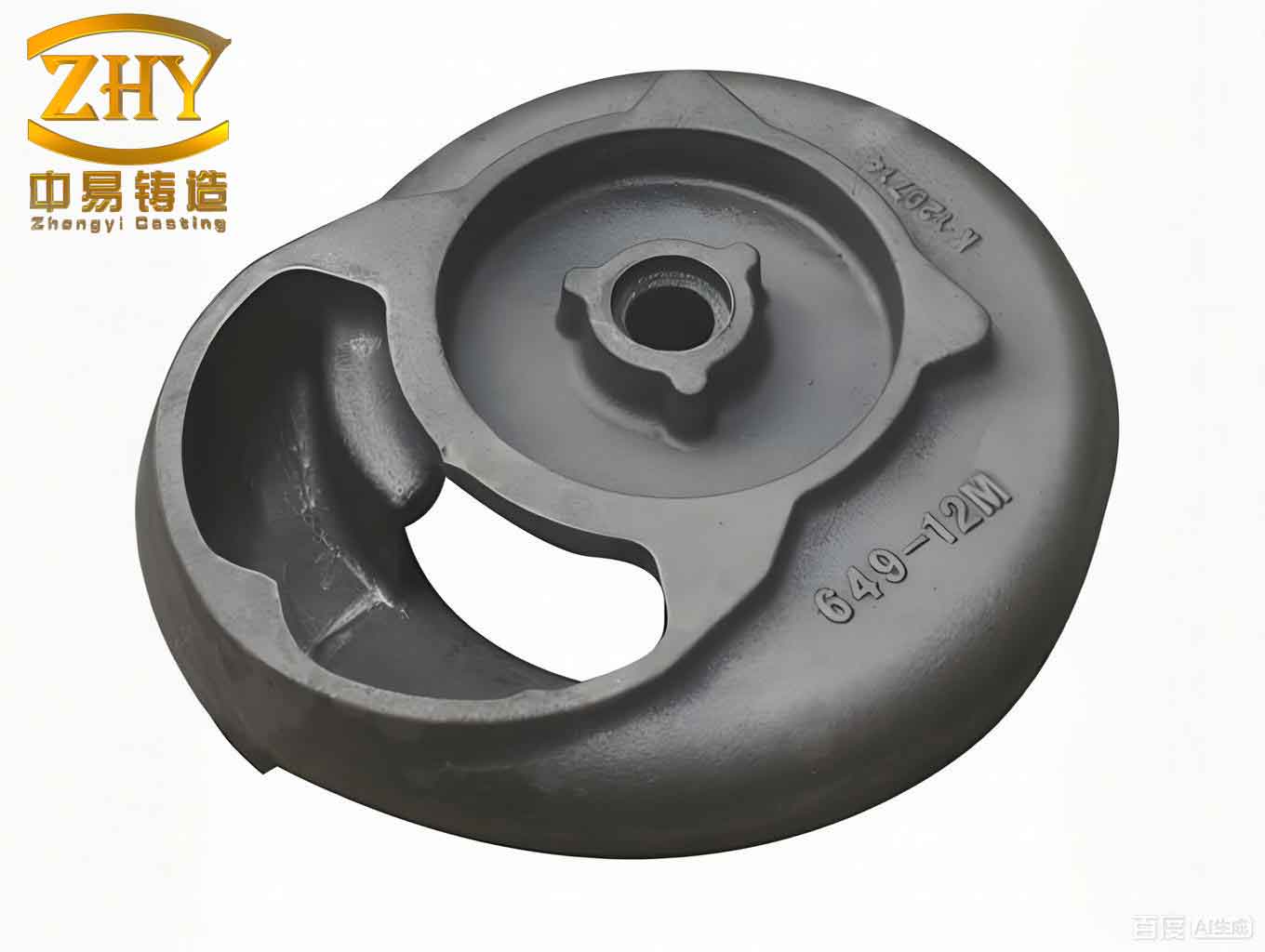
Non-destructive testing (X-ray inspection) on 18 castings revealed that 17 were sound internally, corresponding to a yield rate of approximately 94%. This represents a significant improvement over the anticipated high scrap rate from the initial non-optimized process. Samples extracted from representative castings were subjected to heat treatment (T6 condition: solution treatment, quenching, and artificial aging) and standard mechanical testing. The results consistently met or exceeded the typical requirements for ZL101A-T6 sand casting products.
| Test | Sample 1 | Sample 2 | Sample 3 | Typical Spec (A356-T6) |
|---|---|---|---|---|
| Tensile Strength (MPa) | 302 | 302 | 302 | >260 |
| Yield Strength (0.2% Offset, MPa) | — | — | — | >185 |
| Elongation (%) | 5.0 | 5.0 | 4.0 | >3.5 |
| Brinell Hardness (HBS) | 88.6 | 88.8 | 88.7 | >70 |
Conclusions and Broader Implications
This case study demonstrates a systematic and effective approach to designing and optimizing the manufacturing process for a complex thin-walled aluminum alloy sand casting product. The integration of traditional casting design principles with advanced numerical simulation proved instrumental. The initial design, while sound in terms of filling, failed to ensure adequate feeding for all sections of the casting. The simulation accurately pinpointed the locations and cause of potential shrinkage defects.
The optimization, focused on enhancing riser efficiency through insulation and size increase, directly addressed the root cause: insufficient thermal gradient and feeding distance. The final simulation predicted a sound casting, which was conclusively validated by physical production and testing. The successful outcome—high yield rate and compliant mechanical properties—highlights the economic and qualitative benefits of simulation-driven process development. It reduces the need for multiple costly and time-consuming trial casts, accelerates time-to-market, and ensures consistent quality in sand casting products.
The methodology is broadly applicable to other sand casting products, especially those with challenging geometry-driven solidification issues. Key generalizable lessons include:
- The critical importance of analyzing both filling and solidification behaviors.
- The effectiveness of insulating/ exothermic risers in extending feeding ranges in sand molds.
- The necessity of tailoring the riser modulus to be greater than that of the casting section it feeds: $$ M_{riser} > M_{casting} $$
- The value of using simulation not just for defect prediction, but as an interactive tool for evaluating “what-if” scenarios during process design.
This project underscores that producing high-quality, reliable sand casting products for demanding applications requires a synergistic blend of empirical knowledge, fundamental metallurgical principles, and modern computational tools.