
In our foundry practice, producing high-integrity shell castings has always been a significant challenge due to their complex geometries, thin walls, and stringent requirements for mechanical properties and pressure tightness. Traditional gravity casting methods often result in defects such as shrinkage porosity, gas pores, and inclusions, especially for tall, thin-walled shell structures. To address these issues, we embarked on a process experiment utilizing differential pressure casting principles to achieve riserless gating for shell castings. This approach not only enhances the quality of shell castings but also improves production efficiency and material yield.
The core of this experiment lies in leveraging the controlled pressure environment of differential pressure casting to facilitate sequential solidification and effective feeding without the need for conventional risers. By applying a counter-pressure during mold filling and solidification, the molten metal remains in a laminar flow state, minimizing turbulence and oxidation. Furthermore, the pressure field increases the solubility of gases in the alloy, reducing the formation of pinholes and shrinkage defects. This report details our comprehensive analysis,工艺 design, parameter optimization, and results for producing shell castings via this innovative method.
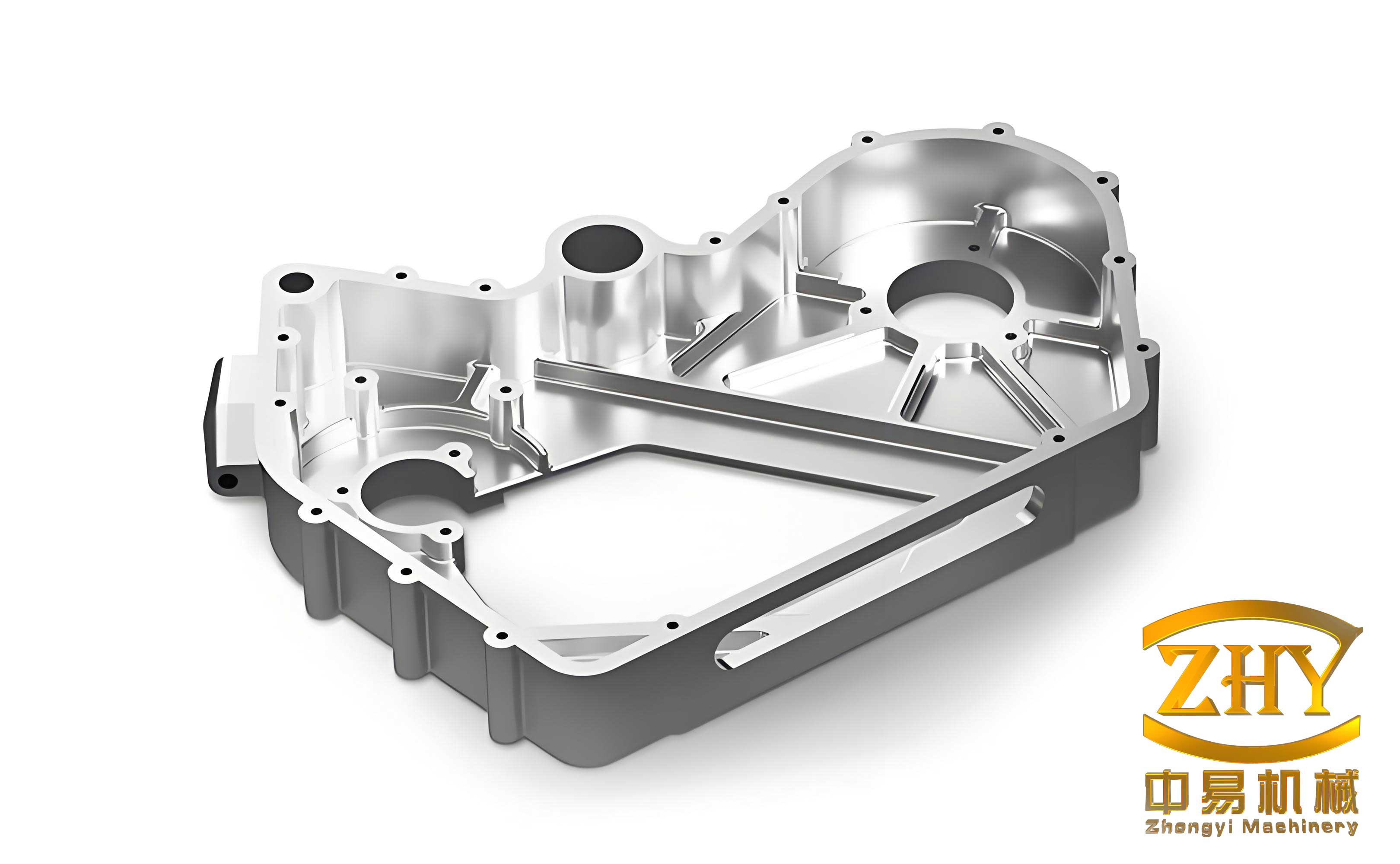
The shell castings in focus are characterized by their considerable height and thin-walled cylindrical structure. Key specifications include a weight of approximately 8.8 kg, a large-end diameter of 200 mm, a small-end diameter of 100 mm, and an average wall thickness of 5 mm. The internal cavity features multiple reinforcing ribs, and the casting must meet strict standards: the inner diameter is left un-machined, pinhole porosity must not exceed Grade 3 per relevant standards, and it must withstand an internal air pressure test of 15 MPa and an external water pressure test of 30 MPa. These demanding requirements, particularly for pressure tightness and minimal defects, necessitated a departure from conventional casting techniques.
Our initial attempts with gravity casting revealed significant limitations. When molten aluminum ascends through a riser tube to feed a traditional riser located at the top of the shell casting, the temperature drops considerably due to the height and heat loss to the mold. Additionally, the presence of a cope (top flask) creates edge chilling effects, causing the riser to be cooler than the lower sections of the shell casting. This temperature gradient inhibits effective feeding, rendering the riser almost useless for补缩. Consequently, defects like shrinkage cavities and porosity were prevalent. This led us to explore differential pressure casting for实现 riserless gating, where the entire process—from filling to solidification—occurs under a controlled pressure gradient, promoting dense, sound shell castings.
Analysis of Casting Process for Shell Castings
The geometry of the shell casting dictates a工艺 that ensures sequential solidification from the top (thin section) to the bottom (thick section). We determined that the optimal pouring position is with the large end down and connected to the gating system, while the small end is up without any riser. This orientation allows the casting to solidify layer by layer from top to bottom, with the thicker bottom section solidifying last. Under pressure, this sequential solidification enables continuous feeding from the bottom upward, compensating for solidification shrinkage throughout the process. To facilitate this, we adopted a slit gating system. Slit gates combine the advantages of top and bottom gating: they allow molten metal to fill the mold cavity smoothly from below while promoting favorable thermal distribution and feeding efficiency within the mold. To enhance the补缩 capability, the slit gates were designed to taper, becoming progressively thicker from top to bottom. This design encourages a steeper temperature gradient, reinforcing the desired solidification sequence.
The gating system must accommodate the characteristics of aluminum alloys: low density, high thermal conductivity, significant shrinkage, and susceptibility to oxidation and gas absorption. Therefore, the system must ensure rapid, tranquil filling with minimal turbulence and slag entrainment. We designed an open gating system where the cross-sectional areas increase from the lift tube to the slit gates. This design helps maintain平稳 flow and reduces secondary氧化. The system consists of a lift tube, a spherical slag trap at the top of the tube (to buffer flow and collect inclusions), four radially distributed horizontal runners (each fitted with a ceramic fiber filter), four vertical runners, and finally, the slit gates leading into the mold cavity. Four slit gates were used, evenly spaced around the circumference of the shell casting and positioned to avoid the thicker reinforcement ribs, preventing local overheating and associated porosity.
The number and dimensions of the slit gates are critical. Based on empirical formulas and the casting structure, we determined the parameters using the following relationships. The number of slit gates \( n \) is related to the casting perimeter \( L \) and the slit width \( b \):
$$ n = \frac{L}{b} $$
For our shell castings, with a perimeter \( L \) derived from the diameters and an initial slit width \( b \) of 5 mm at the thinnest point (tapering downward), we calculated \( n = 4 \). The cross-sectional area of the vertical runner \( A_{\text{vertical}} \) is sized based on the total weight of the casting (including gating, but without riser in this riserless design) and other factors. The formula used is:
$$ A_{\text{vertical}} = \frac{G}{0.31 \mu t \sqrt{H}} $$
where \( G \) is the total weight of the casting (for riserless design, taken as 1.2 to 1.5 times the casting weight to account for gating), \( \mu \) is the flow resistance coefficient of the alloy (for aluminum at 720°C, \( \mu \approx 0.5 \)), \( t \) is the pouring time in seconds, and \( H \) is the effective pouring head height. The pouring time \( t \) is estimated as:
$$ t = S \sqrt{G} $$
where \( S \) is a coefficient typically between 1.5 and 2.5 for thin-walled castings. The open gating system ensures that the metal velocity is controlled, preventing turbulence while allowing rapid filling to minimize temperature loss during the long flow path required for these tall shell castings.
Mold工艺 and Core Design
Given the height of the shell castings, a single flask mold would be impractical for molding and finishing. Therefore, the external mold was split into three flasks: drag, intermediate, and cope. All external mold parts were made with green sand for ease of use. The flasks were aligned using定位 pins to ensure dimensional accuracy, particularly for maintaining uniform wall thickness.
The internal cavity of the shell casting is formed by a complex core. Due to its height and intricate shape, the core box was segmented into three sections. A metal core reinforcement was placed inside to provide structural strength. The cores were made with dry sand, baked in an oven at 250–300°C to achieve adequate strength and low gas evolution. Precise alignment between core segments was ensured via dedicated pins.
Process Parameters and Optimization
The heart of differential pressure casting is the precise control of pressure differentials to achieve optimal filling speed and solidification conditions. In our setup, we use a减压法 (pressure reduction method) for filling. The working pressure \( P_w \) and the mold cavity counter-pressure \( P_c \) are adjustable. For a given shell casting height, there exists an ideal pressure difference \( \Delta P \) that yields the best filling velocity \( v_{\text{fill}} \). The relationship is derived from fluid dynamics principles:
$$ \Delta P = \rho g h + \xi \frac{\rho v_{\text{fill}}^2}{2} $$
where \( \rho \) is the density of the molten aluminum (approximately 2400 kg/m³), \( g \) is gravitational acceleration, \( h \) is the height of liquid metal rise, and \( \xi \) is a resistance coefficient accounting for friction and form losses in the gating system (we used \( \xi \approx 2.5 \) based on system geometry). Rearranging for filling velocity:
$$ v_{\text{fill}} = \sqrt{\frac{2(\Delta P – \rho g h)}{\xi \rho}} $$
The filling time \( t_{\text{fill}} \) is then:
$$ t_{\text{fill}} = \frac{h}{v_{\text{fill}}} $$
It is crucial that \( v_{\text{fill}} \) is neither too slow nor too fast. Too slow, and the metal may lose fluidity before completely filling the thin sections, leading to misruns. Too fast, and turbulent flow can cause splashing, oxide entrainment, and defect formation. For our shell castings, we aimed for a filling velocity in the range of 20–50 mm/s, depending on specific dimensions.
We conducted trials with varying parameters, and the recorded data for different shell casting batches are summarized in Table 1 below. Note that the pouring temperature in differential pressure casting is typically 30–50°C lower than in gravity casting, which helps reduce shrinkage and gas absorption.
| Casting ID | Pouring Temperature (°C) | Inlet Pressure (MPa) | Total Pressure Difference, ΔP (MPa) | Working Pressure, P_w (MPa) | Filling Velocity, v_fill (mm/s) | Pressure Holding Time (s) |
|---|---|---|---|---|---|---|
| SC-01 | 710 | 0.45 | 0.25 | 0.60 | 28 | 120 |
| SC-02 | 705 | 0.48 | 0.27 | 0.62 | 32 | 130 |
| SC-03 | 715 | 0.42 | 0.23 | 0.58 | 25 | 110 |
| SC-04 | 700 | 0.50 | 0.30 | 0.65 | 35 | 140 |
After the mold cavity is filled, pressure is maintained for a specified holding time (typically 100–150 seconds) to ensure complete solidification under pressure. This pressure-holding stage is vital for enhancing feeding and reducing microporosity in shell castings. Subsequently, the pressure is released, and the mold is removed from the differential pressure casting equipment.
Theoretical Analysis of Riserless Feasibility for Shell Castings
The feasibility of producing sound shell castings without risers hinges on managing solidification shrinkage through controlled sequential solidification and pressure-assisted feeding. For aluminum alloys, which have a narrow freezing range and high volumetric shrinkage, the total shrinkage volume \( V_{\text{shrinkage}} \) can be expressed as:
$$ V_{\text{shrinkage}} = V_{\text{liquid}} + V_{\text{solidification}} + V_{\text{solid}} $$
More specifically, a detailed model considers:
$$ V_{\text{shrinkage}} = \beta_{\text{liquid}} (T_{\text{pour}} – T_{\text{liquidus}}) + \beta_{\text{solidification}} + \beta_{\text{solid}} (T_{\text{solidus}} – T_{\text{room}}) $$
where \( \beta_{\text{liquid}} \), \( \beta_{\text{solidification}} \), and \( \beta_{\text{solid}} \) are coefficients for liquid contraction,凝固收缩, and solid contraction, respectively; \( T_{\text{pour}} \) is pouring temperature, \( T_{\text{liquidus}} \) and \( T_{\text{solidus}} \) are liquidus and solidus temperatures. In differential pressure casting, \( T_{\text{pour}} \) can be lowered, reducing \( V_{\text{shrinkage}} \). Moreover, the pressure \( P \) applied during solidification effectively increases the feeding pressure, modifying the shrinkage equation to account for pressure-enhanced补缩. The pressure contribution can be modeled as an additional term that reduces the net shrinkage volume:
$$ V_{\text{net}} = V_{\text{shrinkage}} – \frac{P \cdot A_{\text{feeding}}}{\kappa} $$
where \( A_{\text{feeding}} \) is the effective feeding area and \( \kappa \) is a material constant related to compressibility. When sequential solidification is well-established, and the pressure is sufficient, \( V_{\text{net}} \) can approach zero, enabling riserless production of dense shell castings.
Furthermore, the geometry of our shell castings supports this approach. With the thick section at the bottom and the gating there, a positive temperature gradient is maintained. The absence of a top riser eliminates the issue of premature freezing at the riser neck, which often occurs in gravity casting due to heat loss to the cope. Under pressure, the entire casting remains “pressurized,” forcing liquid metal to feed shrinkage throughout solidification. Additionally, the increased gas solubility under pressure reduces pore formation, complementing the shrinkage control.
Defect Reduction Mechanism
Differential pressure casting significantly mitigates common defects in shell castings. The persistent pressure field during filling and solidification accelerates crystallization, refines grain structure, and enhances feeding. The suppression of turbulent flow minimizes oxide film entrainment and gas aspiration. The increased pressure also promotes dissolution of hydrogen and other gases, lowering the propensity for pinholes and gas porosity. Moreover, the pressure can induce slight plastic deformation in the mushy zone, helping to close interdendritic shrinkage pores. These combined effects yield shell castings with superior metallurgical integrity.
Experimental Results and Comparative Analysis
We compared shell castings produced via differential pressure casting (DPC) with those from conventional gravity casting (GC). The evaluation covered chemical composition, microstructure, mechanical properties, and economic indicators.
Chemical Composition: All castings met the specification requirements for the aluminum alloy (similar to ZL114A or A357 type).
Microstructure: Microscopic examination revealed a stark contrast. DPC shell castings exhibited a fine, equiaxed grain structure with no visible pinholes or shrinkage porosity. In contrast, GC shell castings showed a coarser structure with dendrite arms and Grade 2-3 pinhole porosity per ASTM E505, along with localized micro-shrinkage. The典型 microstructures are summarized: DPC structure consists of fine α-Al + eutectic Si uniformly distributed; GC structure shows larger α-Al dendrites and clustered eutectic Si.
Mechanical Properties: After standard T6 heat treatment (solution treatment and aging), tensile tests and hardness measurements were conducted. The results are presented in Table 2.
| Property | Differential Pressure Casting (DPC) | Gravity Casting (GC) |
|---|---|---|
| Tensile Strength, σ_b (MPa) | 345 ± 10 | 295 ± 15 |
| Elongation, δ (%) | 8.5 ± 1.0 | 4.5 ± 1.5 |
| Hardness, HB | 105 ± 5 | 90 ± 8 |
The DPC shell castings demonstrate markedly higher strength, ductility, and hardness, attributable to their denser microstructure and reduced defect content.
Economic and工艺 Indicators: Key production metrics were also compared, as shown in Table 3. The elimination of risers in DPC directly improves yield and reduces machining allowance due to better dimensional stability.
| Indicator | Gravity Casting (with Riser) | Differential Pressure Casting (Riserless) |
|---|---|---|
| Casting Weight (kg) | 8.8 | 8.8 |
| Riser Weight (kg) | 3.5 | 0.0 |
| Process Yield (%) | 71.5 | 100 (of casting weight, gating extra) |
| Average Machining Allowance (mm) | 3.0 | 2.0 |
Note: Process yield for DPC is calculated based on casting weight versus total metal poured (including gating), which was about 12 kg, giving a yield of approximately 73%—similar to GC but without the riser removal step and with superior quality. The真正的 gain is in the quality and reduced scrap rate.
Conclusion
Through systematic工艺 experimentation and analysis, we have successfully demonstrated that differential pressure casting enables the production of high-quality shell castings without the need for conventional risers. By designing a slit gating system that promotes sequential solidification and optimizing pressure parameters to control filling velocity and solidification pressure, we achieve sound, dense shell castings that meet stringent performance criteria. The elimination of risers simplifies mold design, improves material utilization, and reduces finishing labor. The comparative data unequivocally shows that DPC shell castings possess superior microstructure, mechanical properties, and pressure tightness compared to those made by gravity casting. This methodology is particularly advantageous for complex, thin-walled shell castings used in critical applications where reliability and weight savings are paramount. Future work may focus on further optimizing the gating geometry and pressure profiles for even larger or more intricate shell castings, as well as integrating simulation tools to predict and control the process with greater precision.