
In the realm of equipment manufacturing, machine tools stand as pivotal products, widely adopted across various industries for mechanical machining. As a foundry specializing in machine tool castings, which constitute over 60% of the total weight of a machine tool, we recognize that the quality of our castings directly impacts the overall performance and reliability of the final machine. Our clients, often machine tool manufacturers, have emphasized to us, “Do not think you are merely producing castings; in essence, you are crafting machine tools.” This perspective underscores that our customers view us as an integral part of their supply chain. Therefore, as a foundry dedicated to machine tool castings, we must approach product quality from the standpoint of manufacturing the entire machine tool. This article delves into our practices for producing high-quality machine tool castings, covering technical aspects, management strategies, and future outlooks, with a focus on ensuring excellence in every machine tool casting we produce.
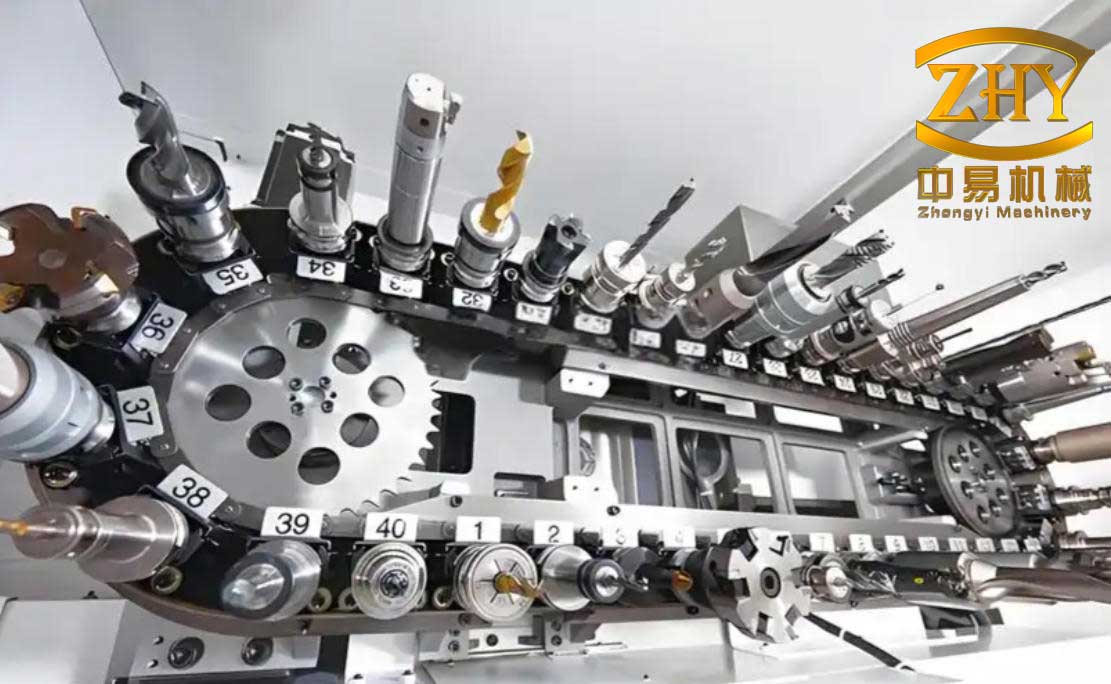
The journey to superior machine tool castings begins with advanced production technologies. Over the years, we have invested heavily in refining our processes to meet the stringent demands of global markets. The adoption of furan resin self-hardening sand (resin sand) technology since the late 1980s has been a game-changer. This process, known for its precision, high mold strength, and operational simplicity, aligns perfectly with our multi-variety, small-batch production characteristics. The resin sand process enhances the surface finish, internal quality, and dimensional accuracy of machine tool castings, forming the bedrock of our export-oriented strategy. Below, we outline key technological enhancements that have propelled our machine tool casting quality to new heights.
First, the design of casting processes tailored to resin sand and the craftsmanship of wooden patterns are critical. Resin sand offers high precision and strength but has poor yield and thermal conductivity. Thus, process parameters must be optimized based on these characteristics and the specific features of the machine tool casting, such as wall thickness, material, and geometry. Through decades of experience, we have developed a comprehensive set of guidelines for resin sand casting process design. These include principles for selecting parameters like core print clearance, draft angles, parting line allowances, and distortion compensation. Particularly, the gating system design—its form, dimensions, and placement—is meticulously regulated to minimize defects. For instance, the gating ratio for a typical machine tool casting can be expressed as:
$$ A_g : A_r : A_c = 1 : 1.2 : 1.5 $$
where \(A_g\) is the gate area, \(A_r\) is the runner area, and \(A_c\) is the choke area. This ratio ensures smooth metal flow and reduces turbulence. Additionally, wooden pattern quality is paramount; we enforce strict standards on material selection, dimensional accuracy, and assembly to ensure high-precision machine tool castings. A summary of key process parameters is presented in Table 1.
| Parameter | Typical Range | Influence on Machine Tool Casting Quality |
|---|---|---|
| Resin Addition | 0.6% – 0.8% of sand weight | Affects mold strength, gas evolution, and surface finish; lower amounts reduce defects. |
| Catalyst Ratio | High-low blend adjusted via temperature | Ensures consistent strip time and optimal strength for machine tool castings. |
| Draft Angle | 1° – 3° depending on geometry | Facilitates pattern removal without damaging the mold of the machine tool casting. |
| Core Print Clearance | 0.5 mm – 2.0 mm | Prevents misalignment and ensures dimensional accuracy in machine tool castings. |
| Gating System Design | Based on modulus calculations | Controls filling and solidification to minimize shrinkage in machine tool castings. |
Second, the integration of efficient equipment like mobile mixers and intelligent resin-catalyst systems has streamlined production. Our 20-ton/hour rail-mounted mobile mixer enhances flexibility and productivity across a 1,000-square-meter molding area, crucial for handling diverse machine tool casting orders. The intelligent additive system dynamically adjusts catalyst blends based on ambient and sand temperatures, optimizing strip times and resin usage. This system minimizes resin addition to an average of 0.7% of sand weight, with some machine tool castings achieved at 0.6%. Lower resin content improves sand flowability, reduces gas defects, and aids regeneration, with reclaimed sand loss on ignition (L.O.I.) maintained at low levels. The relationship between resin addition and defect rate can be modeled as:
$$ D = k \cdot R^2 + c $$
where \(D\) is the defect rate per batch of machine tool castings, \(R\) is the resin addition percentage, \(k\) is a process constant, and \(c\) is a baseline defect rate. By targeting lower \(R\), we enhance the quality of machine tool castings.
Third, coating application via flow coating technology has elevated the appearance of machine tool castings. For resin sand molds, coatings are essential to prevent metal penetration and improve surface finish. We utilize fast-drying alcohol-based coatings applied through a flow-coating system, supported by a custom-designed adjustable dual-chain tilting crane for handling molds ranging from 1000 mm × 1000 mm to 5000 mm × 3500 mm. This ensures uniform coating without brush marks, directly benefiting the aesthetic quality of machine tool castings. The coating thickness \(t\) for optimal performance is given by:
$$ t = \frac{\mu \cdot Q}{A \cdot \rho} $$
where \(\mu\) is the coating viscosity, \(Q\) is the flow rate, \(A\) is the surface area of the machine tool casting mold, and \(\rho\) is the coating density. Consistent \(t\) is vital for defect-free machine tool castings.
Fourth, high-quality molten metal and filtration techniques are indispensable. Over 60% of our machine tool castings are gray iron, melted in cupolas equipped with automated charging, weighing, and computer-controlled systems. Since 2000, oxygen enrichment has boosted melting rates and iron quality, with tapping temperatures stabilized at 1510–1530°C. We employ filtration in gating systems to remove inclusions, reducing defects attributable to metal quality. The filtration efficiency \(E\) for a machine tool casting can be expressed as:
$$ E = 1 – \frac{C_f}{C_i} $$
where \(C_i\) and \(C_f\) are inclusion concentrations before and after filtration, respectively. High \(E\) values correlate with superior internal integrity in machine tool castings. Our composition control is aided by advanced equipment like carbon equivalent analyzers and vacuum optical emission spectrometers, ensuring consistent chemistry for machine tool castings. A typical composition range for gray iron machine tool castings is shown in Table 2.
| Element | Range (wt%) | Role in Machine Tool Casting Quality |
|---|---|---|
| Carbon | 3.2 – 3.6 | Enhances fluidity and reduces shrinkage in machine tool castings. |
| Silicon | 1.8 – 2.4 | Promotes graphitization and strength in machine tool castings. |
| Manganese | 0.6 – 1.0 | Improves hardness and wear resistance of machine tool castings. |
| Phosphorus | < 0.15 | Minimized to prevent brittleness in machine tool castings. |
| Sulfur | < 0.12 | Controlled to avoid impaired machinability of machine tool castings. |
Fifth, meticulous finishing, powerful shot blasting, and precise heat treatment are crucial post-processing steps. We allocate significant personnel to cleaning, using specialized tools to remove fins and gates from complex machine tool castings. Our six shot blasting chambers, including large-scale suspended units, ensure thorough cleaning and reveal near-surface defects, enhancing the reliability of machine tool castings. Additionally, a 30-ton fuel-fired heat treatment furnace with six-point temperature control and computer automation performs stress-relief annealing, critical for dimensional stability in large machine tool castings. The annealing cycle for a machine tool casting typically follows:
$$ T(t) = T_0 + (T_f – T_0) \cdot \left(1 – e^{-t/\tau}\right) $$
where \(T(t)\) is the temperature at time \(t\), \(T_0\) is initial temperature, \(T_f\) is target temperature, and \(\tau\) is the time constant. Controlled cycles minimize residual stresses in machine tool castings.
Sixth, comprehensive inspection capabilities permeate our production chain. We utilize chemical analyzers, mechanical testers, sand testing equipment, metallographic microscopes, and non-destructive testing devices to validate every machine tool casting. Advanced tools like spectrometers and rapid spheroidization detectors enable real-time adjustments, ensuring each machine tool casting meets specifications. The quality index \(Q_i\) for a batch of machine tool castings is computed as:
$$ Q_i = \sum_{j=1}^{n} w_j \cdot S_j $$
where \(w_j\) are weights assigned to attributes (e.g., dimensional accuracy, surface finish, mechanical properties), and \(S_j\) are scores based on inspections. High \(Q_i\) values denote premium machine tool castings.
Strict adherence to process protocols is another cornerstone. We treat process specifications as internal laws, mandating compliance from workers to managers. This culture ensures consistency; if issues arise, we refine the processes rather than blaming execution. For example, tight control of pouring temperatures demands precise melting, while rigorous molding standards drive diligent sand mixing. This approach guarantees that high-quality machine tool castings are reproducible, regardless of personnel changes. The defect reduction over time for machine tool castings can be modeled by a learning curve:
$$ Y = a \cdot X^{-b} $$
where \(Y\) is the defect rate per unit, \(X\) is cumulative production volume of machine tool castings, \(a\) is the initial defect rate, and \(b\) is the learning coefficient. Our continuous improvement yields a steep curve for machine tool castings.
Beyond technology, management plays a vital role in sustaining quality. We focus on practical measures that bolster competitiveness and align with market dynamics. Firstly, fostering a spirit of dedication and elevating overall workforce competence are priorities. People are the primary productive force; advanced tech and equipment only translate into output through human effort. We engage employees through discussions on market realities and corporate goals, linking personal interests to company prosperity. This cultivates a sense of ownership and responsibility toward producing exceptional machine tool castings. Regular training programs in casting techniques and management skills build a skilled team adept at handling complex machine tool casting projects. Moreover, established rules covering labor, attendance, process discipline, and ethical conduct create a disciplined environment conducive to quality machine tool castings.
Secondly, adopting modern management tools enhances operational efficiency. We have implemented an ERP system integrating contract management, sales, production, quality control, cost, finance, payroll, and human resources. This network-based platform standardizes processes, improves accuracy, and elevates management proficiency for machine tool casting operations. Additionally, computer simulation software assists in process design for intricate machine tool castings, shortening trial cycles and conserving resources. The simulation accuracy for a machine tool casting process is quantified as:
$$ \text{Accuracy} = 1 – \frac{|P_s – P_a|}{P_a} $$
where \(P_s\) is simulated parameter (e.g., solidification time), and \(P_a\) is actual measured value. High accuracy reduces development costs for new machine tool castings.
Thirdly, rigorous quality management underpinned by ISO 9000 standards deepens our commitment to excellence. We view ISO 9000 as a foundation for total quality management, not an endpoint. It drives continuous refinement, aligning with international norms and boosting competitiveness for machine tool castings. Our quality management system emphasizes preventive actions and customer-centricity, ensuring every machine tool casting aligns with client expectations. A summary of our management framework is in Table 3.
| Management Aspect | Key Practices | Impact on Machine Tool Casting Production |
|---|---|---|
| Human Resources | Training, motivation, discipline | Enhances skill levels and consistency in machine tool casting processes. |
| Technology Integration | ERP, simulation, automation | Improves precision and efficiency in manufacturing machine tool castings. |
| Quality Systems | ISO 9000, audits, feedback loops | Ensures traceability and defect reduction for machine tool castings. |
| Customer Focus | Rapid response, service quality | Builds trust and long-term partnerships for machine tool casting orders. |
Looking ahead, we envision several strategic directions to further advance our machine tool casting capabilities. First, persistent technological innovation is essential. In a competitive landscape, embracing new processes, materials, and techniques will fortify our position. We plan to explore advanced molding methods and digital twins for machine tool castings, optimizing parameters like feeding efficiency. The feeding efficiency \(F_e\) for a machine tool casting can be calculated as:
$$ F_e = \frac{V_f}{V_c} \times 100\% $$
where \(V_f\) is the volume of feed metal effectively used, and \(V_c\) is the total casting volume. Maximizing \(F_e\) reduces waste and improves soundness in machine tool castings.
Second, product structure adjustment will cater to evolving global demands. We aim to expand exports for both iron and steel machine tool castings, targeting niches that value high precision and durability. This involves customizing alloys and designs for specific machine tool applications, enhancing the versatility of our machine tool castings.
Third, strengthening quality management and customer service is paramount. Market-driven quality extends beyond production to encompass responsiveness and support. We are establishing robust feedback mechanisms to address concerns swiftly, ensuring that every machine tool casting delivered meets or exceeds expectations. The customer satisfaction index \(CSI\) for machine tool castings is derived from:
$$ CSI = \frac{1}{n} \sum_{i=1}^{n} \left( \alpha \cdot Q_i + \beta \cdot D_i + \gamma \cdot S_i \right) $$
where \(Q_i\) is quality rating, \(D_i\) is delivery performance, \(S_i\) is service rating, and \(\alpha, \beta, \gamma\) are weighting factors. High CSI values reinforce our reputation for premium machine tool castings.
Fourth, reinforcing management systems through制度化 (institutionalization) and accountability is crucial. We are moving beyond paperwork to ensure that roles, responsibilities, and work quality are consistently monitored. By embedding ISO 9000 principles into daily operations, we aim to eliminate subjective decision-making and foster a data-driven culture for machine tool casting production.
Fifth, embracing a people-centric philosophy to attract and retain talent will sustain our growth. The competition for skilled professionals is intense; we invest in education and training to nurture in-house expertise. Through incentives and a supportive environment, we strive to maintain a cohesive team dedicated to advancing machine tool casting technology.
In conclusion, producing high-quality machine tool castings necessitates a holistic approach. We must uphold a market-oriented mindset, prioritizing quality and profitability. Leveraging技术进步 (technological progress) through appropriate and advanced casting techniques is imperative for upgrading equipment and processes. Effective management of the entire machine tool casting production cycle, coupled with全员质量意识 (company-wide quality awareness), ensures consistent output. Furthermore, establishing and rigorously implementing a quality management system is non-negotiable for enduring success. By continuously reforming, focusing inward, honing our capabilities, and emphasizing quality and信誉 (credibility), we can navigate market challenges and deliver superior machine tool castings that empower our clients’ machinery. The future of machine tool casting lies in innovation, discipline, and unwavering commitment to excellence—a path we are steadfastly pursuing to meet the evolving demands of global industry.