
In the realm of high-end machine tools, the performance and longevity of the equipment are intrinsically tied to the quality of its foundational casting parts. Among these, the machine table is a critical component. Its strength, rigidity, hardness, and the level of residual stresses within the casting directly influence the machine’s ability to maintain machining accuracy over time. Therefore, producing a flawless table casting part is a significant challenge and a top priority for any foundry serving this demanding sector. This narrative details our first-hand experience in tackling the persistent defects plaguing the production of a large-scale CNC gantry machine table, sharing the iterative learning and practical solutions that led to success.
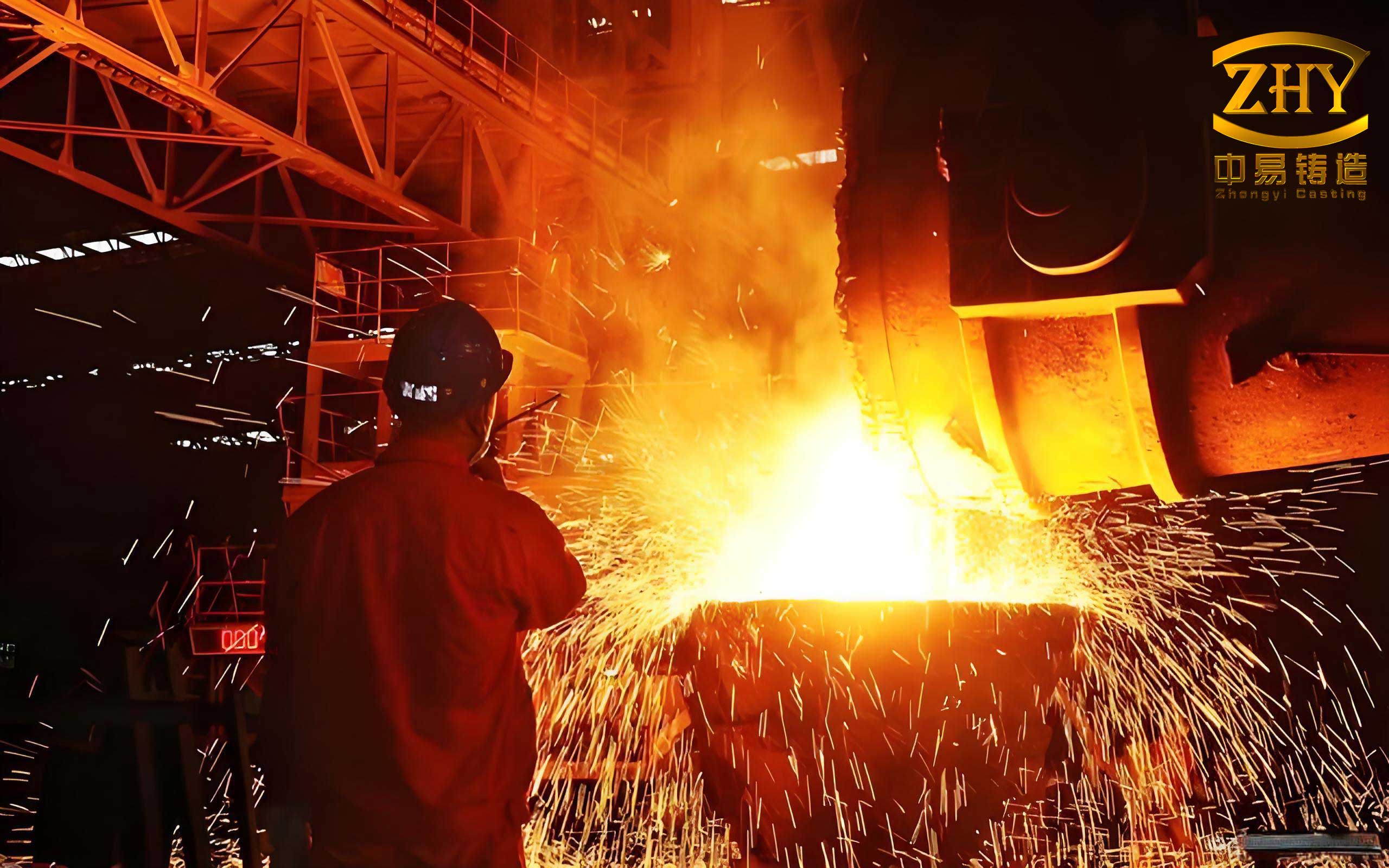
The casting part in question was substantial, with overall dimensions of 3,020 mm in length, 1,520 mm in width, and 260 mm in height, yielding an approximate weight of 3,100 kg. The material specification was gray cast iron, Grade HT300, with a required hardness range of 180 to 200 HBW. Dimensional tolerances were to adhere to a stringent CT11 grade. The primary challenges manifested as gas pores and slag inclusions on the critical working surface, shrinkage porosity at the base of the T-slots (often discovered only after costly machining), and fissure-like nitrogen pores on the thick slide rail sections. Our initial production batch of 31 pieces revealed a concerning defect rate of 16.1%, as summarized in the table below.
| Defect Type | Location | Quantity (pcs) | Defect Rate (%) |
|---|---|---|---|
| Blowholes | Table Working Surface | 2 | 6.44 |
| Slag Inclusions | Table Working Surface | 1 | 3.22 |
| Shrinkage Porosity | T-slot Bottoms | 1 | 3.22 |
| Fissure-like Nitrogen Pores | Slide Rail Surfaces | 1 | 3.22 |
| Total Defective Castings | 5 | 16.1 |
Initial Foundry Methodology and Setup
The production utilized a no-bake furan resin sand process with hand molding. Melting was conducted in a medium-frequency induction furnace, employing a synthetic cast iron approach where steel scrap is the primary charge material, with carbon and silicon levels adjusted using high-quality additives. The initial casting process design was conceived with the following key aspects:
1. Molding and Gating System Design: To ensure the highest quality on the T-slotted working face, it was positioned facing downward in the drag. The entire pattern was placed in the cope, necessitating a core assembly suspended from the top flask—a “hanging core” technique. The gating system was designed as a bottom-feeding arrangement to promote calm filling. It featured a U-shaped runner bar with ingates symmetrically distributed on both sides and a central sprue. Ceramic filters were placed between the runner and ingates to trap slag. The cross-sectional area ratio was: Total Ingate Area : Total Runner Area : Sprue Area = 1 : 1.3 : 1.1, with the choke at the ingates. Multiple flat vents were placed on top of bosses and rib intersections in the cope to aid in air evacuation.
2. Core and Mold Making: Cores for the complex underside geometry were made in three large sections. Reinforcement grids and adequate venting channels (using baked sand ropes) were incorporated within them. During molding, wooden pegs were placed at designated spots in the cope to create both vent holes and access ports for the wires used to suspend the heavy core assembly during closing.
3. Melting and Pouring Parameters: The initial chemical composition target for the molten iron was focused on achieving the required strength:
$$C: 3.05-3.15\%, \quad Si: 1.60-1.70\%, \quad Mn: 0.8-1.0\%, \quad P<0.05\%, \quad S<0.10\%$$
Micro-alloying elements like Antimony (Sb) and Tin (Sn) were added to promote a uniform pearlitic matrix and enhance tensile strength. Inoculation was performed at the furnace spout using a Ca-Ba-Si inoculant. A secondary stream inoculation was applied during pouring. The target pouring temperature range was 1,380 – 1,400 °C.
Defect Diagnosis and Systematic Countermeasures
The feedback from the machine shop provided clear targets for our improvement campaign. We addressed each defect type through a cycle of root-cause analysis, computer simulation, and practical process modification.
1. Eliminating Surface Blowholes and Slag Inclusions
Problem Analysis: The surface defects on the working plane were primarily attributed to two factors. First, operational inconsistency during core coating: when spraying the alcohol-based zirconia coating, the lower sections of the core assembly were subjected to prolonged solvent penetration. Incomplete burn-off and drying before pouring could lead to gaseous decomposition products infiltrating the solidifying metal. Second, and more critically, the initial symmetric gating design caused two streams of metal to enter from the long sides and meet in the middle. This confluence created turbulence and a cold, oxidized flow front that moved towards the far ends of the mold cavity. As the metal velocity decreased and temperature dropped at these endpoints, entrapped slag and gas bubbles failed to float out, resulting in localized defects.
Corrective Actions: We standardized and intensified the drying procedure after coating, using torches to ensure complete solvent removal from all core surfaces. The major change, however, was a complete redesign of the gating system. We shifted from a dual-side entry to a single-side entry system combined with a bottom-feeding ceramic tube. This redesign aimed to establish a more uniform, unidirectional temperature gradient during filling. Computer simulation (using casting simulation software) confirmed a much smoother filling pattern and a more favorable temperature distribution. Furthermore, we strategically placed “dirty metal” collectors (washout risers) at the ends of the flow path opposite the ingates to capture the initial, cooler, and potentially slag-laden iron before it could enter the critical section of the casting part.
2. Solving T-Slot Shrinkage Porosity
Problem Analysis: Shrinkage at the T-slot intersections is a classic issue in thick-sectioned casting parts. Our analysis pointed to two contributing elements. First, the initial carbon equivalent (CE) was on the lower side for the section size. The carbon equivalent, calculated as:
$$CE = \%C + \frac{\%Si + \%P}{3}$$
was approximately 3.65%. A lower CE increases the solidification shrinkage tendency of gray iron. Second, simulation of the original gating revealed that the flow-induced “hot spot” from the two converging metal streams coincided precisely with the geometric hot spot at the central T-slot junction, exacerbating the shrinkage problem.
Corrective Actions: We adjusted the chemical composition to increase the carbon equivalent, thereby improving the graphitization potential and reducing overall shrinkage. The new target range was:
$$C: 3.15-3.25\%, \quad Si: 1.65-1.75\%$$
This raised the CE to approximately 3.76%. The gating system redesign mentioned earlier played an equally vital role. By creating a more unidirectional fill, the severe thermal superposition at the T-slot was eliminated. The simulation of the new design showed a significantly more uniform temperature field in the problem area, confirming the effectiveness of the change for producing sound casting parts.
| Element | Initial Target (%) | Revised Target (%) | Purpose of Change |
|---|---|---|---|
| Carbon (C) | 3.05 – 3.15 | 3.15 – 3.25 | Increase Carbon Equivalent to improve fluidity and reduce shrinkage tendency. |
| Silicon (Si) | 1.60 – 1.70 | 1.65 – 1.75 | |
| Calculated CE | ~3.65 | ~3.76 | Key parameter for shrinkage control. |
3. Eradicating Fissure-like Nitrogen Porosity on Slide Rails
Problem Analysis: The fissure-like pores in the thick slide rail sections were identified as nitrogen gas defects. Spectrographic analysis of samples from the defective zone showed a nitrogen content (N) exceeding 100 ppm. In gray iron, nitrogen solubility decreases sharply during solidification. In heavy sections where cooling is slow, nitrogen can supersaturate and precipitate as gas bubbles in the last-to-freeze regions, often aided by micro-shrinkage. The problem can be described by considering the solubility change:
$$S_{N(L)} > S_{N(S)}$$
where $S_{N(L)}$ is the solubility of nitrogen in liquid iron and $S_{N(S)}$ is its solubility in solid iron. Any residual moisture in the molds (releasing hydrogen) can further aggravate this phenomenon.
Corrective Actions: We implemented a multi-pronged strategy to control nitrogen from source to solidification:
- Charge Material Control: We strictly sourced low-nitrogen raw materials: high-quality steel scrap, graphite-based carburizers with N ≤ 500 ppm, and switched to a low-nitrogen grade of furan resin (3-5% N). All returns were thoroughly cleaned and shot-blasted.
- Enhanced Inoculation: We changed our inoculation practice. Both the ladle inoculation and the stream inoculation were performed using a specialized zirconium-containing inoculant. Zirconium is a strong nitride former (forming stable ZrN compounds), effectively tying up free nitrogen in the melt and preventing its harmful precipitation later. The final melt nitrogen content was consistently reduced to a safe range of 70-90 ppm.
- Mold Drying: We instituted a mandatory, thorough final drying of all mold and core assemblies using gas torches immediately before closing to eliminate any residual moisture as a source of hydrogen.
The effectiveness of late inoculation with strong nitride formers can be conceptualized by a simplified kinetic model for nitrogen removal:
$$[N]_{melt} + [Zr]_{added} \rightarrow (ZrN)_{solid}$$
$$ \frac{d[N]}{dt} = -k_{r}[N][Zr] $$
where $k_{r}$ is a rate constant, and the formation of solid ZrN particles effectively and permanently lowers the active nitrogen concentration in the iron, leading to cleaner casting parts.
Results and Concluding Synthesis
After implementing the full suite of corrective measures—the optimized single-side gating, the adjusted higher CE chemistry, the stringent low-nitrogen charge control, and the use of zirconium-based inoculation—we produced a subsequent batch of 66 table casting parts. All 66 pieces were fully machined by the customer with zero failures. The defect rate was reduced from the initial 16.1% to 0%.
This successful campaign underscores several critical principles in producing high-integrity, large casting parts for demanding applications:
- Holistic Process View: Defects are rarely solved by a single change. A systems approach addressing mold engineering, metallurgy, and process control is essential.
- The Power of Simulation: Computer-aided simulation was invaluable for diagnosing flow-related issues like turbulence and thermal hotspots, allowing us to test and validate gating modifications virtually before committing to expensive tooling changes.
- Metallurgical Precision: Understanding and controlling the subtle metallurgical factors, such as carbon equivalent for shrinkage and nitrogen activity for gas defects, is what separates adequate casting parts from exceptional ones. The relationship between section modulus (or cooling modulus), $M_c$, and the required CE can be approximated for soundness:
$$ CE_{required} \propto \log(M_c) $$
where a larger section requires a higher CE to avoid shrinkage. - Rigorous Process Discipline: Consistency in every step, from charge sorting to mold drying, is non-negotiable. The margin for error in premium castings is extremely small.
The journey to perfect this machine table casting part was a testament to methodical problem-solving and continuous improvement. It transformed a problematic production item into a reliably successful one, ensuring the delivery of high-quality components that form the robust foundation of precision machine tools.