
In the field of precision casting, investment casting stands out as an advanced near-net-shape technology, renowned for producing castings with excellent surface quality, high dimensional accuracy, and complex structures. It is adaptable to a wide range of alloys and finds extensive applications in industrial manufacturing. However, investment casting remains a resource- and energy-intensive process within the machinery industry, and promoting its green and sustainable development has become a consensus in the foundry sector. Currently, China’s investment casting industry produces approximately 2 million tons of castings annually, generating about 2 to 3 million tons of waste mold shells. If these waste shells can be fully reclaimed and recycled, it would yield significant economic and social benefits. Over the years, the recycling of waste mold shells has garnered widespread attention, and related technologies have made substantial progress. In this article, I review the advancements in reclaiming and recycling waste mold shells from investment casting, with a focus on reclaiming treatment and recycling techniques, aiming to provide a reference for further development in this area.
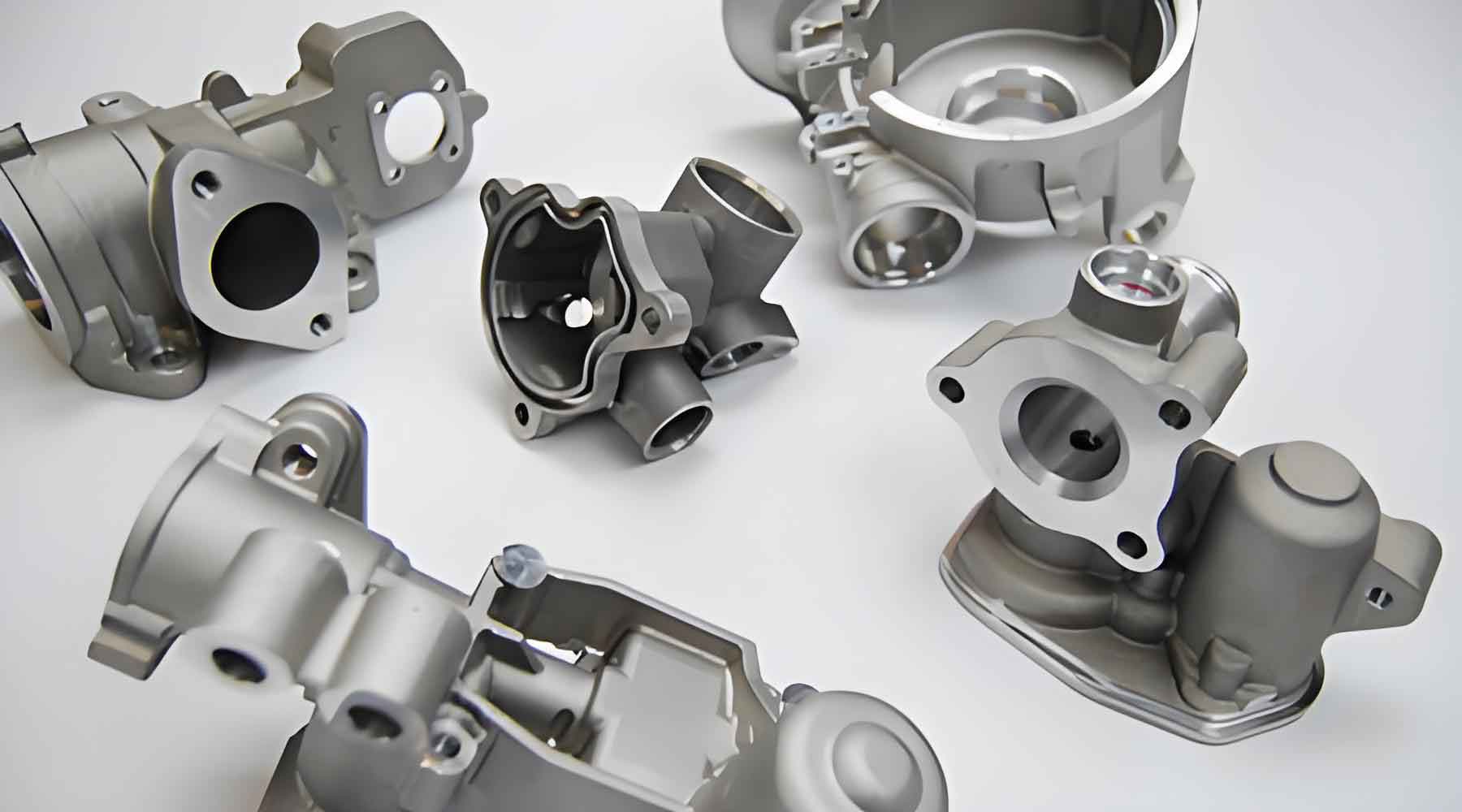
Waste mold shells in investment casting primarily originate from three sources: shells discarded during mold-making and dewaxing, shells abandoned after sintering, and shells discarded after pouring. The latter constitutes the largest proportion of waste shells and is the main target for recycling. The reclaiming and recycling processes involve various mechanical and chemical treatments to separate valuable components like zircon sand, alumina sand, and mullite sand, which can be reused in precision casting or other industries. I will delve into the specifics of these technologies, including the equipment used and the quality control of the reclaimed materials.
Reclaiming Treatment Technologies for Waste Mold Shells
The reclaiming of waste mold shells typically involves processes such as crushing, magnetic separation, screening, and dust removal, which are well-established in the foundry industry. Many investment casting enterprises have developed their own reclaiming processes and equipment based on these principles. For instance, some domestic companies have designed automated systems for waste shell recycling. One such process involves manually feeding the waste shells into a magnetic separation conveyor, which transports the crushed material to a vibrating screen. The screen separates sand into 10–30 mesh particles, which are then sent to a dust removal machine. The cleaned sand is further processed through magnetic separation to remove iron oxides, resulting in reusable sand that is weighed and packaged. Fine sand below 30 mesh is subjected to additional magnetic separation and ball milling to produce 200-mesh powder for use in reinforcement layer formulations.
Another example includes self-designed and manufactured fully automatic waste shell recycling and screening machines, along with crushers. After initial crushing, the waste sand is screened, with coarse sand undergoing further crushing, while medium and fine sand are recycled for production. This approach can achieve a recycling rate of over 70% for waste shells. In regions like Jiangsu and Zhejiang, specialized enterprises have emerged to handle waste shell reclaiming professionally, such as Zhangjiagang Huagi New Materials Co., Ltd.
For more valuable components like zircon sand, alumina sand, and mullite sand, advanced reclaiming techniques are employed. These include graded recycling methods for waste silica sol shells to recover mullite and zircon sand. The process typically involves crushing, magnetic separation, dry screening, and dust removal, followed by water scrubbing, gravity separation, and flotation to isolate high-purity zircon and mullite sands. The equipment used includes jaw crushers, roller crushers, impact crushers, composite crushers, ball mills, rod mills, sand grinding machines, magnetic separators, vibrating screens, shaking tables, flotation machines, water scrubbers, dryers, alkali cooking devices, acid leaching equipment, and dust removal systems.
Studies have shown that after crushing and magnetic separation, waste shells can be screened into different particle size ranges. For example, 80–250 mesh particles are subjected to water scrubbing and shaking table separation, yielding concentrates (zircon sand), intermediate products (mixed zircon and mullite sand), and tailings (mullite sand). The zircon content in the concentrate can increase from 8.73% to 45.55% after gravity separation, while the tailings show a reduction in zircon content to 2.07% and an increase in mullite content to 97.93%. Further flotation can enhance the zircon content in the concentrate to over 90%, making it suitable for reuse in precision casting.
Mechanical abrasion methods have also been developed to separate electrofused white alumina from waste silica sol shells. By exploiting the hardness differences between alumina and other components, ball milling of crushed shells with particle sizes below 1397 µm can extract 43.3% to 56.7% of the alumina content. The remaining sand can be processed into ceramic granular sand, achieving 100% recycling of waste shells. Additionally, treatments like alkali cooking, acid leaching, and magnetic separation are used to reduce iron content and improve the quality of reclaimed sand. For instance, magnetic separation at 0.3 T can reduce Fe2O3 content to levels comparable to new materials, and acid leaching further decreases surface iron content.
Quality Characteristics of Reclaimed and Reused Sands
The quality control of reclaimed and reused sands is crucial to ensure their performance in various applications. Key parameters include chemical composition, phase composition, surface morphology, particle size distribution, moisture content, dust content, and refractoriness. These are benchmarked against specifications for investment casting refractories and other recycled foundry sands.
Chemical composition and phase analysis reveal that waste shells primarily consist of phases similar to mullite sand or quartz sand, depending on the original shell material. For example, waste shells from silica sol systems often contain mullite, quartz, and zircon, while impurities like iron oxides vary but remain low overall. Iron is a significant impurity that affects recycling efficiency and high-temperature performance. The main phases in waste shells do not change significantly during reclaiming processes, ensuring consistency.
Surface morphology of reused sand particles shows sharp edges, open pores, and microcracks due to mechanical crushing, whereas regenerated zircon and alumina sands exhibit clean, smooth surfaces. Particle size distribution tends to be concentrated and unimodal, with finer sizes achieved through longer crushing times. For instance, one study reported D0.1, D0.5, and D0.9 values of 4.85 µm, 34.69 µm, and 90.18 µm, respectively, for reused sand. Ball milling can further reduce particle sizes, with wet milling producing over 90% of particles below 13 µm.
Dust content is reduced through processes like gravity separation and flotation, but some reclaimed sands may still have surface dust, requiring enhanced dust removal during application. The table below summarizes typical chemical compositions of waste shells and common refractories used in investment casting.
| Material Type | Al2O3 (%) | SiO2 (%) | ZrO2 (%) | MgO (%) | CaO (%) | TiO2 (%) | Fe2O3 (%) | Na2O (%) | K2O (%) | Main Phases |
|---|---|---|---|---|---|---|---|---|---|---|
| Waste Shell 1 | 32.5 | 53.5 | 8.73 | 0.46 | 1.35 | 2.12 | 0.73 | – | – | Mullite, Quartz, Zircon |
| Waste Shell 2 | 53.8 | 39.0 | 3.85 | 0.47 | 1.03 | 1.38 | 0.46 | – | – | Mullite, Corundum, Cristobalite |
| Mullite Sand | 45.0 | 52.0 | – | 0.12 | 0.41 | 0.78 | 0.61 | 0.14 | 0.12 | Mullite, Glass Phase, Quartz |
| Quartz Sand | <0.3 | 97.0 | – | <0.2 | <1.0 | – | – | – | – | Quartz |
Particle size distribution can be modeled using the Rosin-Rammler equation: $$ P(d) = 1 – \exp\left[-\left(\frac{d}{d_c}\right)^n\right] $$ where \( P(d) \) is the cumulative percentage finer than size \( d \), \( d_c \) is the characteristic size, and \( n \) is the distribution parameter. For reclaimed sands, \( d_c \) and \( n \) vary based on processing conditions, influencing the suitability for different applications in precision casting.
Recycling Technologies for Waste Mold Shells
Reclaimed waste mold shells can be reused in various fields, including as raw materials in investment casting, construction, refractory products, and composite materials. I will explore each of these applications in detail.
Reuse as Raw Materials in Investment Casting
In water glass-based shell systems, reclaimed powder and sand from waste shells can be used alone or mixed with new refractory materials. Studies show that shells made entirely from reclaimed powder have lower strength and deformation resistance compared to those made from new materials. However, when mixed with 45% new clay or 90% new powder (45% quartz and 45% clay), the performance meets production requirements. Reclaimed sand can be used alone as a stucco material for backup layers. For example, 10–30 mesh reclaimed sand is used as alternating stucco material, and 200-mesh powder is formulated into coatings for reinforcement layers, reducing costs while maintaining process suitability.
Similarly, reclaimed sand mixed with new high-alumina sand in a 1:1 ratio can replace backup stucco for casting carbon steel and high-quality structural steel, with satisfactory high-temperature performance and surface quality. In silica sol-based shell systems, reclaimed powder and sand from sintered or poured waste shells can be directly recycled as backup layer materials. The shell strength, load-bearing deformation, and permeability are comparable to those made from new materials. Inorganic geopolymer technology has been applied to formulate backup layer coatings using 80% reclaimed powder and 20% calcium carbonate or metakaolin, with reclaimed sand as stucco. This approach reduces drying time by 13 hours for a three-layer backup shell and has been successfully used in production, achieving required dimensional accuracy.
Reclaimed electrofused white alumina and zircon sand from waste shells, after treatments like gravity separation, flotation, and acid leaching, are equivalent to new sand and can be used in face layers. For titanium alloy investment casting, which requires specific shell materials, recycling research is still limited, but general principles may apply.
Reuse in Construction Materials
Reclaimed waste shells can be used as aggregates in concrete, similar to other foundry wastes. Studies on concrete made with reclaimed shell sand show good cohesion and water retention but low slump, making it suitable for low-plasticity applications like foundations or mass structures. The compressive and split tensile strengths are comparable to river sand concrete. The water-cement ratio has a greater impact on compressive strength than on tensile strength. The stress-strain relationship follows standard concrete models, expressed as: $$ \sigma = f_c’ \left[1 – \left(1 – \frac{\varepsilon}{\varepsilon_0}\right)^2\right] $$ where \( \sigma \) is stress, \( f_c’ \) is compressive strength, and \( \varepsilon_0 \) is strain at peak stress. Reclaimed shell sand concrete is not recommended for slabs, beams, or densely reinforced structures due to workability limitations.
Reuse in Refractory Products
Waste shells, with phases similar to aluminosilicate or silica refractories, can be used to manufacture refractory materials. For instance, samples made from 88% reclaimed sand, 7% silica fume, and 5% calcium aluminate cement achieve a flexural strength of 7.9 MPa and compressive strength of 43.7 MPa, comparable to traditional mullite-based castables. Lightweight aggregates and bricks can be produced by mixing reclaimed sand with clay, alumina powder, and pore-forming agents like rice husk ash or sawdust. After sintering at 1450°C, lightweight aggregates have a thermal conductivity of 0.265–0.38 W/(m·K), and bricks with 55% reclaimed sand reach a density of 0.98 g/cm³ and thermal conductivity of 0.1–0.92 W/(m·K), matching conventional insulating materials.
Refractory bricks made from 20% fine reclaimed powder, 70% coarse reclaimed sand, and 10% pure Al2O3 powder, sintered at 1350°C, exhibit tensile strengths of 20 MPa and flexural strengths of 9.9 MPa, suitable for industrial furnaces. Additives like TiO2 and CaO act as flux agents, lowering sintering temperatures and improving density. Ceramic granular sand produced from residual sand after alumina extraction has a true density of 2.834–3.05 g/cm³, apparent porosity of 6.03–10.6%, and breakage rate of 1.47–1.58%, making it useful for disposable refractory products like pouring cups or filters.
Reuse in Composite Materials
Zircon and mullite from waste shells are excellent for producing multiphase materials with special functions. For example, cordierite-zircon composites can be made from 75–85% reclaimed sand, 12–22% magnesia powder, and 2–4% fused quartz, sintered at 1100–1250°C. The coefficient of thermal expansion is influenced by zircon content and magnesia addition, which promotes forsterite formation. Mullite-zirconia composites, prepared from reclaimed sand and alumina with mineralizers like MgO, show enhanced mechanical and radiation shielding properties after sintering at 1600°C. The density reaches 2.87 g/cm³, with bending strength of 190 MPa and compressive strength of 308 MPa. The toughening mechanisms include crack deflection and microcracking from zirconia phases. The gamma and neutron shielding performance is comparable to standard materials, making these composites suitable for radiation protection applications.
The formation of mullite and zirconia phases can be described by the reaction: $$ \text{ZrOSiO}_4 + 3\text{SiO}_2 + 6\text{Al}_2\text{O}_3 \rightarrow \text{ZrO}_2 + 2\text{Al}_6\text{Si}_2\text{O}_{13} $$ This reaction completes above 1450°C, with mineralizers aiding decomposition. The mechanical properties are attributed to the elongated mullite grains and zirconia toughening.
Conclusion and Recommendations
In summary, significant progress has been made in reclaiming and recycling waste mold shells from investment casting, yet challenges remain in achieving full utilization and zero emissions. The reclaiming processes involve specialized equipment and treatments to separate valuable components, and the reclaimed materials can be reused in precision casting, construction, refractories, and composites. However, the recycling rate has not reached 100%, and further efforts are needed to optimize technologies and expand applications.
Based on this review, I recommend the following areas for future work: First, develop dedicated reclaiming processes and equipment tailored to waste shell characteristics, including advanced crushing, magnetic separation, gravity separation, flotation, and acid leaching. This will enable the production of high-quality reclaimed sands like zircon, alumina, and mullite. Second, promote the transformation and application of research findings by exploring new uses in construction and advanced materials, and investigate recycling for titanium alloy investment casting. Third, conduct surveys on the current status of waste shell recycling in various regions to identify gaps and opportunities. By addressing these aspects, the investment casting industry can move towards sustainable practices, reducing environmental impact and enhancing resource efficiency.
Through continuous innovation and collaboration, the recycling of waste mold shells can contribute significantly to the green development of precision casting and investment casting, aligning with global sustainability goals. I believe that with concerted efforts, the vision of zero waste in investment casting is achievable.