
In my extensive experience within the offshore construction sector, the integration of massive, load-bearing steel castings into floating production platforms represents one of the most critical and technically demanding fabrication challenges. These components serve as the primary structural nexus, connecting the colossal topside modules to the hull. Their performance directly dictates the platform’s integrity over decades of service under cyclic loads and harsh marine environments. The welding of these high-strength, large-scale steel castings is not merely a joining operation; it is a comprehensive exercise in metallurgical control, procedural precision, and rigorous validation. This article details the systematic approach and multifaceted control strategies essential for ensuring the integrity of such welds, drawing upon proven methodologies to mitigate inherent risks.
The fundamental challenge originates from the very nature of the steel casting material itself. Unlike homogeneous rolled plate, a steel casting possesses a heterogeneous microstructure as a result of its solidification process. This can lead to localized variations in composition, potential discontinuities such as micro-shrinkage or gas porosity, and inherent segregation. When combined with the high strength grade required for such applications—often with specified minimum yield strengths exceeding 420 MPa—the material’s weldability becomes a primary concern. The propensity for hydrogen-induced cold cracking (HICC) is significantly heightened.
This risk is quantitatively assessed using carbon equivalent (Ceq) formulas, which provide an index for hardenability and cold cracking susceptibility. For the high-strength low-alloy (HSLA) steel castings commonly specified, calculations using the International Institute of Welding (IIW) formula consistently yield values that demand stringent controls.
The IIW carbon equivalent formula is given by:
$$ C_{eq(IIW)} = C + \frac{Mn}{6} + \frac{Cr + Mo + V}{5} + \frac{Ni + Cu}{15} $$
For a typical offshore-grade steel casting with a chemistry as shown in Table 1, the calculation reveals the challenge.
| Element | C | Si | Mn | P | S | Cu | Ni | Cr | Mo | V |
|---|---|---|---|---|---|---|---|---|---|---|
| Content (%) | 0.10 | 0.51 | 1.36 | 0.008 | 0.001 | 0.12 | 1.40 | 0.12 | 0.08 | 0.02 |
Substituting the values:
$$ C_{eq(IIW)} = 0.10 + \frac{1.36}{6} + \frac{0.12 + 0.08 + 0.02}{5} + \frac{1.40 + 0.12}{15} $$
$$ C_{eq(IIW)} = 0.10 + 0.227 + 0.044 + 0.101 $$
$$ C_{eq(IIW)} \approx 0.472 $$
A Ceq(IIW) value approaching 0.47% places this material in a category with poor weldability, high hardenability, and significant sensitivity to hydrogen-assisted cracking. This numerical reality dictates every subsequent step in the welding procedure. Furthermore, the sheer physical scale of the casting—often weighing tens of tonnes with cross-sections exceeding 100 mm—introduces complexities in heat management, accessibility, and distortion control. The welding groove is typically a double-sided, symmetric V- or X-preparation to balance contraction forces. Welding often occurs in confined or semi-confined spaces, such as the interior of a tubular connection, creating hazardous environmental conditions for welders and complicating the maintenance of optimal shielding gas coverage.
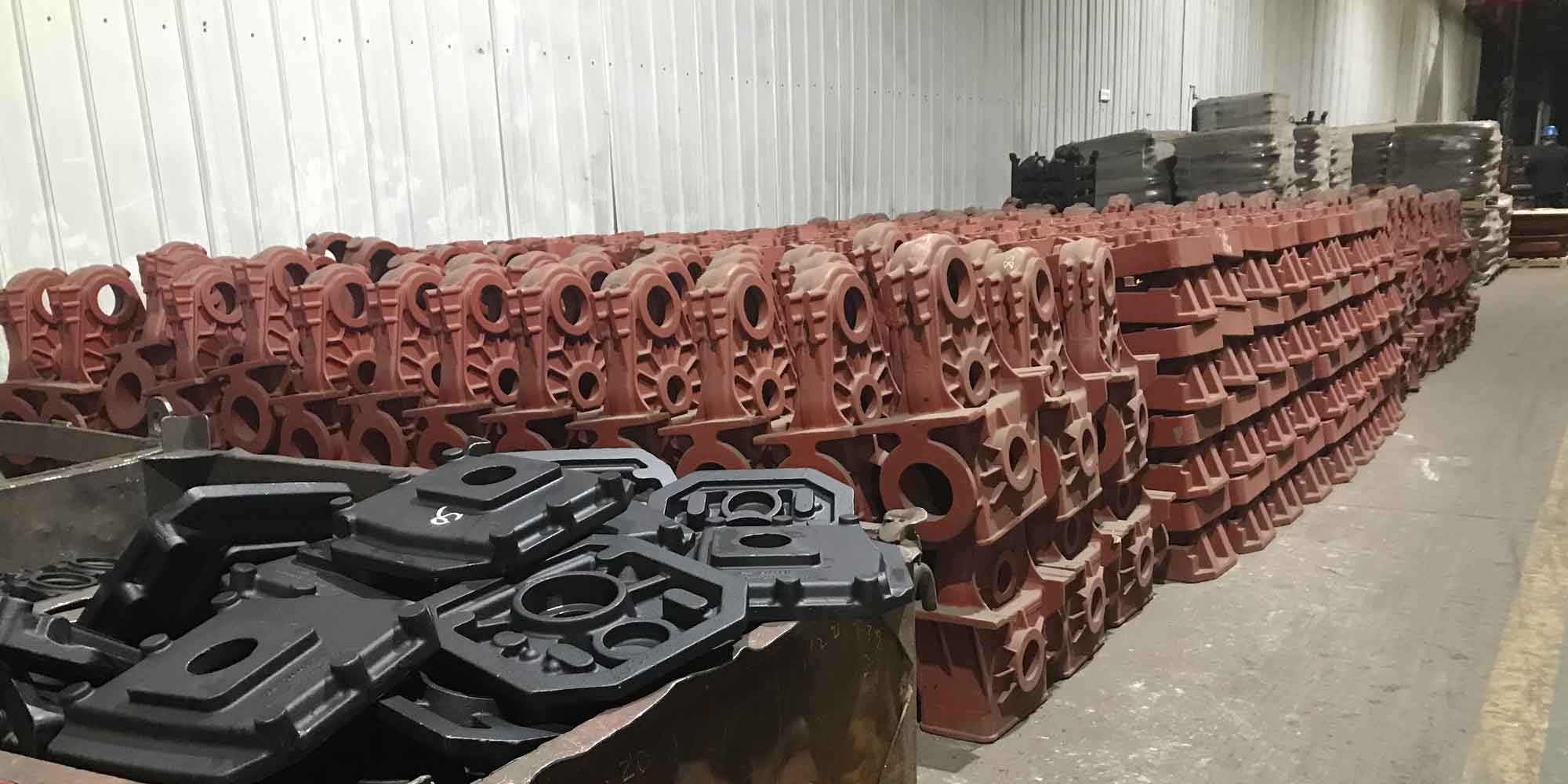
The manufacturing process of such critical components is itself a feat of engineering. The intricate shapes and massive sizes require sophisticated foundry techniques to ensure soundness.
Foundational Control: The Welding Procedure Specification (WPS) and Qualification (WPQ)
Prior to any production welding, a robust Welding Procedure Specification (WPS) must be developed and validated through a Welding Procedure Qualification (WPQ). This is non-negotiable. The WPQ test coupon must faithfully replicate the production joint: it should be fabricated from the actual steel casting material (or a representative sample from the same heat) welded to the mating HSLA plate, utilizing the same joint geometry, thickness, and welding position.
For welding these thick sections, Gas Metal Arc Welding (GMAW) using a shielding gas mix of Argon-CO2 (often 80%/20%) is typically selected. This process offers high deposition rates, excellent penetration profile, and good operational flexibility for the complex grooves involved. The core welding parameters established in the WPS are critical for controlling the weld’s metallurgical and mechanical properties. The key is managing heat input, defined as:
$$ Q = \frac{60 \times V \times I}{1000 \times S} $$
Where:
\( Q \) = Heat Input (kJ/mm),
\( V \) = Voltage (Volts),
\( I \) = Current (Amperes),
\( S \) = Travel Speed (mm/min).
A moderate heat input range, typically between 1.5 and 2.5 kJ/mm, is targeted. Too low a heat input increases cooling rates, promoting hard, crack-susceptible microstructures like martensite. Excessively high heat input can lead to coarse grain growth in the heat-affected zone (HAZ), reducing toughness. A qualified WPS will specify strict ranges for all parameters, as summarized in Table 2.
| Parameter | Value / Range | Rationale |
|---|---|---|
| Process | GMAW (Pulse or Spray Transfer) | High deposition, controllable penetration, less spatter. |
| Shielding Gas | Argon + 18-22% CO2 | Stable arc, good weld bead profile. |
| Wire Type | AWS ER110S-G or similar (Tensile > 760 MPa) | Matching/overmatching strength, low hydrogen. |
| Preheat & Interpass Temp. | Min. 150°C, Max. 250°C | Reduce cooling rate, allow hydrogen diffusion. |
| Current (I) | 260 – 320 A | Part of heat input control. |
| Voltage (V) | 28 – 32 V | Part of heat input control. |
| Travel Speed (S) | 200 – 280 mm/min | Directly controls heat input. |
| Calculated Heat Input (Q) | 1.6 – 2.2 kJ/mm | Balances microstructure and toughness. |
The qualified procedure must demonstrate through destructive testing (tensile, bend, and Charpy V-notch impact tests at design temperature, e.g., -40°C) that the weld joint meets or exceeds the base metal requirements. This validated WPS becomes the governing document for all production welding activities on the steel casting.
Execution Phase: Multilayered Quality Control Measures
With a qualified WPS in hand, the focus shifts to flawless execution. This requires a series of interlocking control measures, each addressing a specific risk factor.
1. Precision in Joint Preparation and Fit-Up
The geometry of the weld preparation is paramount. A symmetrical double-V or double-U groove is almost always employed for thicknesses above 50 mm. This allows for balanced welding from both sides, minimizing distortion and residual stress. The fit-up must be precise, with minimal root gap and strict alignment tolerances. Any excessive gap increases weld metal volume, raising heat input and contraction stresses. The root face dimensions must be consistent to ensure complete penetration during the initial root pass. All surfaces within 25 mm of the weld groove must be meticulously cleaned of rust, scale, paint, moisture, and oil—potential sources of hydrogen and weld defects.
2. Advanced Preheat and Interpass Temperature Control
Given the high carbon equivalent, preheating is the first line of defense against hydrogen cracking. The goal is to slow the cooling rate through the critical temperature range (approximately 800°C to 500°C) to prevent the formation of hard martensite and to provide time for dissolved hydrogen to diffuse out of the weld zone. For the steel casting in question, a minimum preheat of 150°C is typical.
Traditional methods like propane torch heating are inadequate for large, massive castings due to uneven heating, high thermal gradients, and difficulty in maintaining temperature. The modern, controlled solution is electrical resistance heating. Flexible ceramic pad heaters are attached to the casting around the weld joint, connected to a computer-controlled power source. Thermocouples attached to the part provide feedback for closed-loop temperature control. This ensures a uniform, consistent, and documentable preheat and interpass temperature across the entire joint volume, as illustrated in Table 3.
| Method | Uniformity | Control & Documentation | Energy Efficiency | Safety | Suitability for Casting |
|---|---|---|---|---|---|
| Open Flame (Torch) | Poor (spot heating) | Manual, unreliable | Low | Fire risk, fumes | Not Suitable |
| Induction Heating | Good (for specific shapes) | Good | High | Good | Moderate (complex shapes challenging) |
| Resistance (Pad) Heating | Excellent (conforms to geometry) | Precise, fully recordable | High | Excellent (low voltage) | Highly Suitable |
3. Controlled Welding Sequence and Technique
A disciplined welding sequence is crucial to manage distortion and stress. The principle is to balance heat input around the neutral axis of the joint. For a circumferential weld on a tubular connection, this involves using multiple welders stationed symmetrically (e.g., 180° apart). Welding should progress in short, staggered segments using a backstep or block sequence, rather than a continuous progression in one direction. This technique localizes shrinkage forces. The weld must be built up using a multi-pass, multi-layer technique. Each pass must be sufficiently thin (typically 2-3 mm bead height) to allow grain refinement from subsequent passes and to facilitate hydrogen escape. Crucially, thorough interpass cleaning via needle scalers and grinding is mandatory to remove all slag and potential surface defects before depositing the next layer.
4. Management of the Welding Environment
Welding in confined spaces, such as the interior of a node, poses significant challenges. Hydrogen sources are not limited to the electrode; ambient moisture can be a major contributor. The air inside a confined space can have high humidity, which dissociates in the arc to introduce hydrogen into the weld pool. Therefore, forced ventilation with dry air is essential not only for fume extraction but also for environmental control. Additionally, shielding gas coverage must be impeccable; any drafts or leaks can lead to porosity and nitrogen pickup, further embrittling the weld. The use of trailing shields or temporary enclosures may be necessary to protect the solidifying weld metal.
5. Mandatory Post-Weld Heat Treatment (PWHT): Dehydrogenation and Stress Relief
Immediately upon completion of welding, and while the joint is still at or above the interpass temperature, a dehydrogenation post-heat treatment is applied. This is distinct from a full stress relief. The joint is rapidly heated to a temperature in the range of 250°C – 300°C, held for a duration based on thickness (often 2-4 hours), and then allowed to cool slowly under insulation. The holding temperature is sufficient to greatly increase the diffusion rate of hydrogen, allowing it to escape from the weld metal before the component cools to ambient temperature. This single step is one of the most effective measures to prevent delayed hydrogen cracking. The diffusion process can be described by Fick’s laws, where the time \( t \) required for hydrogen to diffuse out is proportional to the square of the thickness \( d \) and inversely proportional to the diffusion coefficient \( D \), which is highly temperature-dependent:
$$ t \propto \frac{d^2}{D(T)} $$
Where \( D(T) \) increases exponentially with temperature \( T \), making the post-heat hold remarkably efficient.
Validation and Acceptance: Advanced Non-Destructive Examination (NDE)
Given the criticality of these welds, standard radiographic testing (RT) and manual ultrasonic testing (UT) are often insufficient. The complex geometry, thick section, and anisotropic grain structure of the weld and steel casting itself can mask or distort indications. The industry standard for such critical connections is now Phased Array Ultrasonic Testing (PAUT).
PAUT uses a probe containing multiple small piezoelectric elements that can be pulsed independently in a precisely timed sequence (phase). By electronically controlling the timing, the ultrasonic beam can be steered, swept, and focused without moving the probe. This allows for:
- Generating a sectorial scan (S-scan) from a single probe position, covering the entire weld volume with multiple angles.
- Improved detection and, more importantly, superior sizing and characterization of discontinuities like lack of fusion, cracks, and elongated slag lines.
- Permanent, reviewable data records (A-scans, B-scans, C-scans, S-scans) that provide an “ultrasonic image” of the weld for archival and third-party review.
The beam steering is governed by the laws of physics. The time delay \( \Delta t_n \) applied to the n-th element to steer the beam to an angle \( \theta \) is calculated as:
$$ \Delta t_n = \frac{(n – \frac{N-1}{2}) \cdot p \cdot \sin(\theta)}{c} $$
Where:
\( n \) = element index,
\( N \) = total number of elements,
\( p \) = pitch (distance between element centers),
\( \theta \) = desired steering angle,
\( c \) = sound velocity in the wedge material.
A detailed PAUT procedure is developed using representative calibration blocks machined from similar steel casting material. The setup for inspecting a 100 mm thick steel casting weld might use a probe with the specifications shown in Table 4.
| Parameter | Specification |
|---|---|
| Array Type | Linear (active aperture: 16-32 elements) |
| Frequency | 5.0 MHz |
| Element Pitch | 0.5 – 0.6 mm |
| Wedge Angle | 36° (for generating shear waves in steel) |
| Sectorial Scan Range | 40° to 70° (shear wave) |
| Focal Law | Multiple focused depths within the weld |
The inspection is performed from both sides of the weld. The data is analyzed against predefined acceptance criteria (typically based on ASME BPVC Section V or AWS D1.1). The ability of PAUT to differentiate between geometric reflections (from the root, cap, or sidewall) and actual planar defects is its greatest strength, providing a high-confidence assessment of weld integrity that far surpasses conventional methods.
Conclusion
The successful welding of high-strength, large-scale steel castings in offshore construction is a testament to systematic engineering and disciplined execution. It begins with acknowledging the material’s inherent challenges through quantifiable metrics like carbon equivalent. It proceeds through the development and rigorous qualification of a tailored Welding Procedure Specification that controls heat input and hydrogen. It is executed via a multi-faceted control regime encompassing precision fit-up, advanced temperature management, disciplined welding sequences, environmental control, and mandatory post-weld dehydrogenation. Finally, it is validated using state-of-the-art non-destructive evaluation, primarily Phased Array Ultrasonic Testing, which provides an unparalleled level of quality assurance. Each weld on a critical steel casting connection is not just a joint; it is the culmination of this integrated quality management system, ensuring the structural resilience required for a floating production platform to withstand the formidable forces of the deep ocean for its entire operational life.