
Our research focuses on the sand casting foundry process for ZM6 magnesium alloy, which belongs to the Mg–rare earth–zirconium series. ZM6 is a high-strength heat-resistant cast magnesium alloy with neodymium as the primary alloying element. It exhibits excellent castability, low microporosity tendency, and low section sensitivity. In the T6 condition, ZM6 offers superior high-temperature properties compared to ZM3 and ZM4, along with high room-temperature mechanical strength and moderate ductility. This alloy is widely used in aerospace and power generation components, such as helicopter engine rear reduction gearboxes, aircraft wing ribs, hydraulic constant-speed device brackets, and rotor lead plates for 300 MW turbine generators. Given the advantages of sand casting foundry—low cost, ability to produce complex geometries, and compatibility with heat treatment—we adopted sand casting foundry for a ZM6 support bracket. This paper details our sand casting foundry process, including mold design, melting, pouring, and quality control, to provide practical guidance for industrial production.
Component Geometry and Sand Casting Foundry Design
The component we addressed is a curved plate with a thickness of 12 mm and approximate cross‑sectional dimensions of 158 mm × 154 mm. The measured chemical composition (mass fraction, %) of the ZM6 alloy is shown in Table 1.
| Element | Content (%) |
|---|---|
| RE (Nd) | 2.76 |
| Zn | 0.36 |
| Zr | 0.46 |
| Cu | 0.016 |
| Ni | 0.023 |
| Mg | Balance |
The magnesium content can be expressed as:
$$w_{\text{Mg}} = 100\% – (2.76 + 0.36 + 0.46 + 0.016 + 0.023)\% = 96.381\%.$$
Our sand casting foundry design employed gravity casting with the large flat surface positioned in the lower mold. We utilized a semi‑closed gating system: a sprue connected to an upper runner segment, followed by a lower runner segment with a filter screen at the junction. This configuration effectively separates oxides and slag while ensuring smooth filling of the mold. To prevent shrinkage porosity, we placed a large riser (diameter 157 mm, height 51 mm) above the casting. Additionally, we inserted 3 mm diameter vent pins through both the sand mold and core to avoid gas entrapment. Both the mold and core were bonded using resin‑based chemical‑hardening sand, which, although more expensive, facilitates easy cleaning and allows sand recycling.
The riser modulus $M$ is a critical parameter in sand casting foundry to ensure directional solidification. For a cylindrical riser, the modulus is calculated as:
$$M = \frac{V}{A} = \frac{\pi r^2 h}{2\pi r h + 2\pi r^2} = \frac{rh}{2h + 2r},$$
where $r$ is the radius and $h$ is the height of the riser. For our riser ($r = 78.5$ mm, $h = 51$ mm), the modulus is approximately:
$$M \approx \frac{78.5 \times 51}{2 \times 51 + 2 \times 78.5} \approx 15.7\ \text{mm}.$$
This modulus value was sufficient to feed the adjacent casting section, as confirmed by subsequent radiographic inspection.
Melting and Pouring Procedures for Sand Casting Foundry
Magnesium alloys are highly susceptible to oxidation during melting, which can introduce inclusions and hydrogen porosity. Therefore, we developed a rigorous melting protocol for our sand casting foundry operation.
Furnace and Crucible Preparation
We used a resistance crucible furnace with a low‑carbon steel crucible. The crucible welds were inspected by X‑ray and kerosene penetration tests, then cleaned with flux. New crucibles were first tested by melting carnallite for more than 8 h to ensure no leakage before using for magnesium alloy.
Raw Material Preparation
ZM6 alloy was prepared using pure magnesium, Mg‑Nd master alloy, Mg‑Zr master alloy, and zinc. All raw materials were sandblasted and preheated to remove oil contaminants. The Mg‑Zr master alloy was boiled in water to remove wax seals. The fluxes used are listed in Table 2.
| Flux | MgCl₂ (%) | KCl (%) | BaCl₂ (%) | CaF₂ (%) | Application |
|---|---|---|---|---|---|
| Carnallite | 44–52 | 36–46 | – | – | Equipment cleaning |
| RJ‑5 | 24–30 | 20–26 | 28–31 | 13–15 | Refining and covering |
| Anti‑ignition mixture | 50% S + 50% H₃BO₃ (by mass) | Cover after refining | |||
Refining and covering fluxes were dried at 100–150 °C for at least 1 h before use. Sulfur and boric acid were crushed and sieved through a 40‑mesh screen, then stored in sealed containers.
Melting Procedure
- Heat the crucible to dark red (~400–500 °C). Sprinkle a suitable amount of powdered RJ‑5 flux on the crucible wall and bottom.
- Charge preheated magnesium ingots and return scrap. Sprinkle additional RJ‑5 flux on top. Start melting. If melt is exposed and burning, add more flux to extinguish.
- After complete melting, remove the dirty flux from the surface and replace with fresh flux.
- Heat to 720–740 °C and add zinc. Continue heating to 780–810 °C, then slowly add Mg‑Zr master alloy and rare earth (in the form of Mg‑Nd master alloy) in batches. Stir thoroughly for 2–5 min, adding flux as needed.
- Allow the melt to homogenize for 3–5 min. Pour a sample for spectroscopic analysis. Adjust composition based on results.
- Adjust melt temperature to 750–760 °C. Refine with RJ‑5 or special refining flux for 4–8 min at a flux consumption of 1–1.5% of the charge weight.
- Pour a fracture sample and break it to check grain size. If unsatisfactory, add 1–3% Mg‑Zr master alloy and repeat refining.
- Once acceptable grain size is achieved, stop using refining flux; only use anti‑ignition flux. Heat to 780–810 °C, hold for 10–20 min, then cool to pouring temperature.
- If pouring time exceeds 1 h, recheck fracture sample; if unacceptable, repeat Zr addition and refining.
The pouring temperature range was 730–780 °C. Higher temperatures increase oxidation risk. The pouring operation in our sand casting foundry followed these steps:
- Use a ladle to push aside the flux layer on the melt surface and scoop out the melt with a wide mouth in a steady motion.
- Before pouring, pour a small amount of melt into a preheated spare mold.
- Pour the casting mold steadily, keeping the gate filled.
- During pouring, continuously sprinkle a mixture of sulfur and boric acid onto the melt stream and pouring cup to prevent ignition.
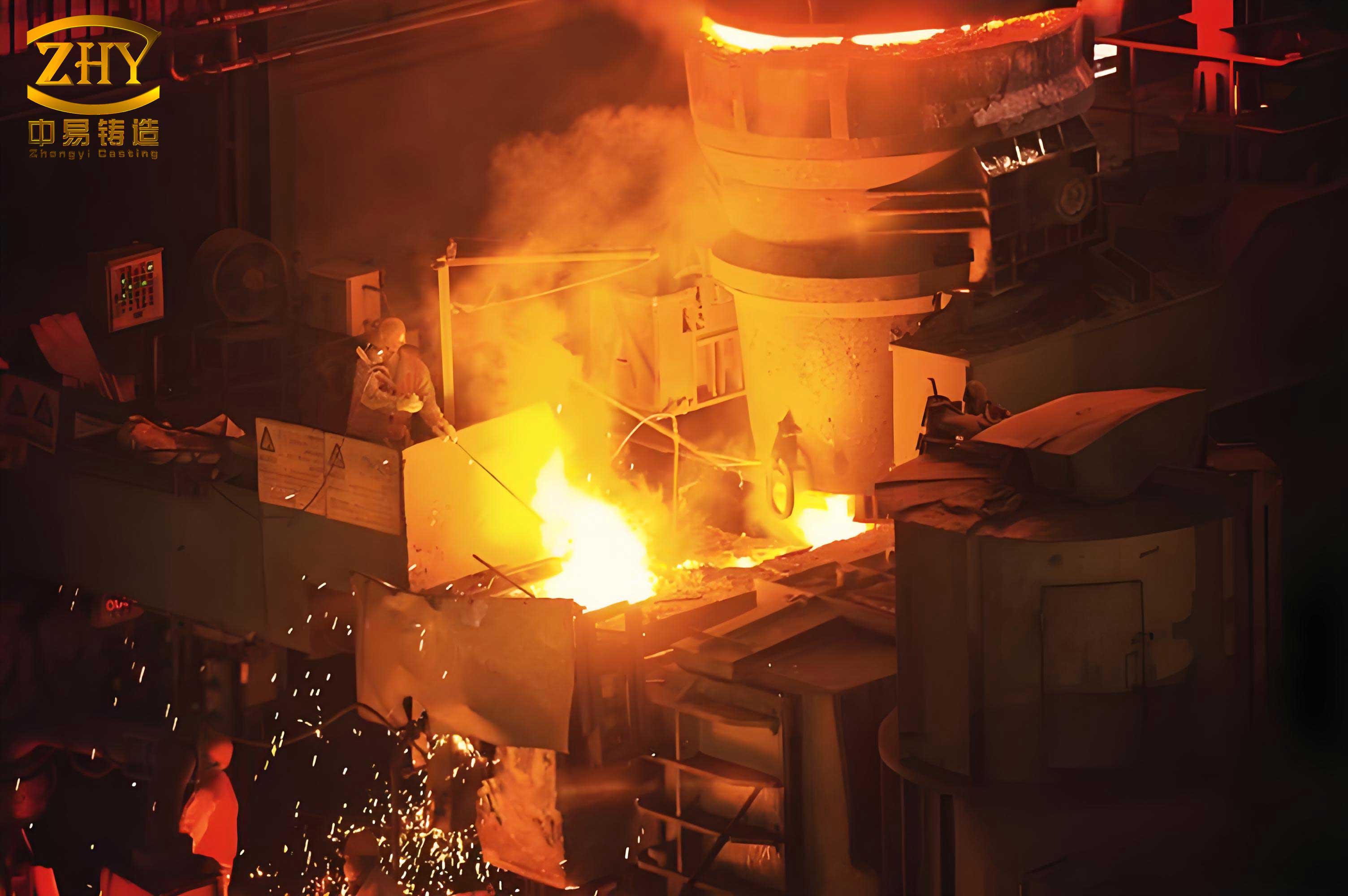
Figure 1 shows a photograph of the actual ZM6 casting produced by our sand casting foundry process.
Post‑casting Treatment and Quality Control
After solidification, the castings were subjected to T6 heat treatment (solution treatment followed by artificial aging). Metallographic examination and mechanical testing confirmed that the properties met the requirements. All castings passed X‑ray inspection without detectable internal defects. The chemical oxidation surface treatment was also successfully applied.
The entire sand casting foundry process can be summarized by a few key parameters. The filling time $t_f$ for gravity casting can be estimated using:
$$t_f = \frac{V}{A_v \cdot v},$$
where $V$ is the casting volume, $A_v$ is the average cross‑sectional area of the gating system, and $v$ is the melt velocity. For our mold, $V \approx 298\ \text{cm}^3$, $A_v \approx 2.0\ \text{cm}^2$, and $v \approx 50\ \text{cm/s}$, giving $t_f \approx 3.0\ \text{s}$—sufficiently short to avoid excessive oxidation.
The solidification time $t_s$ for a plate casting can be approximated using Chvorinov’s rule:
$$t_s = C \cdot M^2,$$
where $C$ is a mold constant and $M$ is the modulus of the casting. For a 12 mm thick plate, $M \approx 6\ \text{mm}$, and with a typical $C$ value of 2 min/cm² for resin‑bonded sand, $t_s \approx 2 \times (0.6)^2 = 0.72\ \text{min}$—very fast, which is why a riser with larger modulus is essential to feed shrinkage.
Conclusions
Through systematic experimentation, we have successfully developed a reliable sand casting foundry process for ZM6 magnesium alloy. The following conclusions can be drawn:
- A semi‑closed gating system with a filter screen effectively minimizes oxide and slag defects in sand casting foundry.
- Using a large riser with proper modulus ensures sound casting without shrinkage porosity.
- Strict control of melting parameters—flux composition, temperature ranges, refining times, and grain size checks—is crucial for producing high‑quality ZM6 castings in sand casting foundry.
- The pouring temperature window of 730–780 °C, combined with anti‑ignition measures, enables stable mold filling in sand casting foundry.
- Post‑casting T6 heat treatment and chemical oxidation treatments met all specification requirements, confirming the viability of the sand casting foundry process for mass production.
Our sand casting foundry process has been successfully demonstrated for the production of ZM6 support brackets. With the necessary tooling and equipment, it can be expanded to manufacture other complex structural components in a sand casting foundry environment.