
In modern industrial manufacturing, as-cast high-performance thin-walled ductile iron castings are extensively employed across various sectors, including automotive, machinery, and aerospace, due to their exceptional combination of strength, ductility, and wear resistance. The unique graphite spheroidization in ductile cast iron confers these properties, making it a material of choice for critical components. However, achieving consistent quality in production, particularly for thin-walled geometries, poses significant challenges. This article, based on firsthand experience, delves into the comprehensive quality control strategies for producing such castings using the iron mold sand coating process, coupled with wire feeding nodularization and stream inoculation. The focus is on optimizing every stage—from raw material selection to final inspection—to enhance product integrity and manufacturing efficiency. Throughout this discussion, the term ‘ductile cast iron’ will be frequently emphasized, underscoring its centrality to the topic.
The iron mold sand coating casting technique is a specialized method where a resin-bonded sand layer is applied onto an iron mold surface to form the casting cavity. This hybrid mold system, comprising a rigid iron frame and a thin sand facing, offers high dimensional stability, rapid heat extraction, and minimal distortion. These attributes are highly beneficial for ductile cast iron production, as the inherent graphite expansion during solidification can be harnessed for self-feeding, often eliminating the need for extensive risers. This process is particularly adept at producing high-grade pearlitic matrix castings with substantial sections. However, when applied to thin-walled, small-to-medium-sized ductile iron castings, the very advantages of fast cooling and mold rigidity become double-edged swords. The accelerated cooling rate can promote excessive undercooling, leading to undesirable microstructural features such as elevated pearlite content, carbide formation (chill), and even filling-related defects due to premature solidification. Addressing these issues necessitates a holistic and precise quality control regimen.
Foundational Elements of Production Quality Control
The journey towards reliable as-cast ductile iron castings begins at the very source: the raw materials. We insist on using high-purity charge materials, predominantly selected scrap steel, to minimize the ingress of trace elements like lead, antimony, or titanium, which can severely impair graphite nodularity. The chemical composition is meticulously planned; for instance, carbon and silicon are balanced not only for fluidity and castability but also to control the final matrix structure and mechanical properties. A typical target composition range for a grade akin to QT500-7 is summarized below.
| Element | Symbol | Control Range (%) | Primary Function |
|---|---|---|---|
| Carbon | C | 3.0 – 3.9 | Graphite formation, fluidity |
| Silicon | Si | 2.0 – 3.3 | Graphitizer, ferrite strengthener |
| Manganese | Mn | ≤ 0.5 | Pearlite promoter, but segregator |
| Magnesium | Mg | 0.03 – 0.05 | Essential nodularizing element |
| Residual Rare Earth | RE | 0.01 – 0.02 | Neutralizes impurities, aids nodularization |
Pre-processing of these materials—involving crushing, magnetic separation, and screening—is mandatory to ensure charge homogeneity, which directly translates into consistent melt chemistry and thermal behavior.
Melting is conducted in a medium-frequency coreless induction furnace, typically of one-ton capacity. This furnace type ensures excellent temperature uniformity and compositional control through vigorous electromagnetic stirring. We integrate real-time monitoring systems: a thermal analysis unit for predicting carbon equivalent and eutectic undercooling, an optical emission spectrometer for rapid elemental analysis, and automated thermocouples logging the temperature profile. The molten ductile iron must be superheated to a precise temperature range (e.g., 1500-1550°C) to ensure adequate fluidity and dissolution of impurities, before being tapped for treatment. The cleanliness of the iron, referring to low inclusion content, is paramount, as inclusions can become nuclei for undesirable graphite shapes or act as stress raisers.
Nodularization and Inoculation: The Heart of Ductile Iron Metallurgy
These twin treatments are the most critical metallurgical operations defining the quality of ductile cast iron. Nodularization transforms flake graphite into spheroids, while inoculation primarily influences the number of graphite nodules, their size distribution, and suppresses carbide formation. For thin-walled castings, the inoculation step is especially vital to counteract the severe chilling tendency.
We employ the wire feeding method for both nodularization and post-inoculation. This technique offers superior reproducibility, reduced fume generation, and precise alloy addition compared to traditional sandwich methods. The nodularizing wire typically contains a magnesium-bearing alloy (e.g., FeSiMg), while the inoculating wire contains a potent graphitizer like ferrosilicon with strontium or barium. The kinetics of magnesium dissolution and recovery are complex. A simplified model for the effective magnesium recovery rate, $\eta_{Mg}$, can be expressed as:
$$ \eta_{Mg} = \frac{[Mg]_{\text{final}} – [Mg]_{\text{initial}}}{[Mg]_{\text{added}}} \times 100\% = f(V_w, H, T, C_{\text{Mg}}, d_s) $$
where $V_w$ is the wire feeding speed (m/min), $H$ is the depth of molten iron in the treatment ladle (m), $T$ is the treatment temperature (K), $C_{\text{Mg}}$ is the form of magnesium in the cored wire (alloyed vs. pure), and $d_s$ is the steel sheath thickness (mm). The optimal feeding speed must ensure the wire penetrates to the bottom of the ladle before the sheath fails due to thermal and chemical attack. An empirical relationship guiding our practice is:
$$ V_{w,opt} \propto \frac{H \cdot \alpha(T)}{d_s \cdot \beta(C_{\text{Mg}})} $$
Here, $\alpha(T)$ is a temperature-dependent factor increasing with $T$, and $\beta(C_{\text{Mg}})$ is a factor related to magnesium volatility. Higher temperatures or more volatile magnesium forms necessitate faster feeding. The following table outlines key parameters and their effects.
| Parameter | Symbol | Influence on Process | Typical Control Range |
|---|---|---|---|
| Molten Iron Height | H | Directly dictates required wire penetration speed. Higher H requires higher V_w. | 0.8 – 1.2 m |
| Treatment Temperature | T | Higher T accelerates sheath degradation, requiring higher V_w. | 1450 – 1520°C |
| Wire Mg Content | CMg | Higher Mg content increases vapor pressure inside wire, promoting earlier sheath failure. | 15% – 30% |
| Sheath Thickness | d_s | Thicker sheath prolongs survival time, allowing lower V_w. | 0.3 – 0.5 mm |
| Feeding Speed | V_w | Critical for achieving bottom reaction. Too slow causes late reaction; too fast causes wire breakage. | 24 – 30 m/min |
Inoculation effectiveness is quantified by the nodule count, $N$, which should be maximized for thin sections to ensure a fine, uniform microstructure. The fading of inoculation is time-dependent. The instantaneous inoculation effect during pouring (stream inoculation) is modeled to counteract this fade. The added inoculant, as a percentage of molten iron weight, $W_{\text{inj}}$, is crucial. For our process:
$$ W_{\text{inj}} = k \cdot \frac{A_c}{V_c} $$
where $k$ is an empirical constant, $A_c$ is the casting’s cooling modulus (volume/surface area), and $V_c$ is the casting volume. Thinner sections (smaller $A_c$) require a higher specific inoculation addition.
Thermal Management and Post-Casting Operations
The cooling curve of ductile iron in an iron mold sand coating system is critical. The temperature gradient, $G$, and cooling rate, $R$, at the solidification front influence graphite morphology and matrix formation. For a simplified one-dimensional heat transfer,
$$ \frac{\partial T}{\partial t} = \kappa \frac{\partial^2 T}{\partial x^2} $$
where $\kappa$ is the thermal diffusivity of the mold/casting system. The sand coating thickness, $\delta_s$, acts as an insulating layer, modifying the effective heat transfer coefficient $h_{eff}$. We control $\delta_s$ within 4-6 mm for our thin-walled castings to balance cooling rate (to avoid excessive chill) and dimensional accuracy.
Heat treatment, though often minimized for ‘as-cast’ grades, might involve a stress relief or sub-critical anneal if required. For high-performance as-cast ductile iron, the goal is to achieve the desired pearlite/ferrite ratio directly from the mold. This is governed by the composition (especially Si and Cu/Sn additions) and the controlled cooling rate described above. Post-casting, operations like shakeout, shot blasting, and grinding are performed. Shot blasting not only cleans the surface but also induces beneficial compressive stresses, enhancing fatigue resistance—a key property for dynamically loaded ductile iron components.
Integrated Quality Assurance and Advanced Inspection
A multi-layered inspection protocol is embedded throughout the process. Statistical Process Control (SPC) charts are maintained for key variables: melt chemistry, treatment temperatures, wire feeding speeds, and pouring times. For final validation, every batch undergoes stringent testing. Mechanical properties (tensile strength $\sigma_b$, yield strength $\sigma_{0.2}$, elongation $\delta$%, and hardness HB) are tested on separately cast keel blocks or coupons from the casting itself. The relationship between hardness and tensile strength for ductile cast iron is often correlated empirically, such as:
$$ \sigma_b \approx c \cdot \text{HB} $$
where $c$ is a constant typically between 3.2 and 3.6 for pearlitic-ferritic grades. Microstructural evaluation is non-negotiable. We assess nodularity grade (1-4 per ISO 945), nodule count (per mm²), pearlite percentage, and the presence of deleterious phases like carbides or phosphides using quantitative image analysis on polished samples. Non-destructive testing (NDT), including ultrasonic testing for internal shrinkage and X-ray radiography for porosity, provides a complete picture of internal soundness. The acceptance criteria are defined in a comprehensive specification document.
A Case Study in Process Optimization
A practical example involves the production of an automotive differential housing, a quintessential thin-walled ductile iron casting with complex geometry and demanding service requirements. The target material was QT500-7, with specified properties: $\sigma_b \geq 500$ MPa, $\sigma_{0.2} \geq 320$ MPa, $\delta \geq 7\%$, hardness 170-230 HB, nodularity grade 1-3, pearlite 20-50%, and carbides <5%. The initial trials using standard high-magnesium wire (28-30% Mg) resulted in microstructural deviations: pearlite content soaring above 70%, presence of carbides, and suboptimal nodularity, leading to high hardness and poor machinability.
The root cause analysis pointed towards excessive undercooling from the high magnesium content and insufficient inoculation potency for the rapid cooling conditions. The improvement strategy had three pillars: compositional adjustment, optimized wire feeding parameters, and enhanced inoculation.
First, the composition was fine-tuned, increasing silicon to leverage its solid solution strengthening and graphitizing power, while slightly lowering carbon to maintain a similar carbon equivalent. The revised targets were:
| Element | C | Si | Mn | Mg | Residual RE |
|---|---|---|---|---|---|
| Target (%) | 3.5 – 3.7 | 2.8 – 3.0 | ≤ 0.5 | 0.03 – 0.05 | 0.01 – 0.02 |
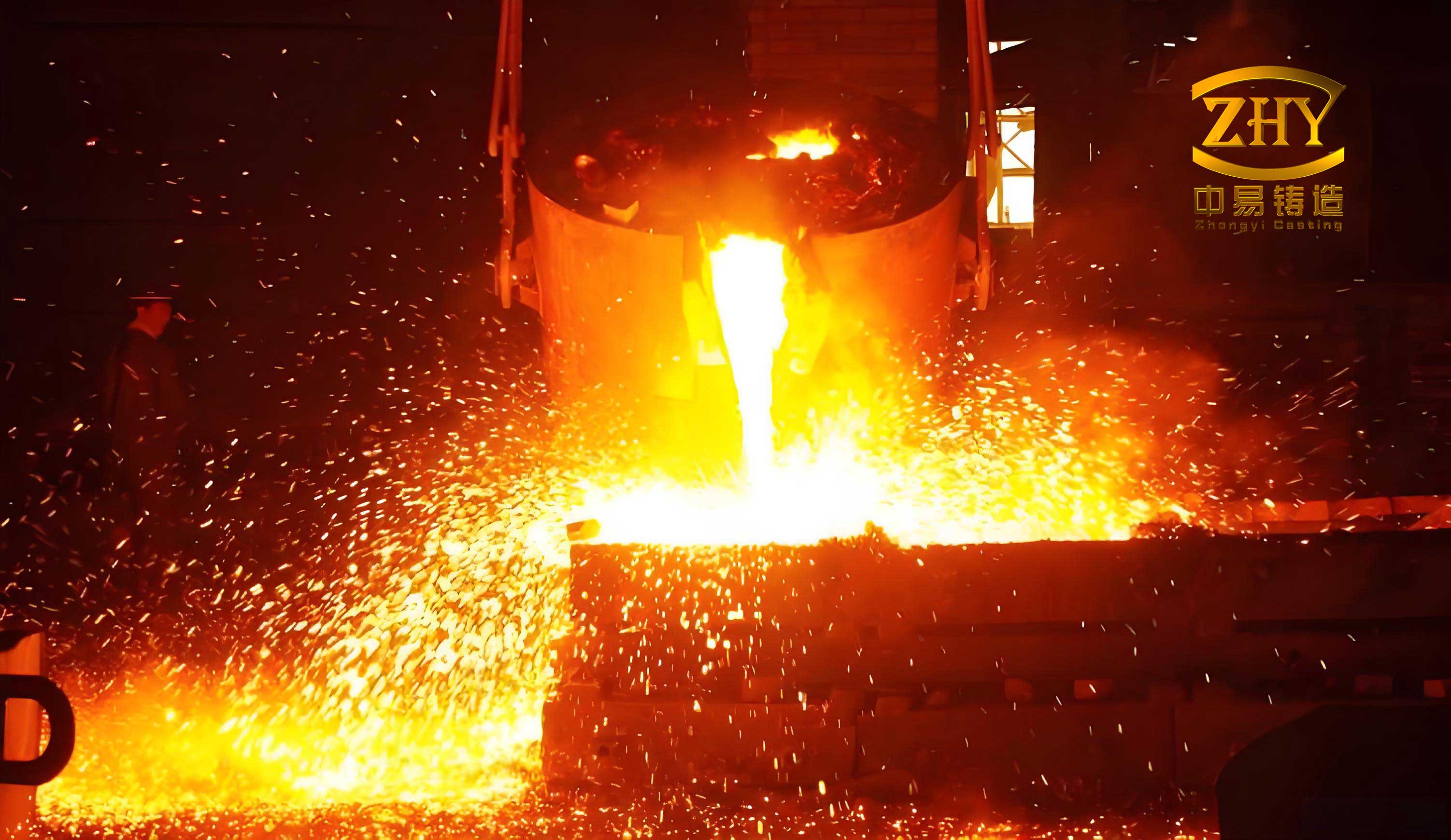
Second, the nodularizing wire was switched to a grade with lower, more controlled magnesium content (15-16% Mg) but with optimized rare earth balance. The feeding speed was increased to 28-30 m/min to ensure deep penetration and efficient reaction. Third, a dual inoculation strategy was employed: a baseline inoculation via wire feeding (using a high-efficiency FeSi alloy) followed by an instantaneous stream inoculation during pouring with a specialized inoculant designed for fast-acting, fade-resistant performance.
The process parameters for the improved run are summarized below:
| Process Step | Material/Equipment | Key Parameter | Value |
|---|---|---|---|
| Nodularization | Cored Wire (15-16% Mg, 2% RE) | Addition Rate | 23 meters per ton of iron |
| Wire Feeder | Feeding Speed, $V_w$ | 28-30 meters/minute | |
| Primary Inoculation | Inoculation Cored Wire | Addition Rate | 18 meters per ton of iron |
| Stream Inoculation | Specialized FeSi-Based Inoculant | Addition Rate | 0.15% of tap weight |
| Pouring | Automatic Pouring System | Temperature | 1380 – 1420°C |
Six consecutive production heats were monitored under this new regimen. The results demonstrated a remarkable improvement and consistency.
| Heat Identification | Hardness (HB) | Pearlite Content (%) | Nodularity Grade (1-6) | Graphite Size (ISO 945) | Carbides (%) | Tensile Strength (MPa) | Elongation (%) |
|---|---|---|---|---|---|---|---|
| Heat 01-115 | 201 | 35 | 2 | 6 | <1 | 525 | 9 |
| Heat 01-116 | 195 | 35 | 2 | 6 | 0 | 518 | 10 |
| Heat 01-117 | 181 | 25 | 2 | 6 | 0 | 505 | 12 |
| Heat 01-118 | 205 | 35 | 2 | 6 | 0 | 530 | 8 |
| Heat 01-119 | 205 | 45 | 2 | 6 | <1 | 535 | 8 |
| Heat 01-120 | 202 | 35 | 2 | 6 | 0 | 522 | 9 |
The data confirms all properties met the QT500-7 specification. The reduction in wire magnesium content decreased the inherent undercooling tendency, while the increased feeding speed and efficient inoculants ensured high nodule counts (typically >150 nodules/mm²) and controlled the matrix. The silicon adjustment provided sufficient solid solution strengthening to achieve the required yield strength without relying excessively on pearlite. This case underscores that for thin-walled ductile iron, a synergistic approach balancing chemistry, treatment kinetics, and thermal management is essential.
Concluding Synthesis and Forward Outlook
Producing high-quality as-cast thin-walled ductile iron castings is an intricate exercise in precision metallurgy and process engineering. Success hinges on a deep understanding of the interplay between composition, treatment methods, cooling conditions, and their collective impact on the microstructure and properties of ductile cast iron. The wire feeding technique, when parameters are scientifically determined, offers a highly controllable route for nodularization and inoculation. The iron mold sand coating process provides the necessary dimensional and thermal environment but must be carefully managed to avoid the pitfalls of excessive chilling for thin sections. Our experience demonstrates that through systematic optimization—including selecting purer inputs, fine-tuning silicon and carbon levels, employing lower-magnesium wires with optimized feeding speeds, and implementing robust multi-stage inoculation—consistent production of as-cast high-performance ductile iron castings is fully achievable. Future advancements may involve real-time adaptive control of wire feeding based on molten iron analysis, advanced simulation tools to predict microstructure under specific cooling conditions, and the development of even more potent inoculants with longer fade times. As the demand for lightweight, high-integrity components grows, the mastery of quality control in ductile cast iron production will remain a cornerstone of competitive foundry practice, driving innovation and reliability in this vital material class.