
The manufacturing of steel castings is a cornerstone of heavy industry, enabling the production of complex, high-strength components for critical applications in sectors such as rail transportation, construction machinery, and energy. The casting process offers unparalleled design freedom, allowing for the integration of intricate geometries and varying wall thicknesses that would be challenging or impossible to achieve through other methods. However, the inherent characteristics of molten steel—including high melting point, poor fluidity, significant shrinkage, and susceptibility to oxidation and gas absorption—often lead to the formation of defects like shrinkage cavities, porosity, cracks, and inclusions within the casting. For many steel castings, especially those not subject to extreme pressures, weld repair is not merely an option but a standard and essential procedure to salvage valuable components and ensure they meet stringent quality specifications.
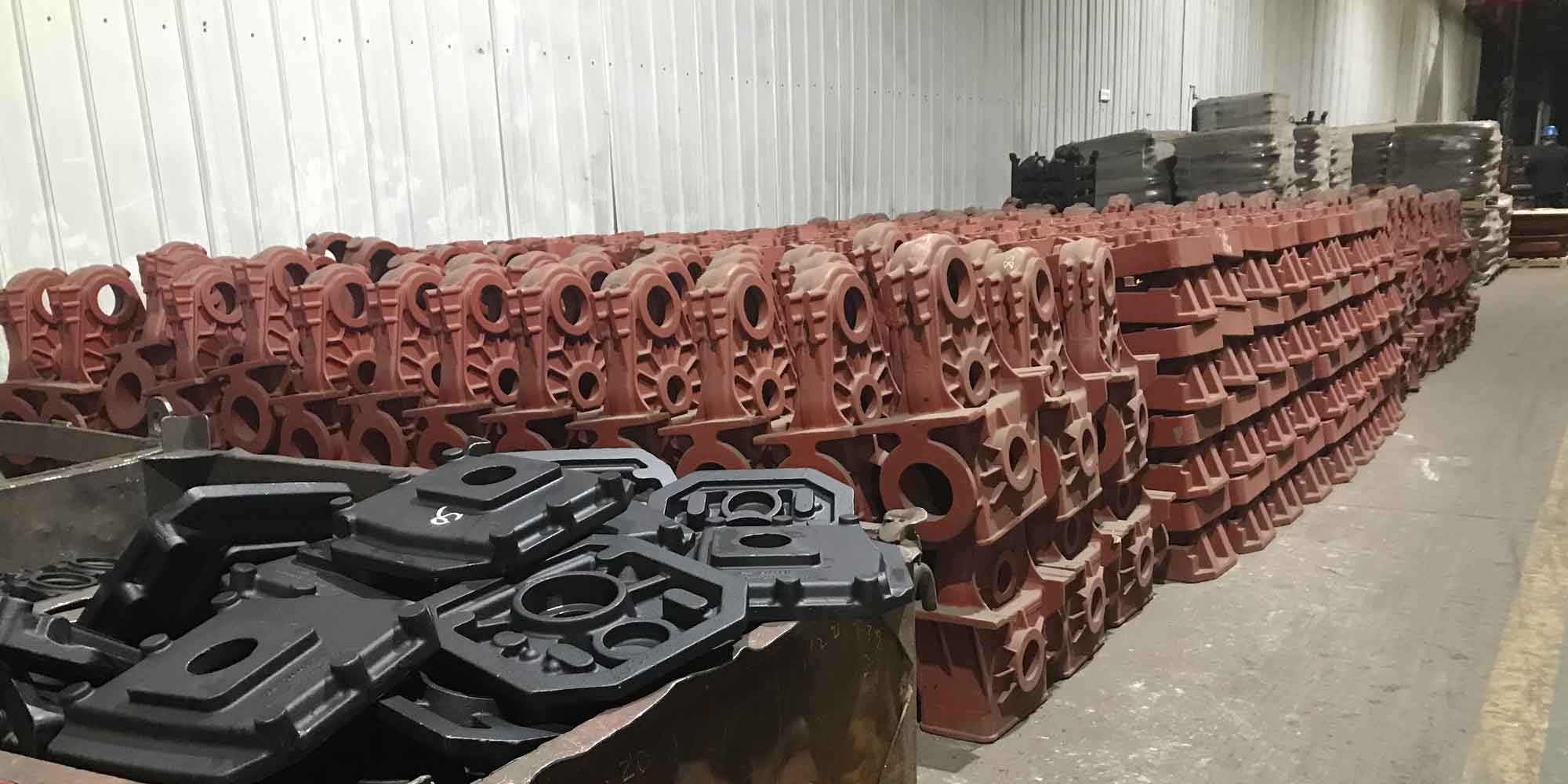
The consequence of inadequate weld repair in steel castings can be severe. A poorly executed repair does not simply create a cosmetic flaw; it introduces a potential site for premature failure. In service, these components are frequently subjected to cyclic fatigue loads, corrosive environments, and significant mechanical stress. Defects within the weld repair zone act as stress concentrators, initiating cracks that can propagate under load, ultimately leading to catastrophic component failure, unplanned downtime, and significant safety risks. Therefore, establishing and maintaining rigorous control over every stage of the weld repair process for steel castings is not just a matter of quality assurance—it is a fundamental requirement for operational safety and reliability.
Metallurgical Analysis of Common Welding Defects in Steel Castings
A critical step in controlling weld quality is the ability to accurately identify and understand the root cause of defects. Metallurgical examination, particularly macro- and microstructural analysis, is an indispensable tool for this purpose. Two of the most critical and commonly encountered defects in the repair of steel castings are welding porosity and lack of fusion.
Welding Porosity: Formation and Impact
Welding porosity refers to cavities formed by gas entrapment during the solidification of the weld pool. These gases may originate from moisture, contaminants on the base metal or filler wire, improper shielding gas coverage, or excessive arc length. In steel castings, subsurface micro-porosity from the original casting process can also be a contributing factor if not entirely removed during defect preparation.
The fundamental problem with porosity is its effect on the cross-sectional area and stress state. A pore creates a discontinuity, drastically reducing the effective load-bearing area. More importantly, it acts as a potent stress concentrator. The stress concentration factor (K_t) for a spherical pore can be approximated, but its actual effect is heavily influenced by its size, shape (spherical vs. elongated), and proximity to other defects or the surface. In components like bogie frames for high-speed trains, which endure high-cycle fatigue loading, a cluster of pores at a geometric stress concentration point (e.g., a rib fillet) can be the initiation site for fatigue cracking. The fracture surface often exhibits a characteristic “clamshell” or beach mark pattern emanating from the pore. Microstructurally, the region around the pore in a weld repair on a steel casting will show distinct zones: the as-cast dendritic structure of the weld metal, the coarse-grained heat-affected zone (HAZ) where the base metal has been overheard, and the fine-grained HAZ. The base metal of the steel casting itself, typically a ferritic-pearlitic or tempered martensitic structure, will be visibly distinct from these weld-affected zones.
Lack of Fusion: A Planar Imperfection
Lack of fusion is a planar defect where the weld metal fails to fuse completely with the base metal of the steel casting or with previously deposited weld beads. This defect is primarily process-related, caused by insufficient heat input, incorrect welding angle, improper joint preparation (e.g., oxide or slag remaining on the groove face), or excessive travel speed. Unlike a rounded pore, lack of fusion presents as a sharp, crack-like discontinuity. Its stress concentration effect is extreme, often comparable to that of a crack of similar size and orientation. This makes it particularly detrimental to fatigue strength and fracture toughness.
Metallurgical examination reveals a clear, unbonded interface. Often, this interface may be decorated with oxides or other non-metallic inclusions, confirming the absence of metallic bonding. In inspections of repaired steel castings, non-destructive testing (NDT) methods like magnetic particle inspection (MPI) are highly effective at detecting surface-breaking lack of fusion, which appears as a sharp, linear indication. When such an indication is found, cross-sectioning and microscopic analysis are necessary to confirm its nature and extent. The microstructure adjacent to the lack-of-fusion defect will show an abrupt transition from the weld metal microstructure to the unaffected base metal of the steel casting, with no evidence of a blended HAZ, confirming that melting and intermixing did not occur at that interface.
| Defect Type | Primary Causes | Metallurgical Signature | Primary NDT Method for Detection | Effect on Mechanical Properties |
|---|---|---|---|---|
| Porosity | Gas entrapment (moisture, contamination, poor shielding), high arc length. | Spherical or elongated cavities, often located at weld centerline or near fusion line. Distinct weld/HAZ microstructure around cavity. | Ultrasonic Testing (UT), Radiographic Testing (RT). | Reduces cross-sectional area; creates stress concentration; severely reduces fatigue strength. |
| Lack of Fusion | Insufficient heat input, incorrect technique, poor joint cleanliness, excessive speed. | Sharp, planar unbonded interface, often with oxide films. Abrupt microstructural change at the interface. | Magnetic Particle Inspection (MPI), Penetrant Testing (PT), Ultrasonic Testing (UT). | Acts as a pre-existing crack; drastically reduces fatigue and fracture toughness; can cause brittle failure. |
| Cracking (Hot/Cold) | High restraint, high carbon equivalent, inadequate preheat/post-heat, hydrogen ingress. | Intergranular or transgranular fracture path. Often associated with hard, brittle microstructures (martensite) in HAZ. | MPI, PT, Visual Inspection after stress relief. | Catastrophic; provides a direct path for failure under load. |
Development and Qualification of the Welding Procedure
Consistent, high-quality weld repairs on steel castings cannot be left to operator skill alone. They must be governed by a formally qualified Welding Procedure Specification (WPS). The development of this procedure is a systematic engineering process.
Selection of Welding Process
The choice of welding process for repairing steel castings depends on the casting’s material grade, heat treatment condition, defect location and size, required productivity, and available equipment. The most common processes are compared below.
| Process | Key Characteristics | Typical Application in Steel Casting Repair | Advantages | Disadvantages |
|---|---|---|---|---|
| Shielded Metal Arc Welding (SMAW) | Uses flux-coated consumable electrode. Manual process. | Repair of medium to large defects, especially in pre-heat treated or non-critical areas. All-position capability. | Equipment simplicity, portability, versatility, works on rusty/dirty metal (to a degree). | Low deposition rate, slag removal required, skill-dependent, high heat input. |
| Gas Metal Arc Welding (GMAW) | Uses continuous solid wire electrode with external shielding gas (CO₂ or mix). | High-productivity repair of medium to large defects, often before final heat treatment. | High deposition rate, continuous operation, deep penetration, relatively clean process. | Equipment complexity, sensitive to drafts, potential for porosity if gas coverage is poor. |
| Gas Tungsten Arc Welding (GTAW) | Uses non-consumable tungsten electrode and separate filler wire. Inert gas shield (Argon). | Repair of small, critical defects, especially on finished machined surfaces or after final heat treatment. Root passes. | Excellent control, high-quality, clean welds, minimal spatter, precise heat input. | Very low deposition rate, high skill requirement, sensitive to contamination. |
Procedure Qualification and Parameter Optimization
Once a process is selected, a Welding Procedure Qualification Record (WPQR) must be established according to international standards such as ISO 15614-1 or AWS D1.1. This involves welding a test coupon that simulates the production joint in terms of base material (taken from an actual steel casting or representative coupon), thickness, joint design, and thermal condition (e.g., as-cast, normalized). The qualified procedure defines the essential variables: base metal specification, filler metal classification, shielding gas, preheat and interpass temperature ranges, welding current, voltage, travel speed, and post-weld heat treatment (PWHT).
A key calculated parameter is heat input, which significantly influences the microstructure and properties of the weld and HAZ. Heat input (Q) is given by:
$$ Q = \frac{60 \times V \times I}{S \times 1000} $$
where \( Q \) is the heat input in kJ/mm, \( V \) is the voltage in volts, \( I \) is the current in amperes, and \( S \) is the travel speed in mm/min. For steel castings with specific toughness requirements, the heat input must be controlled within a qualified range to avoid excessive grain growth or the formation of undesirable brittle phases.
Preheat temperature is another critical variable, determined by the material’s carbon equivalent (CE) and thickness to prevent hydrogen-induced cold cracking. A common formula for CE (IIW) is:
$$ CE = C + \frac{Mn}{6} + \frac{Cr + Mo + V}{5} + \frac{Ni + Cu}{15} $$
For a high CE steel casting, a higher preheat is mandatory. The required preheat (\(T_p\)) can be empirically estimated based on CE and thickness (t):
$$ T_p(^\circ C) = 350 \times \sqrt{C_{eq}} – 0.25 \times t $$
This underscores the need for material-specific procedures.
| Process | Base Metal (Steel Casting) | Filler Metal | Preheat/Interpass Temp. | Key Welding Parameters | Qualified Heat Input Range |
|---|---|---|---|---|---|
| GMAW (CO₂) | G20Mn5 (EN 10293) | ER70S-6, Ø1.2 mm | 150-200°C | I: 220-260 A, V: 24-28 V, S: 20-30 cm/min | 0.8 – 1.5 kJ/mm |
| GTAW | G20Mn5QT (Quenched & Tempered) | ER70S-2, Ø2.0 mm | 100-150°C | I: 110-140 A, V: 11-14 V, S: 8-12 cm/min, Argon 15 L/min | 0.4 – 0.7 kJ/mm |
Critical Control Points in the Welding Repair Process for Steel Castings
With a qualified WPS in hand, the focus shifts to its rigorous execution. The following sequential steps constitute the critical control points for ensuring repair integrity in steel castings.
1. Defect Removal and Joint Preparation
This is the most crucial preparatory step. The defect must be entirely removed, and the cavity shaped to allow proper weld bead placement and fusion. Grinding with mounted wheels or rotary burrs is the preferred method for precision and control. Thermal methods like arc gouging can be used for bulk removal but must be followed by grinding to remove the carbon-enriched, brittle layer and achieve a clean, sound metal surface. The prepared groove should have a smooth contour with no sharp corners to avoid stress concentration. Its geometry (V, U, or compound) must comply with the qualified WPS. After preparation, the groove must be cleaned of all contaminants (oil, grease, dust, oxide) using appropriate solvents and stainless steel wire brushes. A final verification via liquid penetrant testing (PT) or magnetic particle testing (MPI) is often required to confirm complete defect removal before welding commences.
2. Preheating and Temperature Management
Preheating serves multiple vital functions: it slows the cooling rate of the weld and HAZ, reducing hardness and the risk of martensite formation; it helps dissipate hydrogen from the weld zone; and it reduces thermal gradients, minimizing shrinkage stresses and the risk of cracking. The preheat temperature specified in the WPS must be achieved uniformly in a zone extending at least 75 mm (or 3 times the thickness) on either side of the weld. Temperature must be monitored using contact pyrometers or thermal crayons. Interpass temperature—the temperature of the material between weld passes—must also be maintained within the specified range (usually the same as or slightly higher than the minimum preheat) to prevent the build-up of excessive residual stress.
3. Welding Execution and In-process Controls
The welder must strictly adhere to all parameters of the WPS. This includes using the correct, properly stored and baked (if required) filler metal, maintaining the specified shielding gas flow rate, and employing the correct welding technique (weave pattern, arc length, travel angle). For multi-pass repairs on thick-section steel castings, careful bead sequencing and interpass cleaning (slag removal in SMAW, spatter removal in GMAW) are essential to prevent lack-of-fusion and slag inclusions. Techniques like peening (light hammering of the weld bead while it is still hot) can be employed on intermediate passes to help alleviate residual stresses, but this must be done with caution and according to the procedure to avoid work hardening or hiding defects.
4. Post-Weld Heat Treatment (PWHT) and Stress Relief
Due to the localized intense heating, weld repairs create regions of high residual stress and potentially hard, brittle microstructures in the HAZ. PWHT is often mandatory for critical steel castings to:
- Relieve residual stresses through high-temperature soaking and controlled cooling.
- Temper hard martensitic regions in the HAZ, improving toughness.
- Allow further diffusion of hydrogen out of the weld metal.
The PWHT cycle (temperature, holding time, heating/cooling rates) is a critical part of the qualified WPS and is typically aligned with the original heat treatment cycle of the steel casting. For local repairs, induction or resistance heating pads can be used to perform a localized stress relief, provided the temperature gradient to the surrounding base metal is carefully controlled.
5. Final Inspection and Acceptance
No repair is complete without thorough verification. After the weld has cooled and any PWHT is performed, the repair area must undergo a series of inspections:
- Visual Inspection (VT): Check for surface irregularities like cracks, undercut, excessive reinforcement, and acceptable weld profile.
- Non-Destructive Testing (NDT): The method(s) specified in the acceptance criteria must be applied. This is typically:
- Magnetic Particle Testing (MPT) or Liquid Penetrant Testing (PT) for surface-breaking defects.
- Ultrasonic Testing (UT) for sub-surface defects (porosity, inclusions, lack of fusion) in thicker sections.
The acceptance standards (e.g., allowable defect size, density) must be clearly defined, often referencing standards like ISO 5817 or ASTM E125.
- Dimensional Verification: The repaired area must be ground flush or to a smooth contour that meets the final machining drawing requirements for the steel casting.
| Process Stage | Key Activities | Control Instruments/Tools | Acceptance Criteria / Output |
|---|---|---|---|
| Joint Prep | Defect removal, groove machining, cleaning. | Grinders, burrs, PT/MPT kit, solvents. | Clean, defect-free groove geometry per WPS. PT/MPT clear. |
| Preheating | Heating to specified temperature range. | Heating blankets/coils, contact pyrometers, temp sticks. | Uniform temperature achieved & documented in zone ≥ 3T. |
| Welding | Deposition per WPS (params, technique). | Calibrated welding power source, gas flowmeter, procedure. | Weld bead appearance, interpass cleaning, temp control log. |
| PWHT | Stress relief thermal cycle. | Furnace or local heaters, data recorders (time/temp). | Compliance with qualified PWHT cycle chart/record. |
| Final Inspection | VT, NDT (MPT/PT/UT), dimensional check. | Inspection gauges, NDT equipment, acceptance standard. | Weld meets all visual, dimensional, and NDT criteria. |
Conclusion and Future Perspectives
The weld repair of steel castings is a sophisticated metallurgical and engineering process that bridges foundry and fabrication disciplines. Its success hinges on a deep understanding of defect etiology, a scientifically developed and qualified welding procedure, and an uncompromising adherence to process control disciplines at every stage—from defect excavation to final inspection. The integration of metallurgical analysis as a diagnostic tool is paramount for root cause analysis and continuous improvement. As industries demand ever-higher performance and reliability from components, the standards governing the repair of steel castings will continue to evolve. Future trends point towards greater digitization, such as the use of automated or robotic welding systems with real-time parameter monitoring and adaptive control to ensure consistency. Furthermore, advanced NDT techniques like phased array ultrasonics and digital radiography are becoming more prevalent, offering higher sensitivity and better defect characterization. The ultimate goal remains constant: to transform a defective casting into a component whose repaired zone is as reliable, if not more reliably understood, than the original base metal, ensuring the safe and prolonged service life of critical steel castings in demanding applications worldwide.