
In the realm of heavy industrial manufacturing, particularly for mining equipment, the demand for high-integrity alloy steel castings is paramount. These components often possess intricate geometries, significant section thickness variations, and must meet stringent mechanical property requirements. A quintessential challenge in producing such parts is managing the inherent risks during heat treatment, especially the quench-hardening phase. Excessive thermal gradients and transformation stresses can lead to catastrophic cracking, resulting in significant financial loss and production delays. This detailed account chronicles my first-hand experience in diagnosing, analyzing, and ultimately solving a critical quenching crack issue in a complex box-shaped alloy steel casting, offering a technical deep-dive into the metallurgical principles and practical process adjustments required for successful production.
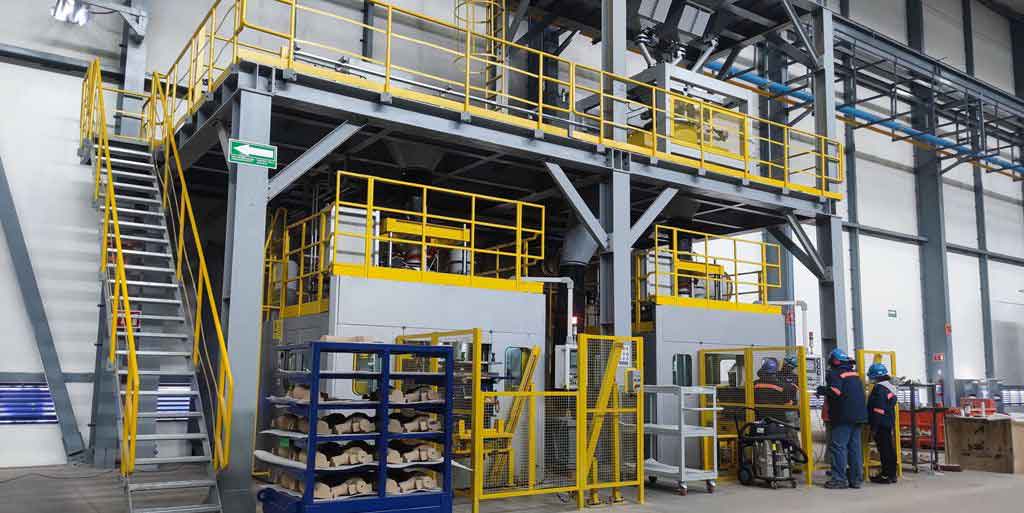
The subject component was a structurally complex box-type alloy steel casting ordered for a global mining machinery application. With a substantial weight of approximately 279.5 kg and overall envelope dimensions of 580 mm x 645 mm x 762 mm, its design featured pronounced variations in wall thickness. The mechanical specifications demanded a combination of high strength and exceptional low-temperature toughness, as outlined in the performance table. Achieving this property profile necessitated a quenching and tempering (QT) heat treatment, a process notoriously risky for intricate steel castings.
| Element | C | Si | Mn | P (max) | S (max) | Cr | Ni | Mo | Al (max) | V (max) | Ti |
|---|---|---|---|---|---|---|---|---|---|---|---|
| Wt. % | 0.29-0.37 | 0.30-0.60 | 0.60-1.00 | 0.045 | 0.040 | 0.45-0.55 | 0.70-0.90 | 0.22-0.27 | 0.040 | 0.10 | 0.015-0.050 |
| Property | Tensile Strength (MPa) | Yield Strength (MPa) | Elongation (%) | Reduction of Area (%) | Hardness (HBW) | Charpy Impact @ 0°C (J) |
|---|---|---|---|---|---|---|
| Requirement | ≥ 830 | ≥ 650 | ≥ 14 | ≥ 30 | 269 – 321 | ≥ 35 |
The initial manufacturing and heat treatment protocol was established based on standard metallurgical calculations. The full austenitization temperature (Ac3) was estimated from the chemical composition, leading to a quenching temperature of 870 ± 10°C. A normalizing cycle at 900°C preceded the QT process to homogenize the as-cast microstructure. To achieve the required hardenability and strength, water was selected as the quenching medium. A dedicated fixture was used to transfer the hot steel casting from the furnace to the quench tank within a strict 35-40 second window. The water temperature was maintained between 20-30°C with vigorous agitation to break the vapor blanket, and the casting was quenched for approximately 8 minutes to a final temperature of 100-150°C before tempering at 600°C.
Post-quench and temper non-destructive testing (NDT) revealed a critical failure: surface cracks were detected at locations of severe section change. The cracks originated precisely at the junctions where thin walls met massive sections. This is a classic failure mode in quenched steel castings, driven by the interplay of thermal stress and transformation stress. The fundamental mechanism can be described by considering the sequential phase transformation during cooling.
When the hot steel casting is immersed in the quenchant, the surface regions cool rapidly, transforming first from austenite (γ) to martensite (α’). Martensite formation is accompanied by a volumetric expansion. At this stage, the hotter, softer austenitic core can plastically accommodate the expansion of the surface shell. However, as cooling continues, the core itself eventually reaches the martensite start (Ms) temperature and begins to transform. Now, the already-transformed, hard-and-brittle surface layer resists the expansion of the core. This creates immense tensile stresses in the core and, more critically, tangential tensile stresses at the surface or subsurface. In regions of geometric stress concentration—like sharp corners or drastic thickness transitions—these tensile stresses can easily exceed the fracture strength of the freshly formed, untempered martensite, leading to quench cracks.
The stress state can be conceptually modeled. The thermal stress ($\sigma_{th}$) arises from the temperature gradient and is proportional to the thermal expansion coefficient (α), Young’s modulus (E), and the temperature difference (ΔT). The transformation stress ($\sigma_{tr}$) is related to the volume change (ΔV/V) during the γ→α’ reaction. The total stress at a critical point is a complex superposition:
$$
\sigma_{total} = f(\sigma_{th}, \sigma_{tr}) = f\left( \alpha E \Delta T, \frac{\Delta V}{V} \right)
$$
For a successful quench without cracking in a steel casting, the following condition must be met at all points:
$$
\sigma_{total} < \sigma_{fracture}(M)
$$
where $\sigma_{fracture}(M)$ is the fracture strength of the untempered martensite at that location, which can be compromised by microstructural inhomogeneities inherent in the steel casting process, such as non-metallic inclusions or micro-shrinkage.
Metallographic examination of the cracked region confirmed a well-quenched microstructure—approximately 98% tempered martensite (sorbitic structure) with a minor amount of bainite. This indicated that the quenching intensity was sufficient to achieve the desired hardenability. However, it was precisely this high intensity (water quench) that generated the damaging stress gradients. The crack path was intergranular and transgranular, typical of quench cracks, initiating at the stress-concentrated surface and propagating inward.
The analysis pointed to a clear need: to maintain sufficient cooling speed to achieve the required microstructure and mechanical properties, but to moderate the cooling severity in the critical temperature range where martensite forms (between Ms, approximately 300-350°C for this grade, and room temperature) to reduce stress. Simply switching to a slower oil quench risked failing to meet the hardenability and impact toughness requirements. The solution had to be a nuanced modification of the water quenching procedure itself.
The optimized quenching strategy was developed through systematic trials on sacrificial castings. The core principles were: 1) Slightly elevate the initial quenchant temperature to reduce the initial thermal shock, and 2) Implement an interrupted or “time-mist” quenching technique to allow stress relaxation at a critical moment.
| Quenching Parameter | Initial Process | Optimized Process | Rationale |
|---|---|---|---|
| Water Temperature | 20 – 30°C | 30 – 38°C | Reduces initial heat extraction rate, lowering thermal stress gradient. |
| Quenching Method | Single, continuous immersion (8 min) | Interrupted (4 min total): 2 min in water, 1 min in air, 2 min in water. | The air pause at ~350°C allows temperature equalization across sections before the final martensitic transformation, reducing transformation stress. |
| Monitoring | Fixed time | Surface temperature monitored via infrared pyrometer during air pause. | Ensures process consistency and that the casting re-enters the quench at the correct temperature. |
The science behind this “heat equalization” step is crucial. When the steel casting is pulled from the quench after the initial two minutes, the surface temperature is low (near Ms), while the core is still significantly hotter. During the one-minute air pause, heat from the core flows outward, reheating the surface. This temperature equalization has two beneficial effects: First, it tempers the surface martensite that has already formed, slightly increasing its ductility and fracture resistance ($\sigma_{fracture}(M)$ increases). Second, and more importantly, when the casting is re-immersed, the temperature difference between surface and core is smaller, meaning the final martensitic transformation in the core occurs while the surface layer is warmer and more ductile, better able to accommodate the core’s expansion without cracking. The cooling path modification is illustrated conceptually below.
The effectiveness of this optimized process was immediately validated. Microstructural analysis of the new trial steel castings showed a slightly altered but fully acceptable microstructure of approximately 90% tempered martensite and 10% bainite. Most importantly, the mechanical properties not only met but exceeded the original specifications, demonstrating that the reduction in quench severity did not compromise the final performance of the steel casting.
| Property | Standard Requirement | Optimized Process Result |
|---|---|---|
| Tensile Strength (MPa) | ≥ 830 | 923 |
| Yield Strength (MPa) | ≥ 650 | 735 |
| Elongation (%) | ≥ 14 | 21 |
| Reduction of Area (%) | ≥ 30 | 38 |
| Hardness (HBW) | 269 – 321 | 302, 294, 298 |
| Charpy Impact @ 0°C (J) | ≥ 35 | 53, 58, 62 |
This case study underscores a fundamental principle in the heat treatment of complex alloy steel castings: brute-force quenching to maximize hardness often leads to failure. Success lies in strategically managing the cooling curve to balance the competing demands of microstructure development and stress minimization. For a steel casting with high hardenability requirements, water quenching cannot always be avoided. However, by intelligently modifying parameters like quenchant temperature and introducing controlled interruptions, it is possible to “shape” the cooling curve to minimize the peak tensile stresses during the most critical phase transformation window. This process of optimizing the quench for a specific steel casting geometry and alloy is as much an art as it is a science, requiring a deep understanding of TTT/CCT diagrams, stress formation mechanisms, and practical process control. The methodology described here—root cause analysis via metallography and stress theory, followed by iterative, physics-based process refinement—provides a robust framework for tackling similar quenching challenges in the production of high-performance alloy steel castings across various industries.