
As a researcher deeply immersed in the field of advanced manufacturing, I have witnessed the transformative impact of rapid precision sand casting technology without molds. This innovative approach, which merges traditional sand casting processes with rapid prototyping techniques, represents a paradigm shift in how we conceive and produce complex metal components. In this article, I will delve into the fundamental principles, diverse applications, and inherent characteristics of this technology, drawing from extensive study and practical insights. My aim is to provide a detailed exposition that underscores the significance of sand casting in modern manufacturing, while highlighting the revolutionary aspects of moldless methods.
The core concept of rapid precision sand casting without molds, often abbreviated as RC, revolves around the direct fabrication of sand molds or cores from digital models, eliminating the need for physical patterns or tooling. This is achieved primarily through two overarching methodologies: those based on discrete accumulation principles (such as 3D printing and laser sintering) and those rooted in numerical control (NC) machining principles. The former builds molds layer by layer from powdered materials, while the latter subtractively machines molds from pre-formed sand blocks. Both pathways offer distinct advantages in terms of cost, speed, and design freedom, making them particularly suitable for low-volume production, prototyping, and the manufacture of geometrically intricate parts that are challenging for conventional sand casting. The essence of sand casting—pouring molten metal into a sand mold—is preserved, but the mold-making process is radically accelerated and digitized.
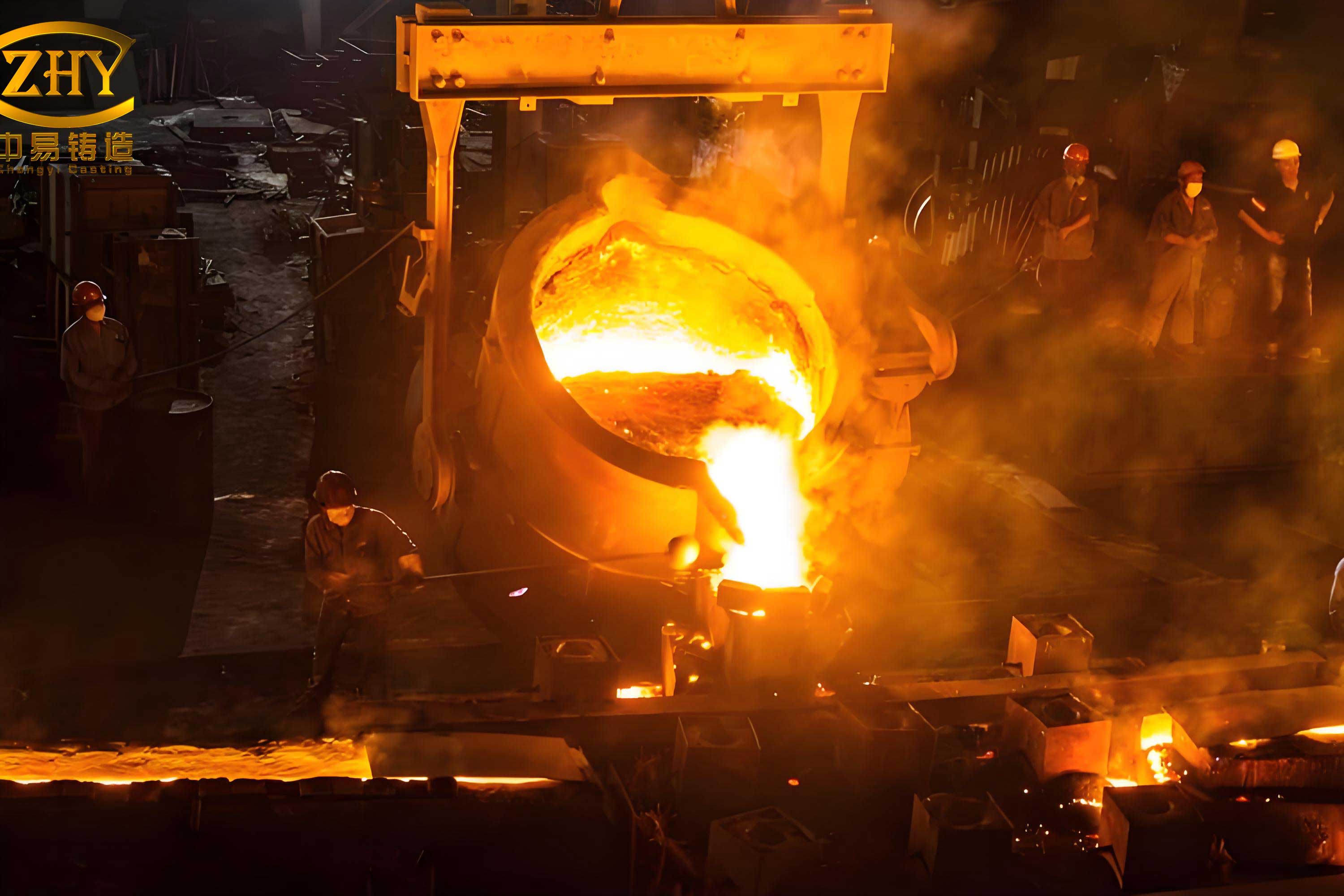
To appreciate the technological leap, it is instructive to compare the traditional sand casting workflow with the moldless approach. In conventional sand casting, creating a mold involves crafting a pattern (often from wood or metal), packing sand around it, and then removing the pattern to leave a cavity. This process is time-consuming, costly for small batches, and limits geometric complexity due to pattern withdrawal constraints. In contrast, rapid precision sand casting without molds translates a computer-aided design (CAD) model of the part, complete with gating and risering systems, directly into a sand mold. The CAD model is typically sliced into thin cross-sectional layers, and these layers guide the fabrication equipment. The result is a significant reduction in lead time—often by 50% to 80%—and the ability to produce molds with internal channels, undercuts, and complex cores as a single integrated piece. This capability is revolutionizing sectors like automotive, aerospace, and energy, where components such as engine blocks, cylinder heads, turbocharger housings, and pump impellers benefit immensely from the flexibility and precision of advanced sand casting techniques.
Discrete Accumulation-Based Technologies for Sand Mold Fabrication
The first major category of moldless sand casting technologies is founded on the principle of discrete accumulation, where a three-dimensional object is constructed by sequentially adding material layer upon layer. This family of additive manufacturing (AM) processes is ideally suited for creating the complex, often organic geometries required in modern sand casting applications.
Laser Sintering-Based Rapid Sand Casting
Selective Laser Sintering (SLS) of sand, commonly referred to as laser sintering-based rapid sand casting, is a mature and widely adopted technique. In this process, a thin layer of sand powder, typically coated with a thermoplastic binder (phenolic resin), is spread across a build platform. A laser beam, controlled by CAD slice data, selectively scans the powder bed, melting and fusing the binder to solidify the sand in the desired cross-sectional shape. After one layer is completed, the build platform lowers, a new layer of powder is applied, and the process repeats until the entire sand mold or core is formed. The unbonded powder surrounding the solidified structure acts as support, allowing for the creation of complex internal geometries without additional supports.
The process can be broadly classified into direct and indirect sintering. Direct sintering aims to fuse the sand grains themselves, often using sands with lower melting point additives like alumina. However, this requires high laser power (140–200 W) and is less common due to longer cycle times and stringent equipment requirements. Indirect sintering, which targets the binder-coated sand (pre-coated sand), is more prevalent. Here, the laser activates the binder (e.g., phenolic resin) at lower powers (25–100 W). The initial “green” strength of the as-sintered mold is relatively low, necessitating a post-processing curing step in an oven at 200–280°C to fully cross-link the resin and achieve sufficient mechanical strength for handling and pouring.
The quality of molds produced via SLS for sand casting is governed by a range of process parameters and material properties. Key factors include laser power (\(P\)), scan speed (\(v\)), hatch spacing (\(h\)), layer thickness (\(t\)), and the properties of the sand and binder. The energy density (\(E_d\)) delivered to the powder bed is a critical parameter often approximated by:
$$E_d = \frac{P}{v \cdot h}$$
Optimizing \(E_d\) is crucial to achieve complete binder fusion without excessive thermal degradation, which can lead to poor surface finish or low strength. Furthermore, the binder content (\(w_b\)) in the coated sand significantly influences the final mold properties, such as tensile strength (\(\sigma_t\)) and gas permeability (\(k\)). Empirical relationships often show that strength increases with binder content up to a point, but excessive binder can reduce permeability and increase gas evolution during metal pouring, leading to casting defects like gas porosity. Research has focused on developing optimized sand-binder systems and process windows to enhance performance. For instance, improvements have led to molds with tensile strengths exceeding 3 MPa, suitable for direct pouring of ferrous and non-ferrous alloys.
The following table summarizes key characteristics and typical applications of laser-sintered sand molds:
| Parameter | Typical Range/Value | Influence on Sand Casting Process |
|---|---|---|
| Laser Power | 25 – 100 W (indirect) | Affects binder activation, cure depth, and production rate. |
| Build Size | Limited by machine chamber (e.g., 700x380x580 mm) | Determines maximum part dimensions for sand casting. |
| Layer Thickness | 0.1 – 0.3 mm | Influences surface finish and build time of the sand mold. |
| Binder Content | 2 – 4 wt.% | Directly correlates with mold strength and gas evolution. |
| Post-Cure Temperature | 200 – 280 °C | Essential for achieving final strength; can cause distortion. |
| Typical Applications | Engine blocks, cylinder heads, turbine blades, pump impellers | Ideal for complex, medium-to-small sized sand castings. |
Three-Dimensional Printing (3DP) Based Sand Casting
Three-dimensional printing for sand molds operates on a similar layer-wise principle but uses a different binding mechanism: the selective deposition of a liquid binder onto a powder bed. A recoater spreads a layer of dry, un-bonded sand (often standard foundry sand like silica sand). Then, an inkjet print head moves across the bed, depositing droplets of binder precisely where the solid cross-section of the mold is defined. The binder rapidly penetrates and glues the sand particles together. The platform descends, a new layer of sand is spread, and the process repeats. After completion, the loose sand is removed, revealing the finished mold ready for possible post-processing and casting.
This binder jetting approach offers several advantages for sand casting applications. It eliminates the need for expensive lasers, potentially lowering system cost and maintenance. It can utilize a wide variety of readily available foundry sands and binders, contributing to its cost-effectiveness. The process is generally faster for larger volumes compared to laser-based systems due to the use of multi-jet printheads. However, challenges include achieving high resolution and surface finish comparable to SLS, managing binder saturation to ensure adequate strength without compromising permeability, and minimizing the “stair-stepping” effect inherent to all layer-based processes.
Several commercial and research systems exemplify this technology’s application in sand casting:
- Patternless Casting Manufacturing (PCM): This approach uses a dual-printhead system to simultaneously jet a furan resin binder and a catalyst (like toluenesulfonic acid). Their reaction upon contact leads to rapid curing, producing strong molds that can often be used after minimal post-processing, such as coating with a refractory wash. PCM is well-suited for large and medium-sized sand castings.
- Direct Shell Production Casting (DSPC): This method uses finer ceramic powders (75–150 µm) and a silicate-based binder. The resulting molds have excellent surface finish but require high-temperature firing to develop adequate strength, making them more suitable for investment-casting-like processes rather than conventional sand casting.
- ZCast and ProMetal RCT: These are commercial systems (from Z Corp and ExOne, respectively) designed explicitly for foundry applications. They use proprietary sand-binder composites or standard foundry sands to produce molds capable of withstanding pouring temperatures for non-ferrous and even ferrous metals. Their build speeds are high, targeting large-volume mold production.
- GS Process: Developed by Generis, this system employs a multi-jet array to spray resin uniformly, followed by a selective jetting of a hardener. Its high deposition rate makes it efficient for large molds, though extensive binder use can complicate loose sand removal.
The binding mechanism in 3DP can be modeled by considering the capillary forces and the penetration depth (\(d_p\)) of the binder droplet into the porous sand bed. A simplified form of the Washburn equation can be applied:
$$d_p = \sqrt{\frac{\gamma \cos\theta}{2\mu} \cdot r \cdot t}$$
where \(\gamma\) is the binder’s surface tension, \(\theta\) is the contact angle with the sand, \(\mu\) is the binder viscosity, \(r\) is the effective pore radius, and \(t\) is the time. Optimizing these fluid properties and powder characteristics is vital for achieving strong inter-layer bonding and good dimensional accuracy in the sand mold.
The table below provides a comparative overview of discrete accumulation methods for sand casting:
| Technology | Energy/Binding Source | Key Materials | Typical Build Speed | Relative Cost | Best Suited for in Sand Casting |
|---|---|---|---|---|---|
| SLS (Laser Sintering) | Laser Beam | Resin-coated sand (e.g., phenolic) | Moderate | Higher (laser cost) | High-detail, complex cores/molds for ferrous alloys. |
| 3DP / Binder Jetting | Liquid Binder Jetting | Un-coated sand + liquid binder (e.g., furan, silicate) | Fast (for large parts) | Lower | Large molds, rapid prototyping for sand casting, non-ferrous alloys. |
Numerical Control (NC) Machining-Based Rapid Sand Casting
In contrast to the additive approaches, NC machining-based rapid sand casting is a subtractive process. It starts with a solid block of pre-compacted or cured sand material—such as resin-bonded sand, sodium silicate sand, or even green sand. This block is mounted on a multi-axis CNC milling machine. Using cutting tools (end mills, drills, etc.), the machine directly carves out the mold cavity and any necessary cores based on the toolpaths generated from the 3D CAD model of the part and its mold assembly.
This method leverages the high precision and excellent surface finish capabilities of modern CNC machining. Since it uses conventional foundry sand materials, the resulting molds possess all the thermophysical and mechanical properties expected in standard sand casting practice, including good refractoriness, collapsibility, and permeability. A significant advantage is the flexibility in choosing parting lines and mold design; without a physical pattern to withdraw, the mold can be split in the most optimal way for machining and casting, even allowing for complex, non-planar parting surfaces.
However, the subtractive nature also imposes limitations. The geometry must be accessible to the cutting tools, making internal cavities and severe undercuts challenging or impossible to machine directly in a single block. Strategies involve creating molds in multiple segments that are then assembled. Furthermore, the process can be time-consuming for very large volumes of material removal and may generate significant waste sand. It is exceptionally well-suited for low-volume production, prototype tooling, and large, relatively simple to moderately complex castings where the benefits of speed and design flexibility outweigh the machining time.
Two prominent examples are the Direct Mold Milling (DMM) process and technology developed by companies like AcTech. DMM involves placing a block of bonded sand directly into a machining center and milling the entire mold cavity. The German AcTech system emphasizes the digital thread from CAD to casting, enabling highly flexible mold design and efficient production of single pieces or small batches of complex castings, such as large machinery components or automotive prototypes.
The material removal rate (\(MRR\)) in NC machining of sand molds is a key metric for productivity. It can be expressed as:
$$MRR = f_r \cdot a_e \cdot a_p$$
where \(f_r\) is the feed rate (mm/min), \(a_e\) is the radial depth of cut (mm), and \(a_p\) is the axial depth of cut (mm). Optimizing these parameters for the relatively brittle and abrasive sand material is crucial to achieve efficient milling without excessive tool wear or damage to the fragile mold walls. Tool path planning algorithms must also consider the avoidance of tool collisions and the maintenance of adequate wall thickness for the sand mold to withstand handling and metalostatic pressure during the sand casting pour.
Fundamental Characteristics and Advantages of Moldless Rapid Sand Casting
The convergence of digital design and direct manufacturing imbues rapid precision sand casting without molds with a set of defining characteristics that set it apart from traditional foundry methods.
1. Digital Integration: This is the cornerstone of the technology. The entire process chain—from 3D CAD modeling and simulation of solidification and fluid flow, to the generation of machine instructions (slicing data for AM or G-code for NC machining), to the physical creation of the mold—exists within a digital environment. This enables a seamless, automated workflow often referred to as “digital sand casting.” Modifications to the part design can be quickly reflected in the mold without the delays and costs associated with modifying or remaking physical patterns. Simulation software can predict potential defects like shrinkage porosity or mistruns, allowing engineers to optimize the gating system and mold design virtually before any physical mold is made.
2. Precision and Complexity: Both additive and subtractive methods offer high dimensional accuracy and the ability to create intricate features. Additive processes can fabricate internal cooling channels, conformal cores, and lattice structures that are impossible to achieve with conventional pattern-based sand casting. The surface finish, while dependent on the process and layer thickness, can be very good, often reducing the need for extensive post-casting machining. The precision directly translates to higher quality and more reliable sand cast components.
3. Manufacturing Flexibility and Agility: The most celebrated advantage is the drastic reduction in lead time for producing a functional sand casting, especially for one-off parts or small batches. The “time-to-cast” can be reduced from weeks to days or even hours. This makes it an ideal tool for rapid prototyping, design verification, functional testing, and bridge production. It empowers designers with unprecedented freedom, as part complexity incurs little to no additional cost in the mold-making stage. This agility is invaluable in industries with short product lifecycles or high demand for customization.
4. Sustainability and Green Manufacturing Potential: Moldless sand casting presents several environmentally favorable aspects. Additive processes typically use only the material needed to build the mold, minimizing waste compared to subtractive machining which generates chips. Some binder systems and processes are being developed to be more environmentally benign. Furthermore, the digital nature reduces the need for physical storage and transport of patterns. The sand used, whether in SLS, 3DP, or NC blocks, is often reclaimable and recyclable, aligning with the circular economy principles increasingly important in modern sand casting foundries.
The economic impact can be summarized by a simple model comparing total cost (\(C_{total}\)) for a traditional vs. a moldless sand casting approach for low-volume production:
$$C_{total}^{traditional} = C_{pattern} + N \cdot C_{mold}^{manual} + C_{material} + C_{machining}$$
$$C_{total}^{moldless} = C_{data\_prep} + N \cdot C_{mold}^{digital} + C_{material} + C_{machining}$$
For small \(N\) (batch size), the high fixed cost \(C_{pattern}\) in traditional sand casting dominates, making \(C_{total}^{moldless}\) significantly lower, as \(C_{data\_prep}\) (model preparation and software) and \(C_{mold}^{digital}\) (direct digital fabrication cost per mold) are relatively low and independent of complexity.
Future Directions and Concluding Remarks
The trajectory of rapid precision sand casting without molds points towards faster build speeds, larger build volumes, improved material systems, and tighter integration with the broader digital manufacturing ecosystem. Research is ongoing to develop new sand-binder composites with enhanced properties—higher strength for thin walls, better thermal stability for ferrous alloys, and lower gas evolution. Multi-material printing within a single sand mold, such as incorporating chill materials or exothermic compounds at specific locations, is an exciting frontier that could further optimize the solidification process and casting quality.
Hybrid approaches are also emerging. For instance, using additive manufacturing to create only the complex core sections of a mold and then assembling them into a conventionally produced main mold frame combines the strengths of both worlds. The integration of in-process monitoring and closed-loop control, using sensors to track dimensions, density, or binder saturation during printing or machining, will enhance repeatability and quality assurance.
In conclusion, as I reflect on the evolution of sand casting technology, the advent of moldless rapid precision techniques stands out as a revolutionary development. By dissolving the constraints imposed by physical patterns, it has unlocked new levels of design freedom, speed, and efficiency for the venerable process of sand casting. Whether through the layer-wise magic of 3D printing and laser sintering or the precise subtraction of CNC machining, these technologies are democratizing the ability to produce high-quality metal castings. They are not merely incremental improvements but foundational enablers for agile, digital, and sustainable manufacturing. For anyone involved in product development, prototyping, or low-volume production of metal parts, understanding and leveraging rapid precision sand casting without molds is no longer optional—it is essential to remaining competitive and innovative in the modern industrial landscape. The future of sand casting is undoubtedly digital, precise, and moldless.